
Sumba Island in Indonesia is one of those places that has managed to preserve a character that has become increasingly rare elsewhere in the country. This is not a destination that tries to please tourists in an easy way. Traveling to Sumba requires time, patience, and a willingness to adapt to the island rather than expect the island to adapt to you.
The word “authentic” here is not just a marketing hook. The traditional animist Marapu belief system remains the foundation of everyday life, rituals are not staged performances for tourists, and villages do not feel like open-air museums.
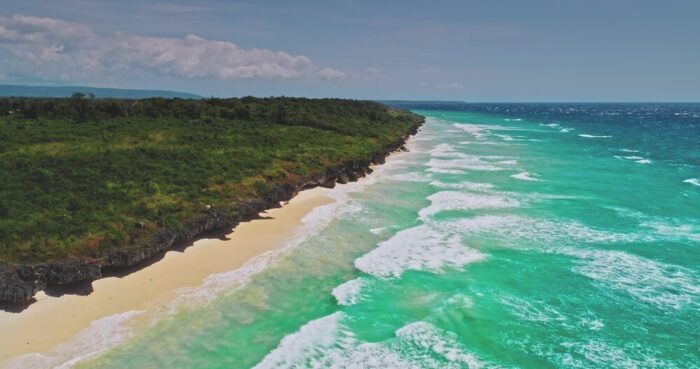
This rawness, however, also has another side. If you want to plan a trip to Sumba, it is important to know that comfort and infrastructure are still limited here, and getting around the island takes more time than many travelers expect.
In this guide, we’ll walk you through everything you need to know before traveling to Sumba. The article was written by Nikol, who has lived on the island for several years and holds a master’s degree in Indonesian Studies. Her experience brings together local knowledge, cultural context, and practical travel advice.

The goal is to help you plan your trip with more confidence, respect, and a better understanding of what makes Sumba different from other parts of Indonesia.
Planning a Trip to Sumba: Quick Answers
If you are planning a trip to Sumba, the most important thing to know is that this is not the kind of island where you can move around quickly or improvise everything at the last minute. Distances are long, roads can be rough, and many of the best places are spread across different parts of the island.
For most first-time visitors, 7 days is a good minimum. It gives you enough time to see a mix of beaches, hills, waterfalls, and traditional villages without spending the whole trip in the car. If you have only a few days, it is usually better to focus on one part of the island rather than trying to see everything.
Most travelers arrive either in Tambolaka in the southwest or Waingapu in the east. Which airport makes more sense depends on your route, accommodation, and what part of Sumba you want to explore first.
- Best trip length: 7 days for a balanced first trip, 4–5 days for highlights only, 10–14 days for a slower island-wide route.
- Best time to visit: Usually May to October for dry roads and easier logistics.
- How to get around: A car with a driver is the most practical option for most travelers.
- Best for: Travelers who enjoy remote places, long drives, strong local culture, and less polished destinations.
- Not ideal for: Anyone looking for easy transport, nightlife, lots of cafés, or quick point-to-point travel.
Why Is Sumba Worth Visiting
Beyond the fact that Sumba is beautiful in its own right — with open savannas, rolling hills, and empty white-sand beaches with minimal development — its relatively low population density and poor infrastructure offer a real sense of adventure and a chance to observe cultural continuity in a setting that has not been significantly shaped by mass tourism.
What to See
Sumba is geographically and culturally diverse, and each part of the island offers a slightly different kind of experience.

Southwest Sumba
Southwest Sumba is one of the most visited parts of the island, mainly thanks to places such as Weekuri Lagoon and Mandorak Beach. This area is best known for its natural scenery and relatively easier access. In recent years, it has become increasingly popular.
Learn more in our detailed guide: What to Do in Southwest Sumba: Top Places & Tips.
West Sumba
From a travel perspective, West Sumba can be divided into the hilly interior around Waikabubak, the island’s second-largest town, and the beautiful southern coast, full of stunning, empty white-sand beaches opening out onto the Indian Ocean.
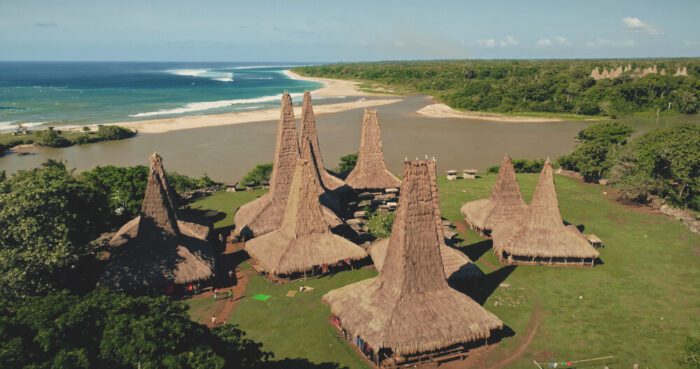
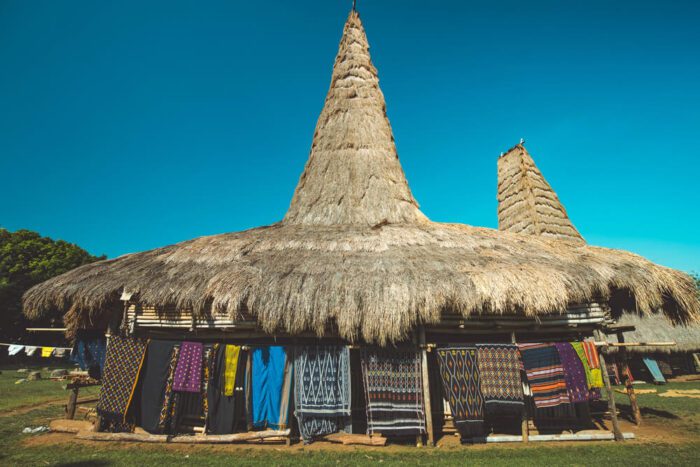
This area is popular with both surfers and backpackers who prefer contact with local people and visits to picturesque traditional villages. It is here that you can clearly observe the architecture, burial structures, and everyday life of local communities.
For more details about this area, read our full West Sumba guide in Waikabubak, Sumba: Travel Guide Full of Local Tips.
Central Sumba
Central Sumba remains off the main tourist routes. It offers fewer specific “attractions,” but gives a more authentic insight into everyday life.
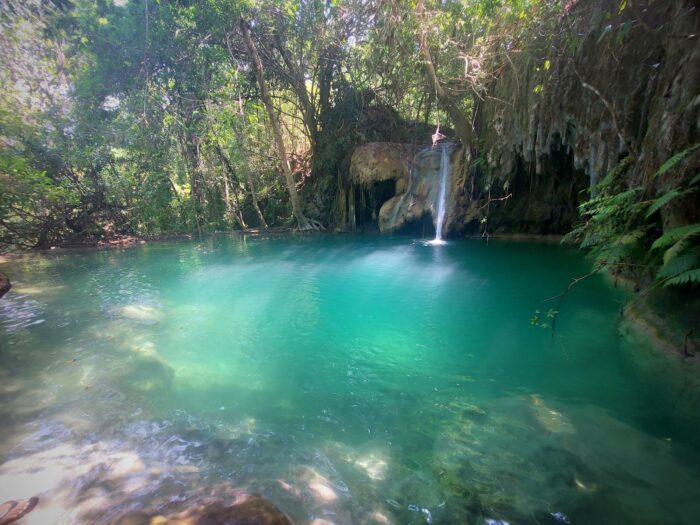
You will find several beautiful waterfalls and beaches here, and in most cases, you can be sure you will not meet any other tourists. However, there is almost no accommodation available in this area, and tourist facilities are still virtually nonexistent.
Thinking about exploring this part of Sumba? Learn more in: Guide to Central Sumba: Hidden Gems & Local Spots.
East Sumba
East Sumba is the most striking part of the island in terms of landscape. It is known for the rolling grassy hills of Wairinding, the northern coast with its characteristic mangroves — for example, at the popular Walakiri Beach — and dramatic canyons with waterfalls, such as Tanggedu and Waimarang.

The main starting point is Waingapu, the island’s capital, which makes a good base and is also a nice place to experience local urban life.
Planning to explore East Sumba? Read our Waingapu: Travel Guide to East Sumba’s Highlights.
What to Experience
Sumba is not a destination built around a checklist of “must-see” attractions, but around the experience as a whole. Still, there are several activities that are essential, and without them, you cannot really say you have truly experienced the island.
Visiting Traditional Villages and Funerals
Visiting traditional villages helps you understand the social structure and the practical importance of the local animist Marapu belief system.
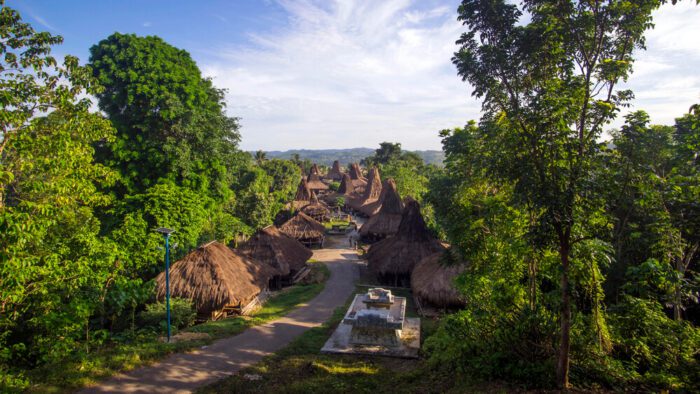
Funeral ceremonies play a major role here and are complex social events. If you have the chance to attend one, it should ideally be by invitation and with proper respect. Be prepared for a very raw atmosphere, ritual animal sacrifices, and a deeply authentic setting. This experience is definitely not for everyone, but it may stay with you for life.
Which local villages should you visit? Read 7 Traditional Villages in Sumba Worth a Visit.
Pasola
Pasola is a unique phenomenon — a ritual horseback battle connected to agricultural cycles and the symbolism of blood as a source of fertility. It takes place only once a year in several villages in West and Southwest Sumba and offers a truly unique experience for spectators.

Planning to be a part of this event? Read Pasola Festival in Sumba: A Traveler’s Guide to the Tradition.
Surfing
Surf lovers will find some excellent waves on Sumba, especially along the southern coast of West Sumba. It is no coincidence that Sumba has been described in some guidebooks as a surfers’ mecca, and even today it still has a reputation for world-class waves.
The main season runs from May to October and is better suited to advanced surfers, as the waves here are usually fast and powerful, often breaking over reef, which can make wipeouts dangerous.
Waterfalls
Although the island may seem quite dry at first glance — especially during the summer months — and does not have any major mountain ranges like other parts of Indonesia, it hides countless beautiful and very diverse waterfalls.
These range from tall ones such as Lapopu or Hirumanu, to smaller falls suitable for swimming, like Kolam Jodoh and Waimarang, and canyon-style waterfalls such as Tanggedu or Lakolat.
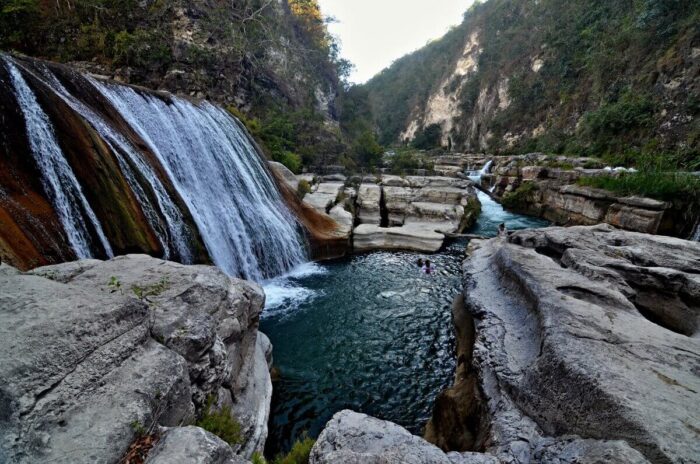
Wee Kacura Waterfall is a particularly special place, located in the middle of rice fields, and thanks to its uniqueness, it has quickly become one of the main symbols of the island.
Sunrises and Sunsets on the Savannas
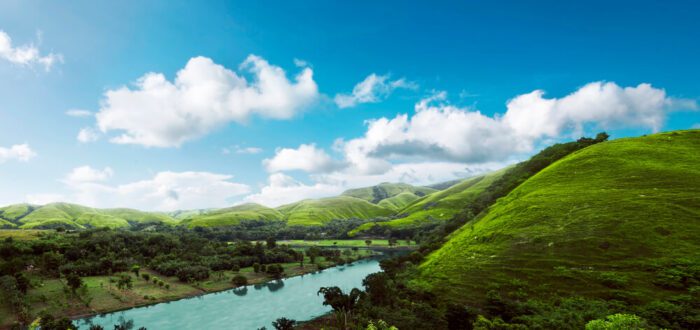
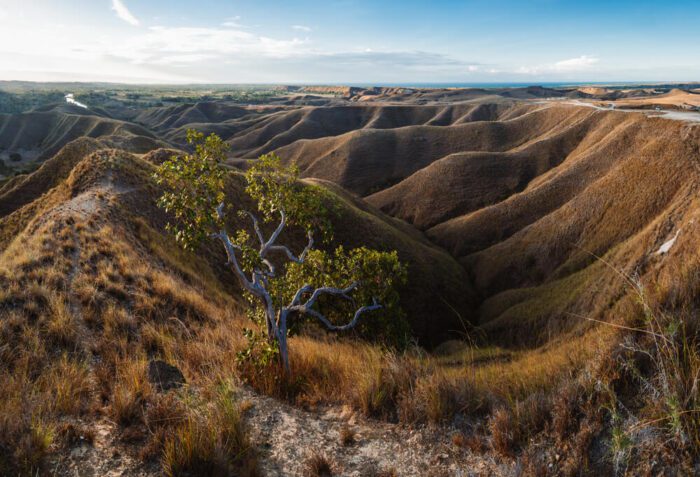
During the dry season, East Sumba is known for its parched savannas and endless rolling hills. Places like Bukit Wairinding and Bukit Tanau are very photogenic, especially at sunrise and sunset, when the hills stand out the most. In the rainy season, on the other hand, they turn beautifully green and look completely different again.
Woven Textiles (Ikat)
One of the island’s greatest cultural treasures is the weaving of textiles with traditional motifs, many of which are still dyed using original natural dyes.
You will come across these textiles all over the island, as they are part of everyday life in both villages and towns. East Sumba is also considered one of the areas producing the highest-quality ikat in Indonesia. It is no surprise that their prices often reach several million rupiah.

You can see the production process in most traditional villages. In some places, it is also possible to try on a complete traditional outfit for a fee, for example in Ratenggaro, Prai Ijing, or Kampung Raja in Waingapu.
How to Get to Sumba
There are two airports on the island — in Tambolaka in the southwest and Waingapu in the east. The most common option is to fly from Bali (Denpasar), where smaller regional airlines operate several flights a day.

Alternatively, you can use connections from Kupang on Timor or, more recently, from Mataram on Lombok. The cheaper option is usually flying into Tambolaka Airport, where there is a wider choice of airlines.
Flying to Sumba? Read our guide on how to get from Tambolaka Airport and Waingapu Airport to your next stop.
The second option is to arrive on the island by boat. Ferries and long-distance passenger ships, known as kapal penumpang, connect Sumba with Bali, Lombok, Flores, Timor, and Sabu. This option is especially suitable if you are traveling with your own motorbike or want to experience an unusual adventure among locals, in the same way most of them travel.

Planning your route to Sumba? Read our guide on How to Get to Sumba: Flights and Ferries.
Best Time to Visit Sumba and Why
The dry season (May–October) is generally the best time to visit, as the roads are easier to drive on and getting around the island is simpler. During this period, the landscape takes on its characteristic golden tone.
On the other hand, the rainy season (November–March) is not as intense here as on other Indonesian islands, and apart from waterfalls, it does not limit a visit to the island too much. During this time, you can see beautiful green scenery.
How Many Days Do You Need in Sumba?
How many days you need in Sumba depends mainly on your pace, budget, and how much of the island you want to cover. Sumba is much bigger than many people expect, and even short distances can take time because of the road conditions.
- 4 to 5 days is enough if you want to see only the main highlights in one part of the island. This works best if you focus either on the southwest and west, or on the east.
- 7 days is the best option for most first-time visitors. It gives you enough time to combine nature, culture, and some slower moments without turning the whole trip into constant transfers.
- 10 to 14 days is ideal if you want to travel across multiple regions, stay in different areas, and have time for villages, waterfalls, beaches, and longer inland drives.
If your time is limited, it is usually better to plan a shorter route well than to try to see the entire island too quickly.
Suggested Sumba Itineraries
The sample itineraries below are included mainly to show that Sumba is not a destination you can rush too much. Distances are long, road conditions vary, and even a short list of places can take more time than expected. For that reason, we do not usually recommend following generic internet itineraries too rigidly.
There is no single correct Sumba itinerary. The best route depends on where you arrive, how many days you have, what kind of places interest you most, and whether you are traveling independently or with a local driver or guide. If you do have a local driver, it is often better to use these itineraries as a rough structure and stay open to their suggestions rather than expect them to adapt to a completely fixed plan.
4-Day Sumba Itinerary
This version is best if you only want to see the main highlights and do not mind a faster pace. It usually makes more sense to choose one side of the island rather than trying to cross all of Sumba.
- Day 1: Arrive in Tambolaka or Waingapu and settle into your base.
- Day 2: Visit nearby beaches, hills, or villages.
- Day 3: Full-day trip to one or two major highlights such as Weekuri, Mandorak, Wairinding, Walakiri, or a waterfall depending on your area.
- Day 4: Short morning stop and departure.

7-Day Sumba Itinerary
This is the most practical first-trip itinerary and the one we usually recommend. It gives you enough time to experience the island without rushing every day.
- Day 1: Arrive and stay near your arrival airport.
- Day 2: Explore the surrounding region.
- Day 3: Visit beaches, hills, or villages and continue to your next base.
- Day 4: Full-day nature and culture stops on the way across the island.
- Day 5: Explore another region more deeply.
- Day 6: Waterfalls, villages, viewpoints, or a slower beach day.
- Day 7: Departure.
10-Day to 14-Day Sumba Itinerary
If you have more time, Sumba becomes much more enjoyable. You can move at a slower pace, stay in different areas, and avoid turning the trip into a checklist.
- Spend several days in the southwest or west for beaches, villages, and surf areas.
- Spend several days in the east for hills, mangroves, waterfalls, and Waingapu.
- Add inland stops if you want a deeper look at everyday life and less-visited areas.
- Leave some flexibility for road conditions, weather, and long driving days.
Visa and Entry Requirements
Sumba is an Indonesian island so standard visa conditions apply for tourists. In general, there are two options from which you can choose depending on the lenght of your stay in Sumba/Indonesia.
Visa on Arrival (VoA)
For short visits to Sumba, a Visa on Arrival (VoA) works the best. This visa allows you to stay in Indonesia for up to 30 days and can be obtained either online before your trip or on arrival at major airports and seaports.
The visa costs IDR 500,000 (approximately USD 35) and can be extended once for an additional 30 days. Although the extension application is submitted online through the official immigration website, you will still need to visit a local immigration office to complete the final verification process.
Backindo Tip: If you plan to stay longer, keep in mind that there is no immigration office on Sumba, so any visa extension must be handled in Kupang on Timor.
Longer Stay Visas

If you’re planning to stay in Sumba for more than a month, applying for a C1 visa is usually the better option. The application is completed online, but it requires additional documents, and the processing time is at least five working days. This visa grants an initial stay of 60 days.
Backindo Tip: Not every nationality is eligible for the C1 visa, so make sure to check whether your passport qualifies before applying.
It can then be extended twice, each extension adding another 60 days, allowing you to stay in Indonesia for up to six months in total.
Important Notes
- Your passport must be valid for at least 6 months from the planned date of leaving Indonesia.
- You must have a return ticket or proof of onward travel.
- Starting in 2025, travelers must complete an online customs declaration within 3 days before their arrival. It’s called the All Indonesia card.
- The official government website is https://evisa.imigrasi.go.id/. Other websites that charge higher fees are third-party agencies offering additional services, which is why the total cost may be higher.
Backindo Tip: Visa policies can change frequently, so always check the latest official information before your trip to avoid surprises. And remember that each day of overstay costs 1,000,000 IDR per person (around 60 USD).
Money and Approximate Costs
The currency in Indonesia is the Indonesian rupiah.
On Sumba, it is quite difficult to exchange US dollars or euros, and when it is possible, the rates are usually not very favorable. For this reason, it is definitely worth withdrawing cash from an ATM. These are currently available only in larger towns, and it is always a good idea to carry enough cash in case the nearest ATM is out of service.
Apart from a few better shops and hotels, paying by card is still not very common on Sumba. Cash is essential, especially once you leave the main towns.

In many ways, Sumba is more expensive than some of the surrounding islands. This is mainly due to limited infrastructure, complicated logistics, and fewer options for local production. The island is not fully self-sufficient and depends heavily on imported goods, which is reflected in everyday prices.
Tourism services also tend to be more expensive than you might expect. This is partly because tourism on Sumba is still developing, and many things require more coordination than in better-connected destinations.
Wondering how the internet is in Sumba? Read our guide to internet access before your trip: Internet in Sumba: What to Expect Before You Go.
How to Get Around Sumba
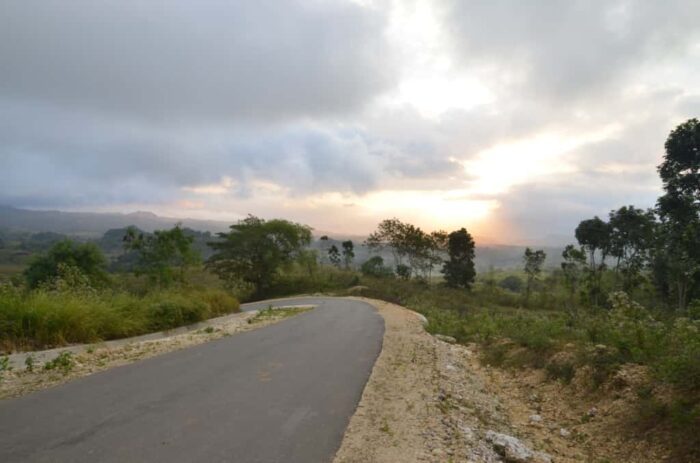
Given the condition of the roads and the distances involved, the most practical option is a car with a driver. Of course, it is also possible to rent your own scooter, but this option is less comfortable and requires enough riding experience. It is good to know that in most places outside the larger towns, there is little to no signal, and online maps are often not up to date.
Need a reliable driver on Sumba? Send us a message at hello@backindo.com and we’ll happily share contacts of people we personally know and trust.
Scooters can be rented in both Tambolaka and Waingapu, and this service is gradually becoming more widely available. In some cases, it is also possible to arrange delivery of the motorbike to a specific place for an extra fee.
Rental prices, however, are significantly higher than on Bali, usually two to three times as much. Given the road conditions, it is also important to choose a good-quality, reliable scooter. We recommend always riding with a helmet and keeping in mind that outside the main routes, petrol can be difficult to find, so it is best to keep enough fuel in reserve.
Backindo Tip: Before renting a motorbike in Sumba, read our guide for safety tips Renting a Motorbike in Sumba: All You Need to Know.
Public transport here operates mainly between towns in the form of buses and shared cars, known locally as travel. It is a cheap way to make a one-off transfer from one end of the island to the other.
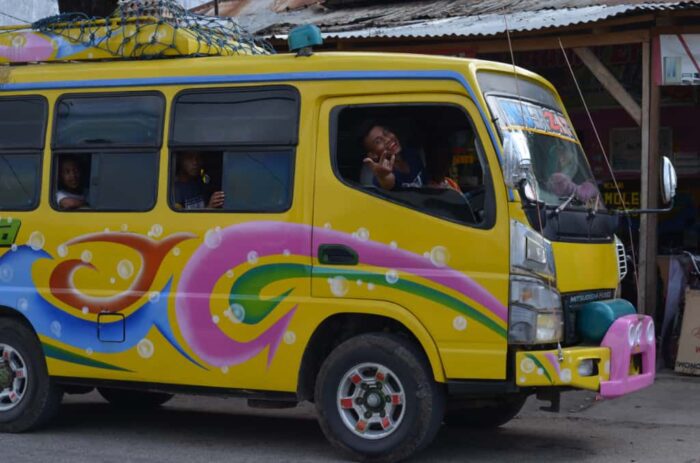
You can also find some options on GetYourGuide or Klook, but the offers are still quite limited and prices are usually higher than arranging the trip yourself through one of our trusted contacts.
Accommodation on Sumba
Accommodation on Sumba varies a lot depending on where you stay on the island. If you are looking for standard hotels on Sumba, you will find the most options around the main towns and airports, especially in Waingapu and Tambolaka.
Along the coast, the choice is much more limited. Some areas are almost completely undeveloped, while others are home to luxury Sumba resorts and remote beach stays. This is why choosing where to stay on Sumba is not only about the hotel itself, but also about your route, transport, and the places you want to visit.
Hostels and Guesthouses
Classic backpacker hostels with bunk beds are almost nonexistent on Sumba. Instead, you will find family-run homestays or simple guesthouses, but even these are very limited.

A basic room with a fan, often with cold water only, usually costs around IDR 200,000–400,000 per night.
Examples include Hotel Jemmy in Waingapu, as well as Sumba Sejahtera and Hotel Pasola in Waitabula.
Mid-Range Accommodation
This category has seen the biggest growth in recent years, especially thanks to the development of ecotourism and the surfing community.
These rooms usually come with air conditioning and hot water, and the hotels often have their own restaurants and, in many cases, a swimming pool. Prices range between IDR 800,000–2,000,000 per night.
We can recommend places such as Mario Hotel & Cafe in Waitabula, Rua Beach Resort on the south coast, or Casa Kandara in Waingapu.
Luxury Hotels
Sumba is world-famous for its exclusive resorts, which define the idea of “isolated luxury.” These hotels are often destinations in themselves. They offer complete privacy, top-level gastronomy, personal butlers, and a strong focus on sustainability. Many also have a private beach.
Prices start at around IDR 10,000,000 and, for the best villas, can climb into the hundreds of millions per night.

A typical example is Nihi Sumba, formerly Nihiwatu, which has been voted the best hotel in the world several times. It is a closed ecosystem with its own private beach in an area suitable for world-class surfing. Nearby Lelewatu Resort is also worth mentioning, as well as Sanubari, a newer modern resort in the east.
Food and What to Eat on Sumba
Sumba is not especially famous for its cuisine, and the food is generally quite simple, often based around spicy sambal sauce and, besides rice, also corn or cassava. Most warungs here are owned by Javanese and Balinese people, so you will mostly come across dishes that are common in other parts of Indonesia as well.
In some places, you may see the label “RW,” which refers to dishes made from dog meat. These days, it is more of an exceptional occurrence — dog meat is more commonly prepared at home — but it is still good to know what this label means.
Pork is also quite common on Sumba, especially during funeral ceremonies and other cultural events, where it also carries symbolic meaning.

On the island, people drink very strong local coffee prepared in a simple way, with the grounds left in the cup. A local specialty is ginger coffee (kopi jahe), which has a distinctive and slightly spicy taste. It is especially popular in cooler areas.
Sumbanese people love alcohol, and it is fair to say that local spirits such as peci or moke are a regular part of all cultural and social events. If you decide to try them, it is best to be careful, as they are homemade and the quality can vary. In some cases, methanol content can also be a problem.
Health and Hygiene on Sumba
You should expect limited healthcare on Sumba, especially outside the towns of Waingapu and Waikabubak. In the case of more serious health problems, evacuation to another island may be necessary, most often to Bali.
Backindo Tip: Before traveling to Sumba, make sure you have good travel insurance that includes solid coverage for medical evacuation and air transport.
It is definitely wise to bring your own first-aid kit with basic medication. Consistent use of a good-quality insect repellent is also very important, as malaria and dengue fever are both present on Sumba. Malaria is very common here, but fortunately, local doctors know how to treat it well. Antimalarial medication is a personal decision, but it is not essential.

The sun here is extremely strong, especially during the dry season. Use SPF 50+ and drink more fluids than you are used to in order to avoid heatstroke.
Tap water is definitely not safe to drink. Drink only bottled water, and it is always better to avoid ice in drinks at cheaper local places or from street vendors.
Is Sumba Safe for Travelers?
In general, Sumba is safe for travelers, especially if you come with realistic expectations and move around the island respectfully. Serious crime against tourists is not something most visitors experience, but Sumba is not a polished or highly organized destination, so “safe” here often means using common sense rather than expecting everything to work smoothly.
The main risks on Sumba are usually road conditions, long transfers, limited healthcare, and miscommunication rather than classic tourist scams or heavy crime. If you travel around the island with patience and avoid unnecessary conflict, most trips go without major problems.
Road Safety Matters More Than Anything Else
For many travelers, the biggest safety issue on Sumba is transport. Roads can be long, uneven, and tiring, and driving after dark is best avoided when possible. If you are not very confident on a motorbike, a car with a driver is usually the safer and more practical option.
If you do rent a scooter, wear a helmet, keep enough fuel in reserve, and do not underestimate distances. Some roads look manageable on a map but take much longer in real life.

Some Areas Require More Sensitivity
Although Sumba is generally welcoming, some parts of the southwest, especially around Waitabula and Kodi, are sometimes seen within Indonesia as more socially sensitive than other parts of the island. This does not mean tourists should avoid the area, but it does mean that it is wise to behave more carefully, avoid arguments, and not assume that every situation can be handled casually.
In these areas, having a local guide or driver can make a real difference, especially if you are visiting remote beaches, villages, or places where communication is limited.
Respect in Villages Is Important
Many of the most interesting places on Sumba are traditional villages and communities where local customs still matter a lot. Dressing modestly, speaking politely, asking before taking photos, and not treating ceremonies as tourist performances all help avoid misunderstandings.
People on Sumba are often very hospitable when they feel that visitors are respectful. A calm and observant approach usually goes a long way.
Health and Communication Can Become Safety Issues
Outside larger towns, English is limited and healthcare is basic. This means that even a minor problem can become more stressful if you are far from services, do not have a local contact, or do not have mobile signal. It is worth saving offline maps, carrying cash, and not planning your days too tightly.
Backindo Tip: Sumba is not as conservative as some other parts of Indonesia, but modest clothing is still recommended, especially when visiting villages, traditional houses, or local ceremonies. Covering your shoulders and knees is a simple way to show respect and avoid unwanted attention.
Religion, Holidays, and Traditions
The Marapu belief system has a fundamental influence on social life and shapes the everyday functioning of communities. It is not only a religious system, but a complex set of rules, values, and relationships between people, ancestors, and nature.
Want to learn more about Marapu? Read our full guide to Marapu beliefs and traditions in Sumba.
Funeral ceremonies are among the most important events and can last for several days. They involve extensive preparations, offerings, and the participation of the wider community. For visitors, they can be a powerful experience, but it is important to approach them with respect and sensitivity.

Rituals and ceremonies are not cultural attractions in the tourist sense, but a natural part of how society functions, as well as of the agricultural cycle. Taking part in these events requires an understanding of their meaning and respect for local rules.
Want to explore Sumba’s unique culture? Read our guide 6 Unique Cultural Events on Sumba.
Among the world religions, Christianity is the most widespread on the island — you will mainly encounter Protestants, but also Catholics to a lesser extent. Islam and Hinduism play only a marginal role here.
What Else You Should Know
Internet connection is limited and unreliable, especially outside larger towns. The signal often fluctuates, and in some areas it may not be available at all, which can make both navigation and regular communication more difficult.
You can also visit Sumba if you are traveling with children. However, it is good to keep in mind the lower standard of healthcare and the more demanding transfers. This kind of trip definitely requires more careful planning and a thoughtful choice of accommodation.
Traveling to Sumba with kids? Read our guide for practical tips and what to expect Traveling Sumba with Kids: Tips from an Expat Mom.
Outside the main tourist centers, you will hardly get by in English, so communication can be more difficult in some situations. At least a basic knowledge of Indonesian is useful, or you can use a local guide.
Is Sumba Worth a Visit?
Sumba is not a destination that offers the comfort or easy travel many of us are used to from places like Bali. Its value lies in the fact that it has preserved its own rhythm and way of life. For some travelers, this may be a limitation; for others, it is the main reason to come here.
Continue reading: