
Visiting a traditional village in Sumba is one of the most meaningful ways to understand the island beyond beaches and viewpoints. These villages are not staged attractions. They are living communities where daily life, ancestral beliefs, ceremonies, and traditional architecture still shape the rhythm of the day.
But not all traditional villages in Sumba feel the same. Some are easier for first-time visitors, some are more frequently visited, and others feel quieter, more local, and less adapted to tourism. In this guide, we’ll help you understand which traditional villages in Sumba are worth visiting, what to expect when you go, and how to visit respectfully.

Quick Guide: Which Traditional Villages in Sumba Should You Visit?
- Best for first-time visitors: Prai Ijing or Ratenggaro
- Most dramatic setting: Ratenggaro
- Easiest near Waikabubak: Prai Ijing and Tarung
- Best for a quieter, less touristy feel: Wei Galli or some villages in Central and East Sumba
- Best if you are also interested in ikat and village life in East Sumba: Praiyawang
If you only have time for one or two villages, it usually makes more sense to choose those that fit your route rather than chasing a “best of” list across the whole island. Distances in Sumba are long, and villages are spread across different regions.
What to Expect in Traditional Sumbanese Villages
These villages are not museums or staged cultural parks. People live here. Kids run around, laundry hangs between houses, animals move around the village, and daily chores continue whether visitors are there or not. Some villages are more used to tourism, but many still feel very local, so it helps to arrive with realistic expectations and a respectful attitude.
When you arrive, you may be asked to sign a guestbook and leave a small donation, usually around IDR 10,000-40,000 per person. This generally supports the local community and village maintenance.
Backindo Tip: If you want to make a more personal connection, stop by a local market on the way and bring betel nut as a small gift. Cigarettes are another common option, though not something you have to bring.
Photography is often allowed, but always ask before photographing people. In some villages, children or local guides may offer to show you around or help with photos. You can say yes or no politely.
Many travelers are surprised by how simple life still is in some of these communities. You may see women weaving ikat by hand, meat drying outside, buffalo horns displayed near houses, and stone tombs placed right in the center of the village.
Dress modestly if you visit. Covering your shoulders and knees is a simple sign of respect, especially in villages that are less used to foreign visitors.
Backindo Tip: Villages like Ratenggaro or Prai Ijing are easier for independent visitors. If you want to explore quieter villages or visit during ceremonies, going with a local driver or guide usually helps a lot.
How Traditional Villages in Sumba Are Built
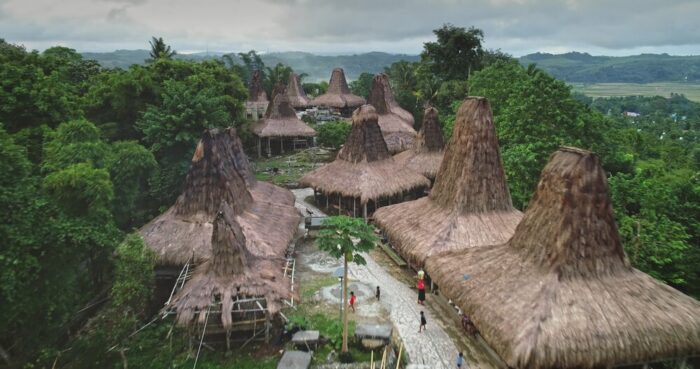
One of the most distinctive things about traditional villages in Sumba is the architecture. The tall thatched houses, often called uma mbatangu or uma kelada, are deeply connected to Sumbanese beliefs, family structure, and the island’s ancestral worldview.
Many traditional houses are built in three vertical levels. The lower part is often used for animals and storage. The middle level is where daily family life happens: cooking, sleeping, weaving, and gathering. The upper level is considered sacred and linked to ancestral objects and ritual life connected to Marapu, the island’s ancestral belief system.

You’ll also notice megalithic stone tombs, sometimes right in front of the houses. These are not historical ruins. In many places, they are still part of living tradition and family identity. Buffalo horns displayed outside houses also carry meaning: they reflect sacrifice, status, and ceremonial history.
If you want a deeper understanding of how village life connects to belief, ritual, and death traditions, our guide to Marapu in Sumba adds important context.
Which Traditional Villages in Sumba Are Worth Visiting?
Ratenggaro Traditional Village (Southwest Sumba)
Best for: dramatic scenery, first-time visitors, iconic photos, combining culture with the southwest coast
If there’s one village that has become visually iconic in Sumba, it’s Ratenggaro. Located on the coast of Southwest Sumba, it is one of the island’s best-known traditional villages and one of the easiest to combine with other major southwest highlights.
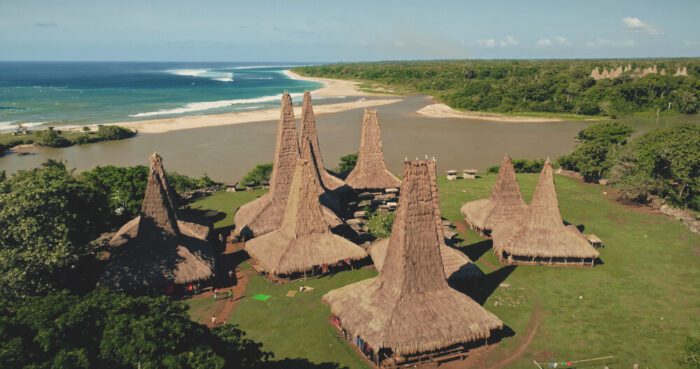
What makes Ratenggaro special is not only the architecture and stone tombs, but also the setting. The village stands right by the ocean, which gives it a dramatic backdrop you will not find in most other villages.
Expect it to feel more visitor-oriented than smaller kampungs. That does not mean it is fake, but it does mean this is one of the places where tourism is already part of village life. Entry is usually around IDR 50,000 per person.
Backindo Tip: Ratenggaro works best if you treat it as a cultural stop, not just a photo stop. And if you continue to the beach, don’t swim there because crocodile warnings are taken seriously.
Prai Ijing Traditional Village (West Sumba)
Best for: easy access, first-time visitors, staying near Waikabubak
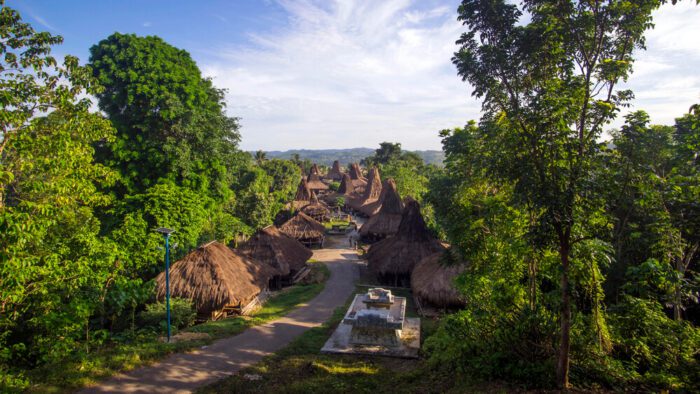
Prai Ijing, just outside Waikabubak, is one of the easiest traditional villages to visit in West Sumba. That makes it a very practical option if you want to visit a village without committing to a long detour.
Because it is relatively accessible, it is also one of the better choices for travelers who want a gentler introduction to Sumba’s village culture. You still get the traditional houses, views, village layout, and local atmosphere, but in a way that feels easier to approach.
Backindo Tip: If you are based in Waikabubak and only have time for one easy cultural stop, Prai Ijing is one of the safest bets.
Tarung Traditional Village (West Sumba)
Best for: visitors already in Waikabubak, combining two nearby villages, interest in ceremonies
Tarung Traditional Village is located very close to Waikabubak, so it is another practical stop if you are exploring West Sumba from there.
What makes Tarung especially interesting is its connection to ritual life. One of the ceremonies associated with the area is Wula Poddu, which usually falls around October to November. If you happen to be in Sumba during that period, village visits can take on a completely different meaning, but they also require more sensitivity.
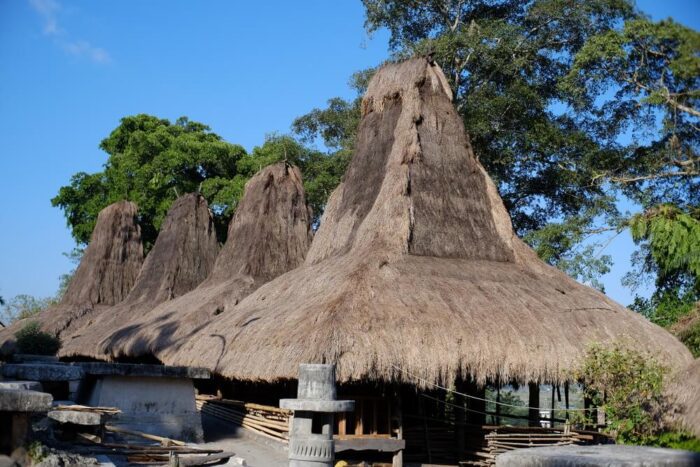
Tarung also sits next to Waitabar Traditional Village, so the area works well if you want to visit more than one village without too much extra driving.
Backindo Tip: If you visit during ceremony season, go slower, dress more carefully, and don’t assume every part of the village or ritual is open to visitors.
Pasunga Traditional Village (Central Sumba)
Best for: travelers crossing Central Sumba, architecture, megalithic tombs
Pasunga Traditional Village, in the Anakalang area of Central Sumba, works well as a stop if you are crossing the island rather than staying only in the east or west.
The architecture here is one of the main draws. The traditional Uma Adung houses are known for their strong wooden structure, and the village also has the kind of megalithic tombs that make Central Sumba culturally distinct.
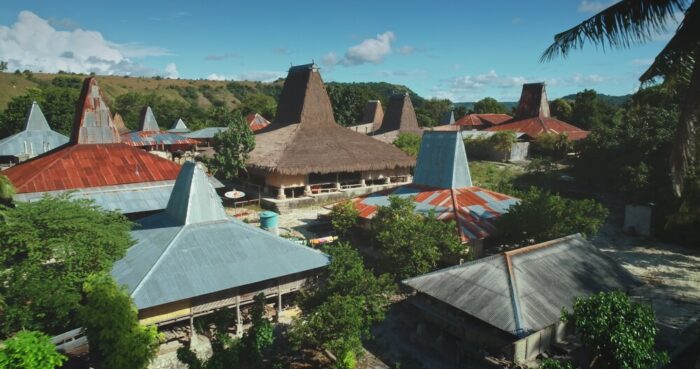
Pasunga is less of a classic first-time visitor stop and more of a good cultural addition if your route already passes through the center of the island.
Praiyawang Traditional Village (East Sumba)
Best for: East Sumba, weaving, village life beyond the usual west coast route
If you want to understand village life in East Sumba, Praiyawang in the Melolo area is a strong candidate. It is especially interesting if you also care about weaving traditions, because this part of Sumba is closely linked to ikat production.
Compared with the better-known villages in the west, this kind of visit can feel less obvious in a standard Sumba itinerary, but that is exactly why it can be rewarding.
Praigoli Traditional Village (Central Sumba)
Best for: deeper cultural interest, traditional hospitality, travelers with time
Praigoli is one of the villages that tends to appeal more to travelers who are genuinely interested in cultural context, not just quick sightseeing. It is known for its megalithic burial stone and for the way hospitality, ritual, and village identity are still strongly felt.
This is the kind of village where the experience depends a lot on timing, local contact, and how open the interaction becomes. It is not always the easiest “drop in, take photos, leave” stop, which is exactly why some travelers may appreciate it more.
Wei Galli Traditional Village (West Sumba)
Best for: travelers looking for a less touristy village in West Sumba
Wei Galli is one of the villages that still feels more informal and less shaped by tourism. There is no fixed entrance fee, and visits are usually based on a guestbook donation.
If you are looking for something quieter than the better-known stops, this kind of village can feel more genuine. But it also means you should arrive with more patience, fewer expectations, and more sensitivity to local rhythm.
Other Traditional Villages in Sumba Worth Knowing About
Beyond the villages above, Sumba has many other kampungs that may be interesting depending on your route. Wainyapu is known for its traditional houses and megalithic atmosphere. In East Sumba, Prailiu is often mentioned because of its royal associations and weaving traditions. Yaro Wora can be interesting if you want to combine coast and culture in West Sumba.

Bodo Ede, on the other hand, is often mentioned in older lists, but because of the fire and rebuilding process, it may not feel as traditional as travelers expect today.
Which Traditional Villages in Sumba Are Best If You Have Limited Time?
If you only have limited time, the easiest choices are usually:
- Ratenggaro if you are already exploring Southwest Sumba
- Prai Ijing if you are staying around Waikabubak
- Tarung if you want a village close to town and easy to combine with other stops
- Praiyawang if your trip focuses on East Sumba and weaving culture
If you want something deeper and quieter, villages in Central Sumba or less-visited parts of the west can be more rewarding, but they usually work better when you already have more time, a driver, or some local help.
Backindo Tip: If you want to explore Sumba’s traditional villages in a more respectful and realistic way, do not try to rush five or six villages into one trip. One or two good visits with context are usually more meaningful than treating them like a checklist.
Continue reading:
- Marapu in Sumba: Understanding the Island’s Traditional Belief System
- Sumba Ikat: A Guide to Traditional Weaving in Sumba
- Waikabubak Guide: Practical Tips for Visiting West Sumba
- Southwest Sumba: Best Places to Visit, Stay and Explore
- Guide to Central Sumba: Where to Go and What to Expect
- Waingapu: Travel Guide to East Sumba’s Highlights