
Are you looking for a tea plantation in Malang where you can enjoy cooler mountain air and see a different side of East Java? Wonosari Tea Plantation is one of the easiest tea plantations to visit from Malang, with wide green fields, views of the hills and a much calmer atmosphere than the city.
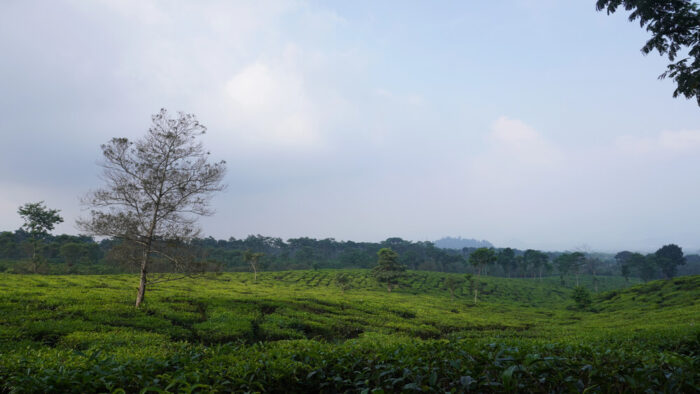
The plantation is located on the slopes of Mount Arjuno and is also one of the oldest tea plantations in East Java, with a history dating back to the Dutch colonial period. Today, you can walk around the tea fields, enjoy the fresh air, stop for the views, and if available, join a short tour of the tea factory.
In this guide, I’ll show you what to expect at Wonosari Tea Plantation, what you can do there, how the tea factory tour works, how much the entrance costs, how to get there from Malang, and whether it is worth adding to your East Java itinerary.
Why Visit Wonosari Tea Plantation?
Wonosari Tea Plantation is one of the oldest tea plantations in East Java. Its history goes back to the Dutch colonial period.
Before tea became the main crop, the estate was used to grow coffee and cinchona, a plant used to produce quinine. In 1910, the area was converted into a tea plantation under the Dutch company NV Cultuur Maatschappij.
During the Japanese occupation, some of the tea plants were replaced with food crops such as cassava, potatoes and sweet potatoes. After Indonesian independence, Wonosari became part of the state-owned plantation system.
Today, Wonosari is still a working tea estate, but also a tourist destination. You can walk between the tea fields, enjoy the cooler air, stop for the views, and see a more developed recreation area that is popular with Indonesian families, especially on weekends.
Things to Do and See at Wonosari Tea Plantation
Walk Through the Tea Fields
The tea fields are the main attraction. You can walk between the rows of tea bushes, enjoy the mountain air and stop at different viewpoints around the plantation.
The scenery is best in the morning, when the temperature is cooler and the light is softer. On clear days, you may also get better views of Mount Arjuno before clouds begin to gather later in the day.
Visit Bukit Kuneer
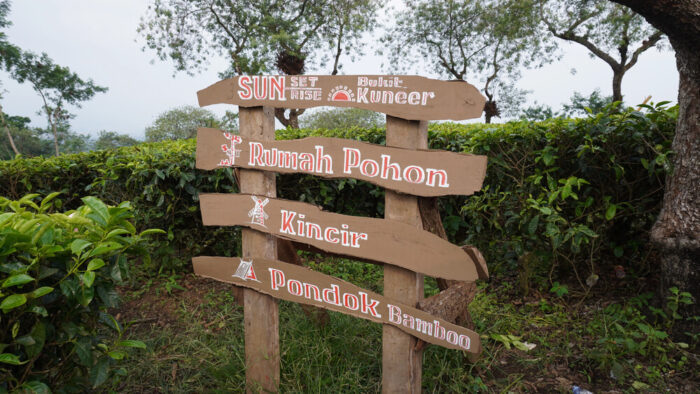
Bukit Kuneer is one of the most popular areas inside the wider Wonosari plantation. It sits higher in the tea fields and has some of the best views across the estate, together with walking paths and photo spots.
From the main entrance, you still need to continue further into the plantation. Walking takes around 40–60 minutes, depending on your pace.
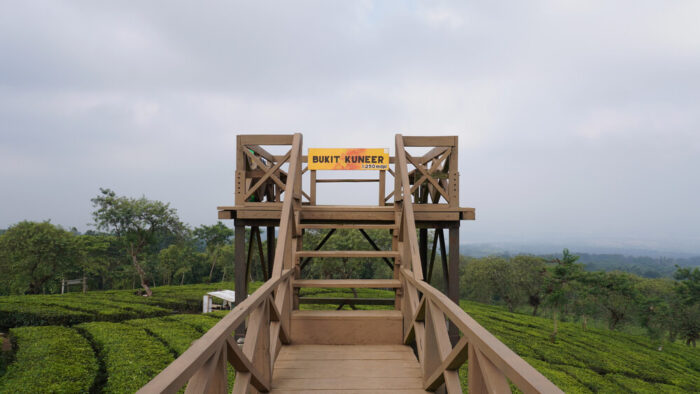
If you do not want to walk, you can rent a Fin Komodo, a small off-road vehicle that is easy to drive and lets you explore the tea plantation in a more fun way. It is especially useful if you want to enjoy the landscape without spending too much energy before reaching the viewpoint.
Bukit Kuneer has an additional entrance fee, usually around IDR 10,000.
Join a Tea Factory Tour
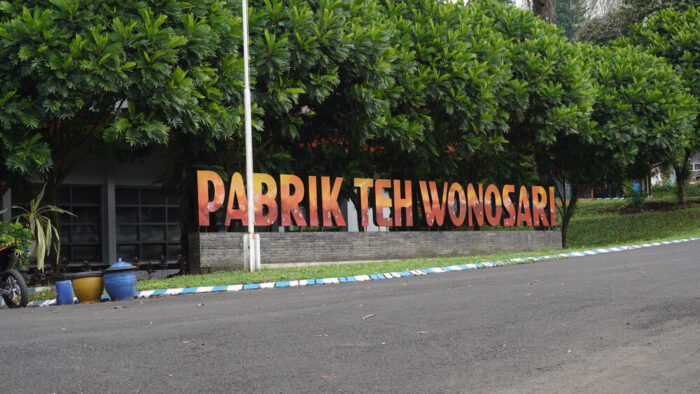
If you want to see more than just the tea fields, you can join a tea factory tour at Wonosari. The tour usually costs extra, around IDR 60,000 per person, and includes a guide who takes you through the tea garden and into the factory.
You get to see the machines and also understand how different types of tea are made. The guide may show you which leaves are used for white tea, green tea and regular tea, and explain why some teas are more expensive than others.
Inside the factory, you can see how the leaves are dried and processed. Some parts can be quite loud, especially near the machines, but it gives you a better idea of how much work goes into something as simple as a cup of tea.
You may also get to smell different grades of tea and try the local tea at the end of the visit. If the factory tour is something you really want to do, come on a working day or book the tour in advance, because access to the factory may depend on the production schedule.
Try Local Tea
After walking around the tea fields, it makes sense to stop for a cup of local tea. One cup of hot tea is included in the entrance ticket.
Wonosari has cafés and food stalls where you can sit down, take a break and try tea produced from the plantation. The tea is sold under the Rolas brand, and you can also buy it in packs to take home.
Since the tourism area is quite developed, this is also an easy place to have lunch or rest before continuing to other places around Lawang or Malang.
Other Activities at Wonosari Tea Plantation
Wonosari is not only a tea plantation, but also a larger agrotourism area. Around the estate, you’ll find a swimming pool, outbound activities, bicycles, ATV rides and children’s play areas.
For most foreign travelers, these activities probably won’t be the main reason to come here. But they can be useful if you’re visiting with kids, or if you want to spend a bit more time in the area instead of only walking through the tea fields.
Most of these activities have separate fees.
Best Time to Visit Wonosari Tea Plantation
Wonosari can look very peaceful in photos, but the real experience depends a lot on when you visit. The main tourism area gets much busier on weekends and public holidays, especially around the entrance, family activities and photo spots.
If you want a quieter visit, come on a weekday and arrive earlier in the day. It also helps to continue further into the plantation, especially toward Bukit Kuneer, where the tea fields usually feel more enjoyable than the busier recreation area.
For a basic visit, tea break and short walk, allow around two to three hours. If you want to join a factory tour, spend more time around Bukit Kuneer, or combine Wonosari with nearby temples, it is better to plan at least half a day.
Backindo Tip: If you enjoy older temples and want to add more stops around this part of Malang, check our guide to temples near Malang. Several of them are close enough to combine with Wonosari Tea Plantation in one trip.
Wonosari Tea Plantation Entrance Fee
The basic entrance fee to Wonosari Tea Plantation is usually around IDR 20,000 on weekdays and IDR 25,000 on weekends and public holidays. This fee only covers the basic visit.
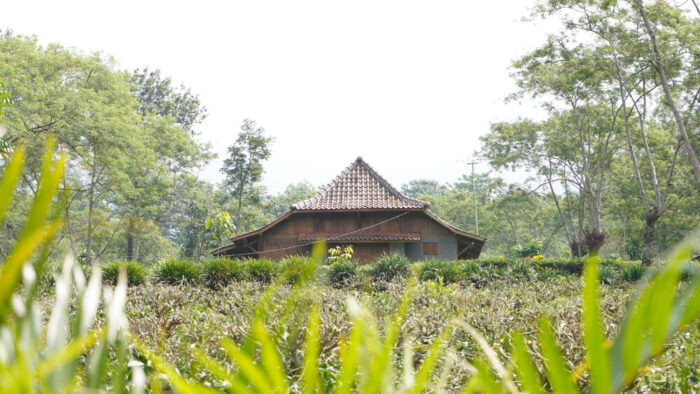
Other activities, such as the tea factory tour, tea-picking packages, swimming pool, ATV rides, bicycles or other family activities, are paid separately. For example, if you want to continue to Kuneer Hill, expect to pay an additional fee of around IDR 10,000 per person.
How to Get to Wonosari Tea Plantation from Malang
Wonosari Tea Plantation is near Lawang, about 30 km north of Malang. By car, the trip usually takes around one to one and a half hours, depending on traffic.
By Private Driver
The easiest way to visit Wonosari is with a private driver. It is not only about comfort, but mainly about the return journey. Getting to Wonosari is usually easy enough, but getting back to Malang can be more annoying if you rely only on Grab or Gojek.

A driver also makes more sense if you want to combine Wonosari with nearby places such as Singosari Temple or Sumberawan Temple.
Backindo Tip: Looking for a reliable driver in East Java? Send us an email at hello@backindo.com and we’ll share contacts of people we personally know and recommend.
Organized Tours
If you do not want to arrange transport yourself, you can also look for an organized half-day tour from Malang. Some tours include Wonosari Tea Plantation together with a tea factory visit, tea picking, Bukit Kuneer or even a nearby bee farm.
By Train to Lawang
You can also take a train from Malang to Lawang. The train ride is short, usually around 20–25 minutes, but Lawang Station is still not at the plantation.
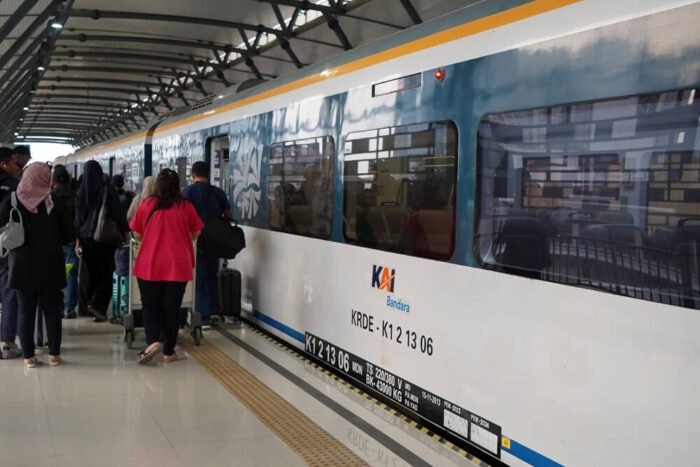
From the station, you need to continue another 6–7 km uphill to Wonosari. This takes around 15–20 minutes by car or motorbike taxi.
Grab or Gojek can work from Lawang Station, but I would not rely on finding a car back from the plantation.
By Motorbike
Many locals come by motorbike, and it is a flexible option if you are used to riding in Indonesia. It is also easier for moving between the entrance area, tea fields and Bukit Kuneer.
But the road climbs toward the plantation and can be slippery after rain. So only ride yourself if you have proper experience, a valid motorbike license, an international driving permit and insurance that actually covers motorbike riding.
Where to Stay Near Wonosari Tea Plantation
If you want to spend more time around the tea plantation, there are a few hotels and homestays nearby.
The closest option is Rollaas Hotel, located inside the Wonosari tourism area near the entrance gate. Another option is BBIB Singosari Suites, which offers rooms with views toward Mount Arjuno. You can also stay around Lawang, such as at Oak Tree Glamping Resort, which is not too far from the area and can work well if you want a quieter stay outside Malang city.
But honestly, for most travelers, staying in Malang is still the easier option because you’ll have more restaurants, transport connections and accommodation choices. But if you want a slower stay near the tea fields, staying around Wonosari or Lawang can make sense.
For more tips on where to stay in the city, read our article Where to Stay in Malang: Best Areas and Hotels.
Where to Go Near Wonosari Tea Plantation
Wonosari Tea Plantation is easy to combine with a few nearby places around Singosari and Mount Arjuno. The easiest stop is Candi Singosari, a temple connected to the old Singhasari Kingdom. You can visit it before or after Wonosari without making the route too complicated.
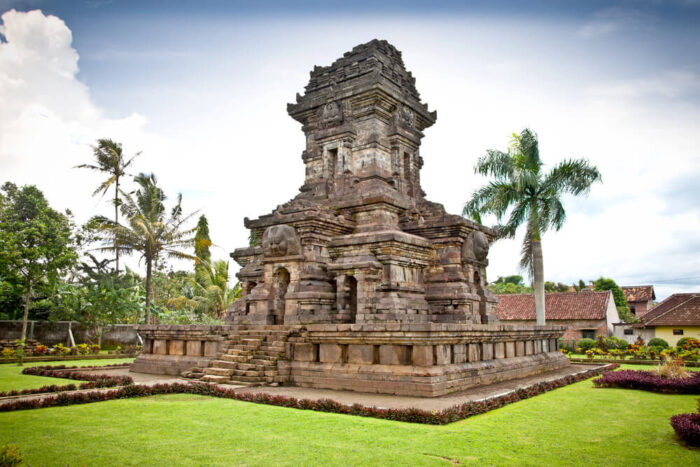
Closer to the plantation, you’ll also find Candi Sumberawan, a small temple complex surrounded by trees and known for its natural spring.
If you want something more active, Bukit Budug Asu has trekking routes through the tea plantation and a camping area near the top. For a lighter stop, you can check Taman Arjuno, known for orchids and gardens.
Is Wonosari Tea Plantation Worth Visiting?
Wonosari Tea Plantation is worth visiting if you have more time in Malang and want an easy nature trip outside the city. It works especially well as a relaxed half-day stop, or as part of a slower route around Singosari and the lower slopes of Mount Arjuno.
The main reason to come here is the combination of green tea fields, cooler mountain air and the chance to learn a bit more about tea production. If you include Bukit Kuneer and arrange a tea factory tour, the visit feels more complete than just stopping for a few photos.
Continue reading: