
Malang is best known as a base for Bromo, Tumpak Sewu and the colorful villages, but the area also has several ancient temples connected with East Java’s Hindu-Buddhist past.
Centuries before the Dutch colonial period, the Malang area was linked to the Singhasari Kingdom, founded in the 13th century. Singhasari later became part of the wider historical path that led to Majapahit, one of the most powerful kingdoms in Indonesian history.
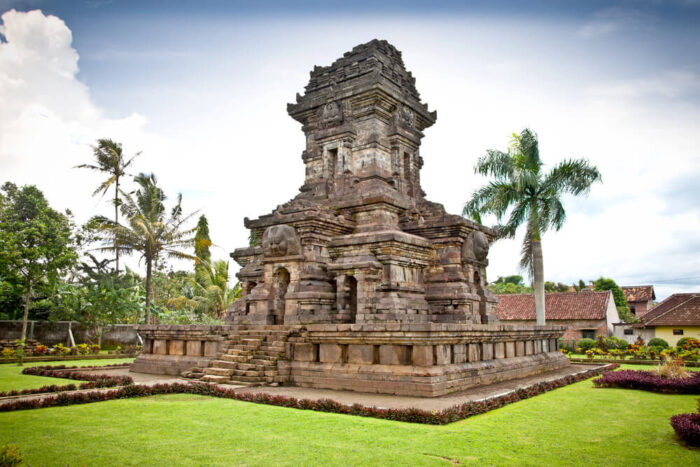
The temples around Malang are not as large or famous as Borobudur or Prambanan, and most visits are quite short. Still, they are worth adding if you enjoy history, architecture or quieter cultural stops beyond the usual Malang highlights.
Best Temples in Malang
Ancient temples are scattered across the wider Malang area, from the lower slopes of Mount Arjuno to villages closer to Mount Bromo. Some are easy to reach from the city, while others make more sense as stops on the way to another destination.
In this guide, we’ll focus on the temples that are most useful for travelers to visit because of their history, condition, location or how easily they can be combined into one route: Candi Singosari, Candi Jago, Candi Kidal, Candi Badut and Candi Sumberawan.
Singosari Temple
Singosari Temple is one of the most important temple sites you can visit around Malang. It is connected to the Singhasari Kingdom. The temple is located about 10 km north of Malang city, not far from Singosari train station.
Singosari Temple reflects a Shiva-Buddhist tradition, combining Hindu and Buddhist beliefs associated with King Kertanegara.
The building has the tall vertical shape typical of Hindu temples, with a large buto statue above the entrance. Some statues are kept at the Singhasari Museum, located about 3 km from the temple toward the lower slopes of Mount Arjuno.
The temple is still used as an active place of worship by Hindus who come here for rituals and prayers. And unfortunately, information in English is still quite limited on site.
To get there by public transport, you can take an angkot from Arjosari Terminal toward Singosari. Tell the driver you want to get off at Singosari Temple, and they will usually drop you near the junction close to the site. From there, it’s only about a 300-meter walk to the temple.
Sumberawan Temple
About 6 km from Singosari Temple, you’ll find Sumberawan Temple, a smaller and quieter site on the lower slopes of Mount Arjuno. This temple is often considered one of the oldest Buddhist temple sites in East Java, and its forested setting makes the atmosphere feel much cooler and more peaceful than many sites closer to the city.
At first glance, the structure may remind you of the upper part of Borobudur. Near the temple, there is also a spring that never runs dry. The site is sometimes connected with Gama Tirta, a ritual that involves collecting water from seven sacred springs.
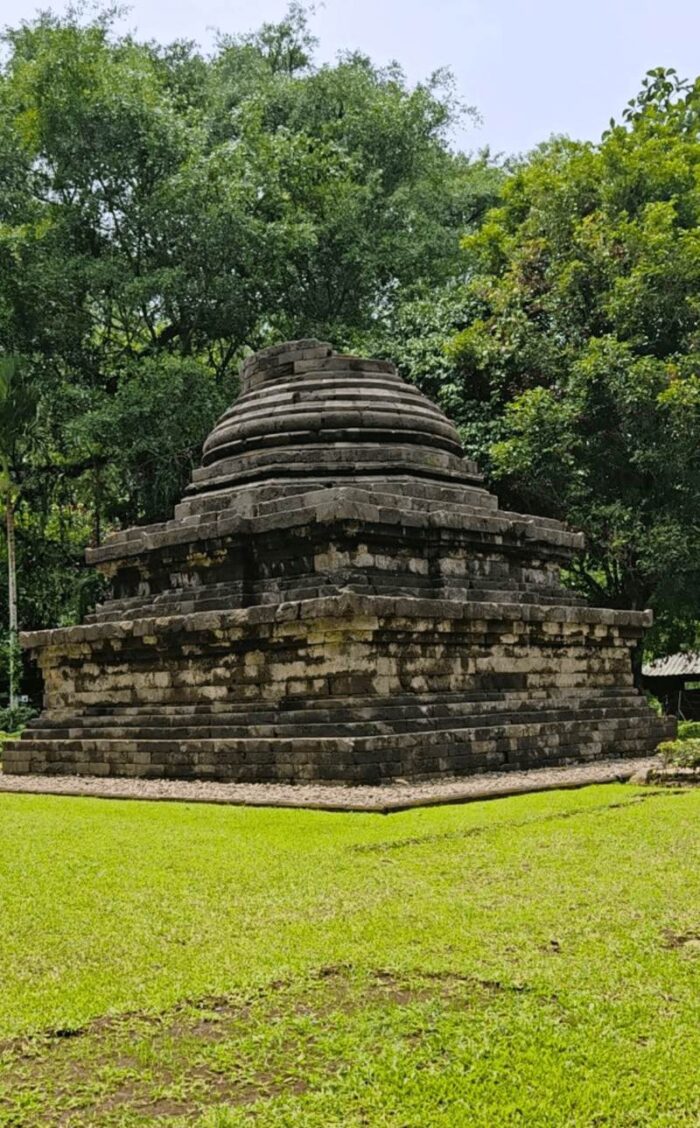
The entrance fee is usually around IDR 10,000 per person, and the visit itself does not take long. It’s a good place to walk around slowly, enjoy the cooler mountain air, and add a quieter historical stop to your Malang itinerary.
Sumberawan Temple is located in Toyomarto tourism village, not too far from Wonosari Tea Plantation. If you have more time, you can combine both places in one trip — first visiting the temple, then continuing to the tea plantation to enjoy the views and learn a little more about the area’s colonial-era tea history.
Thinking about combining tea plantations with nearby temples? Read Wonosari Tea Plantation, Malang: Complete Travel Guide.
Jago Temple
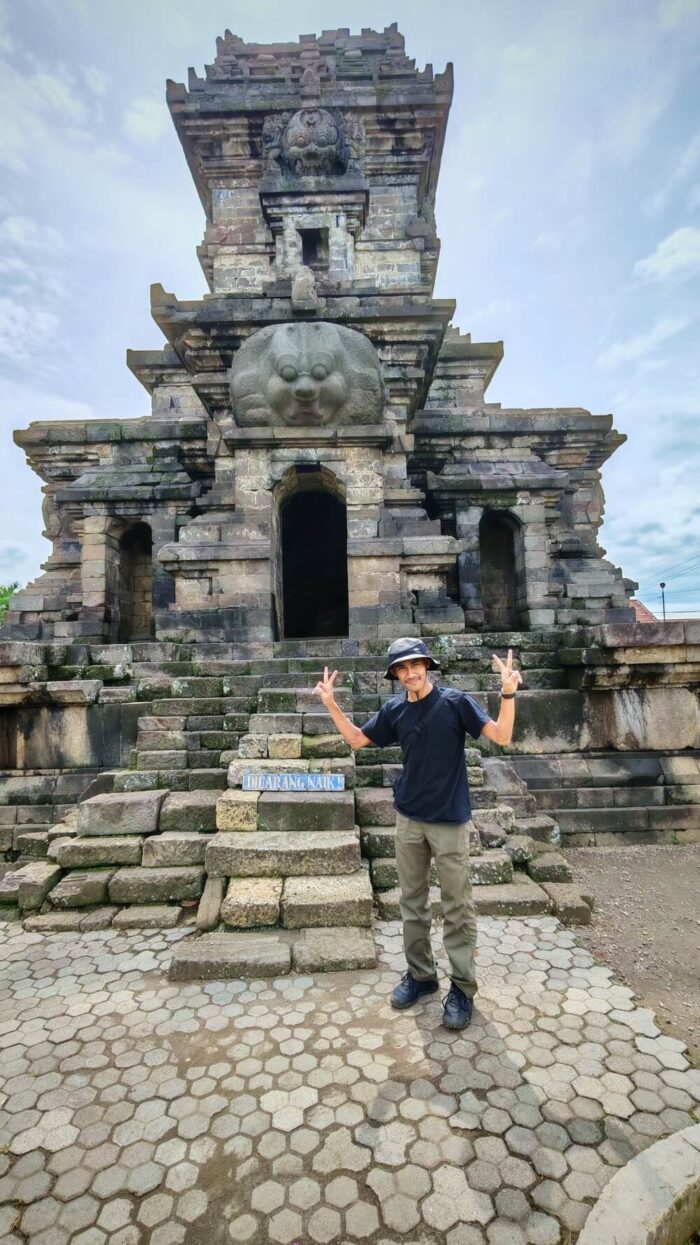
Jago Temple is one of the most interesting temples near Malang if you want to see detailed reliefs and historical architecture. The carvings here are fine and detailed, showing religious life during the time of King Wisnuwardhana of the Tumapel Kingdom, who ruled from 1248 to 1268.
Compared to some other temples around Malang, Jago Temple is larger. The base of the temple shows strong Buddhist influence, especially through the reliefs of Tantri Kamandaka and Kunjarakarna, both connected to Buddhist stories and teachings.
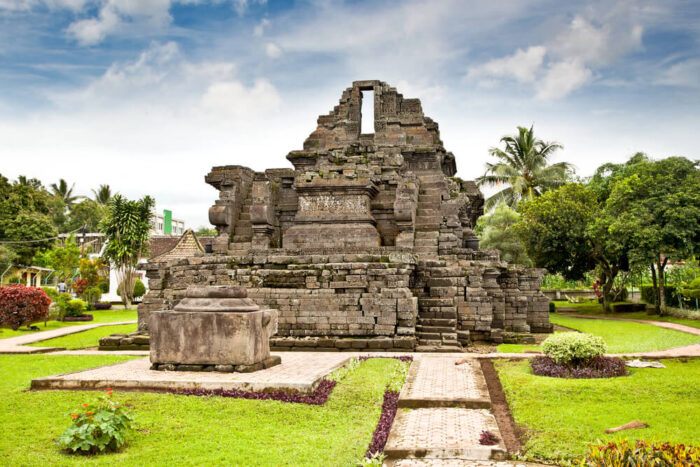
Unfortunately, the upper part of the temple is no longer complete. Around the temple, you’ll also find several statues and carved elements, including the Amoghapasa statue and Kala figures. Kala is a mythological figure often seen in East Javanese temple architecture, usually shown with sharp fangs and large, staring eyes.
Jago Temple is located around Tumpang, not far from Kidal Temple. This area is also one of the main routes toward Mount Bromo from Malang. If you’re planning to visit Jago Temple, it can make sense to combine it with Kidal Temple, or add it as a cultural stop on the way from Malang to Bromo — or on your return from Bromo back to Malang.
Planning a trip to Mount Bromo? Read our guide to the different routes and ways to get there. Mount Bromo Without a Tour: Guide for Independent Travelers.
Kidal Temple
Kidal Temple is connected with King Anusapati and is one of the important Singhasari-era temples near Malang. It is located close to Jago Temple, still in the Tumpang area near the lower slopes leading toward Mount Bromo.
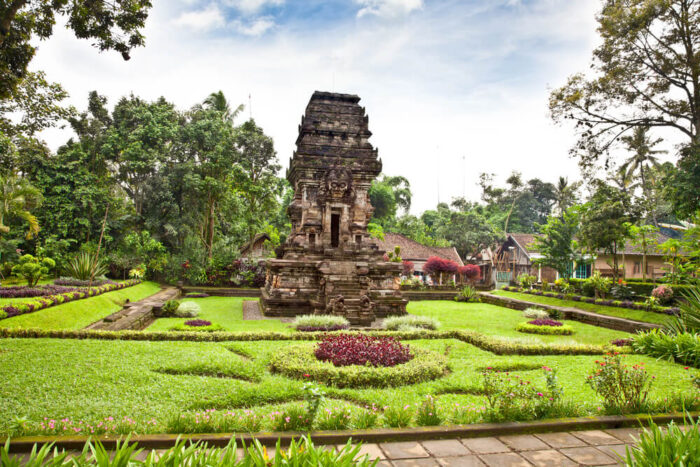
The temple is smaller than Jago Temple and consists of one tall main structure, with the vertical shape typical of Hindu-style temples. In the past, Kidal Temple served as a place to honor King Anusapati, and it is still used as a place of worship today.
The reliefs are carved in fine detail and are often connected with stories about moral values, local beliefs and the image of the king as a wise ruler. Even though the site is small, the carvings make it worth a short visit if you’re interested in East Javanese temple architecture.
Backindo Tip: Candi Jago and Candi Kidal are only around 8 km apart, and Museum Panji is located between them. The museum focuses on Panji stories, traditional masks, wayang and local culture, but there is also a swimming pool and outdoor area. It can be a nice extra stop, especially if you are traveling with children or want a longer break between the temples.
Badut Temple
Badut Temple is the easiest ancient temple to visit while staying in Malang city. It is still within the urban area and usually takes only around 15 minutes by car from the city center, so you can add it without planning a separate day trip.
Historically, it is also different from many other temples around Malang. Badut Temple is usually connected with the Kanjuruhan Kingdom, which existed before the Singhasari Kingdom. It is believed to have been built around the 8th century, during the time of King Gajayana, who ruled from around 760 to 789.
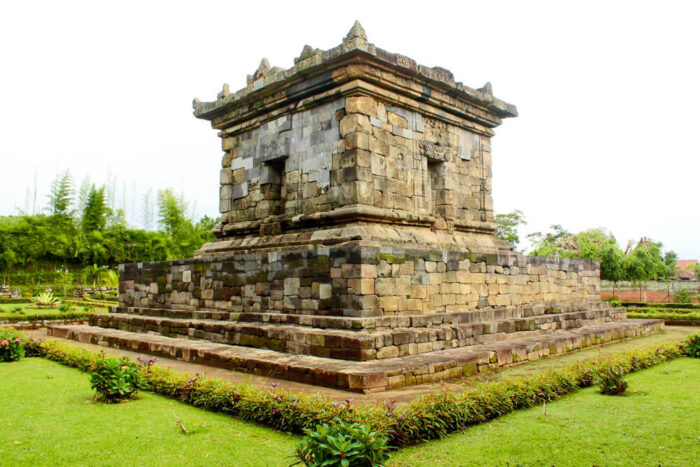
The name is another interesting detail. In Indonesian, badut means “clown,” and some local explanations connect the name with the king’s humorous or playful character.
The temple is not very large, but its architecture looks a little different from many typical East Javanese temples. At first glance, it feels closer to some older Central Javanese temple styles, which makes it an interesting stop if you enjoy comparing temple architecture.
Other Temples Around Malang
There are also a few other temple sites around Malang. Songgoriti Temple is in Batu, while Besuki Temple and Ketawa Gede Temple can also be found in the wider Malang area. Some of these sites are no longer fully intact, and in a few cases only archaeological remains are left. Jawar Temple and Samudro Temple are much farther away, closer to the lower slopes of Mount Semeru.
Backindo Tip: Many temples around Malang have little or no information on site, and English explanations are often missing completely. If you want to understand the history, symbolism and connection between the temples, visiting with a local guide can make the whole route much more interesting.
How to Get to the Temples from Malang City
The temples around Malang are not difficult to reach, but they are spread across different parts of the area and public transport is not always practical.
The easiest option is to hire a private driver, especially if you want to visit several temples in one day or combine them with other places around Malang. This saves time and makes it much easier to plan a route between temples such as Candi Singosari, Candi Jago, Candi Kidal and Candi Sumberawan.
Backindo Tip: If you need a reliable driver in Malang or East Java, you can contact us at hello@backindo.com, and we’ll share a contact we personally trust.
You can also rent a motorbike if you only want to visit one or two temples and prefer more flexibility. I would only recommend this if you are already comfortable riding in Indonesia. Make sure you have the correct license and international driving permit, as your travel insurance may not cover you without them.
Planning to riding a motorbike? Read our detailed guide first Riding a Motorbike in Indonesia as a Tourist.
You do not need to book any of the temples around Malang online. Entrance fees are usually very low, often around IDR 10,000, and at some sites you may only need to pay a small parking fee or leave a donation. So bring small cash.
Where to Stay in Malang
If you are planning to visit the temples around Malang, the city itself is the most practical base. You’ll have better access to restaurants, transport, Bromo tours, Tumpak Sewu trips and day trips around the wider Malang area.
Malang has plenty of accommodation options, from hostels near the train station to comfortable hotels in more central parts of the city.

For backpackers, Semeru Hostel and Shelter Hostel Malang are useful options, especially if you want to stay close to the train station. For a budget-friendly hotel, check Kertanegara Premium Guest House or The Alimar Hotel.
If you want a little more comfort, The 101 Malang OJ, Santika Premiere Malang or Shanaya Resort Malang are worth considering. For something more special, Hotel Tugu Malang is one of the most distinctive hotels in the city.
Backindo Tip: Some temples around Malang are still used for worship or rituals, so wear respectful clothing that covers your shoulders and knees.
Are the Temples Around Malang Worth Visiting?
The temples around Malang are worth visiting if you enjoy history, architecture or quieter cultural stops and already have some time in the area. They are small, so you will not need long at each site, but they can add a completely different layer to your trip and take you to places that many travelers miss.
Another big advantage is that the temples can be easily combined with other places. Candi Singosari and Candi Sumberawan can be paired with a visit to Wonosari Tea Plantation, while Candi Jago, Candi Kidal and Museum Panji can be visited on the route to or from Bromo and Tumpak Sewu.
But don’t forget. Many sites have little or no information available at the temple, especially in English, so if you visit without a guide, it is worth reading about them beforehand.
Continue reading: