
Tumpak Sewu Waterfall (or Coban Sewu) is one of the most popular places to visit in Java, often ranked alongside Kawah Ijen and Mount Bromo as part of East Java’s “big three”.
Known as the “Little Niagara of Indonesia,” this 120-meter-high waterfall forms a wide, curtain-like cascade that looks incredibly dramatic—especially after rain.
And in this guide, you’ll find everything you need to plan your visit—from how to get there (even as a backpacker), entrance fees to practical tips for making the most of your trip.

Why Visit Tumpak Sewu Waterfall
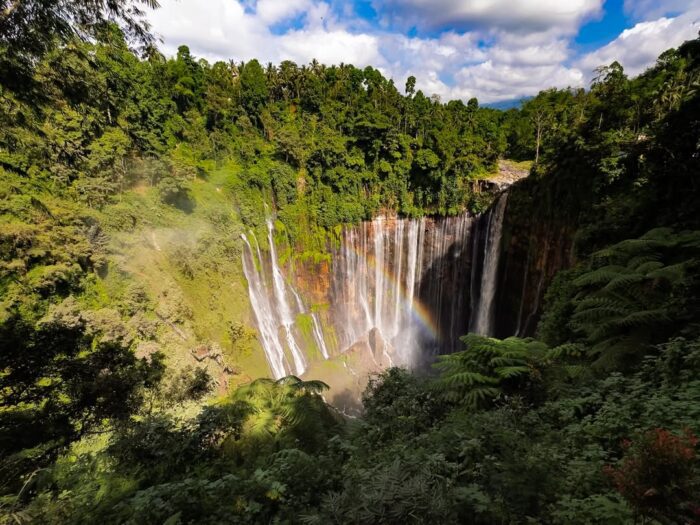
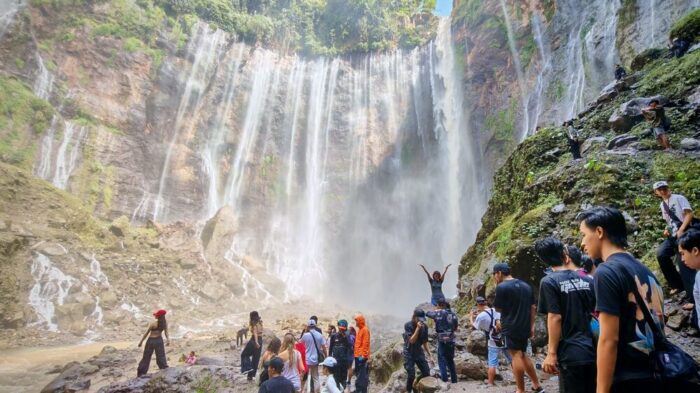
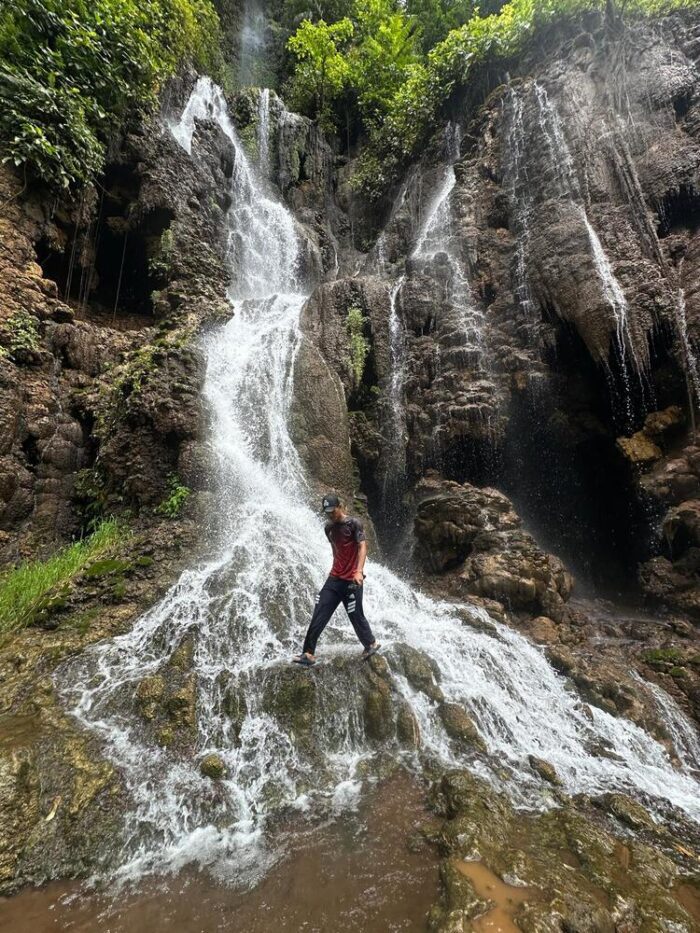
Tumpak Sewu isn’t a typical waterfall. Instead of a single stream, it spreads into dozens of flows, creating a wide, curtain-like shape across the entire valley. The name Tumpak Sewu comes from the Javanese language and roughly translates to “a thousand waterfalls,” which perfectly describes the countless streams fed by the Gidih River.
From the main viewpoint, you get the full panorama—this is the iconic view you’ve probably seen online. But what really makes it special is that you can also hike all the way down to the base. The experience from below feels completely different, with waterfalls surrounding you from all sides and mist constantly in the air.
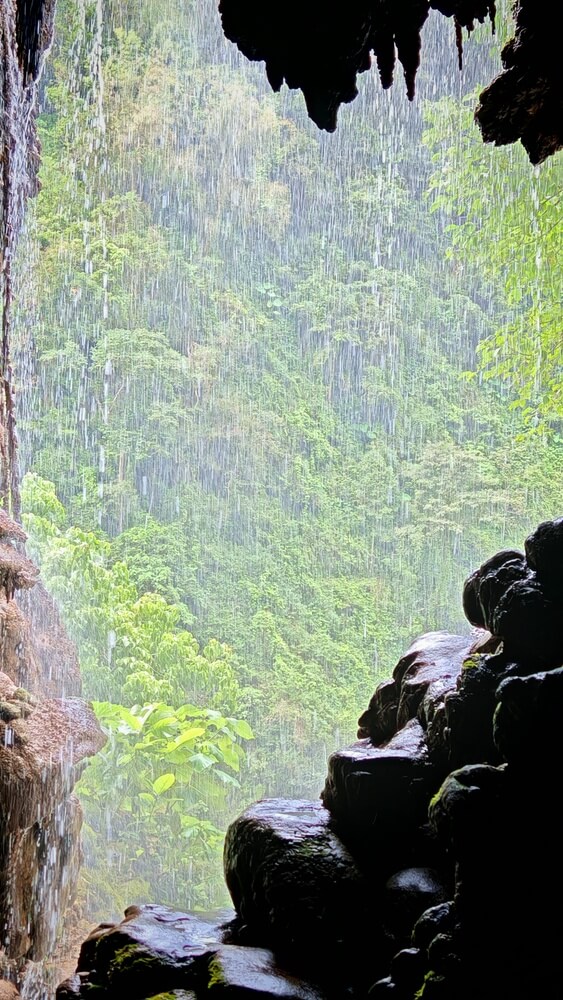
Because of the surrounding cliffs, the waterfall often creates its own microclimate—expect mist, changing light, and sometimes even rainbows when the sun hits the spray just right.
Did you know the highest waterfall in Java is located not far from Tumpak Sewu? Learnmore in Madakaripura Waterfall: Guide to Java’s Highest Waterfall.
What to Do and See in Tumpak Sewu
Enjoy the View from the Panorama Viewpoint
The panorama viewpoint is the easiest way to experience Tumpak Sewu and for many people, it’s already worth the visit on its own. From here, you get the full semicircle view of the waterfall—the iconic perspective.
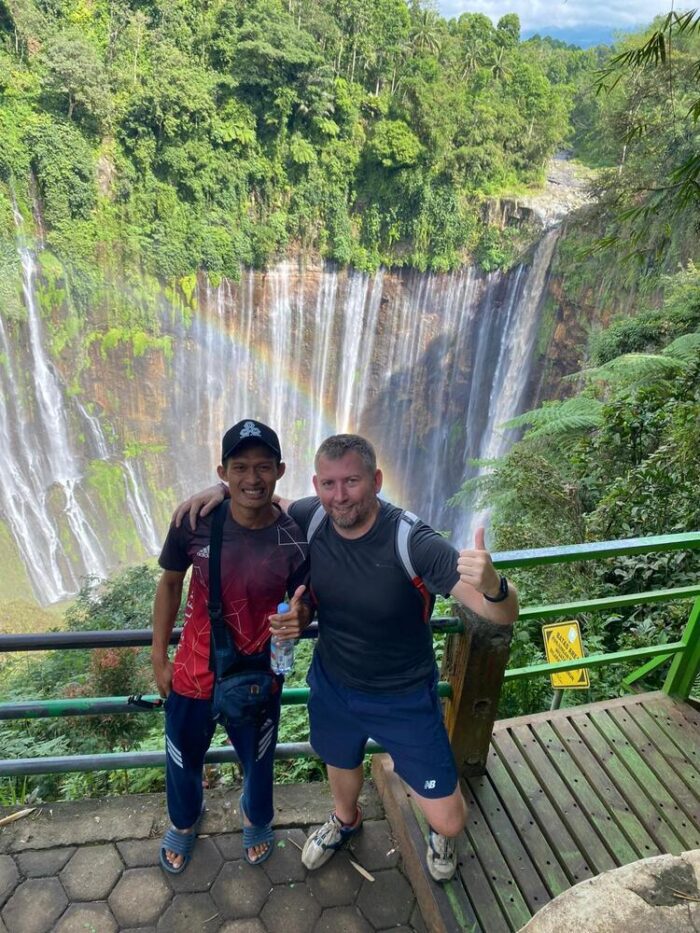
It’s just a 10 minute walk from the Tumpak Sewu (Lumajang) entrance along a short path with a few stairs. The best time to visit is early in the morning, ideally between 7–9 AM, when the chances of clear views are highest and the light is better for photos. Later in the day, fog often rolls into the valley and can completely hide the waterfall, especially in the rainy season.
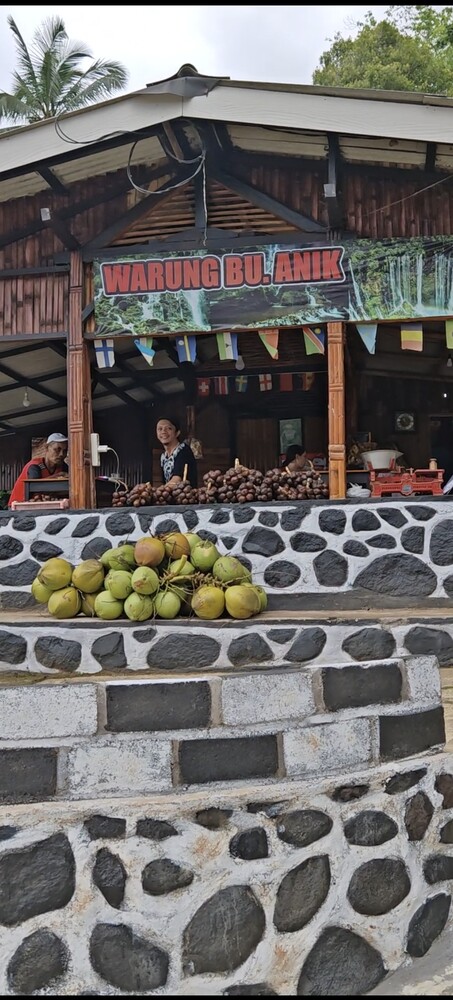
Before heading down the stairs, you will find many vendors selling food and drinks. They also sell various fruits, such as Durian and Mangosteen. If you feel tired after the steep climb, you can stop by a warung (small shop) and enjoy refreshing young coconut water.
Hike Down to the Base
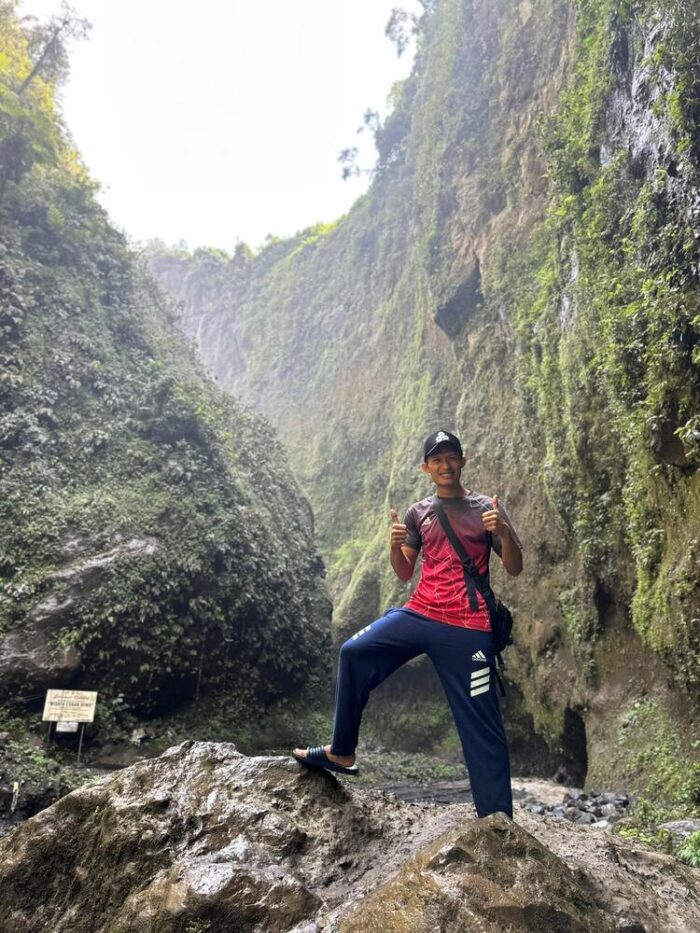
If you have the time and energy, this is the part you shouldn’t skip. The hike down to the base takes around 30–45 minutes one way, but it’s not a simple walk—it’s quite steep and slippery. You’ll follow a narrow trail down the valley, using bamboo ladders, ropes, and improvised steps, and at the bottom you’ll need to cross shallow sections of the river.
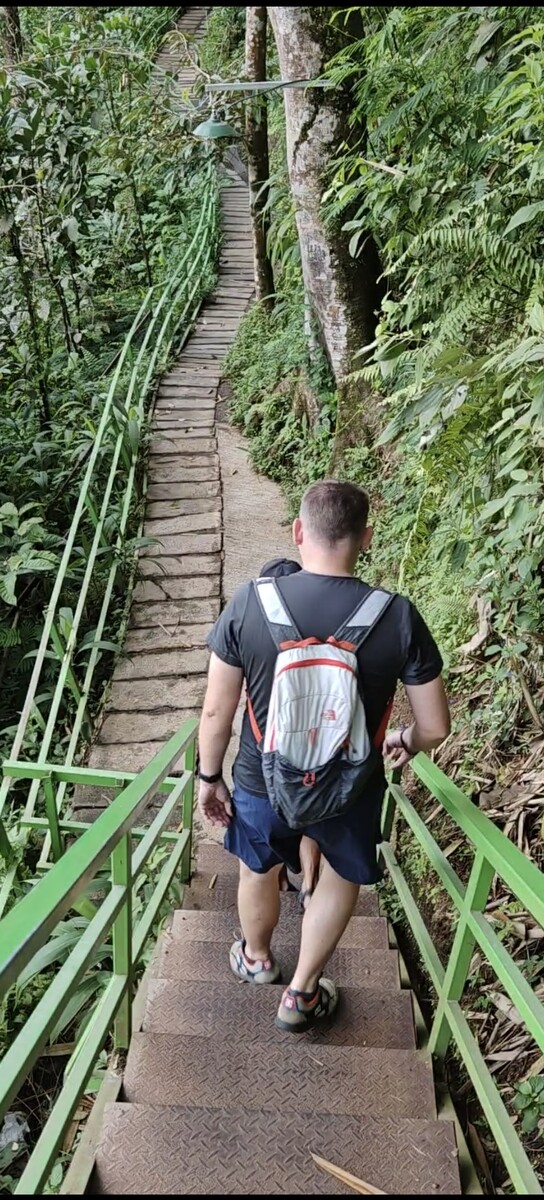
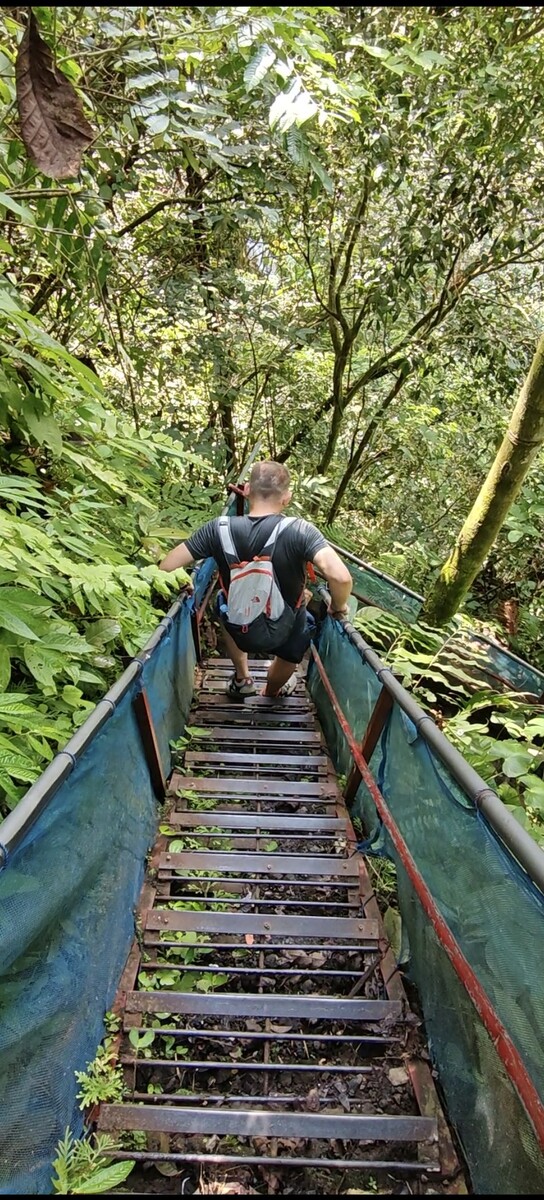
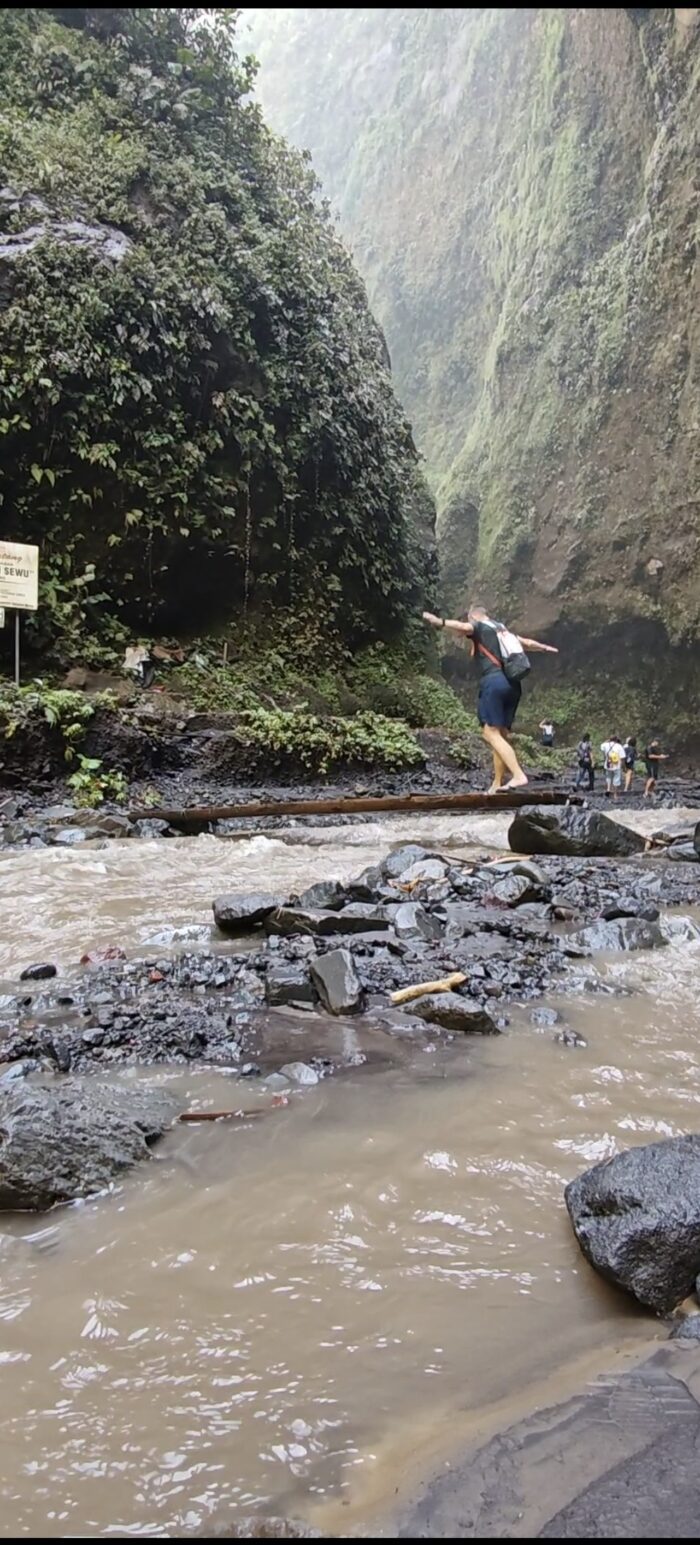
It’s manageable for most people with decent fitness, but you’ll need to take it slow and be careful. Proper shoes with good grip are a must—flip-flops won’t cut it here. You’ll also get wet, either from the river crossings or from the constant mist at the base.
Once you’re down, it’s absolutely worth it. You’re standing right in the middle of the valley, with waterfalls pouring down from all sides—it feels completely different from the viewpoint above.
Backindo Tip: The hike down is not suitable for children or anyone with mobility issues. During rain, the trail is also closed due to safety risks, so the viewpoint is the only option.
Goa Tetes & Telaga Biru
While most people hike down to the base of Tumpak Sewu and then head straight back up, we decided to continue further—and that’s where the experience got even better.
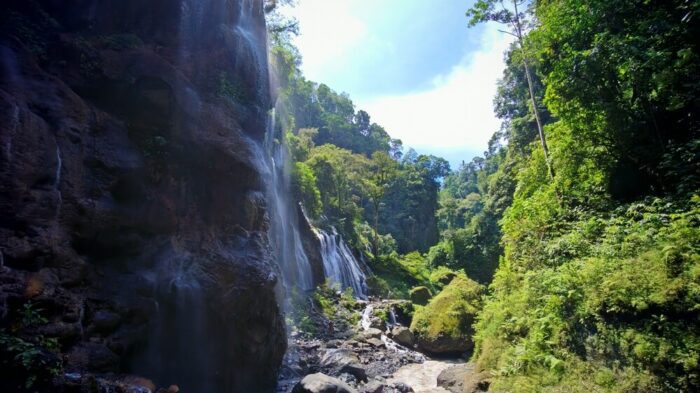
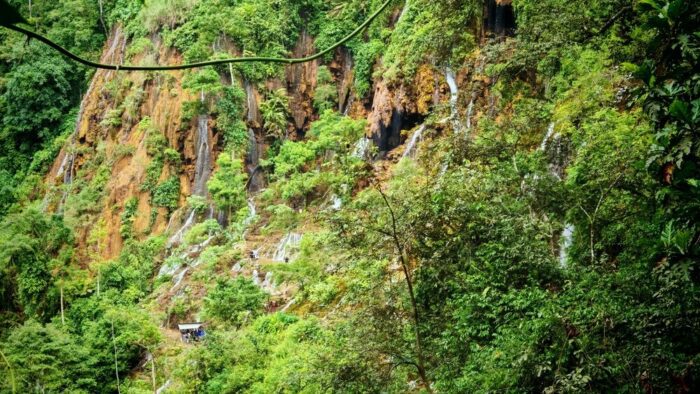
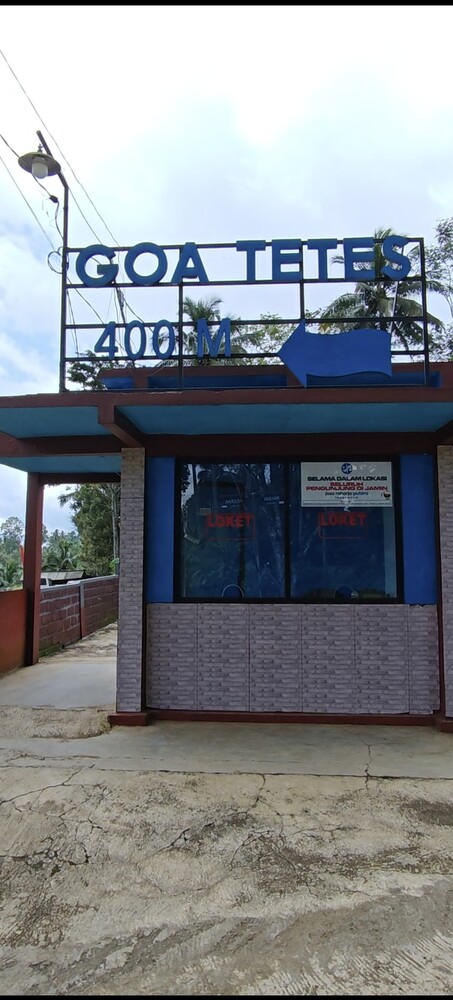
From the bottom of the waterfall, you can follow the river for about 20–30 minutes to reach Goa Tetes, a hidden area with water flowing down moss-covered cliffs, small cave formations, and streams everywhere. The name literally means “dripping cave,” which fits perfectly—water is constantly falling from the rocks around you.
Just nearby, you’ll also find Telaga Biru (Blue Lake), a small natural pool tucked between the rocks.
Getting there requires a bit more effort. You’ll need to walk through shallow water, climb over rocks, and use ropes in a few sections, so expect to get fully wet. The path can be slippery, but it’s manageable if you take your time.
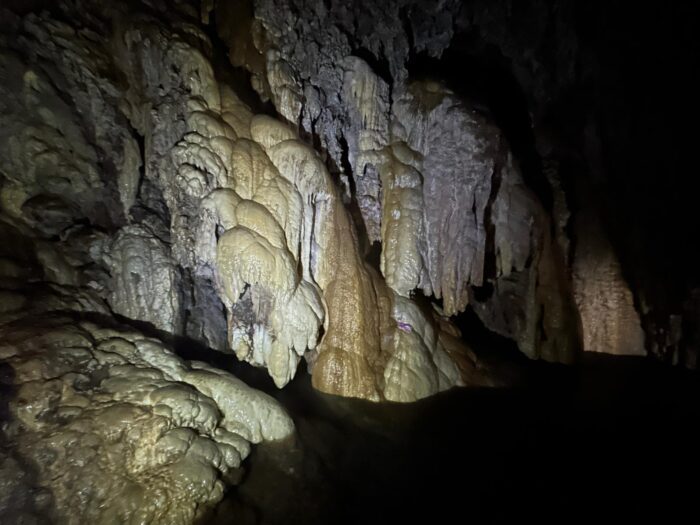
Backindo Tip: We hired a local guide and highly recommend it, especially if you want to explore hidden spots like Goa Tetes or Telaga Biru. They’ll show you the safest route and help you through the more challenging sections.
Once you reach Goa Tetes, you don’t have to go back the same way. There’s an alternative trail that leads up to the parking area, so you can turn it into a loop instead of retracing your steps.
Also keep in mind that Tumpak Sewu and Goa Tetes are managed separately, so you’ll need to pay an additional entrance fee for the Goa Tetes area. The price is around IDR 25,000 (USD ~1.50) if you arrive from the Tumpak Sewu side, or about IDR 50,000 (USD ~3) if you enter from the top near the parking area.
What Else to Do and See Nearby
If you have more time, there are a couple of other waterfalls in the area worth considering. They’re not as famous as Tumpak Sewu, but can be a great addition to your trip.
Kapas Biru Waterfall
Kapas Biru is a smaller, more relaxed alternative to Tumpak Sewu. It’s located nearby and can be reached via a short hike through the jungle, including a few river crossings. The waterfall itself is less dramatic, but the setting feels quieter and less crowded.
Kabut Pelangi Waterfall
Kabut Pelangi, meaning “Rainbow Mist,” is known for the rainbows that often appear in the waterfall spray—especially in the morning light. It’s located a bit further away and usually visited as a separate stop.
Backindo Tip: Our guide at Tumpak Sewu offered to take us there, but we were short on time and didn’t visit.
Where is Tumpak Sewu?
Tumpak Sewu Waterfall (or Coban Sewu) is located on the border between Lumajang and Malang Regencies in East Java. The location is still within the area of Bromo Tengger Semeru National Park, right at the foot of Mount Semeru, so it makes sense to combine it with the trip to Bromo.
There are two entrances to Tumpak Sewu: the Coban Sewu Gate (Malang side) and the Tumpak Sewu Entrance (Lumajang side), located about 1 km apart.
We recommend using the Tumpak Sewu Entrance (Lumajang side). It’s the main access point and gives you the full experience—including the iconic viewpoint and the trail down to the base.
The Coban Sewu Gate (Malang side) is more limited. You’ll get a partial view from above, but won’t have access to the main descent or the full panorama.
How To Get There
The easiest starting point is Malang. From here, Tumpak Sewu is about 70 km away and takes 2–3 hours to reach, depending on traffic and road conditions. So the key is to start early in the morning or stay overnight around the waterfall.
What to do and see in Malang? Learn more in our Malang Travel Guide: The Paradise of Tourism in East Java.
With a Private Driver
The easiest and most flexible way to get to Tumpak Sewu is by hiring a private driver from Malang. The drive takes around 2–3 hours one way, passing through smaller villages and local roads. This option gives you full control over your timing and allows you to combine Tumpak Sewu with other stops along the way.
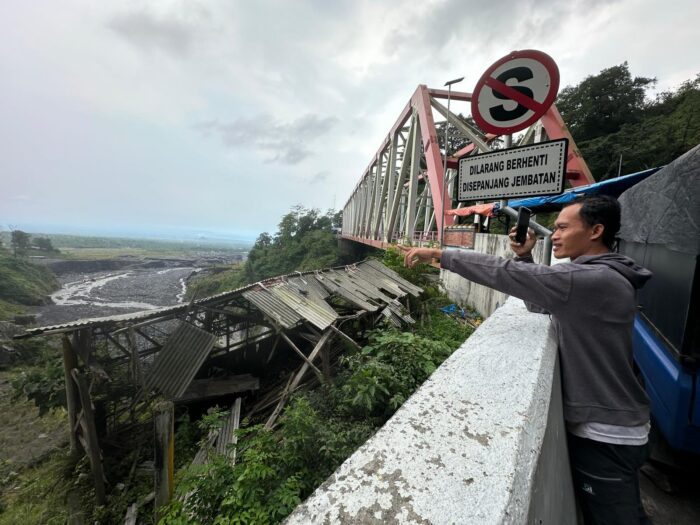
Once you arrive, you’ll park near the entrance and walk about 5–10 minutes to the viewpoint.
This is also what we did, as we wanted to combine the trip with other spots along the way. It gave us the flexibility to move at our own pace without being rushed by a fixed schedule.
Backindo Tip: Need a reliable driver to Tumpak Sewu? Drop us an email at hello@backindo.com and we’ll share contacts of drivers we personally know and recommend.
Tumpak Sewu Day Tours
If you just want to visit Tumpak Sewu without overcomplicating things, there are plenty of day tours from Malang, sometimes also from Surabaya. These usually include transport, entrance fees, and sometimes a local guide, making them a straightforward option—especially if you’re short on time or not comfortable arranging everything yourself.
You can book these tours through your accommodation in Malang (especially if you’re staying at MADOR Malang or Semeru Hostel Malang) or browse platforms like GetYourGuide or Klook to compare reviews and prices.
Multi-Day East Java Tours (Bromo + Ijen)
If you’re planning to explore more of East Java, many tours combine Tumpak Sewu with Mount Bromo (often also Madakaripura Waterfall) and Ijen Crater in a 3D2N or 4D3N itinerary.
These tours usually include transport, accommodation, guide and the entrance fees. Prices typically start from around IDR 2,500,000 (USD 160) depending on the route and level of comfort.
You can arrange them through your hotel, but again, platforms like GetYourGuide or Klook make it easier to compare options—especially for longer trips.
Backindo Tip: We’ve seen some of the best reviews for these two tours. One starting in Surabaya or Malang, the second starting in Yogyakarta or Bali.
The downside is a fixed schedule and less flexibility, but if you want to cover the main highlights without planning everything yourself, it works really well.
Public Transportation
If you’re using public transport, you’ll usually start in Malang. First, head to Gadang Terminal, and from there continue by bus heading towards Pronojiwo/Lumajang (Tumpak Sewu area).
The journey takes around 4–5 hours, depending on connections and waiting times. Pronojiwo is the closest base to the waterfall, with a few simple homestays and guesthouses if you decide to stay overnight.
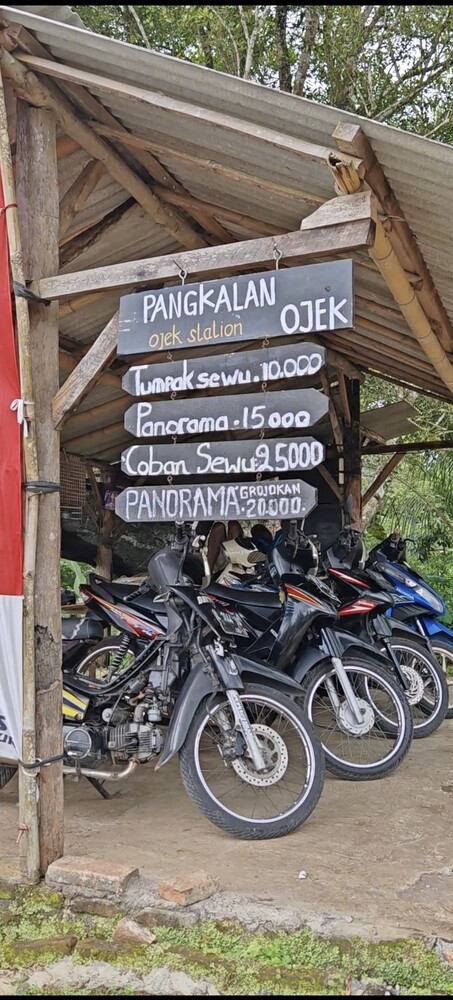
From Pronojiwo, you’ll need to take an ojek (motorbike taxi) or arrange a local ride for the final 30–45 minutes to the entrance.
Backindo Tip: If you leave early in the morning, it’s possible to visit Tumpak Sewu and return to Malang the same day using the same bus route. However, the timing is tight—the last bus back usually leaves in the early afternoon.
In fact, staying overnight in Pronojiwo is the safer and more relaxed option, especially if you want to visit the waterfall early or plan to explore other nearby waterfalls as well.
By Motorbike
If you’re comfortable riding, getting to Tumpak Sewu by motorbike is definitely possible—and quite popular among independent travelers. You can easily rent a scooter in Malang for around IDR 100,000–120,000 (USD 6–8) per day.
The ride takes about 2–3 hours one way and goes through villages, rice fields, and mountain roads. It’s a scenic drive, but don’t underestimate it—the roads are winding, hilly, and can be in poor condition in some sections, especially after heavy rain or volcanic activity.

There’s a small parking fee at the entrance: about IDR 5,000 (USD 0.30) for motorbikes and IDR 10,000 (USD 0.60) for cars.
Backindo Tip: Only do this if you’re confident riding in Southeast Asia—and ideally choose a manual bike over a scooter for better control on steep sections. Also, make sure you have a valid motorbike license as well as an international driving permit—without it, your insurance may not cover you if something happens.
Where to Stay for Tumpak Sewu
When planning your visit, you’ll usually choose between staying in Malang or staying closer to the waterfall (Pronojiwo area).
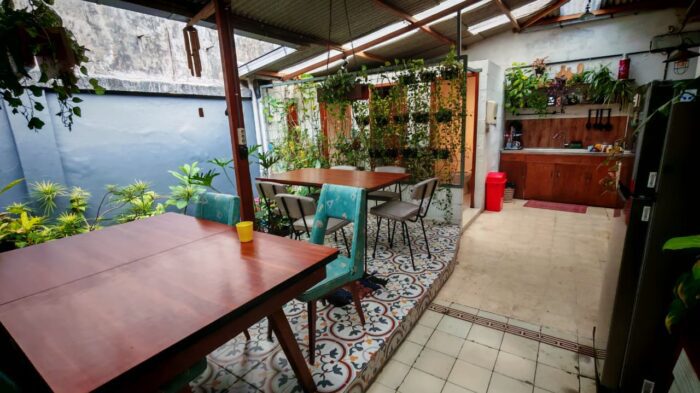
If you’re coming by private driver or doing Tumpak Sewu as part of a bigger East Java trip, staying in Malang is the most common and comfortable option. It has a wide range of accommodation, restaurants, and good transport connections.
In Malang, you’ll find:
- Budget: MADOR Malang Dorm Hostel, Semeru Hostel Malang or De’Corner Guest House
- Mid-range: Kertanegara Premium Guest House, Ijen Suites Resort, HARRIS Hotel & Conventions Malang
- Luxury: The Shalimar Boutique Hotel or Grand Mercure Malang Mirama
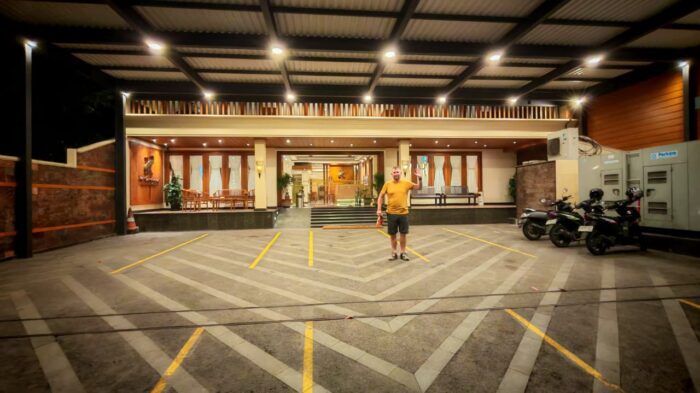
If you’re traveling by public transport or want to visit early without rushing, it makes more sense to stay closer to the waterfall, in the Pronojiwo (Lumajang) area. Accommodation here is much more basic, but it puts you right next to Tumpak Sewu.
Near the waterfall, you can consider:
- Kaliningrat Cottage
- Harmoni Guest House
- Arnez Tropical Cottage
- Dear Traveller Glamping (a more unique option)
Practical Information
Before you go, here are a few things you should know to keep your trip safe and comfortable:
Entrance Fee (Foreign Visitors)
Entrance fees at Tumpak Sewu are a bit confusing at first, because you don’t pay just once—there are separate tickets for different parts of the area. This is because the area is managed by different local communities, and each section has its own ticket.
For foreign visitors, expect the following:
- Tumpak Sewu (panorama viewpoint): around IDR 20,000–30,000 (USD ~1.5–2)
- Hike down to the base: additional IDR 50,000 (USD ~3)
- Goa Tetes area: usually around IDR 20,000–50,000 (USD ~1.5–3) depending on the path you take
In total, if you do everything (viewpoint + hike + Goa Tetes), expect to pay roughly IDR 70,000–130,000 (USD ~5–8) for the entrances.
Backindo Tip: Bring cash, as all the payments are cashless.
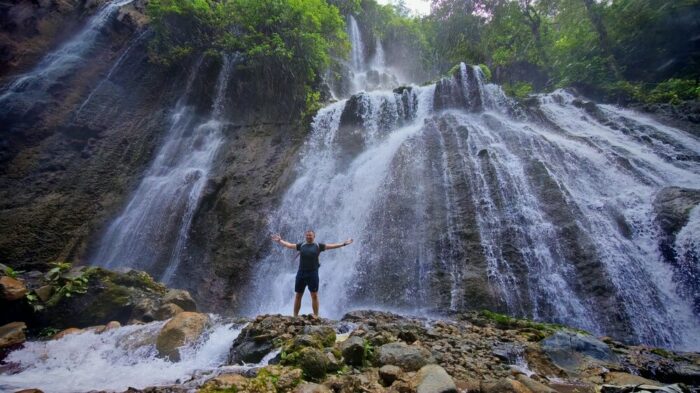
Other Fees
If you’re traveling with your own vehicle, expect small additional costs for parking: around IDR 5,000 (USD ~0.30) for a motorbike and IDR 20,000 (USD ~1.20) for a car.
If you’d like to hire a local guide, prices usually range from IDR 100,000–200,000 (USD ~6–13) per group, depending on size and route.
Backindo Tip: If you’re joining an organized tour, these fees are usually included. If you’re arranging a private driver, it’s worth confirming in advance what’s covered so you don’t run into surprises on the spot.
Tumpak Sewu Opening Hours
Tumpak Sewu Waterfall is open from 07:00 AM to 03:00 PM every day. If you’re planning to trek down to the base of the waterfall, it’s best to start early so you have enough time to explore and make your way back up safely before closing time.
Best Time To Visit Tumpak Sewu Waterfall
The best time to visit Tumpak Sewu Waterfall (Coban Sewu) is during the dry season, from around April to September. Rainfall is less frequent, making the journey to the location safer. While Tumpak Sewu appears more stunning during the rainy season due to a heavier water flow, the paths become much slipperier and less safe. You might choose to visit during the rainy season when rain is less frequent, around October or March.
For a complete overview of Indonesia’s weather, check out Best Time To Visit Indonesia: Month and Weather Insights.
Avoid visiting when it is raining, as the waterfall and Goa Tretes will be closed, and access will only be available to the Panorama Tumpak Sewu (viewing platform).
How Long Is the Trek at Tumpak Sewu?
The trek itself isn’t very long, but don’t underestimate it—the terrain can be quite challenging. The descent to the base usually takes around 30–45 minutes, with steep, often slippery paths and a few sections where you’ll need to use ropes. The way back up is more demanding and typically takes 45–60 minutes.
In total, the hike (down, exploring, and back up) takes around 1.5 to 2.5 hours, depending on your pace.
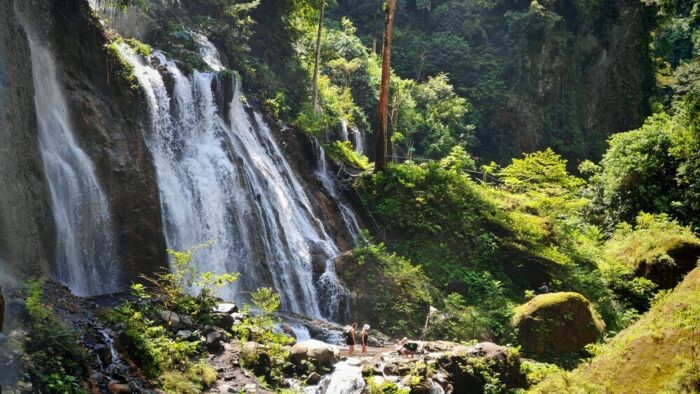
That said, you should plan more time overall. We recommend setting aside at least 3–4 hours for the full visit, including time at the viewpoint, the hike, and exploring places like Goa Tetes.
For reference, we left Malang at 6 AM, arrived around 9 AM, and stayed until about 1 PM. It was early November (start of the rainy season), and as soon as we got back to the car, the rain started—so timing can really work in your favor.
What to Wear at Tumpak Sewu
If you’re planning to hike down to the base, dress for wet and slippery conditions. The trail can be steep, muddy, and uneven, so proper footwear is key—ideally trekking shoes or sandals with good grip.
Wear light, quick-drying clothes and something you can move in easily. You’ll likely be climbing, stepping over rocks, and walking through water in some sections. And most importantly: bring a spare set of clothes. There’s a very high chance you’ll get completely soaked—either from river crossings or the constant mist at the bottom of the waterfall.
A light rain jacket can also be useful, as the weather changes quickly and sudden rain is common.
Backindo Tip: If you don’t have proper shoes, you can rent sandals or basic footwear on-site, but don’t expect anything high quality.
Final Tips for Visiting Tumpak Sewu Waterfall
Before you go, here are a few things that will make your visit much smoother:
- Pack light, but smart. Bring a small backpack with essentials like water, snacks, a light rain jacket, a waterproof phone case (or GoPro), mosquito repellent, and a spare set of clothes—there’s a high chance you’ll get soaked.
- Don’t overpack. You’ll be hiking on steep, slippery terrain, so carrying heavy bags will only make it harder. If you get hungry, there are warungs (local stalls) near the entrance selling instant noodles, coffee, and simple meals.
- Wear proper footwear. Trails can be muddy and slippery, especially on the way down. Go for shoes or sandals with good grip. If needed, you can rent basic footwear at the entrance for around IDR 20,000 (USD ~1.30).
- Bring cash. You’ll need it for entrance fees, guides, ojeks, and food—cards are not accepted.
- Check conditions before hiking down. After rain, the trail can be closed for safety reasons. Always follow local advice.
- Choose your accommodation wisely. If you’re staying nearby, look around the Sidomukti / Pronojiwo area—some places are quite spread out, so location matters more than it might seem.
East Java offers more hidden gems in the Banyuwangi region. Curious about what these hidden gems are? Find out more in our Banyuwangi Travel Guide: Uncover the Hidden Magic of East Java.
Is Tumpak Sewu Worth a Visit?
Short answer: yes—100%.
Tumpak Sewu is easily one of the most impressive waterfalls in Indonesia, and honestly, one of the most unique landscapes we’ve seen in Java. It’s not just about the view from above—the real magic happens when you take the time to explore the valley, hike down to the base, and continue all the way to places like Goa Tetes.
That said, it’s not the easiest destination. Getting there takes some planning, and the hike itself can be physically demanding. But if you come prepared and give yourself enough time, it’s absolutely worth the effort.
At the same time, it’s definitely not the only waterfall worth visiting in Java. The island is full of them. Areas like Baturraden are known for multiple waterfalls with far fewer tourists, and places like Madakaripura Waterfall offer a completely different kind of experience.
If you’re traveling through East Java, Tumpak Sewu is one place you shouldn’t skip—but it’s just one of many incredible waterfalls the island has to offer.
Frequently Asked Questions
Can you swim at Tumpak Sewu?
You can’t swim at the main Tumpak Sewu waterfall, but you can take a dip at Telaga Biru near Goa Tetes, where the water is calmer.
Is Tumpak Sewu open all year round?
Yes, Tumpak Sewu is open year-round, but during heavy rain, the lower area (the hike down) is usually closed for safety reasons.
Can you fly a drone at Tumpak Sewu ?
Yes, you can fly a drone, especially from the upper viewpoint. Just make sure to fly responsibly and respect other visitors.
Is Tumpak Sewu crowded?
Tumpak Sewu can get crowded, especially on weekends and holidays. The main viewpoint is usually the busiest spot.
Do you need a guide?
No, you don’t need a guide—you can explore on your own. However, hiring one can make the hike easier and safer, especially if you plan to visit Goa Tetes.
Can you combine Tumpak Sewu and Bromo?
Yes, combining Tumpak Sewu with Mount Bromo is very common and a popular itinerary in East Java. From Malang, head to Tumpak Sewu first and then to Bromo.
Can you see Mount Semeru from Tumpak Sewu?
Sometimes, but not always. Mount Semeru is often covered by mist or hidden behind cliffs. On clear days, you might spot it from viewpoints above—usually later in the morning. That said, the main highlight here is still the waterfall itself.
Where to head next?