
Enjoying tea in Indonesia isn’t just about sitting in a café or a small local stall. Beyond that, you can experience vast tea plantations spread across the country—especially in Java.
These plantations are usually beautifully maintained and set against mountainous landscapes. Since tea grows best in highland areas, the weather is naturally cool and refreshing. Many of these plantations date back to the colonial era, when the Dutch East India Company introduced tea cultivation to Indonesia in the 18th century. Today, they don’t just offer scenic views, but also carry historical value that has stood the test of time.
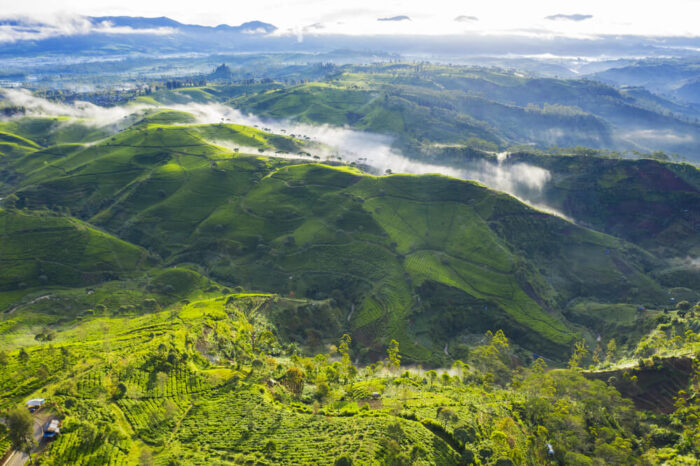
Tea plantations in Indonesia can be visited year-round. You can watch tea pickers at work, visit processing factories, and in some places, enjoy additional attractions and activities.
In this guide, I’ll show you 9 of the best tea plantations you can visit in Java.
Rancabali Tea Plantation (West Java)
Located about 50 km south of Bandung, in the Ciwidey area, Rancabali is one of the most famous and largest tea plantations in the region. It’s also close to other popular attractions like Kawah Putih and Situ Patenggang.
The atmosphere here is cool and surrounded by the mountains of southern Bandung. If you arrive early in the morning, the plantation is often covered in a thin layer of mist, creating a calm and almost magical experience.
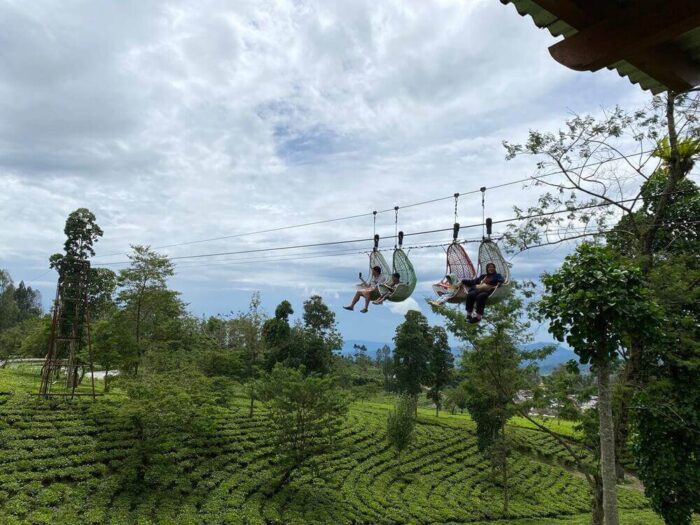
Rancabali also offers several activities, including a flying fox and camping areas. If you’re curious about how tea is made—from picking the leaves to the final product—you can visit the nearby tea factory for a closer look.
Looking for more tips on what to see and do in Bandung? Read Bandung Guide: Best Things to Do, See, and Experience.
Pangalengan Tea Plantation (West Java)
Pangalengan is one of the largest tea plantation areas in southern Bandung, stretching across approximately 2,000 hectares of rolling hills. It’s located about 45–55 km from the city center, with a travel time of around 1.5–2 hours by car.
The journey itself is part of the experience—you’ll pass through scenic landscapes that make it perfect for a full-day trip.
Nearby, you’ll find Situ Cileunca, a peaceful spot to relax, as well as several hidden waterfalls scattered across the hills. There are also other attractions worth visiting, such as Nimo Highland and the filming location of the famous Indonesian horror movie Pengabdi Setan.
Backindo Tip: If you’re planning to stay overnight, there are glamping sites and camping grounds around the plantation, offering a comfortable stay with cool mountain air.
Also, don’t forget to try local drinks like bandrek and bajigur—traditional herbal beverages that are perfect for warming up in the cold weather.
Malabar Tea Plantation (West Java)
Malabar Tea Plantation is part of the Pangalengan area and is not only known for its tea fields but also its historical significance. During the colonial era, the plantation was managed by Albert Rudolf Bosscha, who also established the Bosscha Observatory in Lembang.
His former house and tomb are still located within the plantation and have become points of interest for visitors.
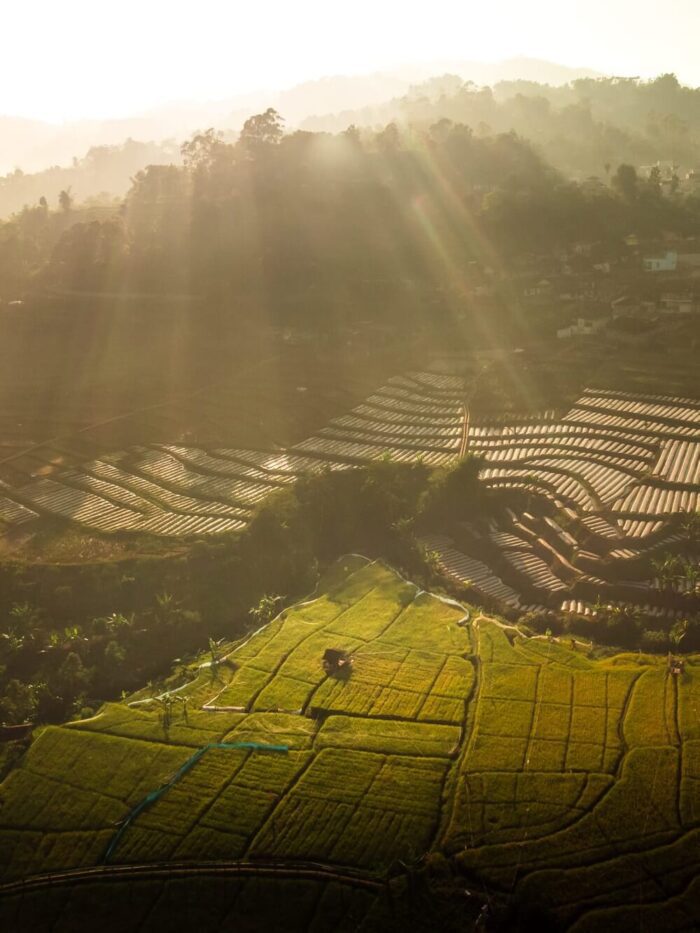

Situated at an altitude of around 1,550 meters above sea level, Malabar offers cool and refreshing air, often accompanied by morning mist.
Backindo Tip: Looking for a truly relaxing place to stay during your trip in Java? Check out Taman Wisata Bougenville by Kozystay in Malabar.
The plantation is also known for producing Walini tea, one of Indonesia’s high-quality tea brands, available in various flavors such as jasmine, white tea, and lychee tea. You can sample these teas at local cafés and small shops around the area.
Besides tea, the Malabar highlands are also known for coffee production, with beans that have gained international recognition. You can enjoy freshly brewed coffee at local cafés or join a jeep tour to explore nearby coffee plantations.
Gunung Mas Tea Plantation (West Java)
Located in the Puncak area of Cisarua, about 1.5 hours from Bogor, Gunung Mas is one of the most well-known tea plantations in West Java. This plantation has a long history dating back to the Dutch and British colonial periods.
Along the road toward Puncak, you’ll be greeted by endless views of tea plantations stretching across both sides of the road. The area is often covered in mist during the day, adding to its cool and refreshing atmosphere.
Some parts of the plantation are freely accessible, allowing you to walk around and take photos. If you’re looking for something more adventurous, you can try paragliding from the hill near Masjid Atta’awun, a well-known rest stop for travelers in the area.

For those interested in history, you can visit the Walini Tea Factory Museum, which is still actively producing tea. Here, you can see the entire process—from picking the leaves to processing them. Visitors are even provided with factory uniforms and hats during the tour. Afterward, you can enjoy a cup of tea at the café nearby.
The entrance fee is around IDR 15,500, and horse riding is also available for about IDR 120,000 per 30 minutes. The area is easy to access, with plenty of parking space, but it’s best to visit on weekdays to avoid heavy traffic, especially on weekends.
If you’re traveling with family, you’ll also pass several attractions along the way, such as Taman Safari Indonesia and other tourist spots in Cisarua.
Kemuning Tea Plantation (Central Java)
I’ve visited Kemuning Tea Plantation several times, located on the slopes of Mount Lawu, about 1.5 hours from Surakarta (Solo).
The plantation is wide and surrounded by cool mountain air. It also serves as a gateway to nearby attractions like Jumog Waterfall and Cetho Temple, a Hindu temple located at around 1,400 meters above sea level.
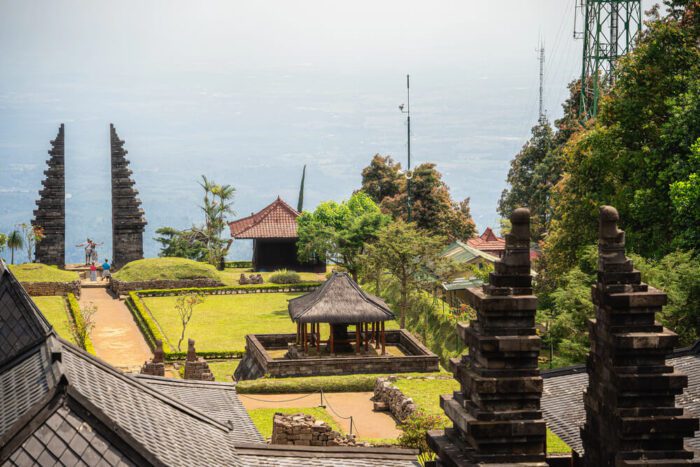
In the past, the area was quiet with very few attractions. But now, it has developed significantly, offering various activities such as a mini train that runs above the tea fields, a sky bridge, and several other attractions.
Personally, I enjoy visiting Kemuning to relax at Ndoro Donker Café, located right in the middle of the plantation. They offer a variety of teas and herbal drinks. One of my favorites is their “forest tea,” a blend of cloves, sappan wood, bay leaves, and a hint of ginger—perfect for the cool mountain weather.
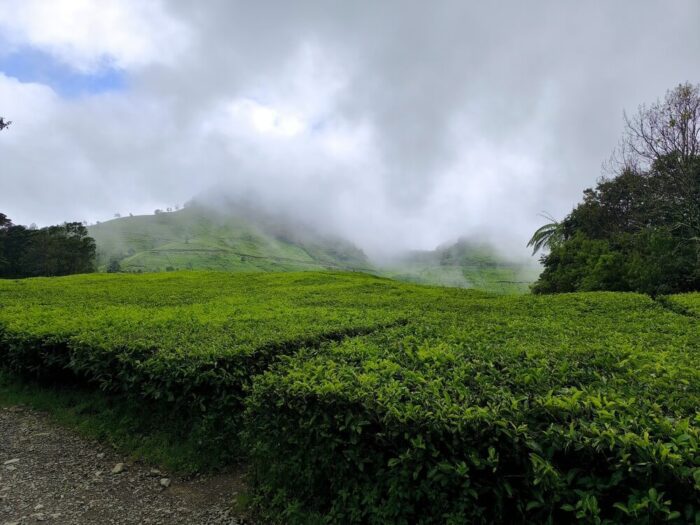
Getting there is best done by renting a car with a driver or as a part of an organized trip. Although the road is paved, it’s quite narrow and steep in some sections. Public transportation is limited and only reaches the main road toward Tawangmangu.
Looking for a tip for reliable drivers around Java? Send us a message at hello@backindo.com and we’ll happily share our tips.
Tambi Tea Plantation (Central Java)
Tambi Tea Plantation is one of the largest and most popular tea plantations in Wonosobo, Central Java. It’s located about 15 km from the city center, along the route to Dieng Plateau.
The area is relatively easy to access, with wide paved roads, although public transportation is limited.
Tambi is known as a producer of high-quality black tea in Java. Like most tea plantations, it offers beautiful mountain views and a cool atmosphere.
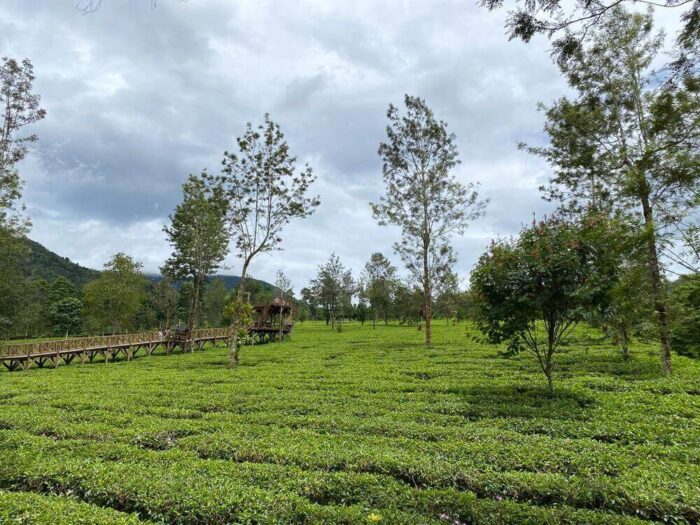
You can explore the plantation by walking among the tea fields or try activities such as crossing wooden bridges and riding a cable car.
Before leaving, don’t forget to buy some tea as a souvenir and enjoy the distinctive taste of Tambi tea.
We’ve put together a full guide in Discover Tambi Tea Plantation in Central Java.
Sikatok Tea Plantation (Central Java)
Sikatok Tea Plantation is probably one of the most family-friendly tea destinations in Wonosobo. You could even think of it as a theme park set within a tea plantation landscape.
It’s located not far from Tambi Tea Plantation—about 3.4 km via an alternative route toward Temanggung.
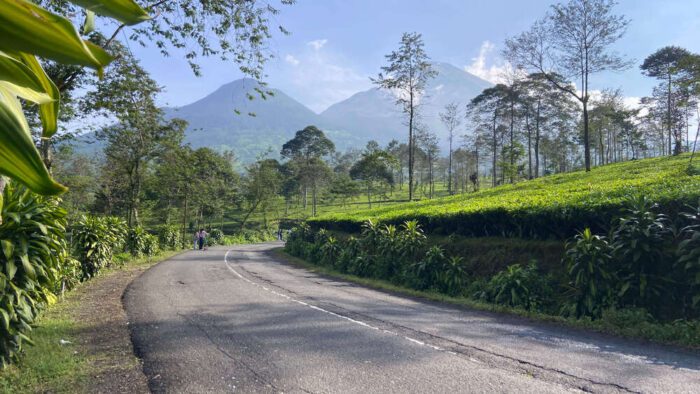
The plantation is divided into two distinct areas. The western side is filled with attractions and entertainment, sometimes with loud music, which can feel a bit overwhelming.
However, the eastern side offers a completely different experience. With Mount Sumbing as a backdrop, the atmosphere is much quieter and more peaceful. Here, you can walk along aesthetic wooden pathways or simply run through the tea fields—it’s surprisingly fun and relaxing.
Panama Tea Plantation (Central Java)
If you’re traveling with family, Panama Tea Plantation offers a variety of attractions suitable for all ages.
There are several activities available, including a cable car, a mini train that runs above the tea fields, long wooden bridges, and jeep tours around the plantation.
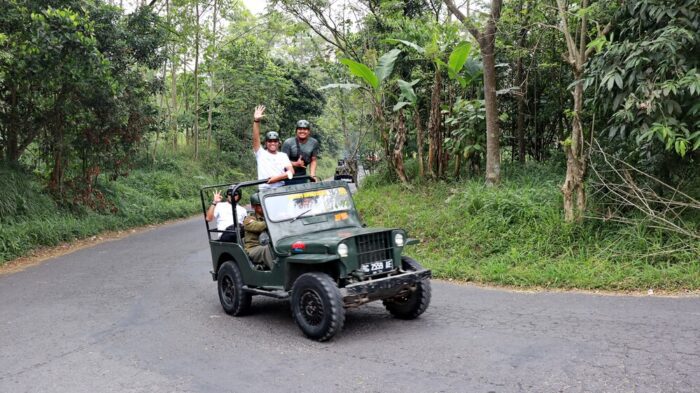
The entrance fee is around IDR 10,000 (USD 0.60), while rides and attractions range from IDR 20,000 to 300,000 (USD 1.20–18).
The location is not far from Tambi Tea Plantation and lies along the same route as Telaga Menjer, another popular stop when visiting the Dieng area.
Wonosari Tea Plantation (East Java)
Wonosari Tea Plantation in Malang offers a different kind of experience compared to other destinations in East Java, such as Bromo or Tumpak Sewu.
Located in a quiet village on the slopes of Mount Arjuno, this plantation has a calm and peaceful atmosphere.
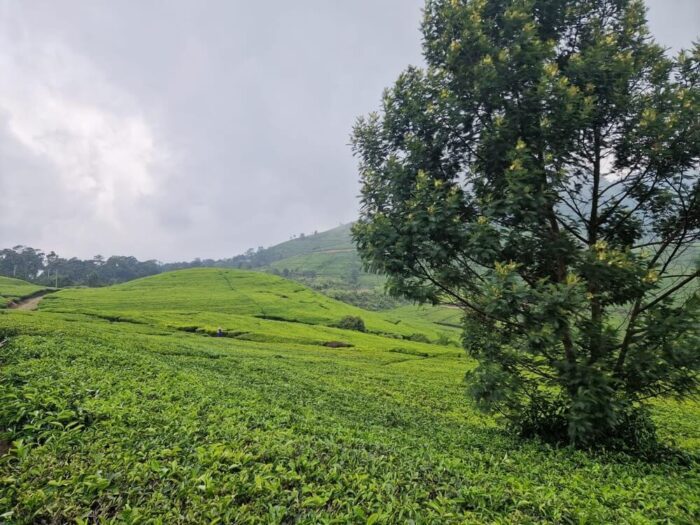
Here, you can see tea workers picking leaves and transporting them to the factory. You can also try various types of tea sold around the area, and enjoy a warm cup while taking in the mountain views.
Wonosari Tea Plantation was established during the Dutch colonial era. To dive deeper into this heritage, explore Malang Dutch History: A Guide to Colonial Heritage and Landmarks.
Are Tea Plantations in Java Worth a Visit?
Those are some of the best tea plantations you can visit in Java. With its mountainous landscape, Java provides ideal conditions for growing tea, making Indonesia one of the notable tea producers in the world.

So if you’re traveling around Java and looking for a refreshing escape, don’t miss the chance to visit these tea plantations and experience the cool mountain air for yourself.
What Next?