
Mount Bromo is one of the active volcanoes in the Bromo Tengger Semeru National Park. Located in East Java, Mount Bromo has a unique charm that draws visitors from around the world. You can witness the Bromo crater up close, wander through the vast savanna, or capture romantic moments with your partner against the backdrop of the stunning volcano.
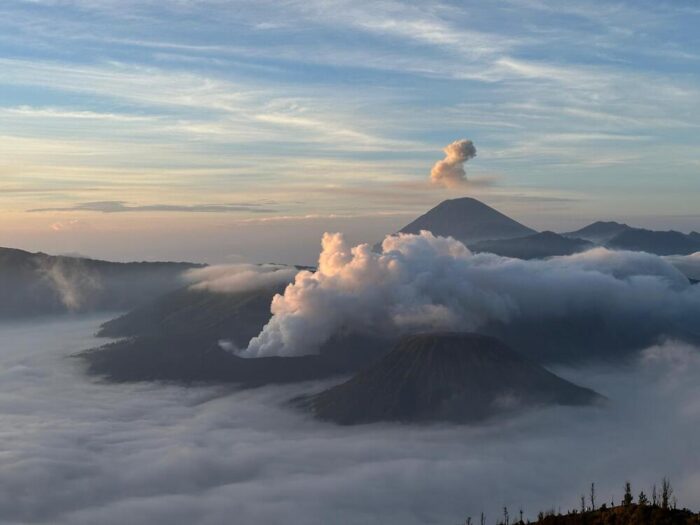
Mount Bromo is, without a doubt, one of the most popular destinations in East Java (together with Kawah Ijen and Tumpak Sewu). There are hundreds of organized tours you can join to get there—but it’s just as possible (and often more rewarding) to visit independently. In this guide, we’ll show you exactly how to do it as an independent traveler or backpacker.
We’ll cover everything you need to know: the best entrance gates, how to reach the crater, transportation tips from local bemos to private drivers, entrance fees, must-see spots, the best time to visit, and where to stay around Bromo.
We’ve visited Bromo three times— in 2016, 2018, and most recently in late 2025—so this guide combines our personal experience with the latest updates from official sources.
Why Visit Mount Bromo?
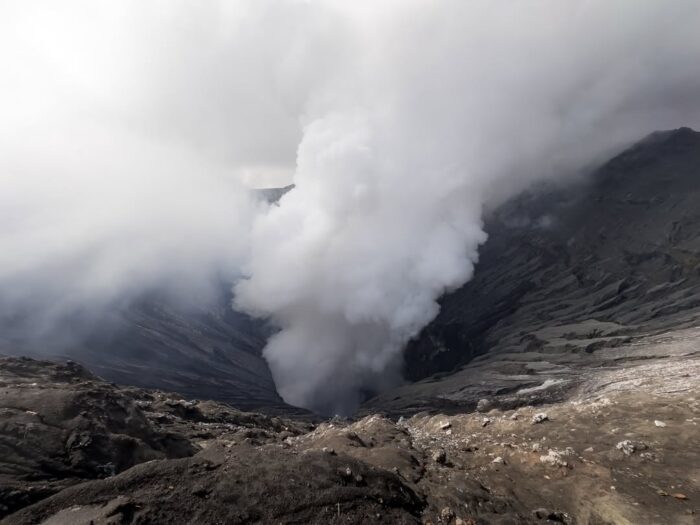
What makes Bromo stand out is how easy it is to experience an active volcano up close. Unlike many other volcanoes in Indonesia, there’s no long or demanding hike involved. You’ll usually cross the sea of sand by jeep or on foot, then climb a short staircase that leads straight to the crater rim. From there, you can look directly into the smoking crater and watch the sulfur clouds rising.
Sunrise is another big reason to visit. The viewpoints around Bromo offer one of the most iconic sunrise scenes in Southeast Asia, with layers of volcanoes, low-hanging mist, and soft golden light. It’s absolutely worth the early wake-up.
At the same time, Bromo is not just about the views. It’s a sacred place for the Tenggerese people, who have lived here for generations. At the base of the volcano, you’ll find Pura Luhur Poten, where important rituals take place throughout the year.
The most famous is the Yadnya Kasada festival, when locals throw offerings into the crater as part of a centuries-old tradition. Even though this festival isn’t open for public, you’ll notice small daily offerings around the area anytime you visit.
What to See & Do in Bromo
Watching Sunrise at Mount Bromo (From the Best Viewpoints)
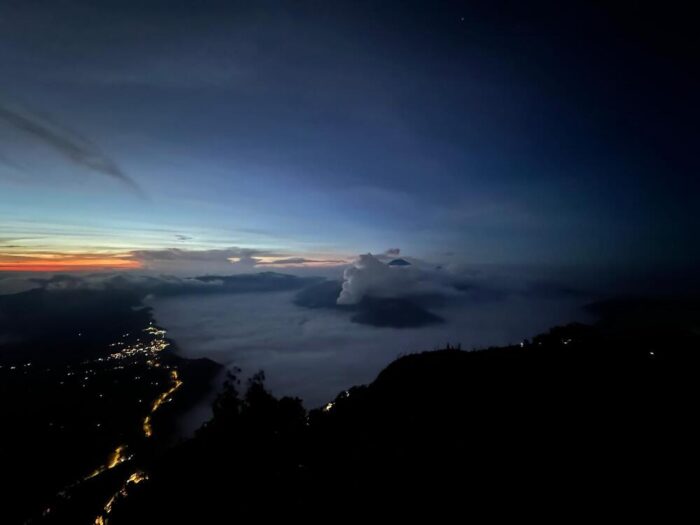
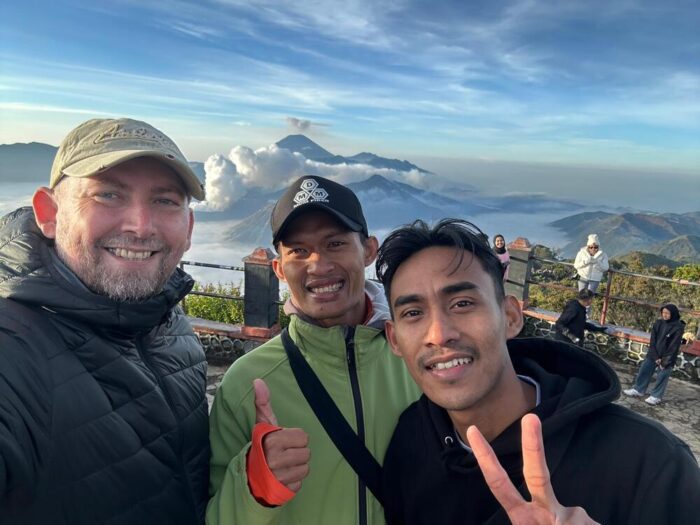
These are the viewpoints you’ve probably seen all over Instagram—the classic panorama of Mount Bromo rising above a sea of clouds. Most of these iconic photos are taken from Bukit Cinta (Love Hill) or Penanjakan 1, two viewpoints located along the same ridge with slightly different perspectives.
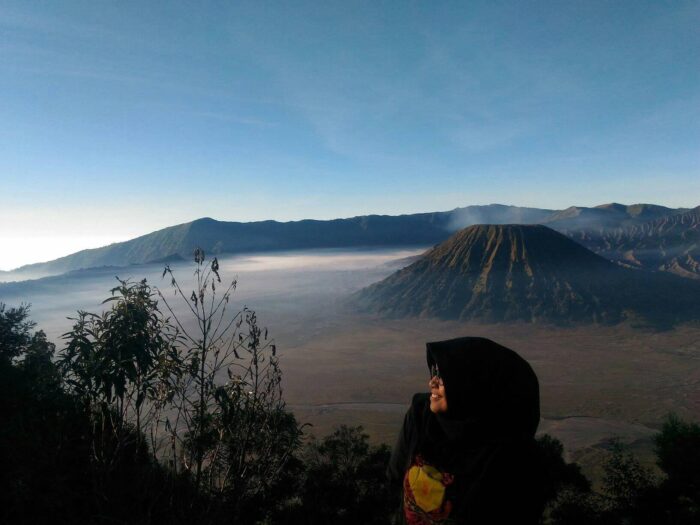
Penanjakan 1 is the highest and most popular viewpoint, offering a wide, unobstructed view over Mount Bromo, Mount Batok, and often even Mount Semeru in the distance. Bukit Cinta sits a bit lower and is usually less crowded, but still delivers a beautiful sunrise experience—especially if you arrive early.
To reach these viewpoints, you’ll typically need to join a jeep tour, as private vehicles aren’t allowed up before sunrise.
If you’re staying in Cemoro Lawang and traveling on a budget, you can skip the jeep and walk—but only to the closer viewpoints. The best option is Seruni Point, which can be reached in about 30–45 minutes uphill and still offers a great sunrise view. Viewpoints like Kingkong Hill, Bukit Cinta, or Penanjakan 1 are much further along the ridge and are usually accessed by jeep.
Backindo Tip: We visited Bromo in November 2025, and to our surprise, most of the accommodations closest to the sunrise viewpoints were already sold out. If you're planning to walk, make sure to book in advance.

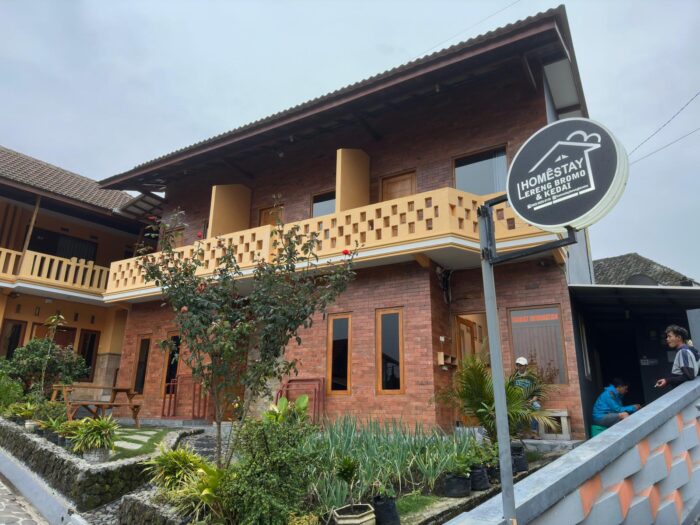
For a budget-friendly option, Cahyo Homestay Bromo offers simple but clean accommodation. If you’re after something a bit different, ARTOTEL Cabin Bromo features a more unique, design-focused concept. In the end, we stayed at Homestay Lereng Bromo arranged a jeep pickup to get to the viewpoints.
Once you’re at the top, expect basic facilities: small food stalls selling instant noodles, snacks, and hot tea or coffee. It gets cold (often close to single digits °C before sunrise), so bring a proper jacket.
Backindo Tip: Arrive early, around 2 or 3 AM, to secure the best spot for sunrise photography, especially on weekends and in the high season.
Lembah Watangan (Teletubbies Hill)
Watangan Valley, also known as Teletubbies Hill, is a wide savanna of rolling hills covered in lush green grass—especially during the rainy season. It’s a popular photography spot, including for pre-wedding shoots, thanks to its soft landscape and peaceful atmosphere, which feels completely different from the volcanic terrain around Bromo.
This stop is usually part of the standard jeep route after sunrise, once you’ve visited the viewpoints and the crater. Expect to spend around 15–30 minutes here, depending on your tour.
The look of the valley changes a lot throughout the year. During the rainy season (roughly November to April), it’s bright green and vibrant. In the dry season, it turns golden-brown, which can be just as photogenic in a more dramatic way.
There are no real facilities here, so it’s more of a quick photo stop than a place to hang out.
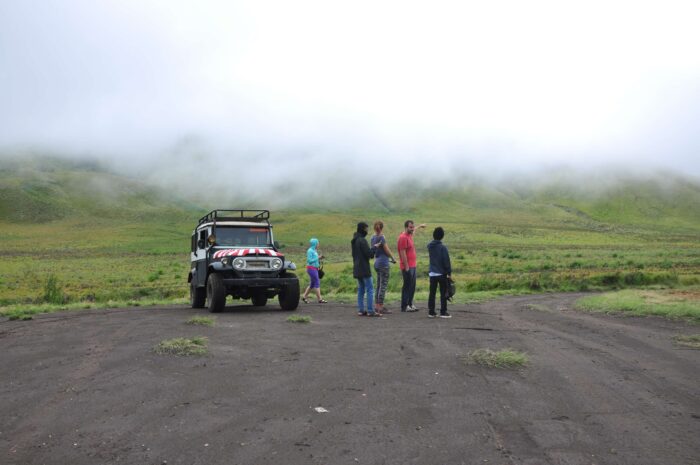
Pasir Berbisik (Whispering Sands)
In contrast to the green hills of Watangan Valley, Pasir Berbisik (Whispering Sands) is a vast stretch of volcanic sand that feels almost like a desert. The name comes from the sound the wind makes as it blows. On windy days, you can actually hear the “whispering.”
This area is part of the famous Sea of Sand, which you’ll cross by jeep on the way to and from the Bromo crater. Some tours also stop here briefly for photos.
Backindo Tip: Be prepared for strong winds and lots of dust, especially in the morning. It’s not unusual for sand to get everywhere—your clothes, your bag, your camera.
Hiking to the Summit of Mount Bromo
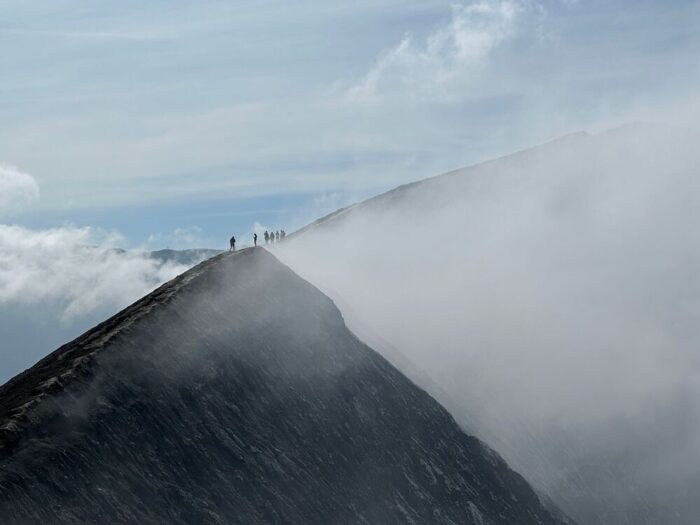
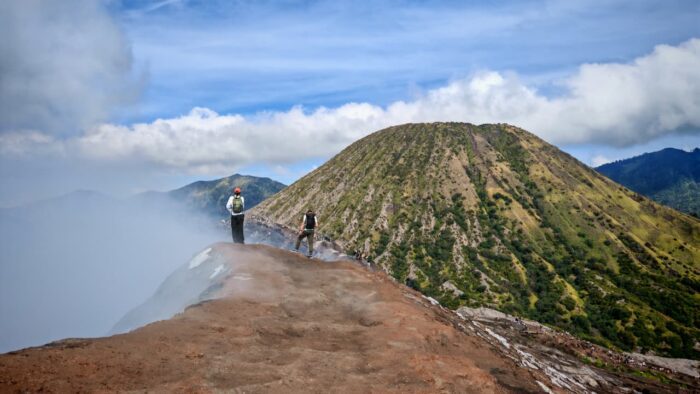
Climbing to the top of Mount Bromo is one of the easiest volcano experiences in Indonesia. There’s no real “hike” involved—just a short walk across the Sea of Sand followed by a staircase that leads up to the crater rim.
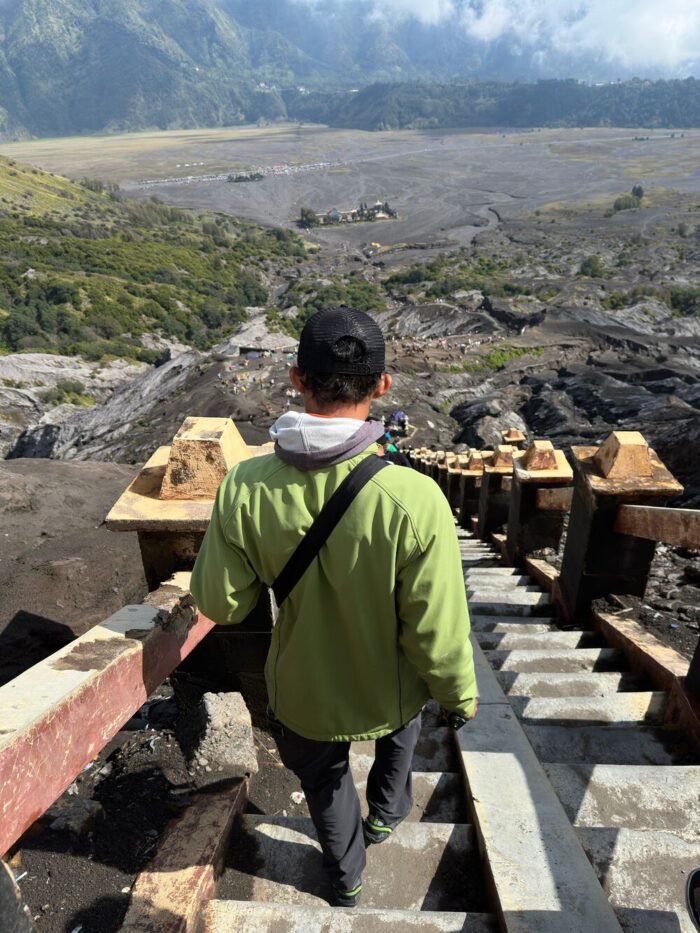
From the parking area, it usually takes 15–30 minutes to reach the stairs, depending on your pace. The final section is a steep staircase (around 250 steps), but it’s manageable for most people with a basic level of fitness.
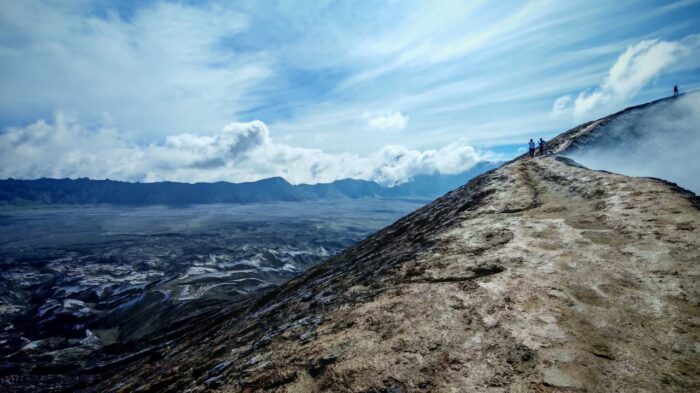
At the top, you can look directly into the active crater, where you’ll see (and smell) sulfur smoke rising from below. Most people stop right where the stairs end, but if you walk a bit further along the rim, you can often find quieter spots with fewer crowds—and sometimes have the view almost to yourself.
Central Java has an easy peak that rewards you with amazing views. Keen to check it out? We’ve shared all the details in our Mount Telomoyo: The Easiest Peak in Central Java
Pura Luhur Poten
At the foot of Mount Bromo, right in the middle of the Sea of Sand, stands Pura Luhur Poten—a sacred Hindu temple actively used by the Tenggerese community. Its setting is quite unique, surrounded by volcanic sand instead of the usual lush greenery.
The temple plays a central role in the annual Yadnya Kasada ceremony, one of the most important spiritual events in the region. During this ritual, Tenggerese people gather to pray and bring offerings (sesajen) such as food, flowers, and livestock, which are later thrown into the crater.

Unlike what many guides suggest, this is not really a tourist event. During the main ceremony, access to Mount Bromo is typically restricted or completely closed, and only local participants are allowed into the area.
The dates change every year based on the Tenggerese calendar. For example:
- 2025: June 10–13 (full closure)
- 2026: May 30 – June 2 (closure + ceremony)
Backindo Tip: If your visit overlaps with Yadnya Kasada, expect full closures of the park. You won’t be able to access the crater or viewpoints—but you may still catch parts of the atmosphere from nearby villages like Cemoro Lawang.
What to Experience around the Bromo Mountain
Exploring Bromo with a Jeep Tour
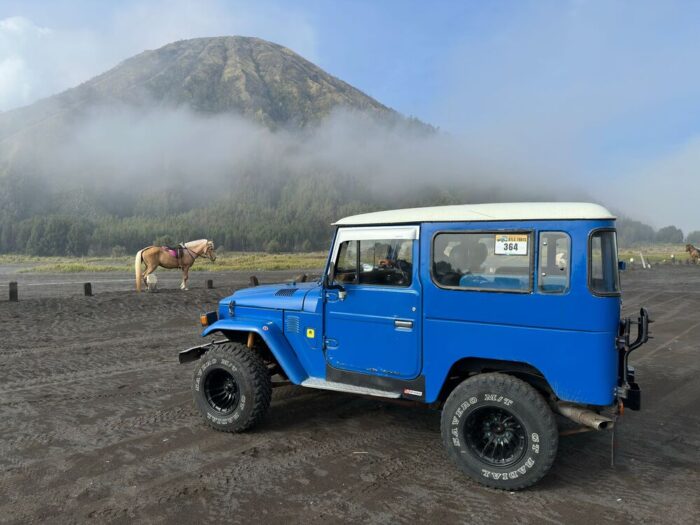
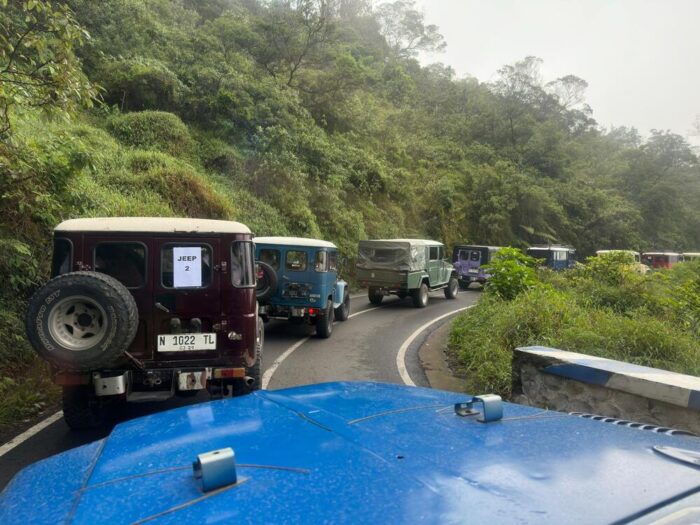
Jeep tours are the most common way to explore Bromo, covering all the main spots—including the sunrise viewpoints. A jeep (which fits up to 5 people) typically costs around IDR 600,000 to 1,500,000 (approx. USD 38–95), depending on your pick-up point, route, and the season.
Prices are usually per jeep, not per person, so it can be quite affordable if you share the cost. Don’t be afraid to negotiate, especially in the low season.
Keep in mind that prices vary significantly depending on where you start. Jeep tours from Cemoro Lawang (Probolinggo)—the closest village to Bromo—are the cheapest. On the other hand, tours from Malang or Tumpang are more expensive, as they include a much longer transfer and often additional stops along the way.
You can arrange a jeep locally in the village, through your accommodation, or book it online in advance if you prefer to secure your spot and check reviews beforehand.
Horse Riding
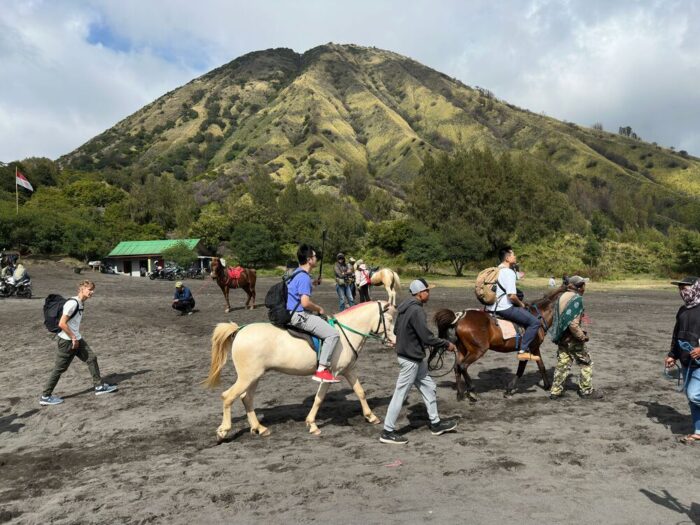
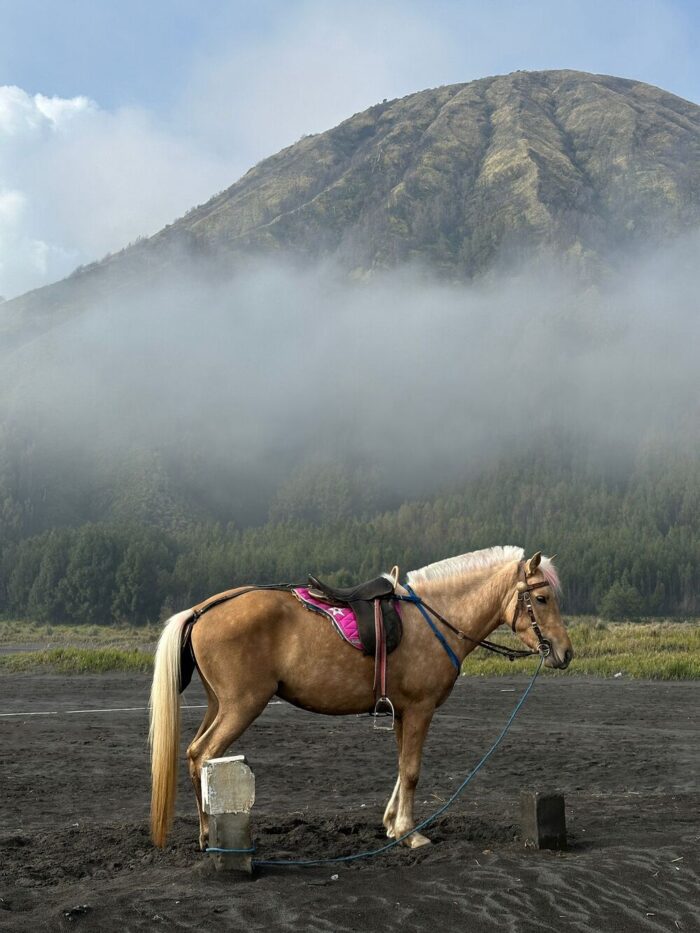
Another way to explore the Sea of Sand is on horseback. You can hire a horse for around IDR 150,000 to 250,000 (approx. USD 10–16) for a short ride toward the crater, which can save you some walking across the sand.
That said, the experience can vary. Some horses are decorated with colorful (sometimes dyed) manes and tails, and the overall treatment of the animals depends on the individual handler. If you choose to ride, it’s worth taking a moment to observe the condition of the horse and pick a provider you feel comfortable supporting.
Visiting Madakaripura Waterfall

If you’re visiting Bromo, Madakaripura Waterfall is one of the best add-ons to your itinerary. Located about 1 hour from Bromo (Probolinggo side), it’s a great stop, especially if you’re continuing towards Surabaya.
At around 200 meters tall, it’s the highest waterfall in Java, hidden inside a dramatic canyon of steep cliffs. What makes it unique is the “rain curtain” effect—water doesn’t just fall from one spot, but drips and flows from the cliffs all around you.
Getting there requires a bit of planning. There’s no public transport from Bromo to the waterfall, so you’ll need to arrange a private driver or join a tour that includes it. Many drivers can combine Bromo and Madakaripura in one trip, especially if you’re heading onwards to Surabaya or Malang.
From the parking area, it’s a 20–30 minute walk along a riverbed to the main waterfall. You will get wet near the end, so bring a poncho or rain jacket and protect your phone or camera.
The entrance fee is around IDR 50,000–60,000 (approx. USD 3–4). Basic facilities like parking, toilets, and small food stalls are available at the entrance.
Looking for a reliable driver around Bromo that can cover Madakaripura as well? Send us a message at hello@backindo.com and we'll happily share our tips.
How to Get to Mount Bromo
Since the volcano sits inside a large national park, there are multiple ways to access it depending on where you’re coming from and how you plan to visit.
Most travelers arrive via one of the nearby cities—Malang, Surabaya, or Probolinggo—and from there continue to Bromo either with a private driver, organized tour, or (less commonly) public transport. Each route leads to a different entrance gate—and your choice will affect everything from price to crowds and overall experience.
Entry Gates to Mount Bromo
Mount Bromo sits inside a large national park, so there isn’t just one way in. Instead, you can access it from several sides through four main gates, and your choice will affect how easy your trip is, how much you pay, and what kind of experience you’ll get.
Cemoro Lawang Gate (Probolinggo)
This is the most straightforward and commonly used access point. Cemoro Lawang is the closest village to Bromo, which makes logistics simple—especially if you’re traveling independently. It’s also the only place where you can walk all the way to the crater, without relying on a jeep.
Because of that, it’s the best option for budget travelers or anyone who prefers a more flexible, DIY trip. On the other hand, it also means it’s the busiest side of Bromo.
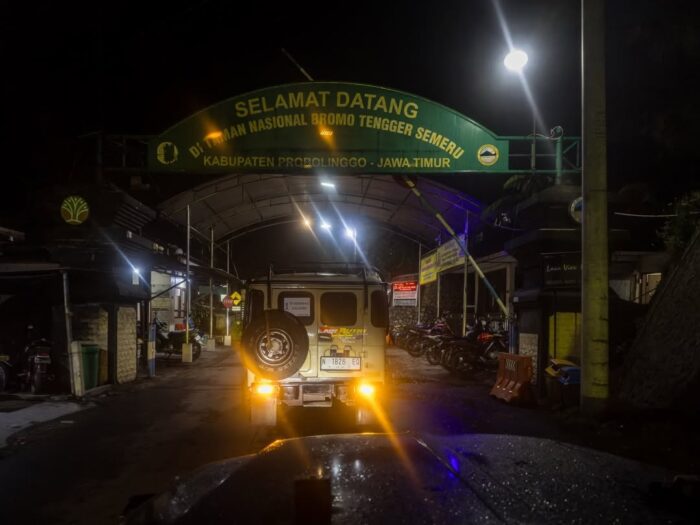
Penanjakan / Wonokitri Gate (Pasuruan)
This side is mainly used for visiting the iconic sunrise viewpoints like Penanjakan 1 and Kingkong Hill. You don’t stay here—instead, you arrive at night and continue by jeep to the viewpoints.
Most visitors access this route from Surabaya, with a private driver or organized tour. The journey takes around 3 hours, usually departing around midnight.
Tumpang Gate (Malang side, via Jemplang/Coban Trisula)
If you’re starting in Malang, this is the most natural route. It offers a more scenic approach, passing through the savanna and Sea of Sand before reaching the main Bromo area.
That said, the journey itself can be quite demanding. The jeep ride is long, often bumpy (the road can be rough in sections), and usually starts very early—often around midnight for sunrise. It’s more of an adventure, but also more tiring compared to the shorter routes. On the plus side, it tends to be less crowded and gives you a more varied experience overall.
Senduro Gate (Lumajang)
This is the least visited entrance and remains more off the radar. It provides access to the eastern side of Bromo, including parts of the savanna, but infrastructure is limited and it’s not commonly used by first-time visitors.
You’ll usually need a private driver to access this side, often as part of a longer East Java route.
Route from Probolinggo to Mount Bromo
As mentioned above, there are several ways to reach Bromo depending on which entrance you choose. In this guide, we’re focusing on the Probolinggo → Cemoro Lawang route, as it’s the most practical option for backpackers.
It’s well connected, relatively affordable, and doesn’t require joining a tour—making it the easiest way to visit Bromo on your own.
Below is a quick overview of how to get to Probolinggo from the main travel hubs across Java.
Backindo Tip: For purchasing train tickets, use Traveloka, Tiket.com, or 12Go. The official KAI Access app or web don't accept international cards. For buses, book through 12Go, or Traveloka.
From Surabaya
Surabaya is the most common starting point, especially if you’re flying into Java. The easiest way to get to Probolinggo is by train—departures run from Pasar Turi or Gubeng Station and take around 2–3 hours. Trains like Probowangi, Logawa, or Sri Tanjung are commonly used on this route, with tickets typically costing IDR 50,000–100,000.
You can also take a bus from Bungurasih (Purabaya) Terminal, which takes a similar amount of time but is less predictable. If you prefer comfort, hiring a private car with a driver is a smooth option via the toll road, also taking around 2–3 hours.
From Malang
If you’re already in Malang, getting to Probolinggo is fairly straightforward. The most practical option is the train, with departures from Malang Station (ML), Malang Kota Lama (MLK), or Lawang.
The most commonly used train on this route is Tawang Alun. An economy train which runs in the afternoon (around 16:30–17:00 departure) and takes about 2–3 hours to reach Probolinggo. Tickets are very affordable, usually starting from around IDR 58,000.
There’s also a morning train, Ijen Ekspres, which offers several classes and is a better choice if you plan to continue to Cemoro Lawang and catch a bemo from Probolinggo.
Buses from Arjosari Terminal are an option, but they often require a transfer and can take longer, so they’re not the most comfortable choice.
A private driver is the easiest alternative if especially if you want to combine the trip with a stop at Tumpak Sewu.
From Yogyakarta
From Yogyakarta, the most practical option is the train. Departures leave from Tugu Station (Yogyakarta) to Probolinggo, taking around 7–8 hours. Trains like Sri Tanjung run this route, with tickets typically costing IDR 300,000–500,000 depending on class.
Buses are also available from Giwangan Terminal, but the journey can take 10–12 hours and is generally less comfortable. If you’re traveling in a group, hiring a private driver can be a more convenient alternative, though it’s a long drive (around 8–10 hours).
Planning your trip to Yogyakarta? Read Yogyakarta Travel Guide: Everything You Need to Know.
From Banyuwangi / Bali
If you’re coming from Ijen or Bali, you’ll likely pass through Banyuwangi first. From there, you can take a train to Probolinggo, with journeys taking around 5–7 hours. Trains like Probowangi operate on this route, with tickets starting from about IDR 250,000.
Buses are also available from Brawijaya Terminal, taking around 6–8 hours, but can be less comfortable. Again, if you’re planning stops on the way, renting a car with a private driver makes more sense.
How to Get from Probolinggo to Cemoro Lawang
Public Transportation to Cemoro Lawang
Once in Probolinggo, head to Bayuangga Bus Terminal, where you’ll find small public minibuses (known as bemos) heading up to Cemoro Lawang.
Be cautious here—this is one of the few places around Bromo where scams are common. Some taxi drivers may try to convince you that public transport doesn’t exist and redirect you to a tour agency. It does exist, so just insist on going to the terminal.
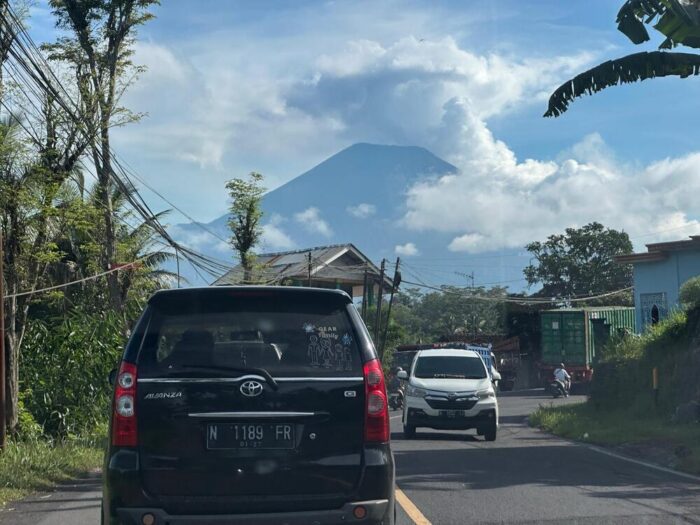
At the terminal, look for the green bemos going to Cemoro Lawang. They’re usually not parked directly inside the terminal, but about 2 minutes down the road, near a cluster of small shops and warungs.
The journey takes around 1.5–2 hours. If you wait for the bemo to fill up, expect to pay around IDR 50,000 per person (approx. USD 3).
If you don’t want to wait, you can pay for the whole bemo and leave immediately. In that case, the total price is usually around IDR 500,000 (approx. USD 27) for the entire vehicle. This cost can then be split between the actual number of the passengers.
Bemos from Cemoro Lawang Back to Probolinggo
To get back down, head to Warung Sederhana around 10 AM, where shared vans to Probolinggo start gathering passengers.
Just like the bemos, they leave once full. Prices vary depending on demand, but typically range around IDR 50,000 per person (approx. USD 3). During high season, they tend to fill up quickly, while in quieter periods you may need to wait or share the cost with fewer people.
If you’re in a rush, you can also arrange an ojek (motorbike taxi).
Renting a Motorbike from Probolinggo to Cemoro Lawang
Renting a motorbike is the most flexible way to get from Probolinggo to Cemoro Lawang, but it’s not an easy ride and definitely not a good idea for inexperienced riders. While scooters (110–125cc) cost around IDR 60,000–100,000/day (USD 4–6) and are easy to arrange locally especially through your accommodation in Probolinggo, the route itself is demanding.
The road climbs steadily for 1.5–2 hours, with steep sections, sharp turns, and changing conditions, and many people underestimate how challenging it is. Even locals have accidents here, especially on the uphill sections.
Closer to Bromo, you’ll also encounter loose volcanic sand, which can be difficult to ride on if you don’t have experience. A manual motorbike is a much better choice than a scooter for this terrain.
Backindo Tip: Do not rent a motorbike if you don’t have a valid motorbike license, including an International Driving Permit. Most travel insurance policies require this—without it, your insurance will not cover any medical costs if something goes wrong.
Gojek / Grab from Probolinggo to Cemoro Lawang
Using apps like Grab or Gojek is also possible—but only one way, and honestly, I’d not recommend it.
From Probolinggo, you can book a ride through the app (or negotiate with a driver directly). Expect to pay around IDR 150,000–250,000 (approx. USD 10–16) for the full ride up to Cemoro Lawang, depending on demand and time of day.
Going up is easy, getting back isn’t. Grab and Gojek barely work in Cemoro Lawang, so make sure to get your driver’s contact and sort out the return before they leave.
Practical Information for Your Bromo Trip
Entrance Fees
Entrance fees to Bromo National Park are IDR 220,000 (USD 13,3) for foreign visitors on weekdays and IDR 320,000 (USD 19,7) on weekends. This price includes access to Bukit Cinta, Penanjakan 1, Teletubbies Hill, Whispering Sands, Bromo’s crater, and the savanna.
Drone
Flying a drone in Bromo Tengger Semeru National Park is allowed, but you’ll need to apply for a permit in advance, and the fee is quite steep: IDR 2,000,000 per day, per drone.
The permission comes from the national park authority, and flying without it isn’t allowed. If aerial shots are high on your list, make sure to sort this out early and be ready for some paperwork.
Guide
You don’t need a guide to visit Mount Bromo—many travelers explore it independently. If you’re staying in Cemoro Lawang, you can simply walk to the viewpoints or the crater. The paths are clear and easy to follow, especially at sunrise when many others are heading the same way.
Another option is to arrange a private driver who will drop you off at the park entrance. From there, you’re free to explore on foot or hire a local jeep if needed.
Backindo Tip: Looking for a reliable driver in the area? Email us at hello@backindo.com for their details.
If you prefer a fully organized experience, you can book a jeep tour with a guide, which takes you to multiple spots inside the park and usually includes some background information about the area. Just keep in mind that this option comes with higher costs, as you’re paying for off-road transport, park access coordination, and guiding services.
This video summarizes our latest trip:
Mount Bromo Closure Dates
In general, Mount Bromo is open year-round. However, the area is occasionally closed for ecosystem recovery and other purposes. Here is the closure schedule for Bromo Tengger Semeru National Park in 2026:
- January 17 (3:00 PM) – January 18 (11:59 PM): End of the Kapitu Month
- March 19–20: Nyepi (Day of Silence)
- April 6 (9:00 AM) – April 12 (10:00 AM): Post–Eid al-Fitr closure for natural ecosystem recovery
- May 30 (9:00 AM) – June 2 (10:00 AM): Yadnya Kasada ceremony and post-Kasada cleanup
- December 8 (3:00 PM) – December 9 (11:59 PM): Beginning of the Kapitu Month
Looking for more waterfalls to explore? Read also about 12 Best Waterfalls to Visit in Java.
Best Time to Visit Bromo
The best time to visit Mount Bromo is in the dry season, especially June and July, when the weather is clear and views are stunning.
However, be aware that the Yadnya Kasada ceremony takes place around this time—and during the ritual, Bromo crater is closed to visitors. Also note that this period overlaps with school holidays, so expect more crowds. Mornings and nights can be chilly, so dress warmly.
Bromo is still accessible during the rainy season, but views aren’t guaranteed—you might end up seeing nothing but fog, like we did during our February 2018 trip.
Where to Stay around Bromo
Most travelers stay near Cemoro Lawang (Probolinggo gate) or Tosari (Pasuruan gate). Here are some solid accommodations:
For more details, head to Where to Stay in Mount Bromo: Best Areas & Hotels.
- Bromo Backpacker Tosari
- Simple but strategic place near Penanjakan—about 20 km from Love Hill. Ideal if you’re entering from the Pasuruan side and want to avoid crowds.
- Lereng Bromo (Tosari)
- Modern hotel with a pool, close to the jeep base. Not all rooms have views, but it’s a convenient spot if you’re coming through Tosari.
- Homestay Anggun (Cemoro Lawang)
- Friendly, affordable, and just a short walk from the crater. Perfect for budget travelers—owners are helpful and used to hosting international guests.
- Artotel Cabin Bromo (Cemoro Lawang)
- Stylish cabin-style hotel with sweeping views over the Bromo landscape. A great option if you’re looking to splurge a little.
- Gubuk Ndeso (Cemoro Lawang)
- Peaceful spot with mountain views, family-sized rooms, and even motorbike rentals. Bonus: they rent out clean jackets for cold mornings.
- Lava View (Cemoro Lawang)
- One of the area’s classics, with direct views of Mount Bromo and a cozy, traditional feel. Great location for sunrise lovers.
Backindo Tip: If you’re looking for something more unique, Plataran Bromo is one of the most luxurious stays on Java. Located away from the main Bromo area, it offers a quieter setting with beautiful views, stylish villas, and a more refined experience.

Prices usually start from around USD 150–300 per night, making it more of a splurge, but a great option if you want to make your Bromo visit feel a bit more special.
How to Combine Mount Bromo into Your Java Itinerary
Most travelers rush through East Java in 2–3 days, ticking off Bromo and Ijen as quickly as possible. While that’s doable, this part of Java easily deserves more time if you don’t want to feel rushed.
Here’s how we did it—and what we’d recommend.
We started in Yogyakarta and took the train to Malang. Instead of heading straight to Bromo, we spent a few days exploring the area—visiting temples, the colorful Jodipan village, and even heading down to the south coast beaches, which are still relatively off the radar.
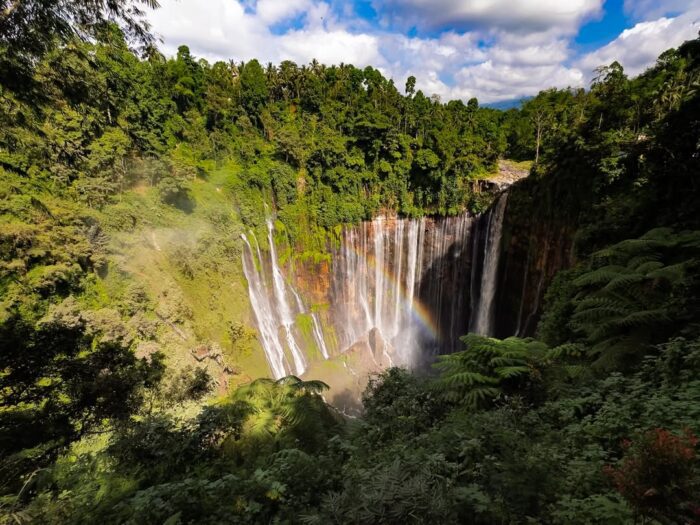
From Malang, we continued east. If you’re planning to visit Tumpak Sewu Waterfall, it makes the most sense to go there first, as it’s located between Malang and Bromo. From there, you can continue directly towards Bromo without backtracking.
After Bromo, many travelers continue further east to Kawah Ijen to see the famous blue fire. We skipped it at the time, as the blue flames weren’t visible during our visit, but it’s a common next stop if conditions are right.
From Bromo, we returned to Surabaya, which is the main transport hub in the region. From there, we split our journey—some of us flew to Bali, while others took the train back west to Purwokerto in Central Java.
Backindo Tip: The most flexible way to do this trip is with a private driver. If you’re short on time, this 3D2N East Java tour can be a convenient alternative—we’ve heard good things about it.
Is Bromo Worth It?
Planning to hike up Mount Bromo without a guide? This guide should give you everything you need to do it on your own—confidently and safely. Whether you’re coming for the sunrise, the sacred rituals, or just the thrill of walking across a volcanic landscape, Bromo is one of those places you won’t forget.
Pack warm layers, check your route, and get ready for an adventure that’s just the right mix of raw nature and real local experience.
Backindo Tip: Don’t forget—Bromo may be the most famous sunrise spot in Java, but it’s not the only one. If you're heading through Central Java, the Dieng Plateau is a hidden gem with equally stunning views—and a lot fewer crowds.
Frequently Asked Questions
Why is Mount Bromo so famous?
Mount Bromo is famous for its stunning landscapes, especially its breathtaking sunrise views. The volcano, surrounded by a vast sea of volcanic sand, offers a surreal and otherworldly experience for visitors. It’s also a sacred site for the local Tenggerese people, who perform the annual Yadnya Kasada ceremony, making Bromo not only a natural wonder but also a place rich in cultural significance. The combination of its scenic beauty, accessibility, and spiritual importance makes it one of the most iconic tourist destinations in Indonesia
Do you need a guide for Mt Bromo?
No, you don’t need a guide, but having one can enhance your experience. A guide can help you navigate the area, explain the cultural significance of the sites, and take you to the best viewpoints. However, the trails and main attractions are well-marked, so many travelers also choose to explore independently.
What is the best viewpoint in Bromo?
The most famous viewpoints are Penanjakan 1 and Love Hill, which offer breathtaking views of the sunrise over Mount Bromo, often with a sea of clouds in the background.
How difficult is Mt Bromo?
Climbing Mount Bromo is relatively easy compared to other volcanoes. There is a staircase that leads directly to the crater, and the hike is short, taking around 20–30 minutes (and 250 stairs).
How many days should I spend at Mount Bromo?
One to two days is typically enough to experience Mount Bromo. Many travelers arrive in the afternoon, spend the night near the park, and wake up early to catch the sunrise. You can explore the main attractions in a single day, but staying an extra day allows you to see more of the surrounding areas.
What should we wear when visiting Bromo?
Dress warmly, especially if you’re planning to catch the sunrise. Temperatures can drop significantly in the early morning, so a jacket, gloves, and warm hat are recommended.
Is it safe to visit Mount Bromo now?
Safety at Mount Bromo depends on its volcanic activity. Bromo is an active volcano, so it’s important to check for any current advisories or warnings from local authorities before visiting. Typically, Mount Bromo is safe for tourists, and when there is any volcanic activity, authorities may restrict access to certain areas near the crater to ensure safety.