
Sumba is not only about beaches and viewpoints. It is also one of the places in Indonesia where traditional rituals, clan obligations, and local ceremonies still shape everyday life in visible ways.
If you are interested in Sumba cultural events, it helps to know that many of them are not formal events designed for visitors. Some are large public rituals like Pasola, while others are ceremonies that travelers may only witness if they happen to be in the right place at the right time.

This guide focuses on some of the most important cultural traditions visitors may hear about or encounter in Sumba: Pasola, Pajura, funeral ceremonies, horse racing, cockfighting, and ritual divination. Some are easier to attend than others, and all of them should be approached with respect rather than as simple entertainment.
If you are trying to plan around a specific cultural event in Sumba, write to hello@backindo.com. Local timing can be difficult to confirm from a distance, and local contacts usually know more than generic internet schedules.
Pasola
Pasola is the most famous cultural event in Sumba and the one most international travelers actively plan around. It is a traditional horseback ritual in which riders throw wooden spears at each other in an open field.
Although Pasola is often described as a festival, it is more accurate to think of it as a ritual event linked to Marapu tradition, the agricultural cycle, and local customary authority. In the past, bloodshed carried symbolic meaning connected to the fertility of the land. Today, the spears are blunt and the event is more controlled, but it still remains intense and culturally significant.

Pasola usually happens in February and March in parts of West and Southwest Sumba, including Kodi, Wanokaka, Lamboya, and nearby areas. Dates may be publicly announced, but local ritual context still matters. If this is the main reason for your trip, read the full Pasola Festival in Sumba guide.
Pajura
Pajura is a lesser-known but striking tradition sometimes associated with the Pasola season. It is a form of traditional fighting between young men and is usually mentioned far less often than Pasola, even though it can be just as intense to witness.
It is commonly linked to the Wanokaka area, including Teitena Beach, and may take place at night, sometimes continuing until morning. Because of the timing, the location, and the local context, this is not something most visitors attend casually on their own. If you want to see it, going with a local guide is strongly recommended.
Funeral Ceremonies
Traditional funeral ceremonies in Sumba are one of the clearest windows into local belief, family structure, and social status. They often include megalithic tombs, ritual exchanges, music, animal sacrifice, and large gatherings of extended family and community members.

What surprises many visitors is that burial may happen months or even years after death. During that time, the family prepares the ceremony, raises funds, organizes relatives, and may also prepare a stone tomb. These events are expensive and socially important, which is one reason they can be delayed.
Funerals are also closely connected to Marapu in Sumba. Animal sacrifice, woven textiles, clan obligations, and the treatment of the dead all reflect a much broader worldview than many visitors expect at first.
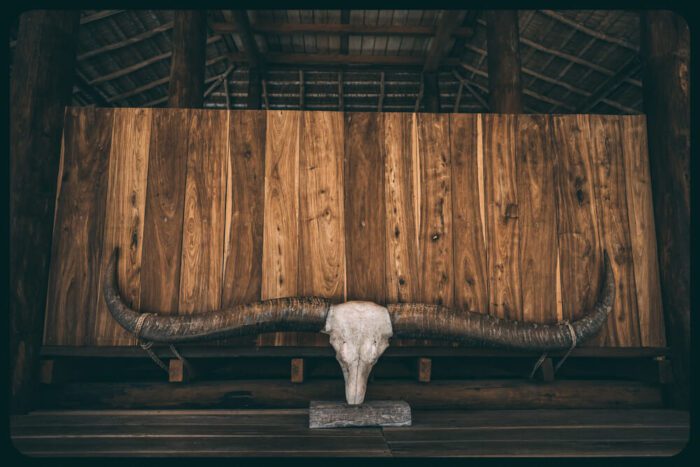
These ceremonies are not scheduled for tourists, but visitors are sometimes welcomed if introduced respectfully. If you are invited, follow local instructions, dress modestly, and do not assume photography is always appropriate.
Backindo Tip: If you are invited to a funeral, a small respectful gift such as betel nut or woven cloth may be appreciated, but local guidance matters more than any generic rule.
Horse Racing
Horses carry strong cultural value in Sumba, so it is no surprise that horse racing is one of the island’s most visible public traditions. The atmosphere can be lively, competitive, and heavily shaped by local betting.
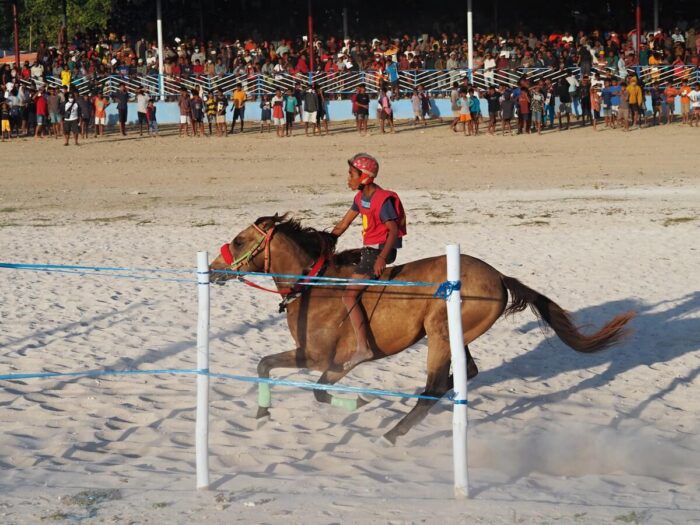
Races happen in different places and can vary a lot in scale. In East Sumba, Waingapu is one of the better-known places to hear about larger races, while smaller events also take place in more local settings. As with other events in Sumba, timing is usually best confirmed on the ground.
Cockfighting
Cockfighting also exists in Sumba, usually as a local and community-based activity rather than something openly promoted to outsiders. For some visitors, it may be culturally interesting. For others, it may feel too difficult or violent to watch.
It is worth knowing that these fights are officially banned, and even where they still happen, they are not always easy or appropriate for travelers to seek out. This is one of those cases where sensitivity matters more than curiosity.
Ritual Divination
In some ceremonies, especially those connected to Marapu belief and ritual life, local elders may interpret signs from sacrificed animals, including chicken innards. This can relate to timing, harvests, acceptance of offerings, or the success of a ceremony.

This is not a public attraction, and many travelers will never witness it. But if you do come across it, it offers a deeper insight into how belief, ceremony, and decision-making still connect in Sumba today.
Backindo Tip: In villages and at ceremonies, covering shoulders and knees is a simple way to show respect. If you are unsure what is appropriate, follow your local host or driver.
Final Thoughts
What makes Sumba culture so distinctive is not only the existence of these traditions, but the fact that many of them are still part of real community life. They are not always easy to access, and they are not always comfortable to witness, but they can add an important layer of understanding to a trip around the island.
If you are exploring Sumba more broadly, continue with Sumba Travel Guide, Traditional Villages in Sumba, Waikabubak Guide, or Waingapu Guide.