
Most travelers come to Malang with Mount Bromo already booked. They check in for one night, make a quick stop at the Rainbow Villages, and leave the next morning. But the best things to do in Malang go beyond that overnight stop: old streets, great food, Hindu-Buddhist history, and enough nearby places to make the city worth spending time in before an early jeep ride.
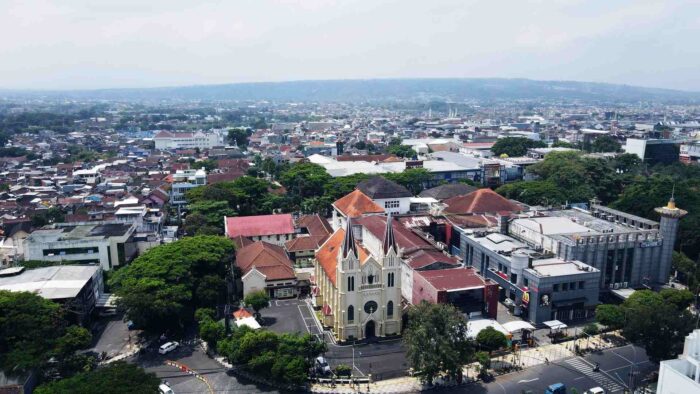
Malang sits in the highlands, so it is cooler than Surabaya. Spend one day in the city itself: walk Kayutangan, see the old squares, visit Jodipan, and eat properly before heading on to the waterfalls, volcanoes, or coast.
This Malang travel guide brings together the city sights worth your time, the best day trips, local food, where to stay, and the practical ways to arrive and continue through East Java.
Why Visit Malang
Malang is one of the most practical places to base yourself in East Java because it gives you more than just one headline attraction. The city has cooler weather than Surabaya, a good food scene, and access to very different day trips, from waterfalls and tea plantations to beaches and volcanoes.

It also has more historical depth than many travelers expect. Before the colonial era, this region was part of the ancient Singosari Kingdom, and several Hindu-Buddhist temples from that period still survive around Malang. Later, the Dutch developed Malang as an administrative city, which is why parts of the city still feel more structured and historically layered than many other places in East Java.
For many travelers, Malang works best as a base for Mount Bromo, Mount Semeru, and Jodipan Rainbow Village, while still offering enough city character of its own. Between its older neighborhoods, local food, and strong Arema football identity, Malang feels like more than just a stop between bigger attractions.
How Long Should You Stay in Malang?
- Give Malang one full day for the city: Kayutangan, the old center, Jodipan, and a few good meals. It is enough to understand the place before moving on.
- With two or three nights, add one proper day trip. Choose Tumpak Sewu, Wonosari and the temples, Batu, or the south coast rather than trying to squeeze all of them into the same stay.
- Stay longer only when Malang is part of a wider East Java route. The most natural rhythm is Malang, then Tumpak Sewu or Bromo, then continue east.
What to Do in Malang City
While Mount Bromo is often the main reason travelers come to Malang, the city itself is worth more than a quick pass-through. Malang is the second-largest city in East Java and became an important strategic city during the Dutch colonial era, which is why the city still has a distinctive mix of older architecture, public squares, and modern urban life.
Walk Through Malang’s Dutch Heritage
The best first thing to do in Malang is simply to walk. The city was developed as a Dutch administrative center, which explains its planned layout, old public squares, and distinct residential areas.
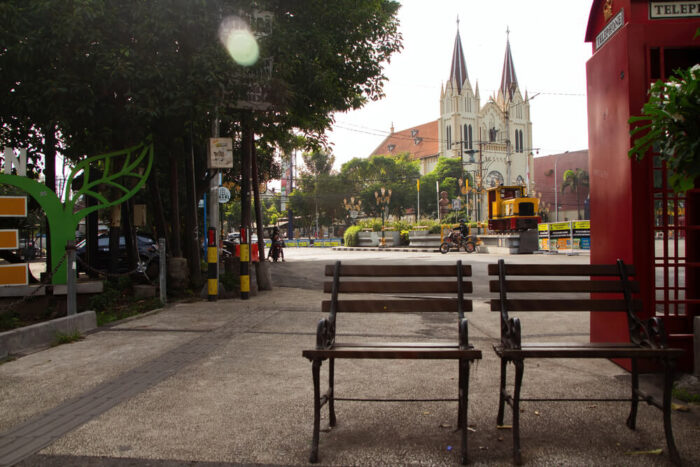
Start around Malang Kota Baru Station and Alun-Alun Tugu, where the monument, pond, city hall, and old trees show the formal civic side of the city. Then walk towards Kayutangan Heritage. The small lanes behind Jalan Basuki Rahmat have old family houses, narrow residential lanes, murals, snack stalls, and restored facades; they are much more interesting than the traffic-heavy main road.
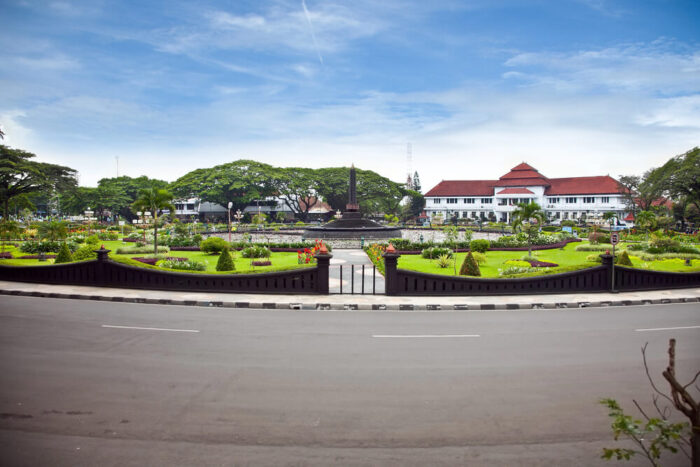
Continue to Alun-Alun Merdeka, the more social and commercial square, with the mosque, church, Toko Oen, and older buildings around it.
In Kayutangan, look for Jengki 976, which is more interesting for its architecture and neighborhood story than as a destination cafe. Finish with a short Grab or Gojek ride to Ijen Boulevard, the nearly one-kilometer, tree-lined former villa district. It is not a museum street: the appeal is the scale of the road, old villas, median garden, and calmer residential feel.
Klojen and its remaining European-style buildings, including Wisma Tumapel, are nearby if you want to keep walking.
Backindo Tip: A guided city walk is useful if you want the story behind Kayutangan, the Dutch-era civic layout, and the remaining colonial houses. For more historical detail, read the Dutch history of Malang.
Visit Jodipan, Tridi and Arema Blue Village
The Rainbow Villages are three neighboring riverside communities just south of Malang Kota Baru Station. Jodipan Colorful Village is the original Kampung Warna-Warni, with houses, steps, railings, and rooftops painted in bright blocks of color. The area used to be known for rubbish and poor sanitation, but residents and students transformed it in 2016 into a cleaner, brightly painted neighborhood that visitors can explore.

Kampung Tridi sits across the Brantas River and is the 3D Village, with optical-illusion murals and photo spots. Arema Blue Village is painted blue in reference to Arema FC, Malang’s football club.
Jodipan and Tridi are connected by the yellow Jembatan Kaca, the pedestrian bridge with its glass-floor section; Arema Blue Village is a short walk away across the railway line.

Budget around IDR 5,000 to 10,000 per village for entry. Bring cash and allow around one hour for Jodipan and Tridi together. The colors are fun, but this is still a residential neighborhood, so walk respectfully and do not block residents in the narrow lanes.
For more detail before going, read our full guide to Jodipan, Tridi and Arema Blue Village.
Visit Temples Near Malang City
The history of Malang goes back long before the colonial era. This region was once part of the Singhasari Kingdom, a powerful Hindu-Buddhist kingdom that left behind several important temples scattered around Malang and nearby areas.
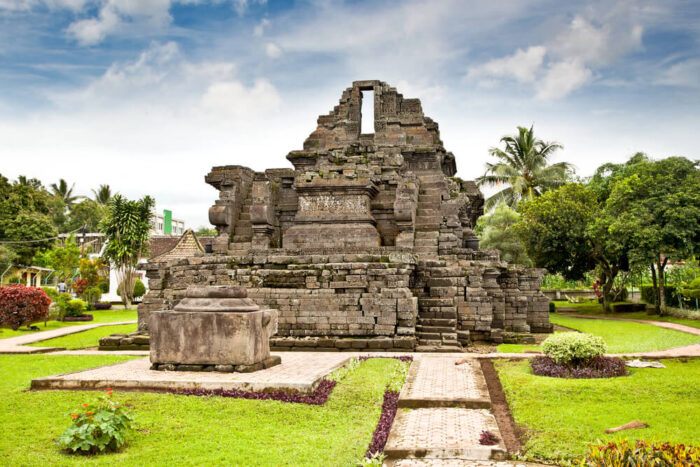
One of the most famous is Singosari Temple, located north of Malang near the Singosari area. It is one of the easiest temples to reach from the city and is known for its large stone structure and its connection to the Singhasari Kingdom.
Another strong stop is Jago Temple in Tumpang, known for its detailed relief carvings and historical atmosphere. Nearby, you can also visit Kidal Temple, a smaller but important site connected to the early Singhasari rulers. These two temples are especially useful if you are planning a route toward the eastern side of Malang Regency, and they make more sense as part of a longer driver day than as standalone city stops.
Backindo Tip: For a simple history route, combine Singosari Temple + Sumberawan Temple + Wonosari Tea Plantation. On the eastern side, combine Jago Temple + Kidal Temple + Tumpang with a trip to Bromo.
Closer to the city center, Badut Temple is considered one of the oldest temples in East Java. Although it is smaller than some of the other temples around Malang, it is easy to access and worth including if you are interested in local history.
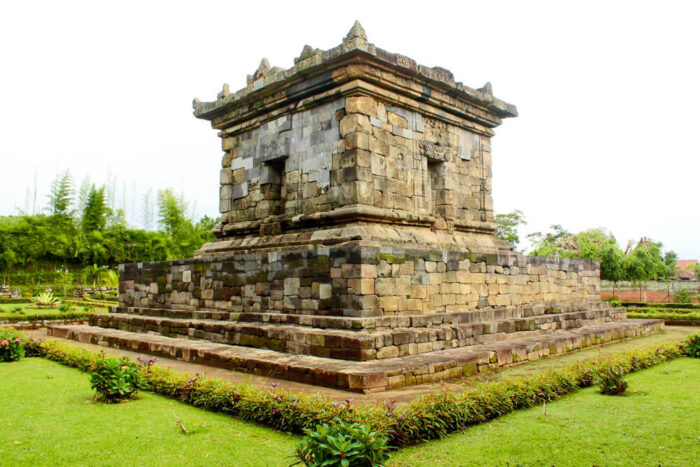
Most temple sites are small and low-key; their value is the history and countryside around them, not a long attraction-style visit. For route ideas and temple details, read my guide to temples near Malang.
Best Day Trips from Malang
One of the main reasons Malang works so well is that you can use it as a base for very different day trips. Some are easy and family-friendly, while others are better for travelers who want volcano views, waterfalls, or longer drives into the highlands and the coast.
Visit Mount Bromo from Malang
From Malang, Bromo means a midnight departure for sunrise. The trip continues by jeep across the Sea of Sand, then on foot up the stairs to the crater rim.
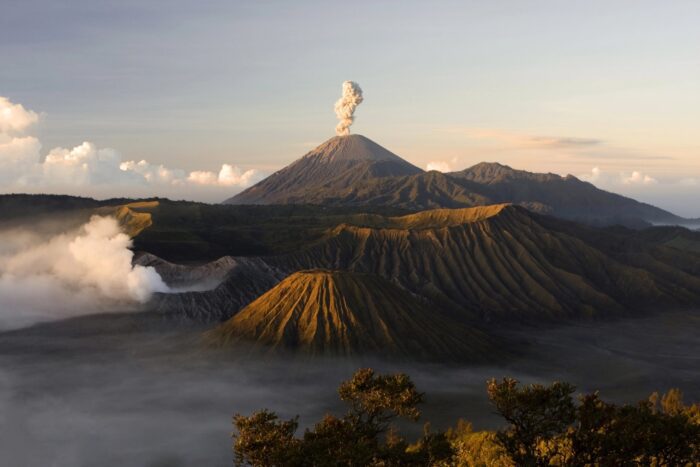
It is without doubt one of East Java’s defining experiences, but it also means a long night with very little sleep, especially if you are coming from Malang. The Malang-side route enters the national park through the Coban Trisula Gate and is longer and more demanding than the more common route from Cemoro Lawang, so the closer you stay to the gate, the longer you will sleep.
Backindo Tip: For the Malang-side Bromo route, stay at Maison Manendra in Gubugklakah rather than returning to central Malang. It puts you on the road towards Coban Trisula, so the sunrise start is far less punishing, and it is a small, family-run place with a much more memorable setting than a city hotel.
International visitors pay IDR 255,000 per person per day for the Bromo entrance ticket. Book online in advance and check current park-access notices; jeep hire, guides, and transport are extra. Bring cash for small expenses, wear warm layers and shoes with good grip, and leave Malang around midnight for sunrise.
For viewpoints, jeeps, fees and all Bromo-specific route options, read our full Bromo guide. And if you need a reliable driver for Malang, Bromo or a multi-stop East Java route, email hello@backindo.com and we can share a trusted local contact.
Visit Mount Semeru from Malang
Mount Semeru is possible from Malang, but it is a much more demanding trip than Mount Bromo. This is not a quick sunrise excursion or a simple day trip: the route requires a multi-day trek, advance planning, strong fitness, and proper preparation for changing mountain conditions.
At the time of writing, access is limited to Ranu Kumbolo, not the summit. The trek starts at Ranu Pani and still involves long walking days, steep sections, cold nights, basic camping conditions, and limited facilities. Online booking, visitor quotas, and registered local support are required. Check the official Bromo Tengger Semeru National Park information before making plans, because access can change.
Go to Tumpak Sewu Waterfall
Tumpak Sewu Waterfall is one of the strongest natural sights near Malang. It sits on the border of Malang and Lumajang beneath Mount Semeru and looks like a broad curtain of water rather than a single fall.

The Panorama Viewpoint is straightforward. The descent to the base is the hard part: steep, wet, slippery, and tiring again on the way back up. Wear shoes with grip and expect to get wet.
From Malang, the drive takes around two to three hours each way, so leave early. Allow several hours for the viewpoint, descent, time at the base, and climb back out; the full descent is not a quick add-on.
Malang → Tumpak Sewu → an overnight near Bromo is a practical multi-day loop before continuing to Surabaya airport, Banyuwangi, Ijen, or Sukamade. You can return to Malang instead, but that means retracing the same road.
For access, the descent, and nearby stops, read our full Tumpak Sewu guide.
Spend a Day in Batu
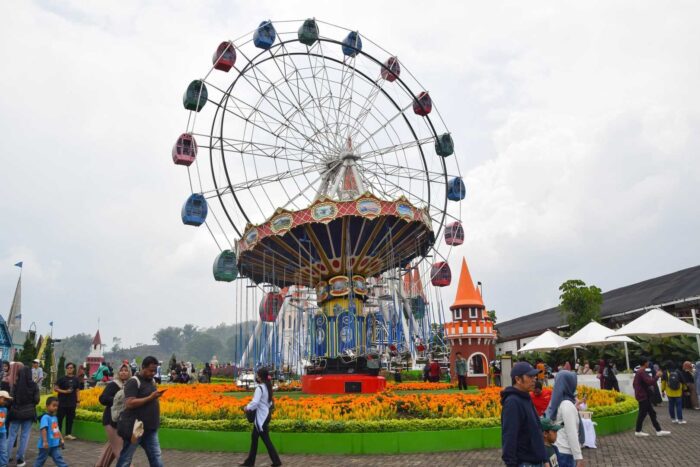
Batu is a highland city next to Malang and is known for its cooler air, family attractions, and mountain views. If Malang is stronger for history, city walks, and urban atmosphere, Batu is stronger for theme parks, lighter sightseeing, and easy family trips.
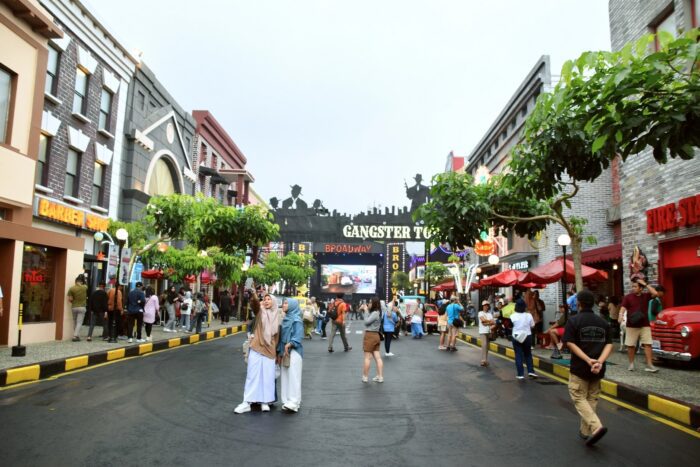
Choose the Batu attraction by interest. Jatim Park 1 is the rides-and-learning park; Jatim Park 2 combines Batu Secret Zoo with animal and natural-history displays; and Jatim Park 3 is the dinosaur-and-themed-attraction option. Each is substantial enough for most of a day.
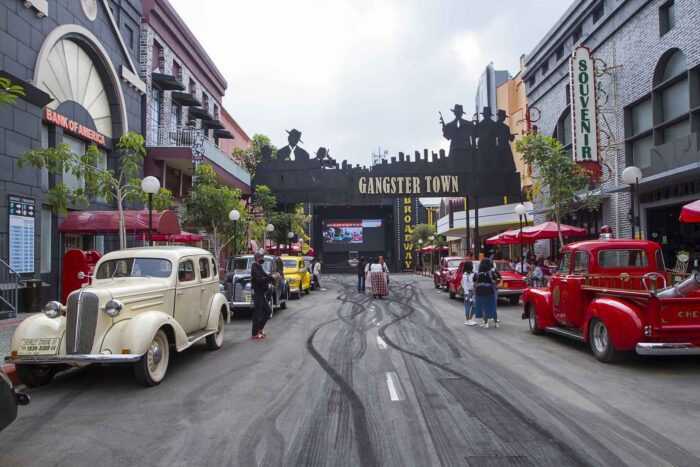
Museum Angkut is the stronger choice for transport collections, themed streets and photo opportunities, and it is easier to pair with a relaxed afternoon in town. Santerra de Laponte is for flower gardens, mountain views and lighter family activities. Alun-Alun Batu is a short, free stop for snacks, souvenirs and Malang apples rather than a reason to plan the day around it.
For real highland scenery rather than a manicured park, drive farther north to Hortensia Garden in Brakseng, Sumberbrantas. It is a working flower field at around 1,700 meters, with colorful hydrangeas and Mount Arjuno-Welirang behind it. Go when you are already heading towards Cangar, and do not confuse it with Selecta: the appeal is the flowers and mountain backdrop, not rides or a full day of facilities. Flower conditions change with the growing cycle, so ask locally before making a special trip.
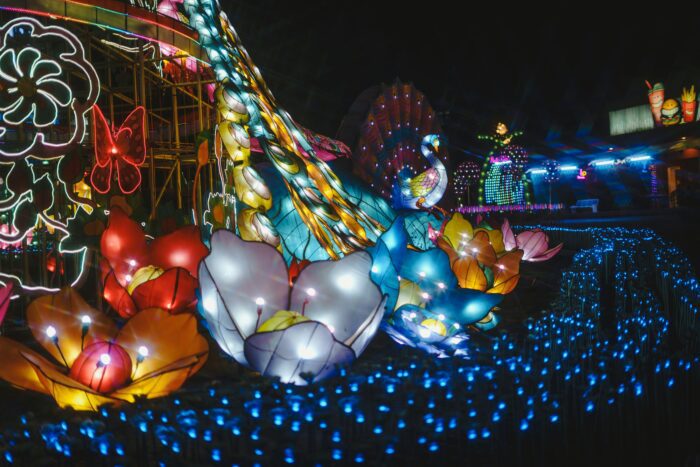
For the evening, Batu Night Spectacular (BNS) has rides, food stalls, lantern displays and a dancing fountain. Go only when you are already staying in Batu; it does not justify a special night return from central Malang.
Overall, Batu is especially good if you are traveling with kids, looking for easier attractions near Malang, or want a more relaxed place to stay with cooler mountain air.
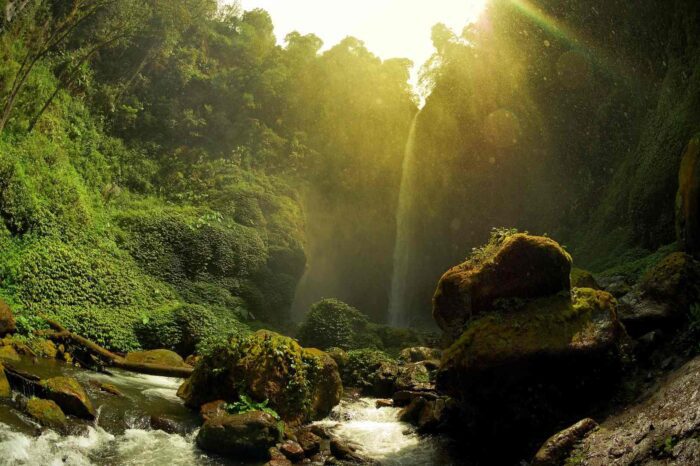
For a smaller nature stop, Coban Putri Waterfall is about 8 km south of Batu’s Alun-Alun in Tlekung. It is a short waterfall with a pool below it, reached by a narrow access road and a moderately steep footpath.
Visit Tea Plantations Near Malang
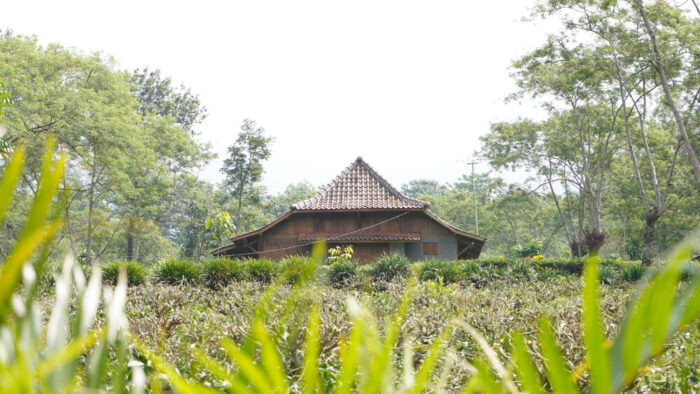
If you want a cooler and more relaxed break from the city, the tea plantation areas around Malang are a good option. One of the best known is Wonosari Tea Plantation, a Dutch colonial-era tea estate located on the slopes of Mount Arjuno.
The cool air and open views are the main reason to come here. Walk through the tea fields, take the path to Bukit Kuneer, and enjoy the countryside instead of rushing from one stop to the next. The factory is worth visiting if it is operating, but tours are not always available, so ask ahead before you go.
Toyomarto Tourism Village is an interesting stop nearby. Its most distinctive event is Grama Tirta, an annual ceremony usually held in October, when the seven hamlets bring together water and soil from their own springs in a shared thanksgiving ceremony. At other times, arrange a local visit around orchid growing, coffee and vegetable farms, or makers of stone mortars and batik-painted wooden clogs. These are community experiences rather than walk-in attractions, so arrange them with your driver or the village first.
Sumberawan Temple is another nearby stop and is one of the oldest Buddhist temples in East Java, surrounded by pine forest and mountain scenery. It pairs especially well with a Wonosari day because both places sit in the same broader highland area of Malang.
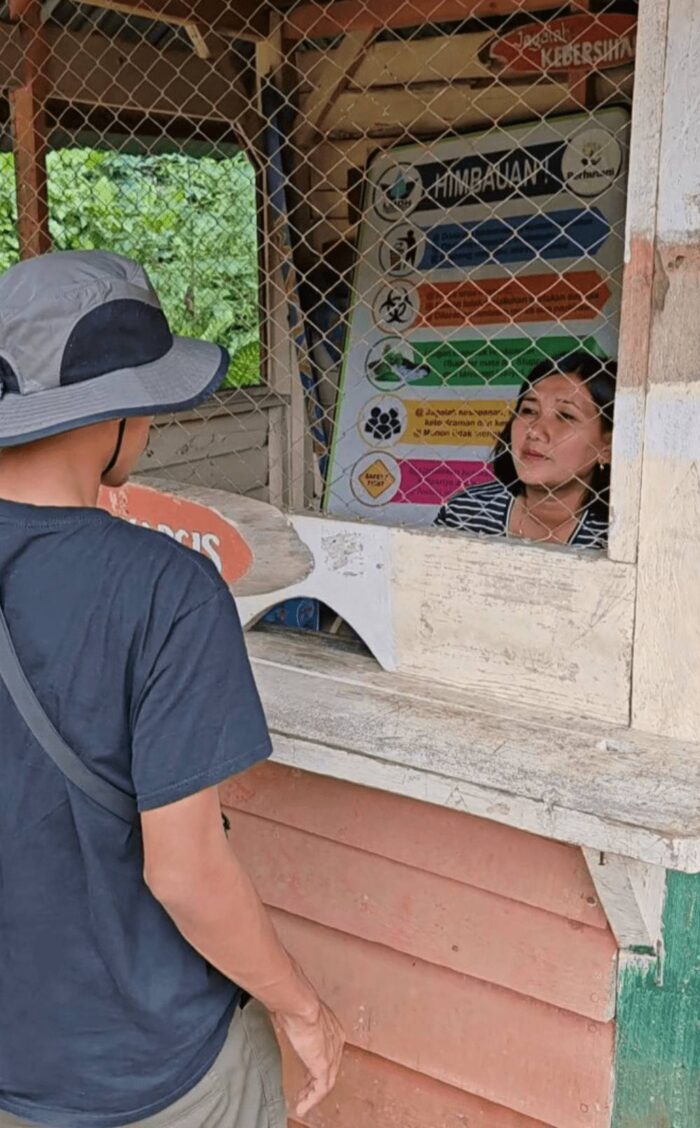
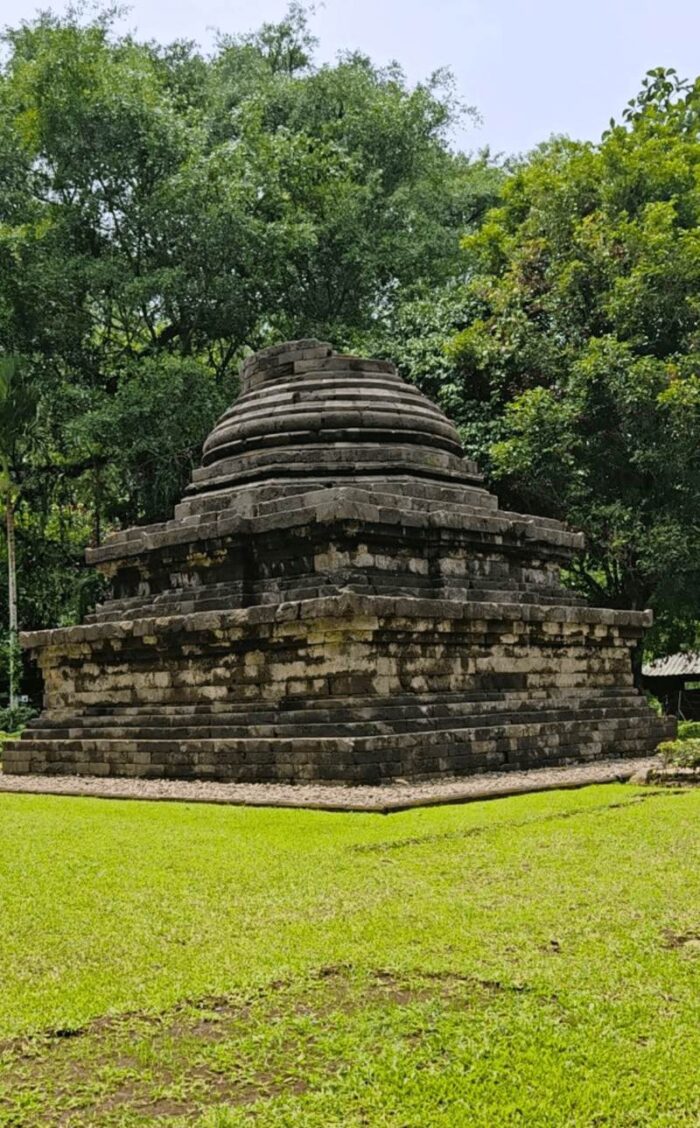
If you prefer a more active outing, Budug Asu Hill is a trekking hill with panoramic views around Mount Arjuno, especially for sunrise and camping.
If you want to go deeper into route planning, read my guide to Wonosari Tea Plantation.
Explore Beaches South of Malang
If you head south of Malang, you will also find beaches worth exploring, from conservation areas and snorkeling spots to dramatic cliffs and quieter coastal scenery.
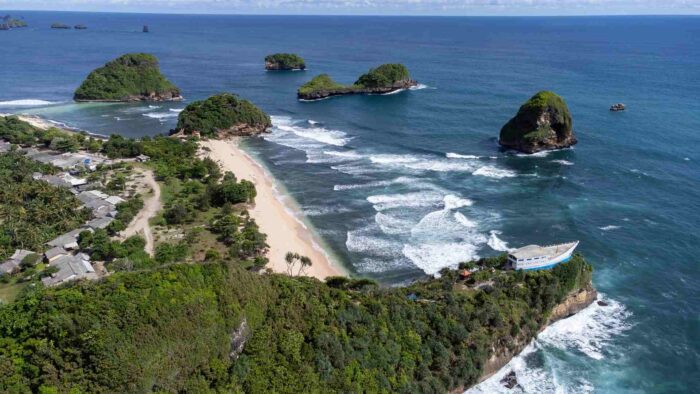
The best-known option is Clungup Mangrove Conservation (CMC), which includes Clungup, Gatra, and Tiga Warna. Tiga Warna has the strictest rules: reservations, visitor quotas, a local guide, a timed visit, and a rubbish check are part of the experience.
The southern beaches are a long day from Malang city, and the roads make the trip feel slower than the distance suggests. The reward is a quieter, more closely managed coastline than the beaches closest to the city.
If you want more coastal variety, Goa Cina Beach is known for its rocky coastline and stronger waves, while Teluk Asmara is popular for scenic views and its small green islands.
For route tips and conservation rules, read my guide to Clungup Mangrove Conservation.
What (and Where) to Eat in Malang
Malang is also a strong city for food, especially if you enjoy local dishes and older legendary eateries. Start with an old-school breakfast or lunch spot, then leave room for bakso, noodles, and street snacks.

Pecel Kawi is one of the classic dishes to try in Malang, especially if you want a traditional breakfast or lunch. It is served with vegetables, peanut sauce, and optional side dishes such as egg or fried chicken. A long-running place to try it is Pecel Kawi Asli 1975.
Sate Gebug is another local favorite, made from tender beef that is pounded before grilling. Sate Gebug 1920 on Jalan Basuki Rahmat is the classic stop and fits naturally into a Kayutangan or Alun-Alun walk.
Toko Oen, close to Alun-Alun Merdeka, is less about finding the best meal in Malang and more about the atmosphere. Go for its homemade ice cream, pastries and older Indonesian-Dutch dishes if you want food with the city’s colonial-era character.

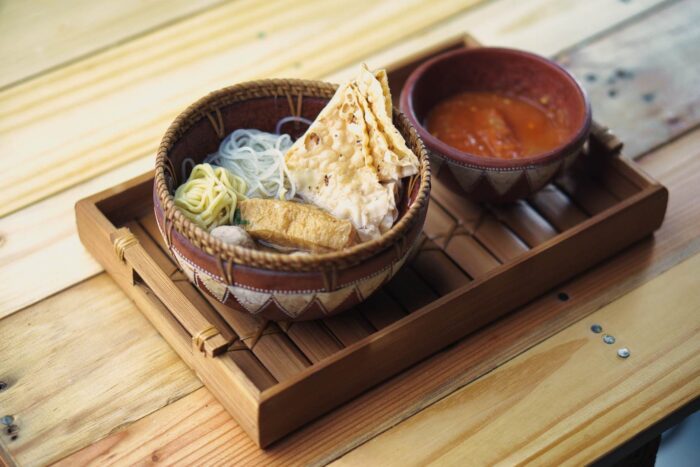
Bakso Malang is the city’s classic comfort food: a bowl of meatballs, tofu, crispy wontons, noodles, and hot broth. You may also see the related name bakwan Malang, especially outside the city, but order bakso Malang in Malang itself. Try it alongside cwie mie, a dry noodle dish with Chinese-Indonesian roots, and rawon, East Java’s dark beef soup flavored with keluak.
Sempol Ayam is a more casual street snack made from seasoned minced chicken on a stick, coated with egg and fried.
Other local dishes and food stops include Tahu Lontong Lonceng, Bakso President, Cwie Mie Depot Hok Lay, Rawon Nguling, Rawon Rampal, ketan dishes, and Orem-Orem Arema.
Cafes and Coffee Shops in Malang
Malang is also a good city for coffee. All About Koffie by Kawisari on Jalan Basuki Rahmat is the easy stop while walking Kayutangan: a small heritage-style room serving beans from Kawisari’s historic Mount Kawi estate.
For a more serious cup, go to Java Dancer Coffee on Jalan Kahuripan, opposite Hotel Tugu, and ask about its Indonesian single origins or manual brews.
Toko Kopi Sumber Rejeki, also on Jalan Basuki Rahmat, is the better choice when you want to sit longer over coffee, food and a break from the street; it has more space than it first appears from outside.
Where to Stay in Malang
For convenience and easy access to the city itself, stay around Alun-Alun Merdeka and central Malang, where there are hotels and homestays at different price levels.
For detailed tips, use the dedicated Where to Stay in Malang guide.
For a more luxurious stay, Hotel Tugu Malang remains one of the city’s most distinctive options. It is known for its classic and opulent design, and it also has a restaurant with a mix of cuisines.
If you want a more affordable but still comfortable option, The 101 OJ Malang is a reliable mid-range choice.
Solo travelers and budget travelers often choose MADOR (Malang Dorm Hostel), which is one of the best-known low-cost options in the city center.
Backindo Tip: We stayed at Kertanegara Premium Guest House and Semeru Hostel ourselves and would happily recommend either. They are both solid bases in central Malang; choose Kertanegara for a more hotel-style stay and Semeru when you want a hostel atmosphere.
How to Get to Malang
Malang is one of the main travel hubs in East Java and can be reached by train, plane, or bus. The city has a central train station, a domestic airport, and good onward connections to places such as Yogyakarta, Surabaya, Mount Bromo, and Banyuwangi.
By Train
The train is one of the most practical ways to reach Malang, especially if you are traveling overland through Java. Malang Station (Malang Kota Baru), often shown simply as Malang in booking apps, is the main station for visitors and sits near Alun-Alun Tugu and central hotels.
Malang Kotalama is farther south and some long-distance trains stop there too, but it is less convenient for a first stay in the center.
From Yogyakarta, direct trains take around six to seven hours. Search for Malioboro Ekspres, Malabar, and Gajayana or Gajayana Tambahan; choose Malang Kota Baru as your arrival when it is offered.
From Jakarta, expect around eleven to fourteen hours. Gajayana and Brawijaya are the more comfortable options, while Jayabaya, Majapahit, and Matarmaja have economy or mixed classes.
From Surabaya, the train takes around two hours. From Banyuwangi, check the current schedule for a service into Malang Kota Baru or Malang Kotalama after Ijen and the Bali ferry.
If you want more context for train travel in Indonesia, read How to Travel by Train in Indonesia.
By Plane
Flights are the fastest way to reach Malang if time matters most. The city is served by Abdul Rachman Saleh Airport, which mainly handles domestic routes.
From Jakarta, flights from Soekarno-Hatta International Airport take around 1 hour 40 minutes. Many international travelers instead fly to Juanda Airport in Surabaya and continue overland, so allow enough time for that airport transfer.
Flying makes the most sense if you want to cut down travel time, but for many travelers the train still feels easier overall when combining Malang with other stops in Java.
By Bus or Shuttle
Buses and shared shuttles arrive at Arjosari Terminal, Malang’s main intercity bus terminal in the north of the city. It is not central, so plan to take a Grab or Gojek onward.
Landungsari Terminal is on the west side of Malang and matters mainly for local transport towards Batu, including the BJL angkot; it is not the normal terminal for long-distance arrivals.
Long-distance buses from Jakarta take around fourteen hours, while buses from Surabaya run frequently throughout the day. Shuttles and private cars are often easier if you are arriving with luggage or want a simpler transfer. If you are landing at Juanda Airport, a private car is the least complicated option; the full journey takes around two to three hours. For the detailed airport transfer options, read getting from Surabaya Airport to Malang.
How to Get Around Malang
Getting around Malang depends on whether you are staying in the city or exploring the wider Malang Raya region, which includes mountain areas, waterfalls, Batu, and the beaches in the south.
For mountain areas, beaches, and multi-stop days, a private driver is the most practical choice. A rental car works when you are confident driving in Java; rent a motorbike only if you have the correct licence, proper insurance, and experience on busy, steep mountain roads.
Public Transportation
Public transportation is easier to find in more urban parts of the region, especially in Malang city and Batu. In Malang city, the Macito Bus (Malang City Tour) is a free sightseeing bus and foreign visitors can use it too.

Book through the MalangMbois app and check the current meeting point and departure time before going; the city tourism office changes the schedule between weekdays and weekends. One loop takes about 40 minutes and is a city tour, not hop-on transport between sights.
Backindo Tip: The booking flow uses a phone-number OTP, so if the app gives you trouble, ask at the departure point whether there are same-day seats.
Malang also has angkot routes, which can be found at Arjosari Terminal and Landungsari Terminal. If you are heading to Batu, you can take an angkot from Landungsari marked with the BJL code.
In Batu, dokar horse-carriage rides operate around Batu City Square. Ask at the square or your hotel whether the free municipal service is running that day and what its current hours are.
For easier city transport, both Malang and Batu have plenty of ride-hailing options such as Grab and Gojek, which remain the simplest solution for many travelers. Ride-hailing works inside Malang and Batu, but it is not enough for Tumpak Sewu, the southern beaches, or a multi-stop temple and tea route; use a driver or rent transport for those days.
Set up mobile data before you arrive: you will need it for Grab, Gojek, Google Maps and booking confirmations. Read my guide to SIM cards and eSIMs in Indonesia before your trip.
Private Drivers and Organized Tours
A private driver is the most useful choice for Tumpak Sewu, the south coast, the temple-and-tea route, or any day with several stops. It lets you start early, set the pace, choose the stops that matter to you, and continue through East Java instead of returning to Malang between every trip.
For a trusted local driver for Malang, Bromo or a multi-day route, email hello@backindo.com.
An organized tour is the easier choice when Bromo is your main goal and you do not want to arrange a midnight pickup, jeep and park access yourself. Check that the tour starts in Malang, includes the viewpoints and crater, and has the right pickup area before booking. Browse organized tours from Malang for current options.
Where to Go Next After Malang
If you are travelling east through Java, avoid returning to Malang just to retrace the same road. After Tumpak Sewu, continue to an overnight stay near Bromo; there is no useful train connection from the waterfall area for that transfer. After a Bromo sunrise, a driver can take you down to Probolinggo Station for trains north to Surabaya or east toward Banyuwangi.
Continue to Banyuwangi and Ijen if Bali is next; use the Probolinggo rail connection when you are flying onward from Surabaya.
For the next leg, use my guides to Tumpak Sewu, Mount Bromo, Banyuwangi, Ijen Crater and Surabaya.
Is Malang Worth Visiting?
Yes. One full day is enough to see the city properly: Kayutangan, the old center, Jodipan, and a few good meals. With two or three nights, Malang becomes a relaxed start to the bigger East Java route instead of a place you only remember from the ride to Bromo.
Read More: Malang and East Java
- Where to Stay in Malang for area-by-area accommodation advice.
- Temples Near Malang for Singosari, Jago, Kidal and the surrounding route.
- Tumpak Sewu Waterfall Guide for access, trekking and current planning.
- Mount Bromo Guide for national-park access, viewpoints and Bromo accommodation.
- Surabaya Airport to Malang if you are arriving through Juanda Airport.