
Komodo National Park is one of the most well-known protected areas in Indonesia. It lies between the islands of Flores and Sumbawa and includes several larger islands as well as dozens of smaller ones, all surrounded by coral reefs.

The park is best known as the natural habitat of the Komodo dragon, the largest lizard in the world. However, the area offers much more—from one-day boat trips to multi-day sailing adventures between the islands.
Why Komodo National Park Is Worth Visiting
The main reason to visit is the opportunity to observe Komodo dragons in their natural habitat. These large lizards are found only in this part of Indonesia and nowhere else in the world do they live in the wild.
In addition, the park is known for its exceptionally rich marine life. Strong ocean currents bring in nutrients, making the coral reefs here abundant with fish, manta rays, turtles, and other marine species.
The island landscape is relatively dry and hilly, with distinctive savannas and rocky bays. The combination of dry terrain, turquoise waters, and small islets creates the characteristic scenery of this part of Indonesia.
The park was established in 1980 primarily to protect the Komodo dragon, the largest lizard in the world. Today, the area is listed as a UNESCO World Heritage Site and is one of the most visited natural destinations in Indonesia.
What to Do and See in Komodo National Park?
Komodo National Park offers a wide range of activities, making it a great destination especially for nature lovers. During a single visit, you can easily combine time in the water — swimming, snorkeling, or diving — with short treks on the islands.
Most trips are done by boat and include several different stops throughout the day. These typically range from seeing Komodo dragons to visiting scenic viewpoints and relaxing on beaches.
Watching Komodo Dragons
These remarkable animals live only on a few islands within the national park—Komodo, Rinca, Gili Motang, and Gili Dasami. Observing the dragons takes place through organized walks with a local ranger on the islands of Komodo and Rinca, which are adapted for this type of visit. The trails vary in length and lead through savanna and sparse forest.

In addition to Komodo dragons, you may also come across deer, wild boar, or buffalo during the trek — their natural prey. However, there’s no guarantee you’ll see any dragons at all. A few are often found near the entrance, as they’re used to people, but further along the trail, sightings depend on luck since the animals live freely in the wild. That said, the chances are relatively high — on the islands of Komodo and Rinca (around 390 and 198 km²), there are approximately 1,700–2,000 individuals.
For the trek, it’s recommended to bring a hat, sunscreen, plenty of water, and sturdy footwear. It’s also important to move calmly and respectfully, both around the dragons and in the surrounding nature.
The ranger fee is approximately 200,000 IDR per group, while the park entrance fee is paid separately (see below).
Snorkeling & Diving
The marine part of Komodo National Park is among the richest in Indonesia. Snorkeling is possible in many locations and is usually included in both one-day and multi-day boat trips.
One of the most well-known spots is Manta Point, where manta rays regularly appear, making it a great experience for both snorkelers and divers. Other popular snorkeling locations include Kanawa and Siaba. Kanawa has a shallow coral reef that’s suitable even for beginners, while Siaba is often called Turtle Point thanks to the high chance of spotting sea turtles.
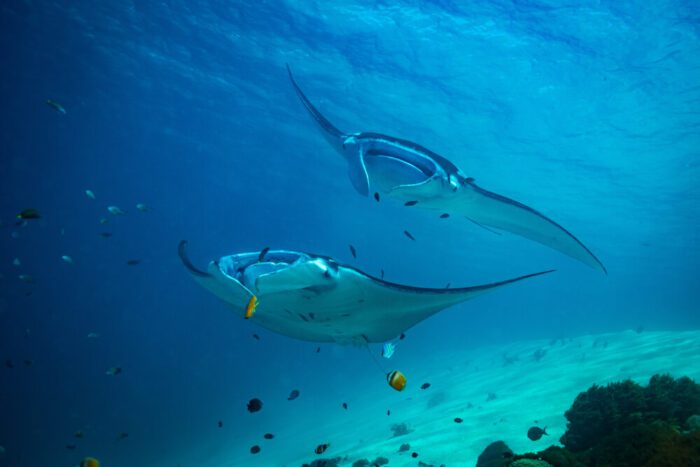
In Labuan Bajo, you’ll find plenty of dive centers offering trips into the park, as well as courses for both beginners and more experienced divers. It’s also possible to complete your PADI Open Water certification here, which usually takes three to four days.
That said, diving in Komodo can be more challenging in some areas due to strong ocean currents, which are typical for this region. Some dive sites are therefore better suited for experienced divers, and locations are usually chosen based on current conditions and the experience level of the group.
Padar Island
One of the most iconic spots in the park is Padar Island, with a viewpoint that’s among the most photographed in all of Indonesia. The hike is short but relatively steep, and rewards you with panoramic views over several bays, each with differently colored beaches.
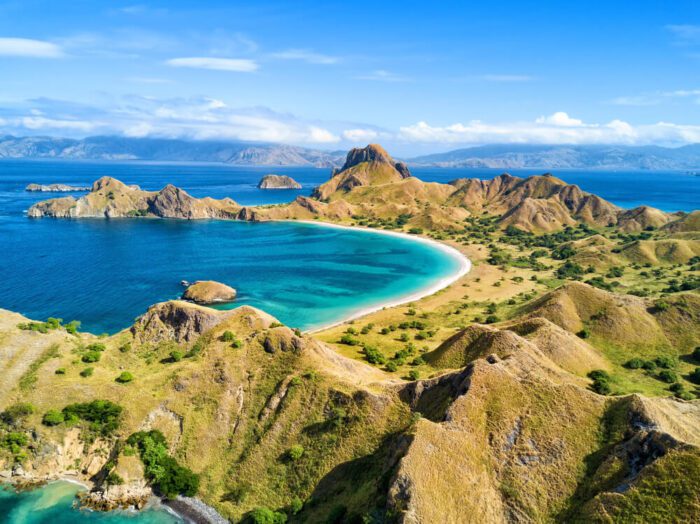
Komodo dragons no longer live here, as their natural prey disappeared from the island in the past. However, Padar was still part of their natural range until around the 1970s or 1980s.
The hike to the viewpoint is only possible with a local ranger, with a current fee of around 150,000 IDR ($9 USD) per group.
Pink Beach
One of the most well-known beaches in the park is Pink Beach, also known as Pantai Merah. Its distinctive color comes from tiny fragments of red coral mixed with white sand.
The beach sits along an open coastline, surrounded by dramatic rocky outcrops. The water is exceptionally clear, with visibility often exceeding 20 meters. The nearby coral reefs are full of tropical fish, and you may also spot sea turtles or even small reef sharks.

Unlike the Pink Beach on Lombok, the pink hue here is visible throughout the day, although it looks best in the morning or late morning when the light is most favorable.
Pink Beach is a common stop on boat trips and offers excellent conditions for both swimming and snorkeling.
Taka Makassar
Taka Makassar is a small sandbank in the middle of the sea and one of the most photogenic spots in the national park. At low tide, a narrow stretch of white sand emerges, surrounded by shallow turquoise water.
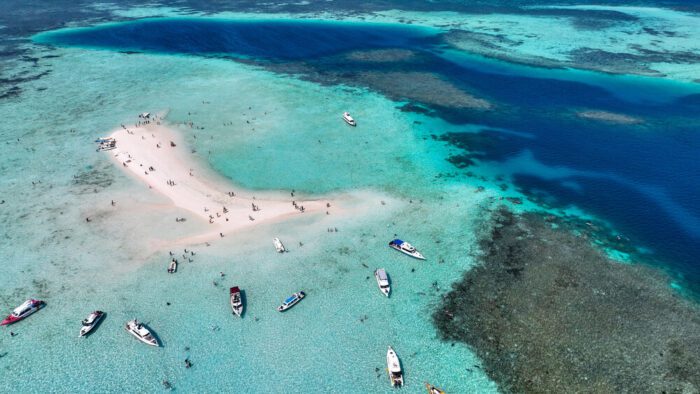
It’s a common stop on boat trips, although usually only for a short time — mostly for photos or a quick swim in the calm, shallow water.
Kalong Island
Kalong Island is a frequent stop, especially during multi-day boat trips. In the evening at sunset, thousands of large fruit bats (so-called flying foxes) emerge from the mangroves.
Boats usually anchor near the shore, and visitors can watch their gradual flight out over the sea. This stop is often a nice way to end a full day exploring the national park. Like Taka Makassar, however, it is more of an interesting addition than a place that should be your main destination.
How to Get to Komodo National Park
The main gateway to Komodo National Park is the town of Labuan Bajo on the western coast of Flores, where most boat trips start.
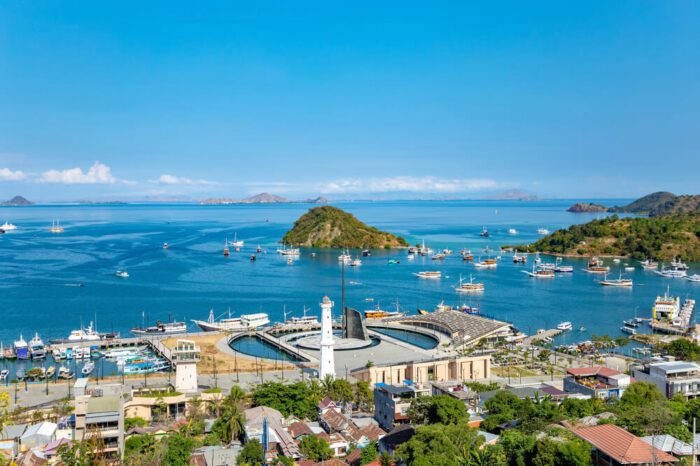
Labuan Bajo has an international airport with connections to major Indonesian cities like Denpasar (Bali), Jakarta, Surabaya, Makassar, and Kupang, as well as international routes from Singapore and Kuala Lumpur.
Starting your trip in Labuan Bajo? Read Best Things to Do in Labuan Bajo & Hidden Gems.
Another interesting option is a multi-day boat trip between Lombok and Labuan Bajo (or the other way around). These trips usually take 3–4 days, include overnight stays on the boat, and combine transport with sightseeing. Along the way, you’ll visit several key spots in the national park, including Komodo or Rinca, where the Komodo dragons live.
Backindo Tip: If you’re choosing a boat trip, don’t go for the cheapest option without checking reviews. Boat quality and safety standards can vary a lot. We’ve had good experiences with companies like Perama and Golden Island Cruises. Or you might check portals with reviews such as GetYourGuide.
When Is the Best Time to Visit Komodo National Park?
The best time to visit is during the dry season, from May to October, when conditions are generally more stable and ideal for boat trips.
During the rainy season (November to March), stronger winds and rough seas are more common. This can limit boat trips, and in some cases, sailing conditions may not be ideal.
Backindo Tip: At the beginning of 2026, access to Komodo National Park was temporarily restricted for several weeks due to extreme weather and unsafe sea conditions, with boat operations suspended into early February. It doesn’t happen often, but it’s a good reminder that conditions here depend heavily on the weather — especially during the rainy season.
How to Get Around Komodo National Park
Getting around the national park is only possible by boat, and in some areas, only with a ranger. Most trips are organized from Labuan Bajo and can last anywhere from one day to several days, depending on the route.
Shared Speedboats (One-Day Trips)
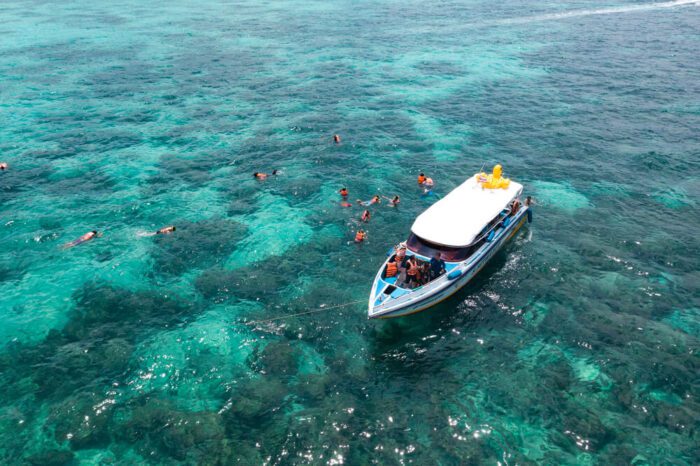
This is the simplest and most affordable option, allowing you to visit the main highlights in a single day. These trips are widely available through local travel agencies, with prices typically ranging from 50–100 USD per person.
Shared Multi-Day Boat Trips
Two- or three-day trips with overnight stays on the boat give you more time to explore and enjoy moments like sunrise or sunset over the islands. The itinerary usually includes snorkeling, visits to multiple islands, and evening stops, such as Kalong Island.
The main downside is limited flexibility — you’ll be following a fixed schedule with the rest of the group.
Private Trips
Renting a private boat is a great option, especially for groups, as the price is charged per boat. It offers more privacy and flexibility, allowing you to customize the itinerary based on your preferences.
Traditional wooden phinisi boats are often used, particularly for multi-day trips, as they’re more stable at sea. Prices vary depending on the boat type, trip length, and included services (like meals), but usually range between 1,000–2,500 USD per boat.
For more details, check the prices here.
Plan Your Trip in Advance
Whichever option you choose, it’s a good idea to book at least a few weeks in advance — and even earlier during peak season.
Since April, a visitor limit of 1,000 people per day applies to the national park. This limit covers the entire park, including Komodo and Rinca islands, as well as snorkeling and diving activities.
Permits are usually arranged by the travel agency you book with. However, it’s also possible to handle it yourself through the official SIORA website (Komodo National Park permits).
Backindo Tip: When choosing a boat trip, it’s worth paying attention to quality and safety, not just the price. Conditions at sea can change quickly, and standards between operators vary. Booking in advance gives you more time to pick a reliable company with good reviews — which usually makes a noticeable difference in the overall experience.
Where to Stay
Most visitors stay in Labuan Bajo, from where they set out on one-day trips. For backpackers, we recommend Manta Manta Guesthouse or Seaesta Komodo Hotel & Hostel. For more comfortable accommodation, Oh!Julia Hotel Komodo is a great option.
If you’re looking for a more upscale stay, AYANA Komodo Waecicu Beach is one of the best hotels in the area, offering great views, a private beach, and a higher standard of comfort — ideal if you want to relax before or after your trip.
Where to Go Next
After visiting Komodo National Park, most travelers continue exploring Flores, usually heading inland toward Kelimutu via Riung and Bajawa.
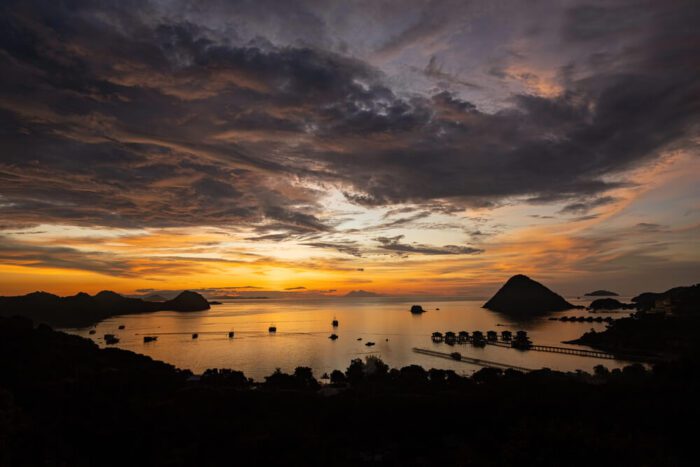
It’s also worth spending a bit more time around Labuan Bajo itself — a relaxed way to wind down after a few days on the boat.
Another great option is Lombok, which is well connected by direct flights from Labuan Bajo and makes for an easy next stop.
Continue reading: