
The island of Timor can be challenging. It is rugged and raw, with landscapes that shift from dry plains to cool mountain valleys within just a few hours of driving. This is not the easiest place for a first trip to Indonesia. The language barrier is real, the pace of life is slower, and once you leave the main roads, conditions can become unpredictable. Tourist infrastructure is limited, and plans rarely unfold exactly as expected.
Foreign visitors are still relatively rare here, which makes every encounter feel more personal. Locals are often curious and welcoming, sometimes even inviting you into their homes. Timor rewards patience. The less you rush, the more it gives back.
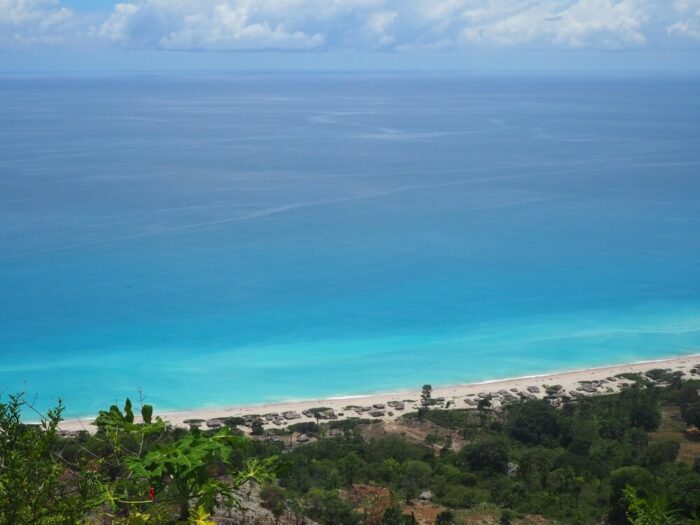
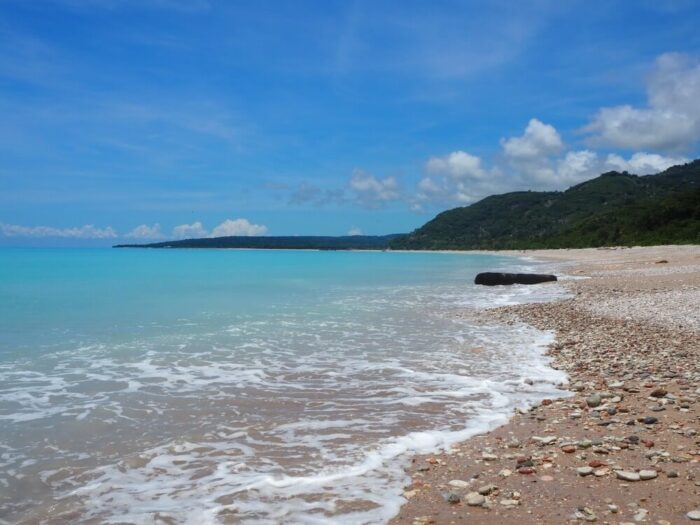
If you make it this far, take your time — especially around the inland town of Soe. The surrounding hills roll endlessly into the distance, dramatic rock formations rise from the landscape, waterfalls hide in the valleys, and turquoise-blue beaches unlike anywhere else in NTT.
Why Soe and Its Surroundings Are Worth Visiting
The area around Soe will surprise you with its diversity. Within a relatively small region, the ocean coastline blends with rolling hills and pine forests, and the scenery seems to change at almost every turn. You’ll rarely encounter other tourists here (often none at all), which allows you to explore the area in peace and experience it in an authentic way.
But the true highlight of this region lies in its people and their way of life. It’s easy to glimpse the everyday reality of local communities, which is just as varied as the surrounding nature – traditional villages where culture is still well preserved, the slow rhythm of life along the coast, scattered houses in the hills without phone signal, and a dusty, livelier town center.
For backpackers who aren’t looking for comfort but for genuine contact with local culture, this part of Timor is an ideal choice.
What to Experience and See
The town of Soe is not a tourist paradise. On its own, it is ordinary and at times dusty, but thanks to its location, it serves as a practical base for exploring the entire region. Mornings here are cooler than on the coast, the market is lively from the early hours, and from the higher parts of town you can enjoy views over the rolling landscape.
Waterfalls
Soe lies about 800 meters above sea level in the cool highlands of central Timor. The higher altitude brings fresher air, rolling hills and a landscape that feels very different from the dry coastal areas below. Hidden in these mountains are several beautiful waterfalls, and surprisingly, a few of them are easier to reach than you might expect.
Oehala Waterfall
One of the most impressive natural attractions in Nusa Tenggara Timur. This waterfall lies in a forested valley where water cascades down rocky steps in several tiers before collecting in small pools below. The lower cascades are suitable for swimming.
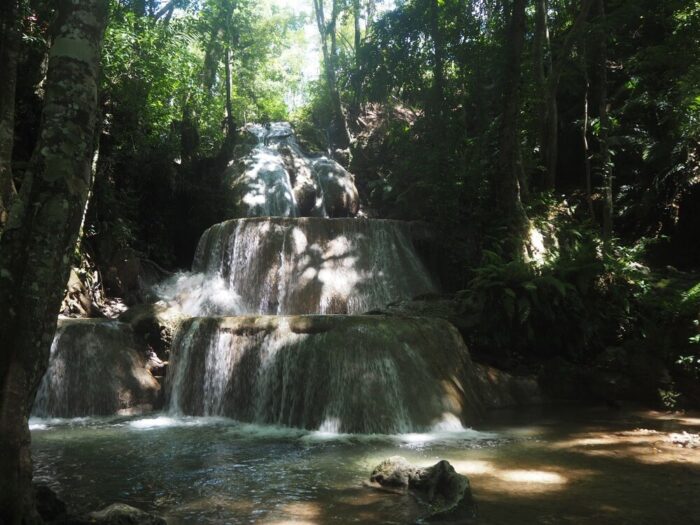
The access path is short but fairly steep, now reinforced with concrete steps. Expect high humidity and oftentimes even leeches.
Satu Hati Noinbila Waterfall
A smaller and less visited waterfall with a more peaceful atmosphere. It gets its name from a heart-shaped rock cavity nearby. The water flow itself is not very strong, but the pool beneath the waterfall is suitable for swimming.
Backindo Tip: Other smaller waterfalls are usually accessible only after a short hike. For example, Oeklofo Waterfall requires walking along the river, and it’s better to go with a local guide who knows the terrain and current conditions.
Traditional Village of Boti
The village of Boti lies approximately 50 kilometers north of Soe in the mountainous part of Timor and is one of the best-known traditional communities in the region. What makes it unique is that the local residents have long maintained their own social and cultural structure, separating the inner part of the village—where families continue to follow traditional adat customs—from the outer part, where certain modern elements have been adopted. Some families still live according to original rules and animist traditions that influence daily life and community practices.
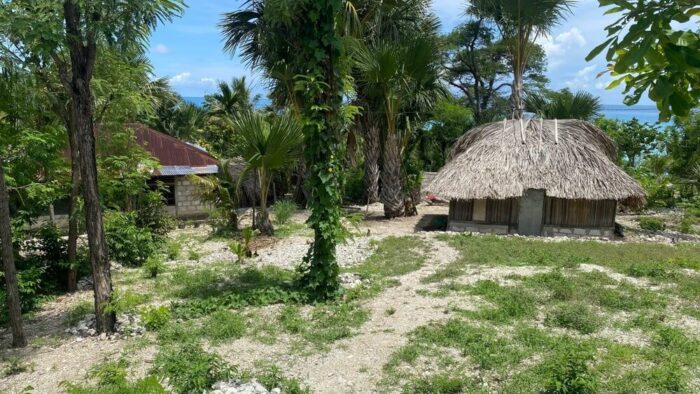
A visit to Boti is a rare opportunity to see how local life unfolds in a village where tradition and everyday activities still form the core of each family and the wider community. However, it is important to come with respect, follow the established rules, and always ask for permission before taking photographs.
A similar system can be found in Baduy, West Java, where the Inner Baduy community remains closed to foreign visitors.
Beaches
If you head to the southern coast, you’ll find beaches unlike any others in the province:
Kolbano Beach
This beach is famous for its colorful stones, setting it apart from classic sandy shores. Pebbles in shades ranging from red and orange to dark grey are formed by natural geological processes. Locals collect them and sell them to Kupang or even Bali, where they are used as decorative elements in villa construction.
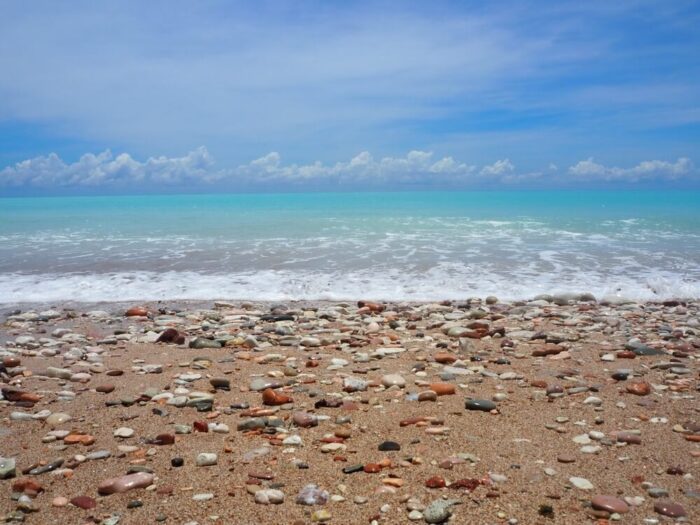
The ocean crashes against rocky cliffs here, and it is often very windy. Swimming is possible, but you need to be cautious of strong currents and the rocky seabed – this is not a calm swimming spot like a typical sandy beach.
Oetuke Beach
Not far from Kolbano lies the better-known Oetuke Beach, where you’ll find a public swimming pool and simple gazebos that offer shade with an open view of the ocean. The atmosphere becomes livelier on weekends, when local families come here to spend the day.
If you’re exploring the area by scooter, it makes for an easy and pleasant stop. There is an entrance fee, and from experience, it’s worth asking for an official ticket, as unofficial fee collectors are sometimes present.
Oetune Beach
A wide stretch of sand framed by low dunes, reached by a narrow asphalt road that feels better suited to a scooter than a car. The sea here is generally calmer than at Kolbano and, when the waves are mild, suitable for swimming.
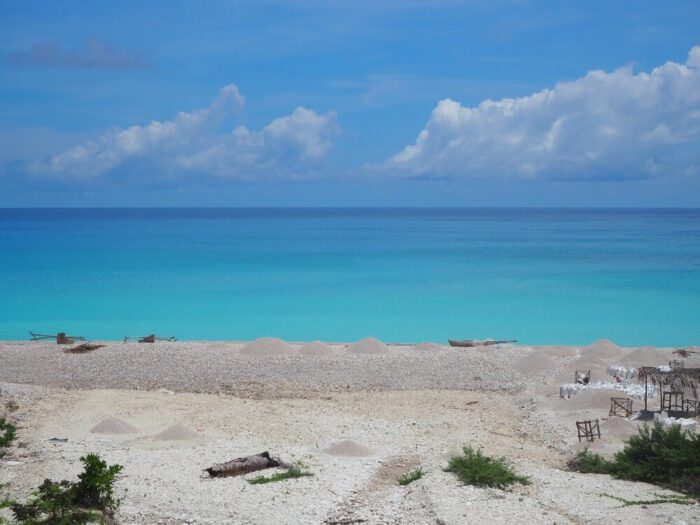
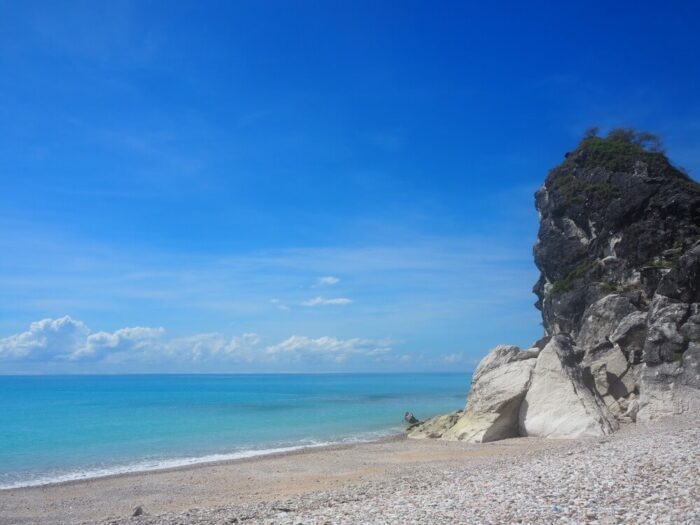
Nualunat Beach
A smaller and quieter stretch of coastline, often described as a hidden gem of southern Timor. Larger stones and rock formations rise from the sea, giving the shore a distinctive shape and forming small coves where the water is usually calmer.
Mountainous Interior
Soe lies in the so-called Timor Highlands, which means there are interesting places to explore right in its immediate surroundings. The most famous is Gunung Mutis, the highest peak of West Timor (2,427 m above sea level), covered in pine forests. The climate here is noticeably cooler than on the coast, and hiking to the summit with a local guide makes for a rewarding full-day trek with wide-ranging views. The trail itself is approximately 13 kilometers long, with an elevation gain of around 1,100 meters.
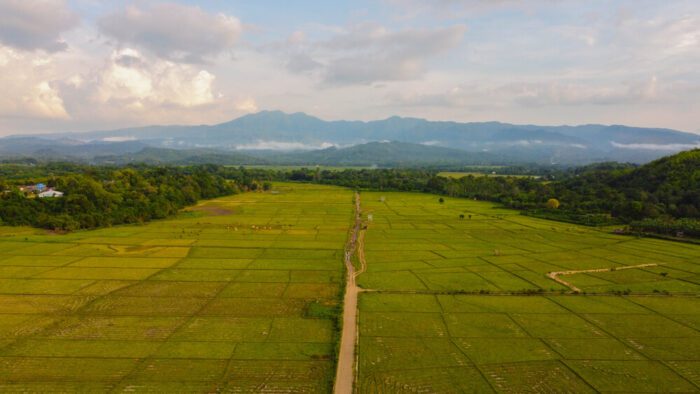
Not far from town, you’ll also find the massive rock formation Fatu Nausus, rising from the landscape as a striking stone landmark. It is less known but still an interesting stop.
Sometimes, however, it’s enough to hop on a motorbike and head out toward the surrounding villages. The journey itself from Soe south to Kolbano is an experience – over roughly three hours, you gradually descend nearly 800 meters in elevation, and the landscape transforms before your eyes from mountain hills to dry coastline. With every kilometer, views of the ocean and Timor’s southern coast open up.
How to Get To Soe
From Kupang, Soe is approximately 100 kilometers away, and the journey by car or scooter takes around 3–4 hours. The main road is also the backbone route across West Timor and is in very good condition, so the trip itself is usually not demanding.
Kupang has an airport that connects the island with Bali, Jakarta, Surabaya, and other Indonesian cities. Flying is therefore the easiest way to reach West Timor.
Flying domestically? Read Guide to Domestic Flights in Indonesia.
When Is the Best Time to Visit Central Timor?
The ideal time to visit is during the dry season, which lasts roughly from May to October. During the rainy season, some secondary roads can be more difficult to pass, and access to waterfalls may be more complicated.
In the interior of Timor, especially around Soe, rainfall tends to be heavier than on the coast. In the wet season, it’s wise to expect frequent intense downpours, as well as rain that can last for several hours.
How to Get Around Soe?
The most suitable way to travel around is by motorbike, ideally rented in Kupang before setting off on a multi-day exploration of the island. However, this option is recommended only for experienced riders. If you plan to travel beyond the main roads, it’s worth choosing a more powerful scooter with good-quality tires. Keep in mind that villages often lack proper fuel stations, and finding petrol can be difficult – gasoline is frequently sold in bottles by the roadside.
For longer distances or for groups, a car is a better option. You can either rent a vehicle independently or hire one with a local driver, which is significantly more expensive but also far more comfortable and safer.
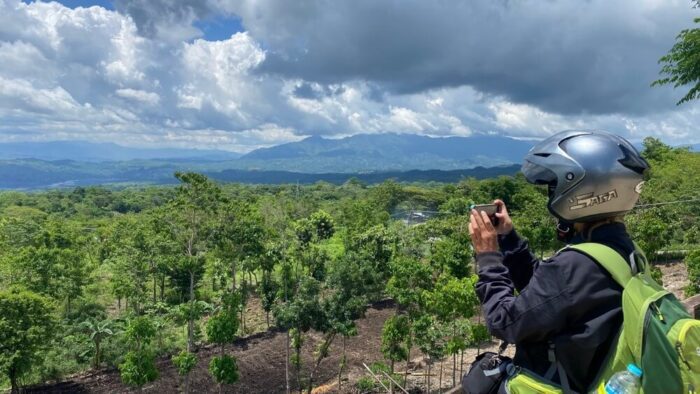
Public transportation is limited here. Long-distance connections between Kupang, Soe, and Atambua operate fairly regularly, but for getting around the nearby area, this option is not recommended.
Where to Stay
In Soe, you’ll mostly find simple but clean accommodation in local homestays and small hotels. A reliable option is Hotel Grand Soe, which offers basic and affordable rooms. An alternative is Dena Hotel. Both places are strategically located in town and serve well as a practical base for exploring the surrounding area.
On the southern coast, we recommend staying at Villa Kolbano, which is among the better options in this part of Timor. However, keep in mind that most accommodation in the area cannot be booked online, so it’s better to arrange everything directly on site or by phone in advance.
What to Taste
Corn and rice form the foundation of the Timorese diet. Among the most typical dishes is jagung ketemak, a thick corn and vegetable soup that is both filling and warming, and jagung bose, a corn porridge cooked with coconut milk.
Along the southern coast, good dining options are limited. Most places you’ll encounter are simple Masakan Padang–style warungs, which have little connection to traditional Timorese cuisine. If you come across grilled fish by the sea, it is usually the best choice.
It’s also worth trying the local coffee — dark, strong and full-bodied. It is commonly prepared in a traditional Turkish-style method, unfiltered, with the grounds settling at the bottom of the cup.
Where to Go Next
After exploring Soe and the southern coast, you can continue in several directions. One option is to return to Kupang and then head to one of the nearby islands, such as Rote or Alor. These islands offer an interesting contrast to the Timor Highlands and can provide a relaxing break by the sea.
Another possibility is to continue toward the border with East Timor and discover an even less-visited part of the island. For those who love mountain landscapes, waterfalls, and traditional villages, exploring the area around Niki Niki and Atambua is a great choice.
Is Central Timor Worth Visiting?
The area around Soe is not a destination that typically stands alone as the main highlight of an entire trip. It makes more sense as an addition to a stay in Kupang, or as a few-day stop while traveling across Timor or on the way to East Timor. It offers a bit of everything – waterfalls, mountain views, and turquoise-blue sea along the southern coast.
Traveling in this part of Indonesia requires a certain level of experience, independence, and the ability to improvise. It does not offer the comfort you may be used to in more touristy areas. Yet that is exactly what gives the region its unique rhythm. Sometimes, it’s enough to slow down, sit with the locals, and simply take in the atmosphere of the Timorese highlands.
Continue reading: