
On the western tip of Flores lies the small town of Labuan Bajo, which until just a few years ago was known mainly to backpackers and divers. Today, it’s one of the fastest-growing tourist destinations in Indonesia. While it serves as the gateway to Komodo National Park—home to the famous Komodo dragons—it also offers plenty of other activities that make it well worth a visit.
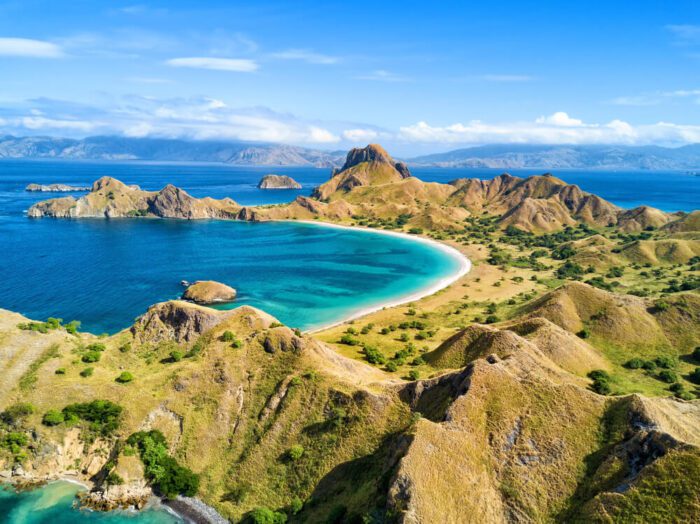
In this guide, you’ll discover the best things to see and do in Labuan Bajo, along with a few hidden gems in the surrounding area that many visitors overlook.
Why Is Labuan Bajo Worth Visiting?
The presence of the national park has undoubtedly shaped Labuan Bajo’s importance on Indonesia’s tourism map. Today, however, the town also serves as a diving hub and a starting point for exploring the western part of Flores Island.
The local waters are known for their rich marine ecosystem, with regular sightings of manta rays, turtles, and a wide variety of tropical fish. Thanks to strong ocean currents and protected areas, the region has long been considered one of Indonesia’s top diving destinations.

The landscape around the town is rugged, with distinctive hills and bays. The coastline is diverse—from light sandy beaches to darker volcanic sand, and even the famous Pink beach located within the national park.
Labuan Bajo combines natural attractions with a growing level of tourist infrastructure and offers an alternative to heavily visited destinations such as Bali.
What to Do and See in Labuan Bajo
Labuan Bajo no longer feels like a small seaside town known mainly to adventurous backpackers. Over the past decade, the area has undergone significant development.
The town continues to change rapidly—new hotels, restaurants, and tourist services are constantly appearing, and prices here are higher than in other parts of Flores. At the same time, Labuan Bajo still maintains its role as an important starting point for visiting Komodo National Park and exploring the western part of the island.

Komodo and Rinca
The main highlight for most visitors is a trip to the islands of Komodo and Rinca in Komodo National Park. On both islands, guided walks with a local ranger allow you to observe Komodo dragons in the wild.
The trails vary in length and lead through savanna landscapes and sparse forests. Besides the dragons, you may also spot deer, wild boars, and water buffalo.
Beaches
Most visitors spend their time on the islands within the national park, but Flores itself also has several easily accessible beaches within driving distance of Labuan Bajo. They’re not particularly spectacular—more on the average side—but they’re perfectly fine for relaxing or a quick swim.
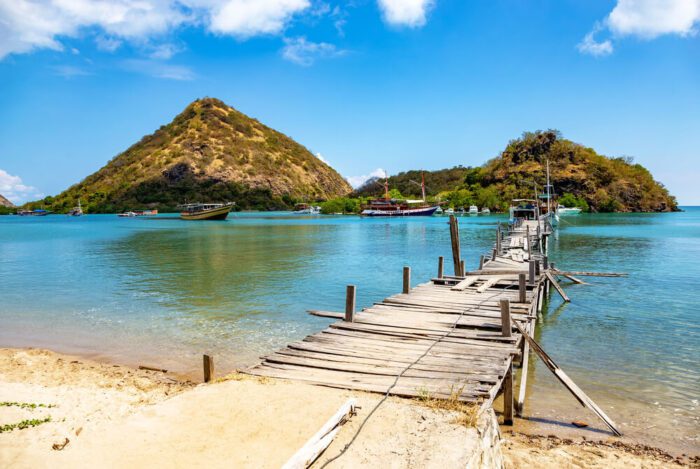
- Pede Beach – the most accessible beach right by the town, suitable for a short stop or an evening walk. During the rainy season, however, there can unfortunately be large amounts of washed-up trash.
- Waecicu Beach – a quieter area north of the center, offering better swimming conditions at high tide, though you should expect fishing boats anchored in the bay. The advantage is easy access and the availability of refreshments.
- Sylvia Beach – a small bay next to a nearby resort. If you buy a drink there, it is usually possible to use the beach without any issues. The beach is clean and suitable for swimming.
- Segang Beach – a less-visited spot without many facilities, offering more privacy. It is best for swimming at high tide.
Waterfalls
Cunca Wulang
The Cunca Wulang waterfalls are located about an hour’s drive from Labuan Bajo. The path to the falls leads through a short forest trek and ends at a rocky gorge with natural pools. During the dry season, swimming here is pleasant, while in the rainy season the current can be stronger and access may be limited.
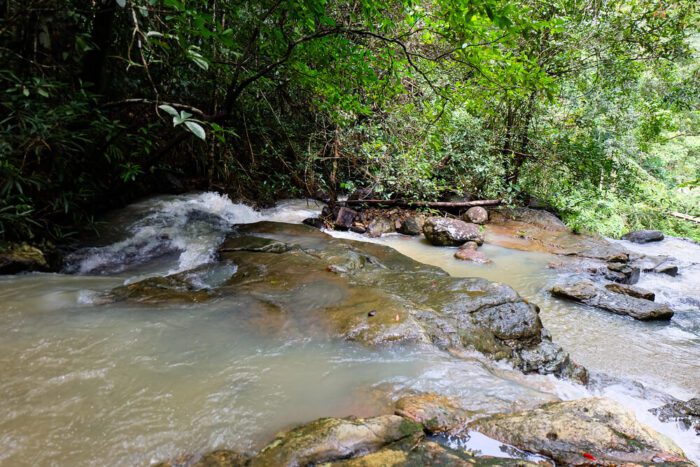
Most of the access road is paved with good-quality asphalt, and the walking trail is clearly marked, leading along concrete steps and across two suspension bridges. The entrance fee includes a local guide who helps with navigation along the trail and ensures safety around the water.
The waterfall itself is relatively modest—the more interesting feature is the narrow canyon with tropical vegetation where it is located.
Cunca Rami
The Cunca Rami waterfall is one of the less visited places around Labuan Bajo. Access usually leads through the village of Rangat, where you can park your motorbike and continue with an approximately one-hour trek through the jungle.
The waterfall itself is quite impressive, but the terrain around it is slippery and the pool beneath the waterfall is very deep, making the place unsuitable for children. Due to the longer trek, it is recommended to arrange a local guide.

Caves
Gua Batu Cermin
Right in the town you can find the limestone cave Gua Batu Cermin, which used to be known mainly for its large tailless whip scorpions that resemble giant spiders at first glance. These creatures can have a leg span of around 30–40 centimeters. However, with the growing number of visitors, they are now rarely seen.
Even so, the site remains a pleasant destination for a short trip and offers an opportunity to explore the local karst landscape. The cave is easily accessible from the town center and can even be reached by the local minibus (angkot) for just a few thousand rupiah. It is recommended to use a local guide, who can explain the history of the area and the cave itself, which was likely underwater in the past.
Rangko Cave
A more interesting but less accessible alternative is Rangko Cave on the northern coast. First, you need to take a short boat ride from a nearby village, which usually costs around 300–400 thousand rupiah (for larger groups up to about 600 thousand). After landing, there is about a ten-minute walk to the cave entrance.
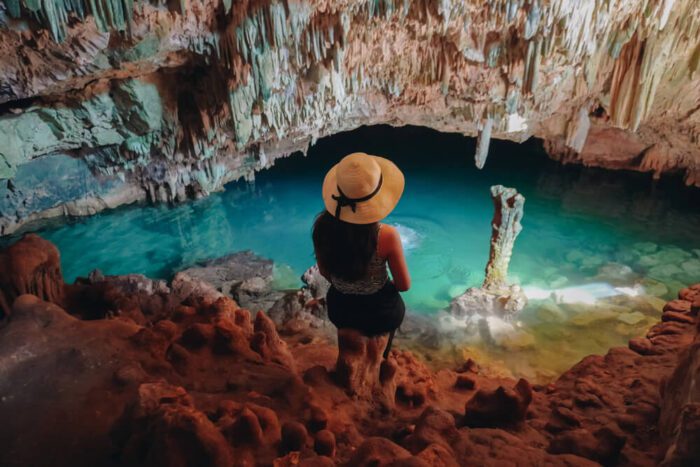
Inside, there is a small pool with crystal-clear water where it is possible to swim. The surface inside the cave is often wet and slippery, so it is necessary to move carefully. Visiting is not recommended during the rainy season, when the access path can be muddy and dangerous.
Viewpoints Above the Town
The northern part of the peninsula above Labuan Bajo offers several viewpoints with beautiful views of the bay and the surrounding islands. Most places are easily accessible by scooter, although the final sections sometimes need to be reached on foot.
Among the better-known spots are Amelia Sea View and Bukit View Bandara Komodo, which offer views not only of the bay but also of the surrounding mountains and the airport. Other nice viewpoints include Bukit Lontar and Willis Hills.
It is also worth stopping at Pondok Pohon Tanjung Bunga, where in addition to the views you will find a restaurant where you can take a break for food or coffee.
Traditional Villages
In the hills above Labuan Bajo, there are several villages belonging to the Manggarai ethnic group. The most well-known is Kampung Melo, which lies on the road to the Cunca Wulang waterfalls. Short cultural programs or demonstrations of traditional dances are often held here.
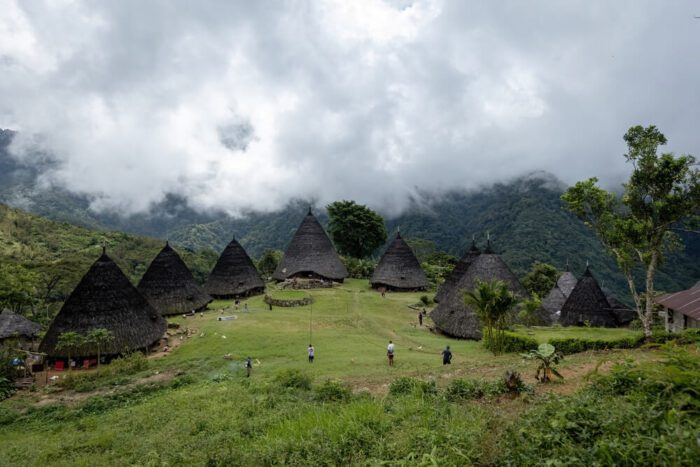
Nearby is Kampung Adat Rangat, where it is possible to learn more about the local culture, especially the megalithic traditions that are typical for the Manggarai region.
It is best to visit these villages with a local guide or driver. Not only will you be able to communicate in English, but they will also ensure that your visit respects local customs and traditions.
How to Get There
The fastest way to get there is by plane. Labuan Bajo has a small but modern airport, Komodo International Airport, with direct flights from Bali and Jakarta. The flight from Bali takes about one hour, while from Jakarta it takes roughly two and a half hours.

An alternative is a ferry from the western part of Sumbawa Island, which makes sense especially when traveling with your own vehicle or when slowly making your way across the Lesser Sunda Islands.
Labuan Bajo can also be reached by road across Flores Island. From the town of Ende it is approximately 260 km, and the journey by car takes around 7–9 hours depending on the road conditions and the number of stops.
When Is the Best Time to Visit?
The best time to visit is from May to October, during the dry season. The sea is calmer, underwater visibility is better, and hikes are more comfortable. The rainy season (November–March) brings higher humidity, occasionally rough seas, and less predictable weather. It’s not the end of the world, but boat plans can sometimes be disrupted.
July and August are the busiest months, so it’s often better to choose May, June, or September.
How to Get Around Labuan Bajo
Labuan Bajo itself can easily be explored on foot. It is small and stretches along the main road and the harbor. For trips to the islands, you need to arrange a boat, either through an organized tour or a private charter.

It is also possible to negotiate directly with locals at the harbor. For exploring the mainland, a scooter or a car with a driver is a good option. The roads are winding and in some places quite damaged—definitely not ideal for inexperienced drivers.
Where to Stay in Labuan Bajo
The accommodation options in Labuan Bajo have expanded significantly in recent years, and today it is possible to find places to stay in almost every price range.
A practical choice is accommodation near Labuan Bajo Port, from where most boat trips depart. However, if you plan to rent a scooter, you can easily choose a hotel outside the center, where the environment is usually quieter.
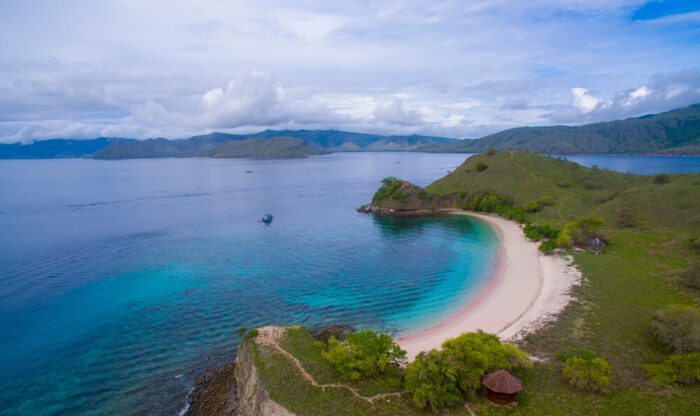
A good mid-range option is Komodo Lodge, which offers pleasant accommodation and nice views of the bay.
Backpackers on a smaller budget can choose places such as Manta Manta Guesthouse or the popular hostel Bajo Bunkhouse. Shared rooms and a livelier atmosphere are also offered by Seaesta Komodo Hotel & Hostel.
Among the more luxurious options worth mentioning is Oh!Julia Hotel Komodo. For those looking for more privacy and tranquility outside the town, an interesting option is The Seraya Resort Komodo, which offers bungalows on its own small island near Labuan Bajo.
Local Food to Try
As this is a seaside destination, the local cuisine naturally focuses on fresh fish and seafood. Whether in a restaurant or a small warung, this is rarely a bad choice.

Fish is most often served grilled with rice, sambal, and a simple vegetable side dish. A regional specialty is a slightly sour fish soup with tomatoes and herbs known as ikan kuah asam. As in Kupang, the porridge jagung bose made from corn and legumes is also popular here.
You may also come across the local spirit moke, made by distilling fermented sap from the lontar palm and typically containing around 30–50% alcohol. However, it’s wise to be cautious about the drink’s origin, as cases of methanol contamination occasionally occur with homemade alcohol in Indonesia.
Where to Go Next
Labuan Bajo is a good starting point for exploring the entire island of Flores. To the west, you can visit Komodo National Park or take a longer boat journey through Komodo and the island of Sumbawa all the way to Lombok.

In the other direction, you can continue across Flores itself. The route leads through mountainous landscapes and smaller towns to Ende, from where you can visit the famous Kelimutu volcano with its three colored lakes. On a longer journey, it is possible to continue further east to the town of Maumere, another important center of the island.
Labuan Bajo is also connected by air with major Indonesian cities such as Jakarta, Surabaya, Denpasar, and Makassar. Thanks to this, a trip across Flores can easily be combined with visits to other Indonesian islands, which often differ significantly from this region in both landscape and culture.
Is Labuan Bajo Worth a Visit?
Labuan Bajo is primarily known as the gateway to Komodo National Park and the main departure point for trips to the famous Komodo and Rinca islands. Yet the town and its surroundings have much more to offer than just access to the national park.
From waterfalls and caves to quiet beaches and scenic viewpoints, there are plenty of interesting places to explore on Flores itself. For many travelers, Labuan Bajo also becomes the starting point of a longer journey across the island—one of Indonesia’s true hidden gems, where dramatic landscapes, traditional villages, and relatively untouched nature still await discovery.
Continue reading :