
Kawah Ijen, also known as Ijen Crater, is one of the most unusual volcanic landscapes in East Java. It’s often combined with Mount Bromo and Tumpak Sewu Waterfall as part of a longer East Java route.
Ijen became famous mainly for its rare blue fire, but this part of the experience has changed significantly in recent years. By 2025–2026, the large blue flames shown in many older photos and travel blogs were no longer something most visitors could expect to see. Changes in gas flow and sulfur mining have affected the phenomenon, and access to the lower crater may also be restricted depending on current safety conditions.
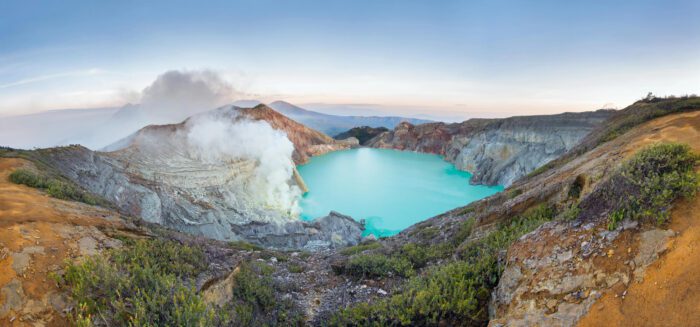
That does not mean Kawah Ijen is no longer worth visiting. The crater itself, the sulfur mining area and the sunrise views still make it one of the more interesting volcano experiences in East Java.
In this guide, we’ll explain what Kawah Ijen is like today, whether it is still worth descending into the crater, how difficult the hike is, what you need before entering, how tickets work, whether you need a guide, and how to get there from Banyuwangi, Bali or other parts of Java.
Why Visit Kawah Ijen?
The blue fire is still what brings many travelers to Kawah Ijen. It is caused by sulfur gases escaping through cracks in the ground and igniting when they come into contact with oxygen. In darkness, this creates the blue flames the crater became famous for.
But today, we would not make the blue fire the only reason to visit.
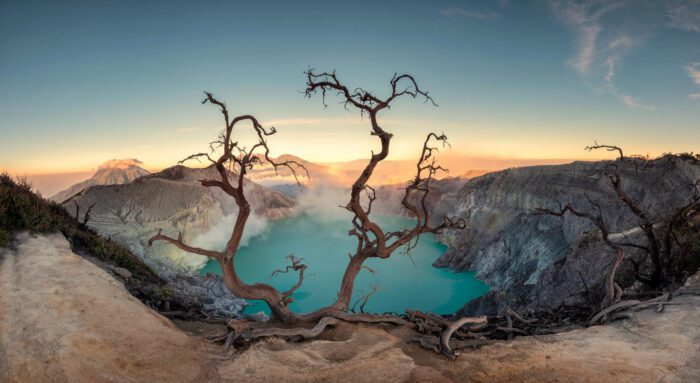
The wider crater landscape is just as important to the experience: the turquoise acidic lake, sulfur smoke rising from below, steep crater walls and mountain views across East Java. If the weather is clear, sunrise slowly reveals the whole crater after the night hike.
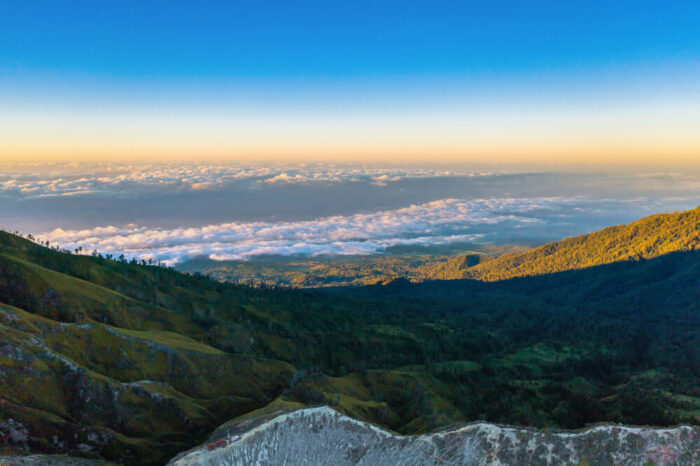
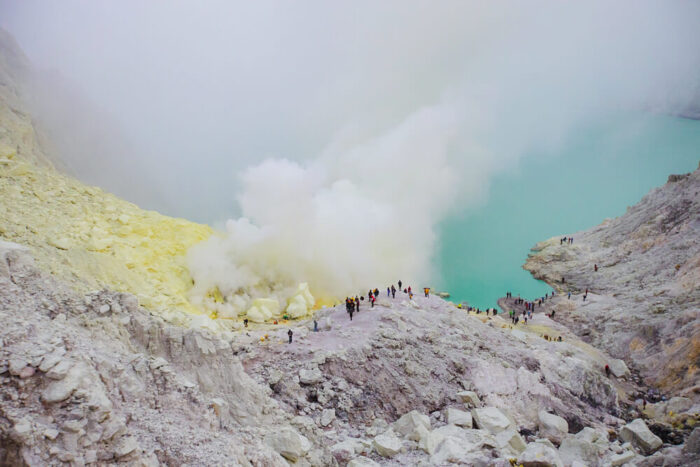
Kawah Ijen is also a working sulfur mine, not only a tourist attraction. Miners still collect sulfur inside the crater and carry heavy loads along parts of the same route used by visitors. It is worth keeping that in mind when walking through the area and giving miners space to pass.
Can You Still See the Blue Fire at Kawah Ijen?
Yes, the blue fire at Kawah Ijen is real, but you should not plan your visit expecting the dramatic blue flames shown in older photos and travel blogs.
In the past, visitors regularly descended into the crater and could see the flames from very close range. Today, the experience is much less predictable. The blue fire may be weak, visible only from a distance, or not visible at all.
Access to the crater and sulfur mining area can also be restricted depending on current safety conditions, which may further limit how close visitors can get.
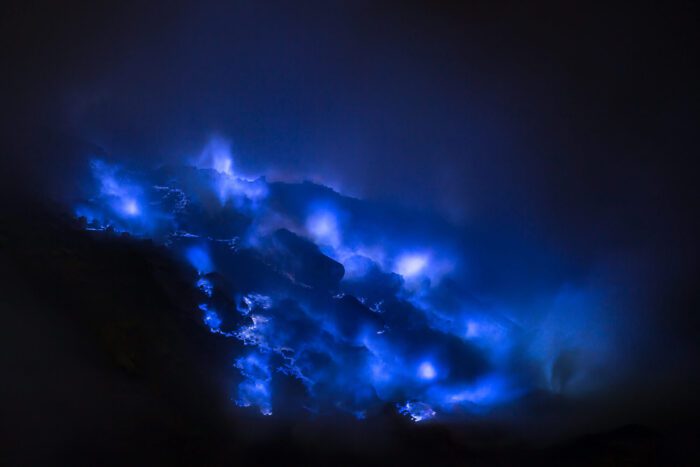
Visibility depends on several factors, including volcanic activity, gas flow, wind, weather and how dark it is when you arrive.
The stronger blue fire experience described in many older articles is simply no longer something you should count on. For most visitors today, the crater landscape and sunrise are a more reliable reason to visit Kawah Ijen.
Is It Still Worth Descending into the Crater?
Not necessarily.
For many travelers, the better part of the Kawah Ijen experience is now the sunrise and crater views from above rather than the descent toward the sulfur mining area.
Going down brings you closer to the sulfur vents and mining activity, but it also means steeper terrain, stronger fumes and less time to find a good position around the rim before sunrise. If visibility is poor or the blue fire is weak, the descent may not add much to the experience.
That does not mean you should never go down. It simply is not the obvious highlight it once was in older travel stories and tour descriptions.
If your main goal is to see the crater, watch the landscape appear at sunrise and avoid the strongest sulfur fumes, staying around the rim often makes more sense.

How Difficult Is the Kawah Ijen Hike?
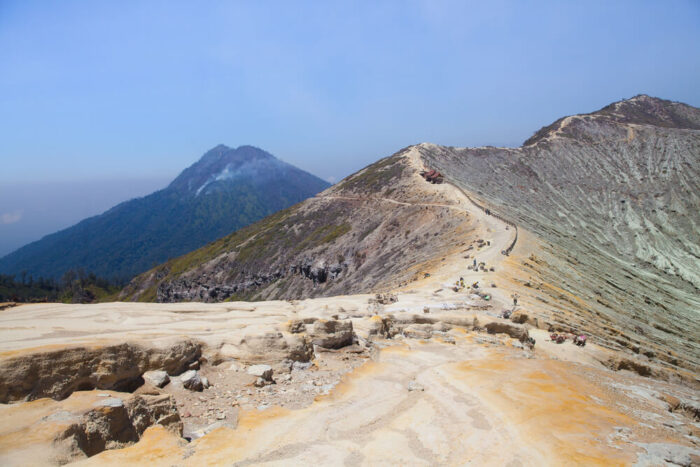
Kawah Ijen is not a quick viewpoint stop. Most visits start in the middle of the night, with a hike in the dark before reaching the crater rim around sunrise.
The main trail from Paltuding is straightforward and does not require technical hiking skills, but parts of it are steep. The combination of uphill walking, cold air, sulfur fumes and very little sleep can make the hike feel harder than the distance suggests.
For travelers with average fitness, the hike is usually manageable.
The bigger issue is the air quality (and an early morning start). Sulfur gas can become uncomfortable very quickly, especially when the wind changes direction. A proper mask is important, and travelers with asthma, heart conditions or respiratory problems should be especially cautious about visiting Kawah Ijen.
What to Prepare Before Visiting Kawah Ijen
Before hiking to Kawah Ijen, there are a few things you need to prepare. Ijen is an active volcanic area with strong sulfur gas, so visitors are required to meet certain health and safety requirements before entering.
Health Certificate
Before hiking Kawah Ijen, you need a health certificate confirming that you are fit enough for the hike.
Do not expect a full medical examination. The check is usually quite basic and may include a few questions about your health, blood pressure, pulse and other basic vital signs. The exact procedure can vary depending on where you get the certificate.
You can usually get the certificate up to three days before your hike from a hospital, clinic, or community health center, known locally as a Puskesmas. Banyuwangi is the most convenient place to arrange this before going to Ijen.
There is also a medical post at the Paltuding entrance gate. It provides health checks and issues health certificates for visitors, so you may be able to arrange it before starting your hike. The post operates from around 2 PM to 7 AM, which covers the usual night-hiking schedule.
Where to Buy Entrance Tickets?
Entrance tickets for Kawah Ijen should be booked online before your visit. As of June 4, 2026, the current booking system runs through AyoKeTamanNasional. You may still find older information online pointing to the BBKSDA East Java ticket website, but that is no longer the main system to rely on.
Daily visitor numbers are limited, so it is better to book your ticket in advance, especially during weekends, holidays, or peak travel periods.
For international visitors, the entrance fee is around IDR 100,000 on weekdays and IDR 150,000 on weekends. After booking online, you will receive a barcode or booking confirmation that you need to show at the ticket counter before entering.
If you join a tour, your guide or tour operator will usually handle the ticket booking process for you. Still, it is a good idea to confirm what is included, especially the entrance ticket, health certificate, gas mask, and guide fee.
When Is Kawah Ijen Closed?
Kawah Ijen is closed on the first Friday of every month for a regular cleaning and maintenance program known locally as Ijen Rijig.
During this closure, visitors are not allowed to hike, while officers and local teams clean the area and check the trail to help protect the environment.
Do You Need a Gas Mask?
Yes. You should bring a proper gas mask or respirator to Kawah Ijen, especially if you plan to descend toward the sulfur mining area.
A full gas mask is not needed for the entire hike to the crater rim, as sulfur fumes on the upper trail are often weak or absent. However, conditions can change quickly when the wind shifts, so it is still important to have one with you.
If you descend into the crater, the sulfur fumes can be much stronger, and we would consider a proper mask essential.
Gas masks can usually be rented around Paltuding for roughly IDR 45,000.
Do You Need a Guide for Kawah Ijen?
You do not need a guide to hike from Paltuding to the crater rim. The main trail is straightforward and many travelers hike it independently.
However, if access to the lower crater is open and you want to descend toward the blue fire and sulfur mining area, you need to go with a local guide.
If you do want a guide, you can arrange one at Paltuding or through your accommodation or tour operator. Prices usually start at around IDR 250,000 per guide for a small group (1 to 5 people).
You can join a shared group to keep the cost lower, or arrange a private guide if you prefer more flexibility. Local guides are usually available near the Paltuding entrance gate.
As a general reference, one guide can usually take around 1 to 5 people, with guide fees starting from about IDR 250,000 per guide. Prices and rules can change, so confirm the latest rate at the entrance gate or with your accommodation before your hike.
Looking for a private driver for a trip around East Java? Send us a message at hello@backindo.com and we'll happily share our tips.
Main Highlights of Kawah Ijen
Sunrise and Crater Views
Sunrise is now the main experience we would recommend at Kawah Ijen. As daylight increases, the lake, sulfur smoke, and crater walls slowly become visible. The exact view depends on cloud cover, wind, and where you stand along the rim.

Ijen Crater Lake
The turquoise lake is beautiful from above, but it is also highly acidic and dangerous. Do not touch the water or try to approach it independently.
The color is usually easiest to appreciate after sunrise, once enough light reaches the crater. The rim also has several popular photo spots, including the dead tree area, but stay away from unstable edges and do not follow other visitors onto exposed sections just for a photograph.
Sulfur Miners
Kawah Ijen remains a working sulfur mine. Miners carry heavy loads along the crater route and the main hiking trail. This is real work, not a performance for tourists.
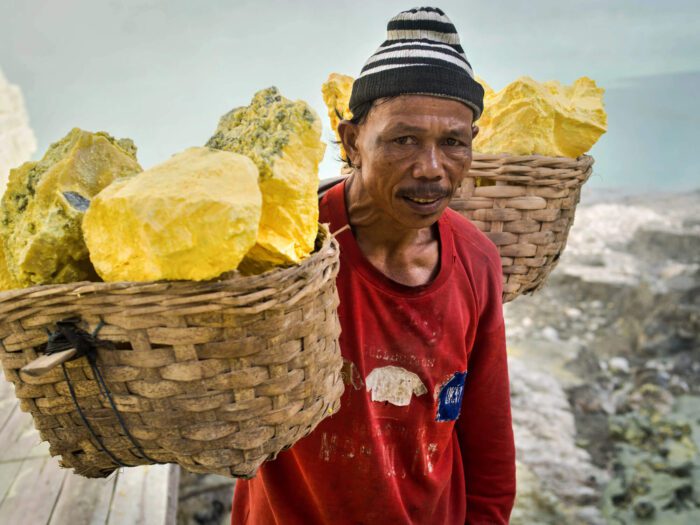
Always give miners priority on narrow sections. Do not block the path or ask someone carrying sulfur to stop for photographs.
Mining at Kawah Ijen is widely recognized as one of the hardest jobs in the world. To learn more about the impact on the miners’ health, you can read this BBC article.
Trolley Taxis
You may see trolley taxis on the main trail. These small carts are pushed and controlled by local workers and can carry visitors who cannot or do not want to walk the full route.
Round-trip prices from Paltuding to the upper trail are often around IDR 800,000 to 1,200,000. A one-way ride, especially downhill, is usually cheaper. Agree on the full price before using the service.
Curious about other incredible mountains in East Java? Check out our complete Guide to Bromo.
Safety Tips for Hiking Kawah Ijen
Although Kawah Ijen is a popular destination, proper preparation is essential for a safe and enjoyable hike. You do not need to carry too much gear, since you will not stay long at the summit, but the essentials really matter here.
- Hiking shoes with good grip
- A gas mask
- A warm jacket because nights can get cold
- Comfortable clothing
- A headlamp or flashlight if you hike at night
- At least 1 liter of water
- Snacks or chocolate
- A small daypack
- Personal medication and a simple first aid kit
- An optional trekking pole if you want extra support
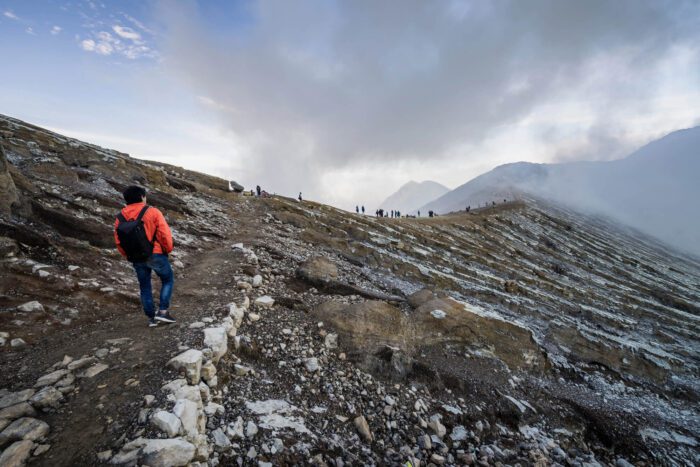
Important safety rules:
- Stay away from unstable crater edges
- Follow closures and ranger instructions
- Do not enter areas restricted because of gas or volcanic conditions
- Motorbikes are not allowed on the hiking trail
- Camping at the summit is prohibited
- Do not litter or damage the crater environment
- Give sulfur miners priority
Backindo tip: Kawah Ijen is popular, but it is still an active volcanic and mining area. Darkness, fatigue, changing wind, and sulfur gas can quickly make conditions more difficult.
Best Time to Visit Kawah Ijen
The best time to visit Kawah Ijen is usually during the dry season, roughly from May to September, when the weather is clearer and rain is less likely.
During this period, you usually have a better chance of stable hiking conditions and a clearer view from the crater rim. In the rainy season, the trail can become slippery, visibility may be poor, and conditions around the crater can feel much less comfortable.
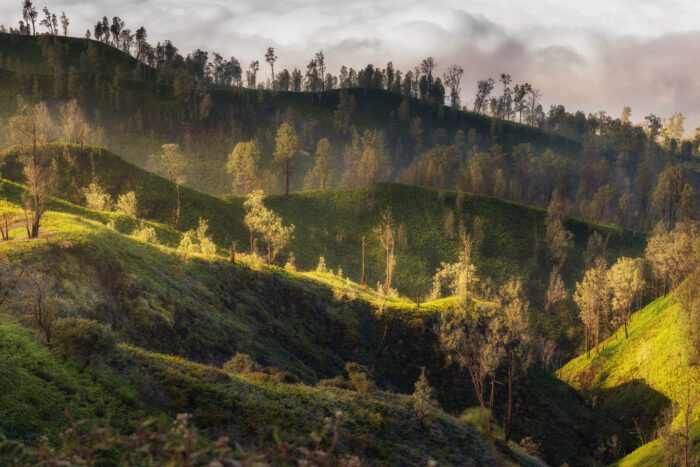
If possible, avoid weekends and national holidays, when Kawah Ijen is often more crowded. Since the trip takes time and most visits start in the middle of the night, it is usually better to stay overnight near the base area or in Banyuwangi instead of trying to do everything in one rushed push.
How to Get to Kawah Ijen
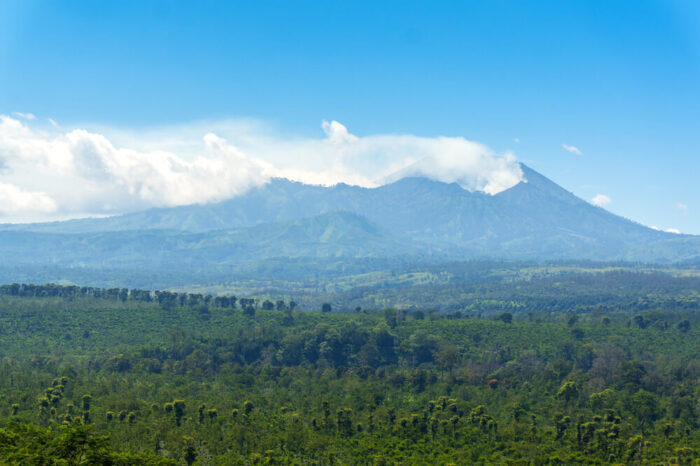
For most travelers, Banyuwangi is the easiest base for visiting Kawah Ijen. From there, you can continue to Paltuding by private car, tour, or DAMRI shuttle.
From Banyuwangi to Kawah Ijen
If you are staying in Banyuwangi, the easiest option is a private car or tour.
For public transport, DAMRI runs a shuttle from Taman Sritanjung in the city center to Paltuding. Seats are limited, so book in advance through the DAMRI app, especially on weekends. If the app is difficult to use, your accommodation can usually help.
From Bali to Kawah Ijen
The most practical route is usually by bus to Banyuwangi, including the ferry crossing from Gilimanuk to Ketapang, which takes around 45 minutes.
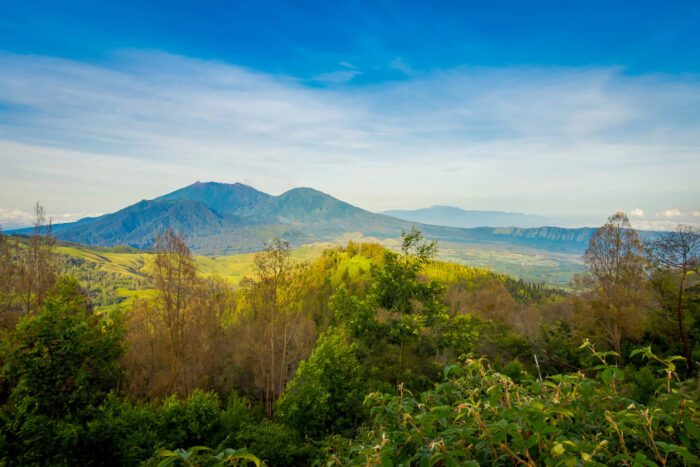
Check where your bus actually stops. Some services finish near Ketapang Port, while others continue into Banyuwangi.
Many buses from Bali arrive late at night or early in the morning. Unless your timing is very good, we would recommend sleeping in Banyuwangi before hiking Ijen rather than going straight to Paltuding.
From Ketapang Port to Paltuding, the drive takes roughly 2.5 hours. Grab and Gojek pick-up can are restricted near the ferry area, so you need to walk a bit before meeting a driver.
Need a trusted driver to get to Kawah Ijen and explore East Java? Send an email to hello@backindo.com.
Getting to Kawah Ijen by Train
If you are coming from Jakarta, Bandung, Yogyakarta, Semarang, or Surabaya, you can take a train to Banyuwangi Kota Station (BWI).
From there, you are relatively close to Taman Sritanjung, where you can connect to the DAMRI shuttle to Paltuding. Grab or Gojek is the easiest way to get between the station and town.
- Jakarta to Banyuwangi: around 19 hours
- Yogyakarta to Banyuwangi: around 10 hours
- Surabaya to Banyuwangi: around 6 hours
Since the trip can be long, staying overnight in Banyuwangi before your hike is usually the better option.
Want to travel by train in Indonesia? Check out our guide on How to Travel by Train in Indonesia and the difference between Gambir Station and Pasar Senen.
Getting to Kawah Ijen by Plane
The fastest option is flying to Banyuwangi Airport (BWX).
From Jakarta, the flight is much faster than overland travel. From the airport, you can hire a car to Paltuding, usually for around IDR 450,000 to 550,000 depending on the time and arrangement.
Still, even if you fly, it is usually better to check into your accommodation and rest before starting the hike.
Where to Stay Near Kawah Ijen
If you plan to stay overnight before the hike, you can stay either in Banyuwangi or in Licin District, which is closer to the Kawah Ijen starting point.
There are also simple homestays closer to the entrance, but comfort and water supply can sometimes be more limited there. For backpackers, camping may sound tempting, but for most travelers a proper night of sleep before the hike is the better decision.
The area around Kawah Ijen offers a wide range of accommodation, from simple budget stays to more comfortable places.
If you want to stay closer to the mountain, Licin is the most practical base. One option is Bamboo & B, about 30 minutes from the entrance. The staff can usually also help with local transport or guide arrangements.
If you prefer to stay in town, choose somewhere near the center of Banyuwangi, ideally not too far from Taman Sritanjung or the main access roads. Mango Tree Homestay is one practical budget option with staff who are familiar with Ijen logistics.
For more weather context, check our Best Time to Visit Indonesia guide.
Is Kawah Ijen Still Worth Visiting?
Yes, Kawah Ijen is still worth visiting, but probably not for exactly the same reasons older travel blogs suggested.
If you go only for dramatic close-up blue flames, there is a real chance you will leave disappointed. But if you go expecting a night hike, a surreal crater landscape, a sunrise over one of the most unusual volcanic lakes in Indonesia, and a more complex reality than the average volcano stop, Ijen can still be a very rewarding experience.
For many travelers today, the descent no longer feels like the most rewarding part of the visit. The real strength of Kawah Ijen is often the full atmosphere of the hike and the sunrise from the rim.
The key is to treat it as a full East Java volcano experience, not only as a blue fire photo stop.
FAQ
Can you still see the blue fire at Kawah Ijen?
You may see a small blue flame near the sulfur mining area, but the large natural fire shown in older photographs is no longer what most visitors experience.
Is it still worth descending into the crater?
For many travelers, sunrise from the rim is now the more rewarding part of the experience. The descent means stronger fumes, steeper footing, and less time to enjoy the crater view above.
Is Kawah Ijen safe to hike?
Kawah Ijen is generally manageable with proper preparation, but sulfur gas, darkness, fatigue, and changing weather create real risks. It is not ideal for people with asthma, heart conditions, or respiratory problems.
Do you still need a health certificate for Ijen?
Yes. Visitors normally need a health certificate issued within the last three days before the hike.
Where do you buy Kawah Ijen tickets?
Tickets should be booked online in advance through the current national park booking system, AyoKeTamanNasional.
What should you bring for the Kawah Ijen hike?
Bring warm layers, hiking shoes, a headlamp, water, snacks, a gas mask, a rain jacket, and your health certificate.