
Tangkoko is one of the best wildlife stops in North Sulawesi and one of the easiest places in Indonesia to try to see tarsiers in the wild. If you are planning a route through the region, this is the place most travelers mean when they talk about seeing spectral tarsiers, crested black macaques, hornbills, and other Sulawesi wildlife without going deep into a remote rainforest.
Here, the main question is not only whether the reserve is worth visiting, but how to time your visit well enough to actually give yourself a strong chance of seeing the animals you came for.
In this guide, we’ll explain how Tangkoko works, whether you can really see tarsiers, if you need a guide, whether a day trip from Manado is enough, where to stay, and what to expect from the visit.
Why Visit Tangkoko?
Tangkoko is one of the best reasons to leave Manado for a day or two, especially if you want to see a completely different side of North Sulawesi. After the reefs of Bunaken or the cool highlands around Tomohon, Tangkoko brings you into lowland forest, where the main highlight is not scenery, but wildlife.
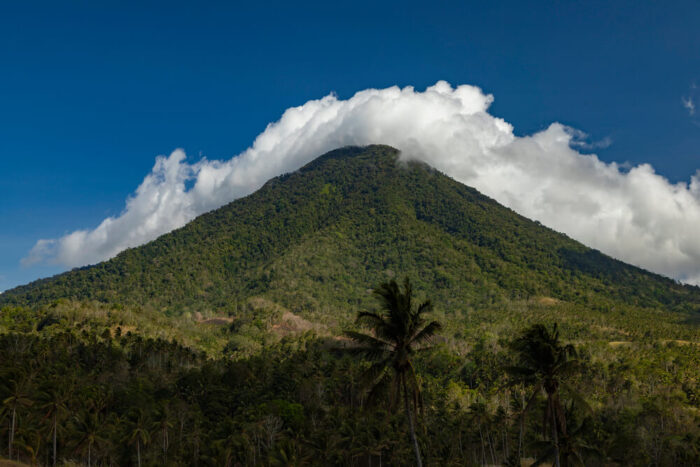
This is one of the most accessible places in Indonesia where you have a realistic chance of seeing wild tarsiers, crested black macaques, hornbills, bear cuscus and other animals connected to Sulawesi’s unique ecosystem. Many of these species are endemic, which means you cannot just see them anywhere else in the country.
What Tangkoko Actually Is
Many travelers search for Tangkoko National Park, but the official name is closer to Tangkoko Batuangus Nature Reserve or Tangkoko Nature Reserve. It is a protected forest area near Batuputih, not far from Bitung, on the northeastern side of North Sulawesi.
The wider protected complex is usually described at around 8,700 hectares, and this is why the naming can feel confusing online. You may also see TWA Batuputih or slightly different official labels depending on the source. For travelers, the practical point is much simpler: this is the main wildlife reserve in North Sulawesi for seeing tarsiers and black macaques, and most visits are arranged through Batuputih.
Can You Really See Tarsiers in Tangkoko?
Yes, Tangkoko is one of the best-known places to try.
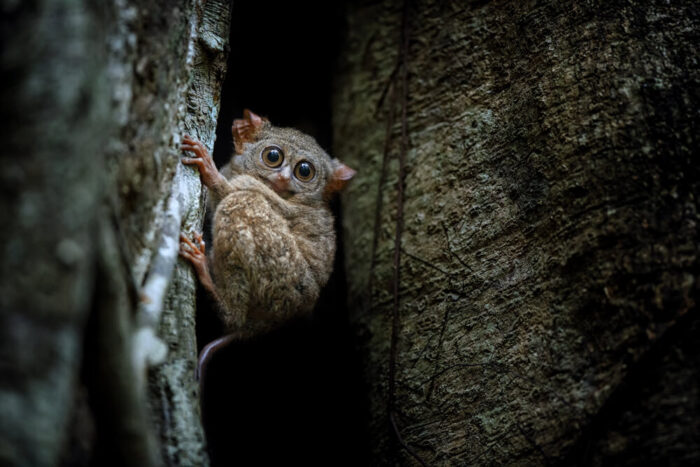
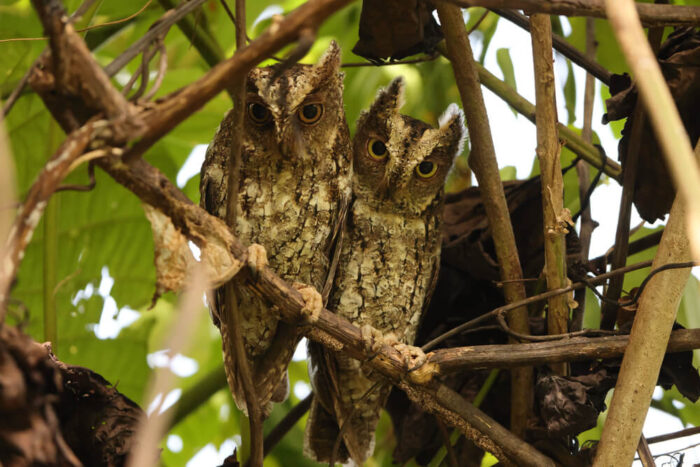
This is the main reason many travelers come. The tarsiers in Tangkoko are tiny nocturnal primates, and local guides usually know the trees or sleeping areas where they are often seen around sunrise or late afternoon into dusk.
You may see them referred to as spectral tarsiers, Tarsius spectrum, or Gursky’s spectral tarsiers. The naming is confusing because taxonomy changed, but it’s still the same animal. And Tangkoko is one of the most accessible places in North Sulawesi to try to see these tiny primates in the wild.
That does not mean sightings are guaranteed. Wildlife is still wildlife. But among the places in Indonesia where travelers hope to see tarsiers, Tangkoko has one of the strongest reputations for making that possible without an unusually difficult expedition.
Other Animals You May See
Tarsiers are the headline species, but they are not the only reason to visit. Tangkoko is strong not only because you may see wildlife, but because so much of that wildlife is endemic to Sulawesi.
Crested Black Macaque / Yaki
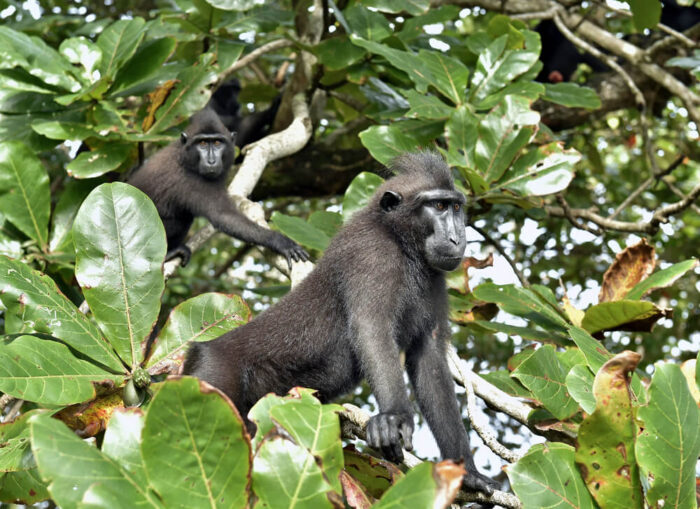
The crested black macaque, locally known as yaki, is another major reasons to come. Macaca nigra is endemic to the northern tip of Sulawesi and listed as Critically Endangered. But these monkeys are often easier to see than tarsiers, especially on morning walks.
Bear Cuscus
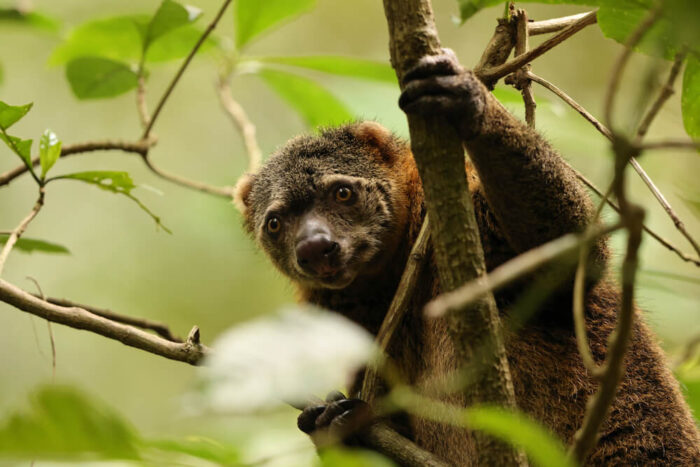
The bear cuscus is another species travelers hope to see, although sightings are never guaranteed. Despite the name, this is not a bear at all but a marsupial.
Hornbills, Kingfishers and Other Birds
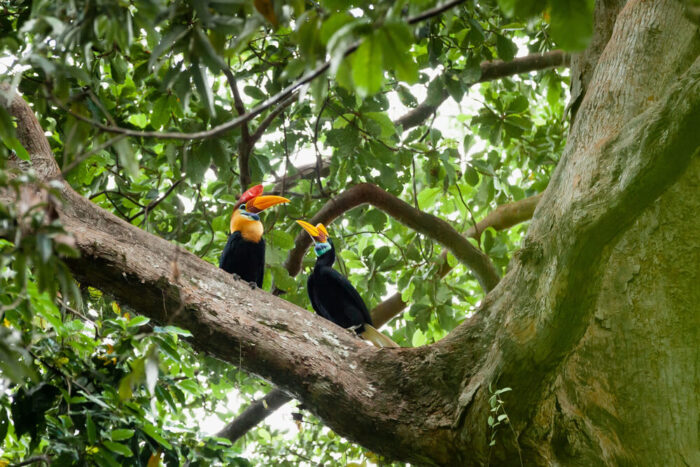
Tangkoko is also a good place for birdwatchers. Hornbills and kingfishers are among the birds you may see here, and even if you are not a serious birder, the forest feels especially alive in the morning.
You may also see maleo mentioned in descriptions of the wider protected area. From a conservation point of view, that makes sense, but casual visitors should not expect to see maleo on a normal forest walk.
Reptiles, Insects and Nocturnal Wildlife
Late afternoon and evening visits sometimes continue beyond the tarsier sighting itself. Depending on the route and your guide, you may also notice snakes, spiders, frogs, monitor lizards, and other small nocturnal wildlife.
Birdwatchers and photographers may notice more details than casual visitors, but you do not need specialist knowledge to enjoy Tangkoko. If you like forests, wildlife and endemic animals, the reserve can still feel very rewarding.
Best Time of Day to Visit Tangkoko
For most travelers, early morning or late afternoon is best. Those are the periods when wildlife activity is usually better and when guides are most likely to focus on tarsier sightings.
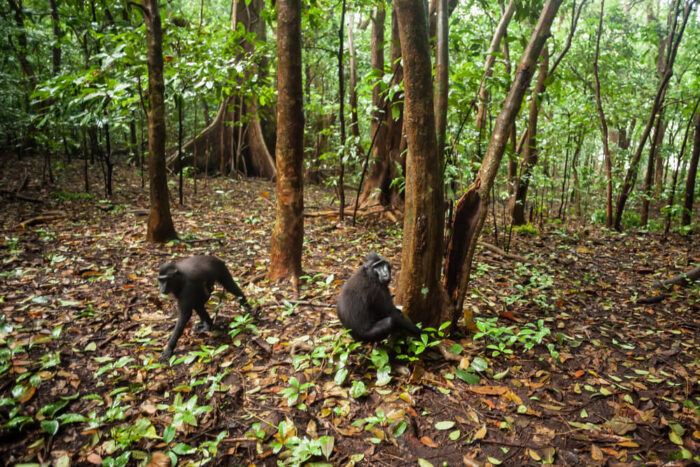
If you only visit in the middle of the day, you can still walk in the forest and may see some animals, but the odds are usually worse. This is why many travelers choose between:
- a very early day trip from Manado
- an overnight stay in Batuputih
- a two-session visit, with one walk in the afternoon and another the next morning
A morning walk is usually better if you care more about macaques, birds, and cooler forest conditions. An afternoon into dusk walk is usually the better choice if tarsiers are your main priority, because this is when guides often wait near the trees where they emerge. Some visits also continue a little later for other nocturnal wildlife.
Do You Need a Guide in Tangkoko?
Yes. A local guide is required to enter the forest in Tangkoko. You can usually arrange one through your guesthouse in Batuputih, at the entrance, or as part of a tour from Manado, Bitung or Lembeh.
Before you agree on a price, check what is included. Some tours include only transport, while the entrance fee and forest guide are paid separately. As a rough reference, foreign visitors often pay around IDR 100,000 for the entrance fee, while guide fees are commonly around IDR 100,000–200,000, depending on the walk and group size. Prices can change, so confirm the current setup before you go.
The guide is especially helpful if you want to spot tarsiers, and other wildlife you would probably miss on your own. They also help keep the visit responsible: no flash around tarsiers, no getting too close, no feeding animals, and no pushing wildlife just for photos.
Day Trip from Manado or Overnight Stay?
Both are possible, but they suit different kinds of travelers.
Day Trip from Manado
A day trip works if you are short on time and want to keep Manado as your main base. This is often the easiest option if you are combining Tangkoko with a wider North Sulawesi route and do not want to change hotels again.
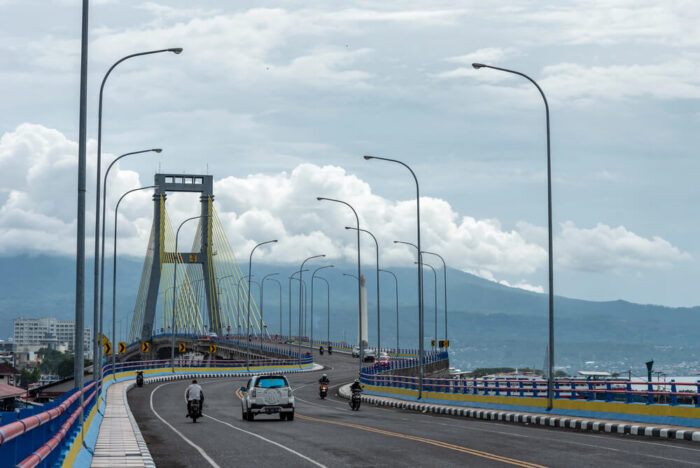
The downside is timing. To make the most of Tangkoko, you usually need to leave Manado very early or plan the day around a late-afternoon visit and return after dark. That is possible, but it makes the day longer and less flexible.
Overnight Stay in Batuputih
Staying near the reserve is the better option if wildlife is one of the main reasons for your trip. It gives you easier access to the reserve at the best times of day, a more relaxed schedule, and the option to do both an afternoon and an early morning walk.
How to Get to Tangkoko
Tangkoko is usually reached via Batuputih, a village area near Bitung. From Manado, the drive generally takes around 1.5 to 2.5 hours, depending on traffic, your exact starting point, and road conditions.
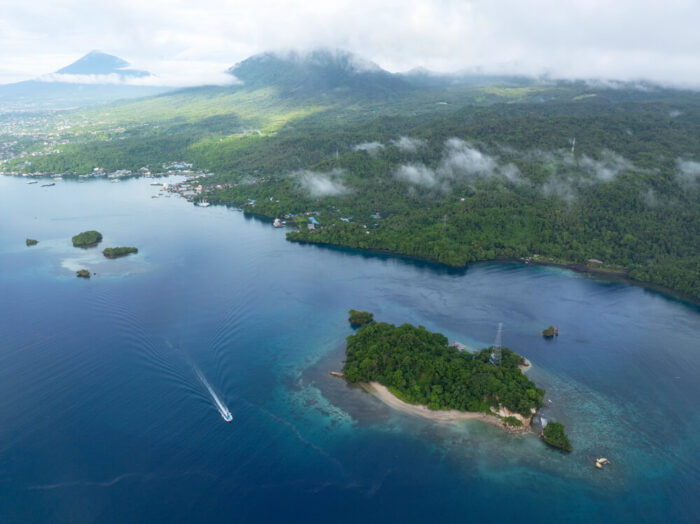
Most travelers visit from Manado, but Bitung is closer and can be a practical base if you are already staying there or diving around Lembeh. Some Lembeh resorts also help arrange Tangkoko as a land trip. If you are staying on Bangka, visiting is possible, but it takes more effort and makes the most sense only if wildlife is a real priority. If you want the easiest timing overall, staying in Batuputih is still the best option.
Private Driver
For most foreign travelers, a private driver is the easiest option. It is the simplest way to control your timing, which matters a lot here because wildlife activity is best early or late in the day.
This option makes the most sense if you are doing a day trip from Manado or continuing onward after Tangkoko.
Organized Tour
An organized tour can work well if you want everything arranged in one go, especially transport plus guide. Just make sure the timing is built around sunrise or late afternoon, not only around what is convenient for the driver.
If you book online, check carefully what is actually included. Some cheaper Tangkoko tours are really transport-based day trips that cover only the car, driver, fuel, tolls, and water, while the forest guide, entrance fee, and lunch are paid separately.
Public Transport
Public transport is possible in theory, especially via Bitung, but for most travelers it is more effort than it is worth. The harder part is not only getting close to Batuputih, but doing it with the right timing for wildlife and then returning smoothly.
If Tangkoko is important to you, this is one of the places where saving money on transport can easily reduce the quality of the whole experience.
Renting a Motorbike
Only do this if you are comfortable riding in Indonesia and have the proper license and insurance. A motorbike gives freedom, but it also means dealing with an early or late ride on your own, which is not ideal for everyone.
Entrance Fees and Other Costs
Foreign visitors commonly report paying around IDR 100,000-150,000 (USD 5.5-8) for the reserve entrance, depending on the day (weekday vs weekend) and current rules, plus a local guide fee from around IDR 150,000 (USD 8) for a shorter walk.
Transport and tour costs vary much more depending on where you start, how long the driver waits, and whether the guide and entrance fee are bundled or paid separately. Bring cash, ask what is included, and if you pay the entrance fee yourself, ask for the ticket.
Where to Stay Near Tangkoko
You basically have two base options: Manado or Batuputih. Accommodation around Batuputih is usually much simpler than in Manado.
If you want the easiest wildlife experience, stay near Batuputih, close to the entrance area of Tangkoko. This is the most practical setup if you want to do an afternoon walk for tarsiers and an early morning walk for macaques and birds without turning the whole visit into a very long transfer day.
Places worth checking near Tangkoko include Tangkoko Sanctuary Villa, which is one of the more comfortable options with air-conditioned rooms and garden views, Tangkoko Hill, a simple hotel with a restaurant, AC rooms, and private bathrooms, and Tangkoko Jungle Homestay, a local homestay near Batuputih with basic rooms and parking. You can also look at Tangkoko Gallery Guest House and Resto if you want a small guesthouse with an on-site restaurant.
If you prefer more comfort, better restaurant options, and easier airport access, stay in Manado and visit Tangkoko as a day trip with a private driver. This is more convenient overall, but less ideal for wildlife timing because you will usually need a very early start or a late return after dark.
What to Expect from the Forest Walk
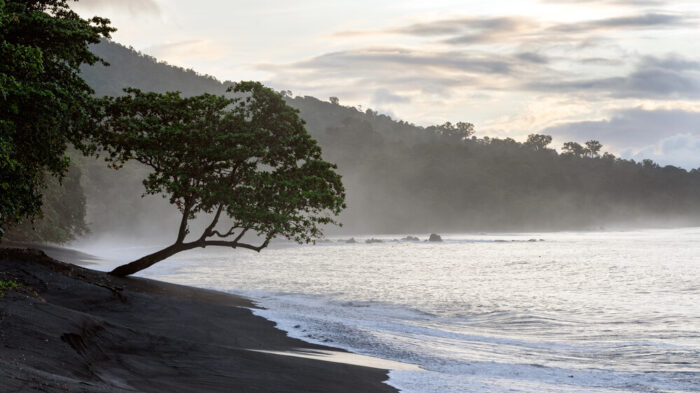
Most visits involve walking with a guide on forest paths for a few hours, often with plenty of stopping, waiting, and looking up into the trees. The exact route depends on what your guide is tracking that day and what animals have been seen recently.
As a rough planning reference:
- a short evening tarsier walk often lasts around 2 hours
- a morning wildlife walk is often around 3-4 hours
- a two-session visit usually means one afternoon walk and one early morning walk
- a birding-focused visit may take half a day or even most of the day
Humidity can be high, and mosquitoes are possible. The visit is usually manageable for most travelers with normal mobility, but closed shoes, water, and realistic expectations help a lot.
Responsible Wildlife Watching in Tangkoko
Tangkoko works best when visitors understand that good wildlife viewing depends on not disturbing the animals.
- Do not use flash when photographing tarsiers. Their eyes are extremely sensitive, and this is one of the clearest basic rules to take seriously.
- Keep your voice low and avoid sudden movement, especially when the group is waiting near a sleeping tree.
- Do not block the animals’ route as they leave the tree hollow.
- Do not touch the tree, branch, or hollow just to get a better reaction or photo.
- Do not pressure your guide to get closer than is reasonable.
- Do not feed wildlife. This should go without saying, but it still matters in places with frequent tourism.
- Do not assume drones are acceptable. Protected wildlife areas often restrict them, and this is not the kind of place where we would expect casual drone use to be welcome.
Practical Tips Before You Go
- Bring cash. Fees, guide payments, drinks, and small local costs are easier to handle in cash.
- Wear proper shoes. Sandals are not the best idea for a forest walk.
- Bring insect repellent and enough water, especially for afternoon walks.
- Wear lightweight clothes that cover your legs. This is more practical than shorts for many people in humid forest conditions.
- Plan your transport around the walk time, not the other way around.
- Do not expect guaranteed sightings. Tangkoko is one of the best places to try, but it is still wildlife.
How to Fit Tangkoko into a North Sulawesi Itinerary
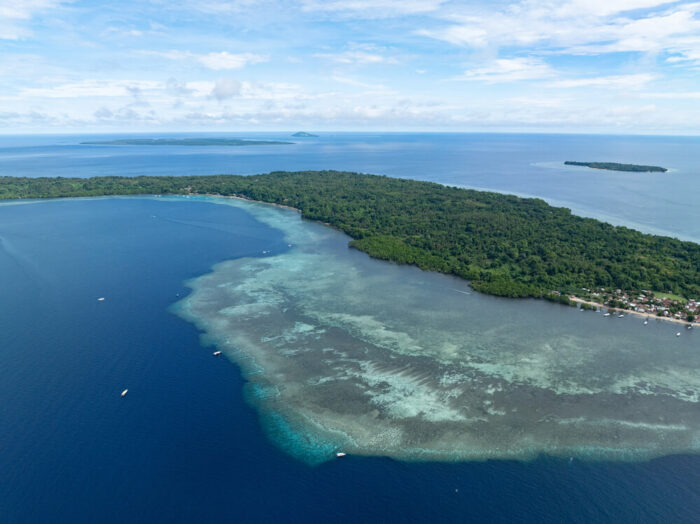
Tangkoko works best as a contrast stop in a wider North Sulawesi route: Manado – Bunaken – Tomohon – Tangkoko.
This route works well because each stop gives you something different: marine life, highland scenery, and wildlife. If the sea is one of your priorities, it helps to read the separate Bunaken National Park guide before planning the route in detail.
If your time is shorter, Tangkoko can also work as a single overnight stop from Manado before returning to the city or continuing elsewhere in Sulawesi. If you are traveling onward, one natural next step is Gorontalo and then the Togian Islands.
Is Tangkoko Worth Visiting?
Tangkoko is not the kind of place you visit for comfort or polished tourism. You come here because you want a real forest wildlife experience and a strong chance of seeing tarsiers and crested black macaques without building your whole trip around a difficult expedition.
If that sounds like your kind of travel, Tangkoko is one of the strongest reasons to leave Manado for a day or two.
Continue reading: