
Gili Air is one of the three Gili Islands off the northwest coast of Lombok. It is calmer than Gili Trawangan, but still developed enough that staying a few days feels easy rather than limiting.
If you want snorkeling, but do not want the stronger party focus of Gili Trawangan, Gili Air is the easiest choice for many travelers. It also gives you more restaurants, cafés and accommodation than Gili Meno, so you do not have to plan every meal around a very small island routine.
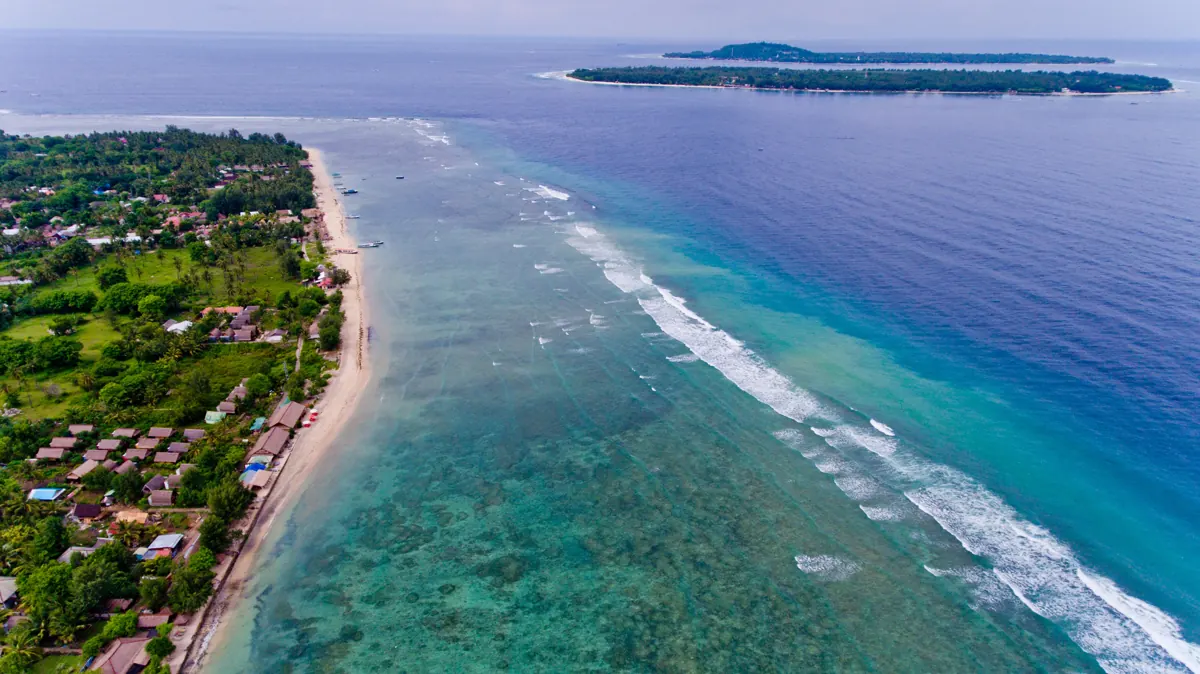
Still, it helps to know what you are booking. Gili Air is not an untouched island with one perfect swimming beach all the way around. Tourism shapes much of the coast, swimming depends heavily on the tide, and the best area to stay depends on whether you care most about snorkeling, sunset, quiet or convenience.
In this guide, we’ll cover what to expect, the best things to do, where to swim and snorkel, how to get there from Bali and Lombok, where to stay, and what to know before you go.
Quick Overview: Gili Air Travel Tips
- Best for: snorkeling, diving, relaxed beach days, sunsets, cafés, yoga and a calmer Gili stay.
- Not ideal for: strong nightlife, completely empty beaches or travelers who expect every beach to be easy for swimming.
- How long to stay: 3 nights is a good starting point for most travelers.
- Best area to stay: east or southeast for convenience and snorkeling access, west for sunset, north for a quieter stay.
- Best time to visit: May, June, September and early October have the best balance of weather and crowds.
- Important tip: do not travel back from Gili Air to Bali on the same day as an international flight. Boats can be delayed or cancelled.
Why Visit Gili Air?
Gili Air is worth visiting if you want a relaxed island stop with snorkeling, diving, sunset views and enough places to eat without the stronger party scene of Gili Trawangan.
The island works especially well if you are moving between Bali and Lombok and want a few slower days in the middle. You can snorkel from the beach, take a boat trip around the three Gilis, try scuba diving, walk or cycle around the island, and still have a decent choice of cafés and restaurants at night.
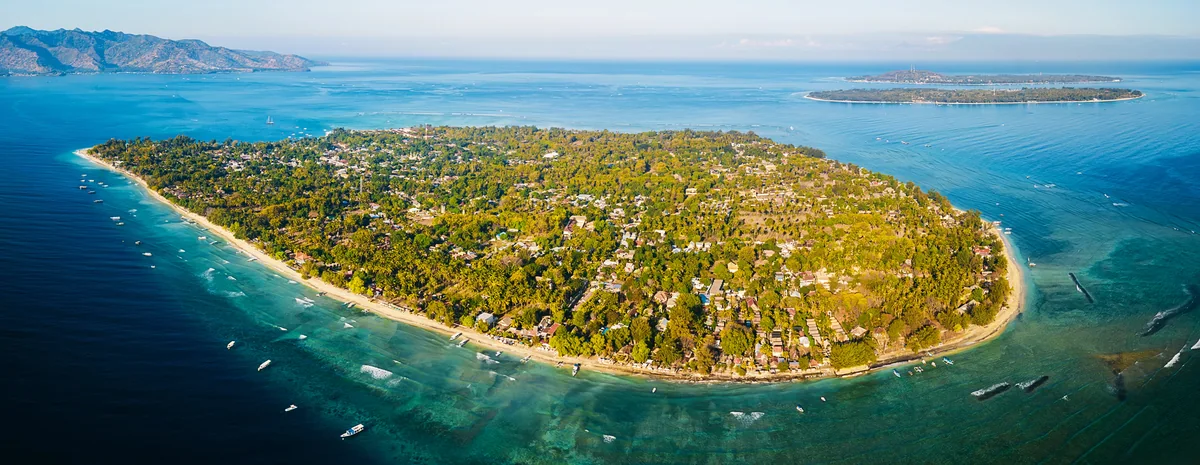
Gili Air is less convincing if your main dream is a remote, empty island. The Gilis are popular, tourism is visible, and the beach changes a lot with the tide. Come for easy sea days and a softer rhythm, not for untouched wilderness.
Gili Air vs Gili Trawangan vs Gili Meno
The three Gili Islands sit close together, but they suit different trips.
- Choose Gili Air if you want the middle path: quieter than Gili Trawangan, livelier and more practical than Gili Meno.
- Best for snorkeling, diving, cafés, enough restaurants and a sociable stay without nightlife running the whole island.
- If you have time for two islands, Gili Trawangan first and Gili Air afterward make a good livelier-to-slower sequence.
- Choose Gili Trawangan if nightlife, hostels, beach bars, the widest restaurant choice and a bigger social scene matter more than quiet.
- Choose Gili Meno if you want the quietest of the three islands and are happy with fewer restaurants, shops and slower evenings.
The simple version: Gili Trawangan is the lively one, Gili Meno is the quiet one, and Gili Air is the balanced one. The more useful version is that Gili Air gives you enough infrastructure to stay comfortably without the island feeling built around nightlife.
Best Things to Do on Gili Air
Most things to do on Gili Air revolve around slow island days. This is not a place where you need a packed sightseeing itinerary, and trying to overplan it almost misses the point.
Snorkel from the Beach
One of the best things about Gili Air is that you can snorkel from shore in several areas. The most practical spots are on the eastern and northeastern side of the island, where you’ll find beach access, rental gear and reef areas close enough for a simple swim.
Turtle sightings are possible, along with tropical fish and patches of coral, but they are never guaranteed. Reef quality also changes from one stretch of beach to the next, so ask a nearby dive center or snorkeling rental where the entry is best that day.
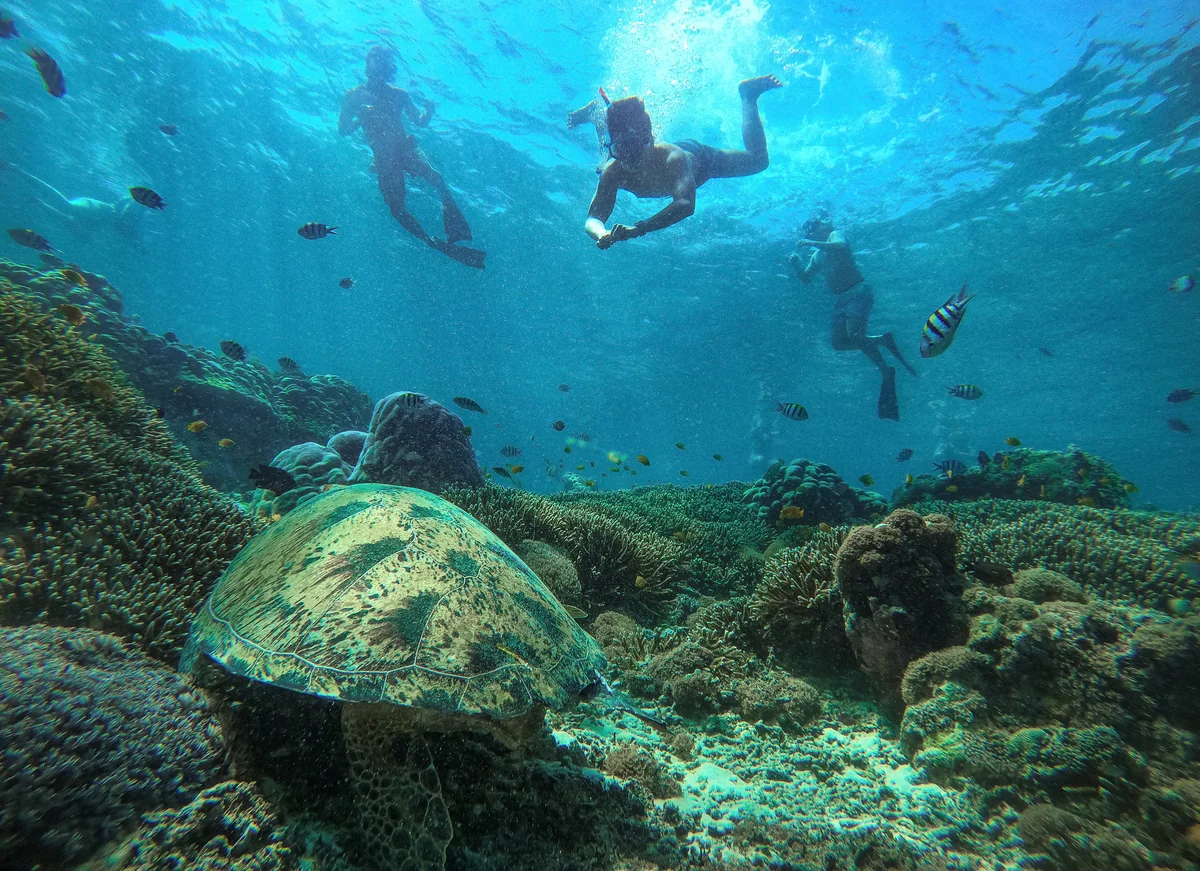
Bring or rent water shoes if you are sensitive to coral rubble. They help with the entry, but they are not permission to walk across living coral.
Backindo Tip: Watch the reef edge rather than swimming in random zigzags. Marine life is often better around the line where the shallow reef drops into darker water, but this is also where current matters more. If you feel yourself drifting, swim across the current toward shore rather than trying to fight straight against it.
Check the Tide Before You Swim
The tide changes the whole experience on Gili Air. At low tide, some reef flats become very shallow, which makes swimming awkward and increases the chance of scraping your feet or damaging coral.
At higher water, swimming is usually easier, but wind and current still matter. A beach that looked perfect in your hotel photos may feel completely different at midday when the water has pulled back.
If swimming matters, do not plan the whole day around one random beach. Check tide times, look at the water before entering, and ask locally where conditions are best.
Join a Three-Island Snorkeling Trip
If you want a fuller snorkeling day, join a boat trip around the three Gilis. Standard routes combine turtle areas, coral spots and the underwater statues near Gili Meno.
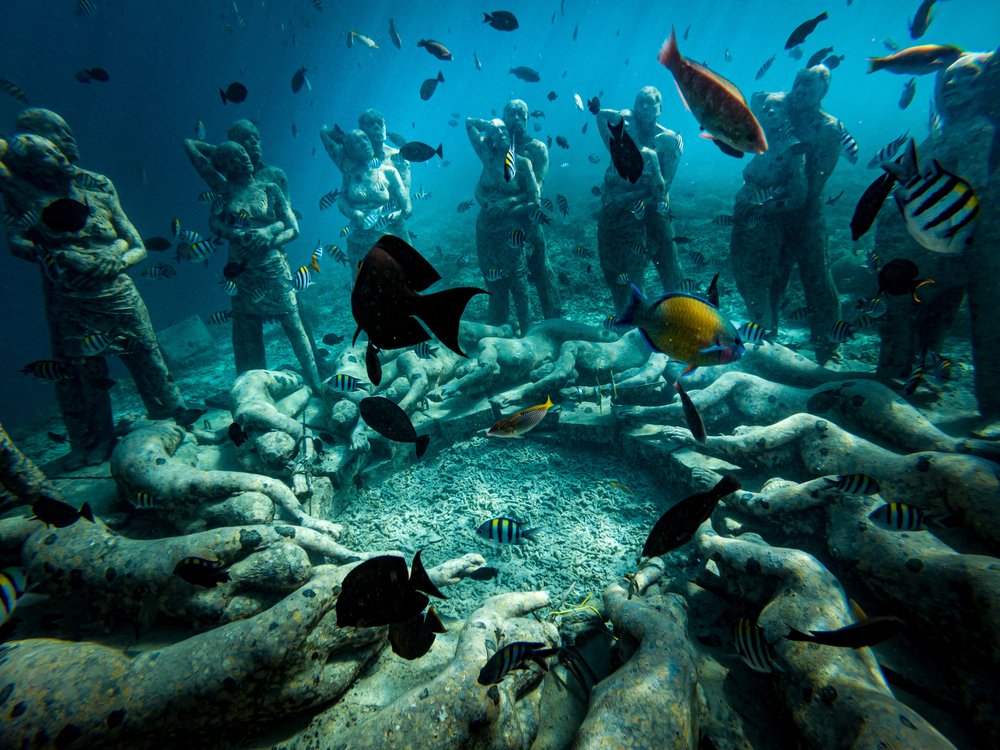
Shared trips are cheaper and easy to arrange on the island, but popular stops can get crowded when several boats arrive together. The Gili Meno statues are especially busy because almost every standard snorkeling route includes them.
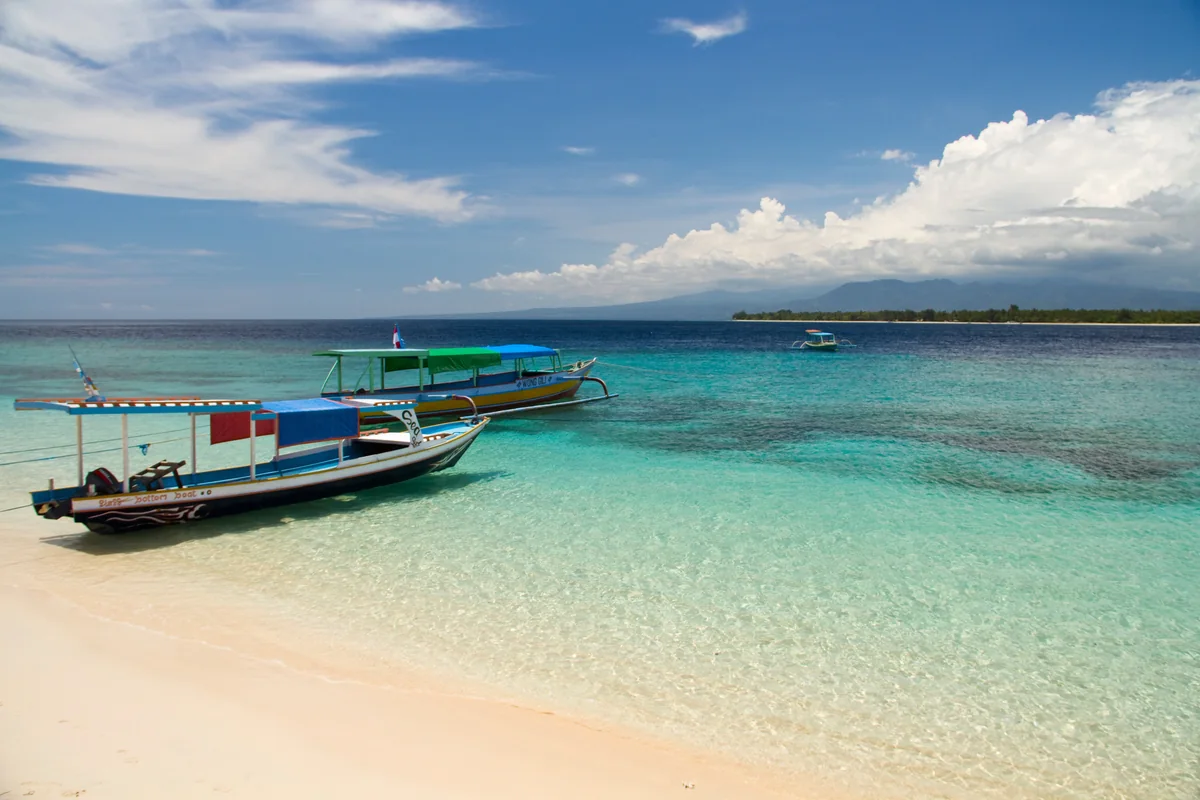
Morning trips are the best bet for lighter wind, better visibility and fewer boats stacked around the same stops. If you are booking a shared trip, earlier is usually better than squeezing onto the busiest midday departure.
Before booking, ask practical questions: how many people are on the boat, how many stops are included, whether mask and fins are included, whether the guide gets in the water, and whether photos or GoPro footage cost extra.
Backindo Tip: If you are nervous in the water, pay more for a smaller group or private boat. A life jacket helps you float, but it does not replace basic swimming ability, especially if there is current or boat traffic.
If you do not want to organize a boat and gear yourself, the options below are a practical place to compare small-group snorkeling trips.
Go Scuba Diving
Gili Air is a popular base for beginner and certified divers. Dive centers offer introductory dives, fun dives and certification courses, and many dive sites around the Gilis are reached by short boat rides.
Dive conditions can be beginner-friendly, but that does not mean every dive is effortless. Currents, visibility and surface conditions change by day and site, so choose a dive center that explains conditions clearly instead of just selling the cheapest slot.
As a 2026 reference, established Gili dive centers list single fun dives around IDR 640,000–650,000 and try dives around IDR 1,350,000. Some operators also add a Gili Matra marine park or conservation fee, so check what is included before you pay.
If you plan to dive, make sure your travel insurance covers scuba diving at the depth you expect to reach.
Walk Around the Island
Gili Air is small enough to explore on foot. A full coastal walk takes roughly one to two hours, depending on how often you stop and how sandy the path gets.
Morning walks are the nicest time for walking because the heat is easier. Later in the day, the west side makes more sense if you want to end with sunset.
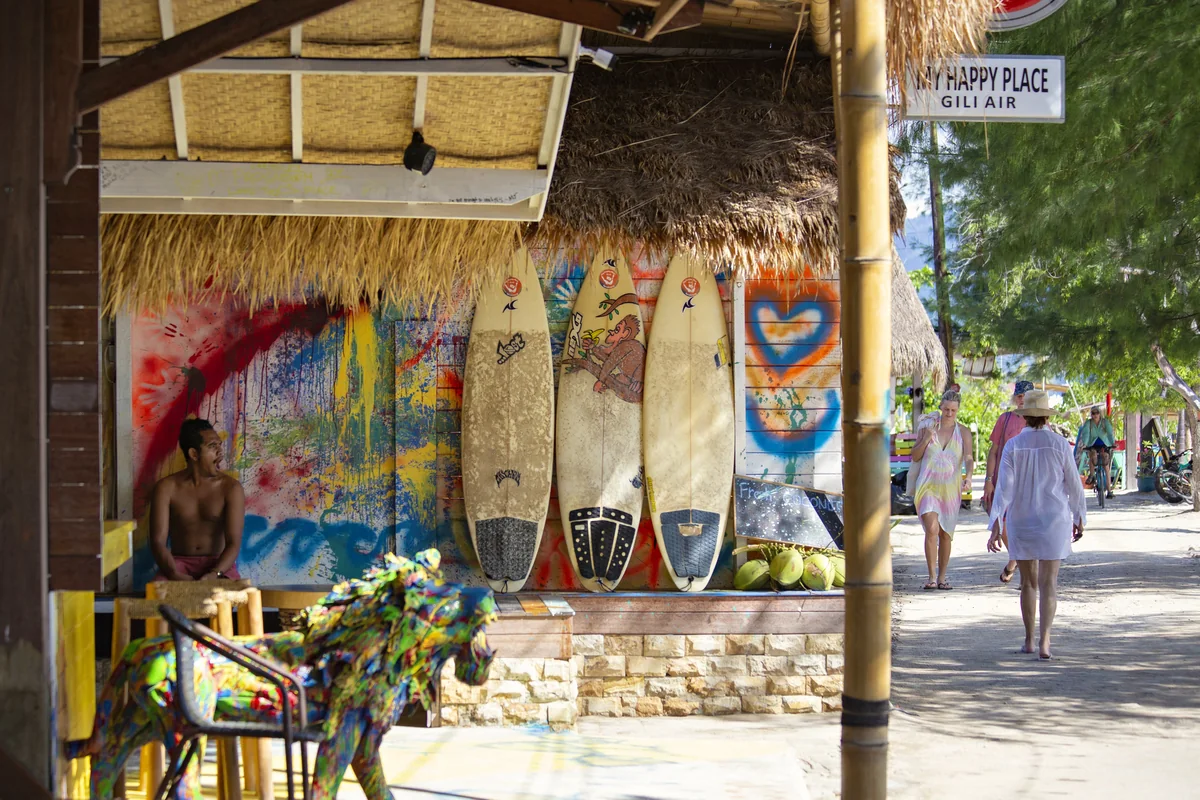
Walking helps you understand the island. The east and southeast feel more practical and developed, the west is built around sunset, and the north has a quieter rhythm.
Rent a Bicycle
A bicycle is useful if you stay away from the harbor or want to move between beaches without thinking too much. Rentals are easy to find through hotels and small shops.
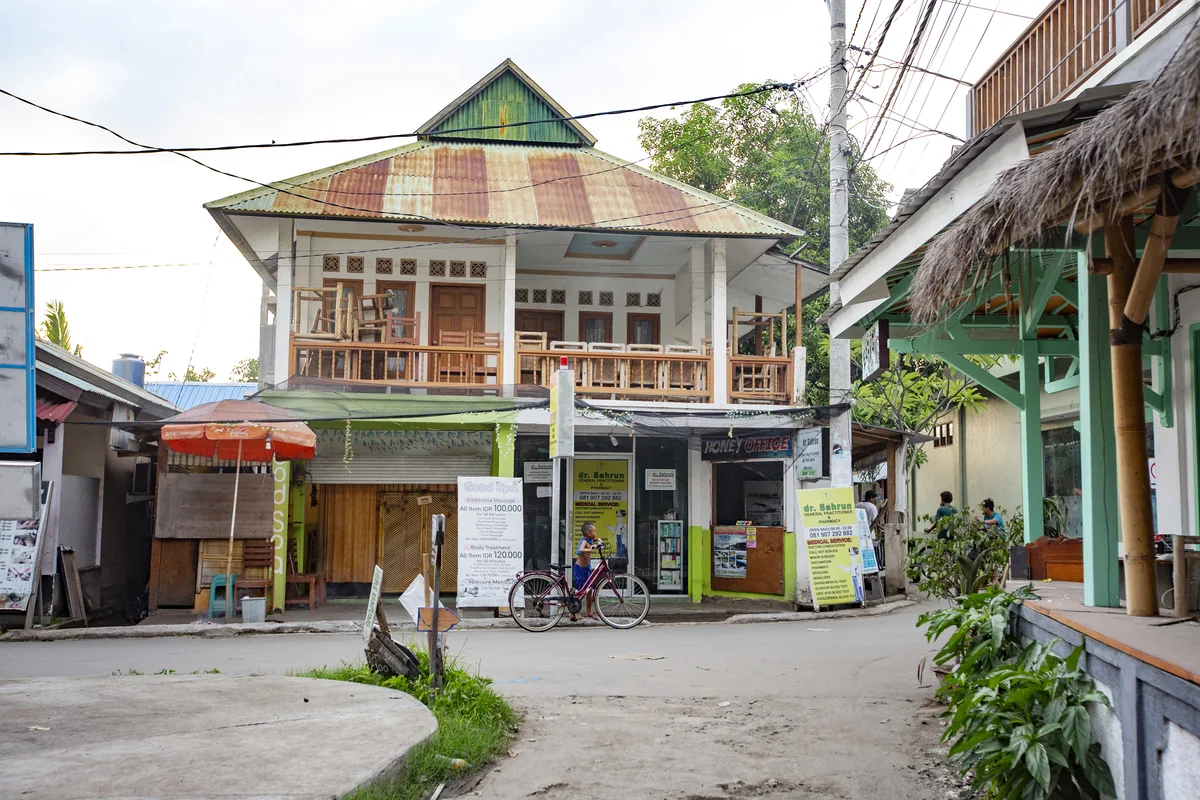
Cycling is not always as smooth as the map suggests. Some coastal sections are sandy enough that you will need to get off and push, especially near the beach paths. Inland routes can be easier than trying to follow the coast the whole way around.
Before taking a bike, quickly check brakes, tires, lock and lights, especially if you plan to come back after dark.
Watch Sunset on the West Coast
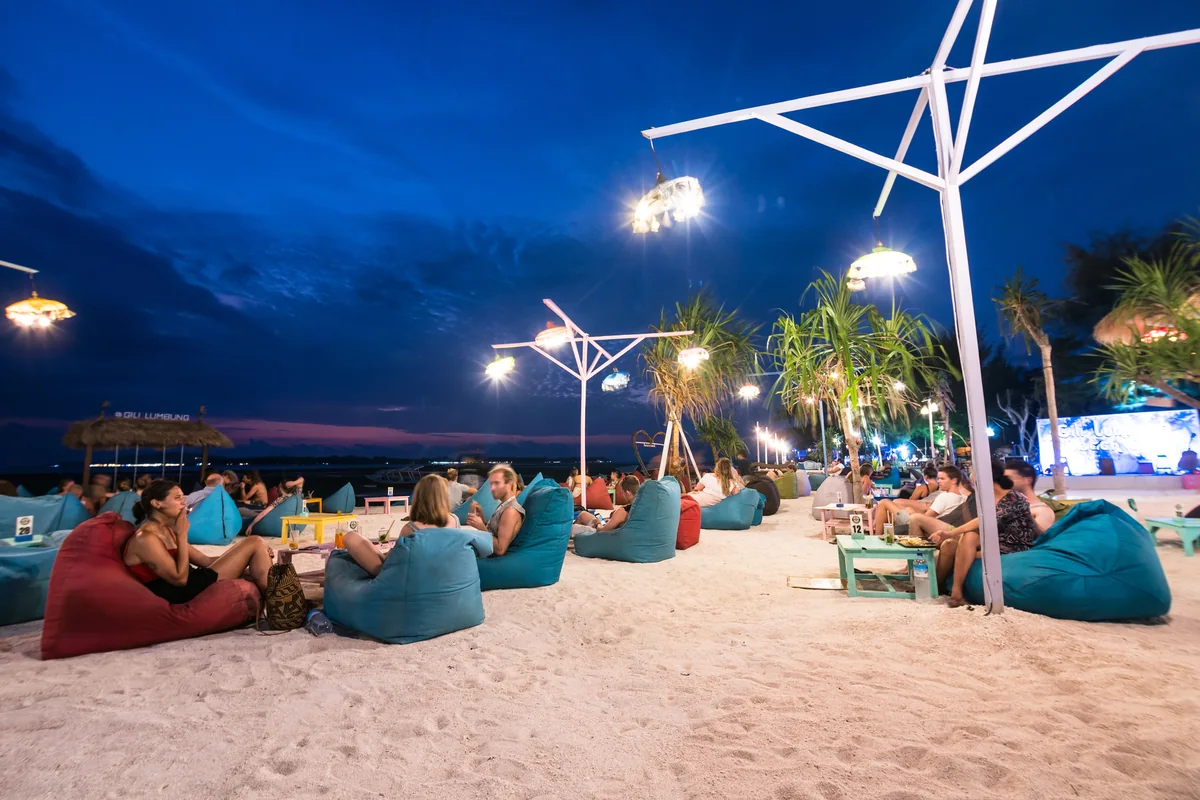
The west coast is the main sunset side of Gili Air. On a clear evening, Bali and Mount Agung can appear across the water.
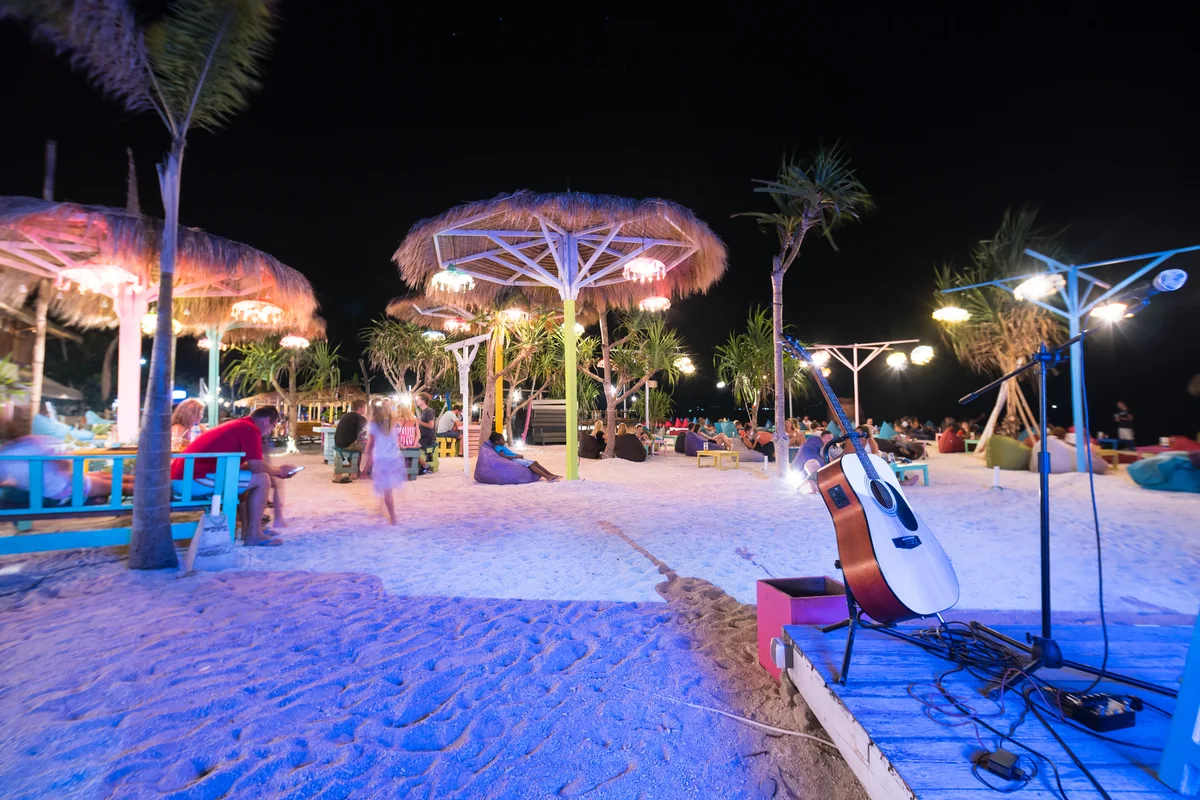
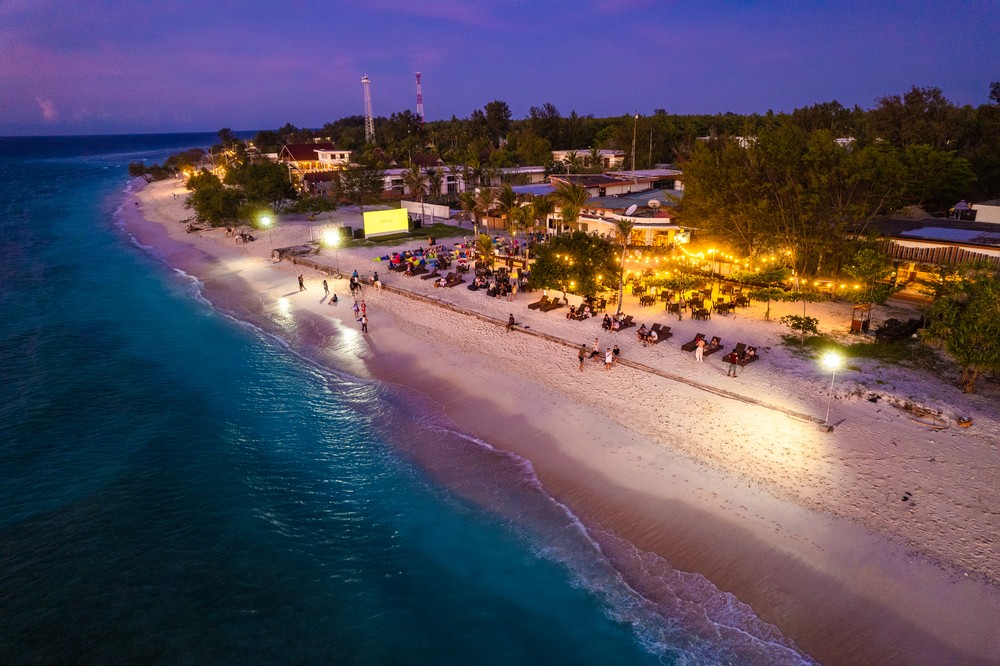
The west coast has beach bars, beanbags and restaurants, but the atmosphere is softer than Gili Trawangan. It is a nice place for a drink, dinner or a slow end to the day.
The trade-off is that the west is not always the best side for swimming. At low tide, some areas become shallow and rocky, so choose this side mainly for sunset and atmosphere.
Try Yoga, Breakfast Cafés and a Slow Morning
Gili Air has a noticeable slow-morning culture: yoga classes, breakfast cafés, massages, smoothie bowls and places where nobody looks surprised if you spend two hours over coffee.
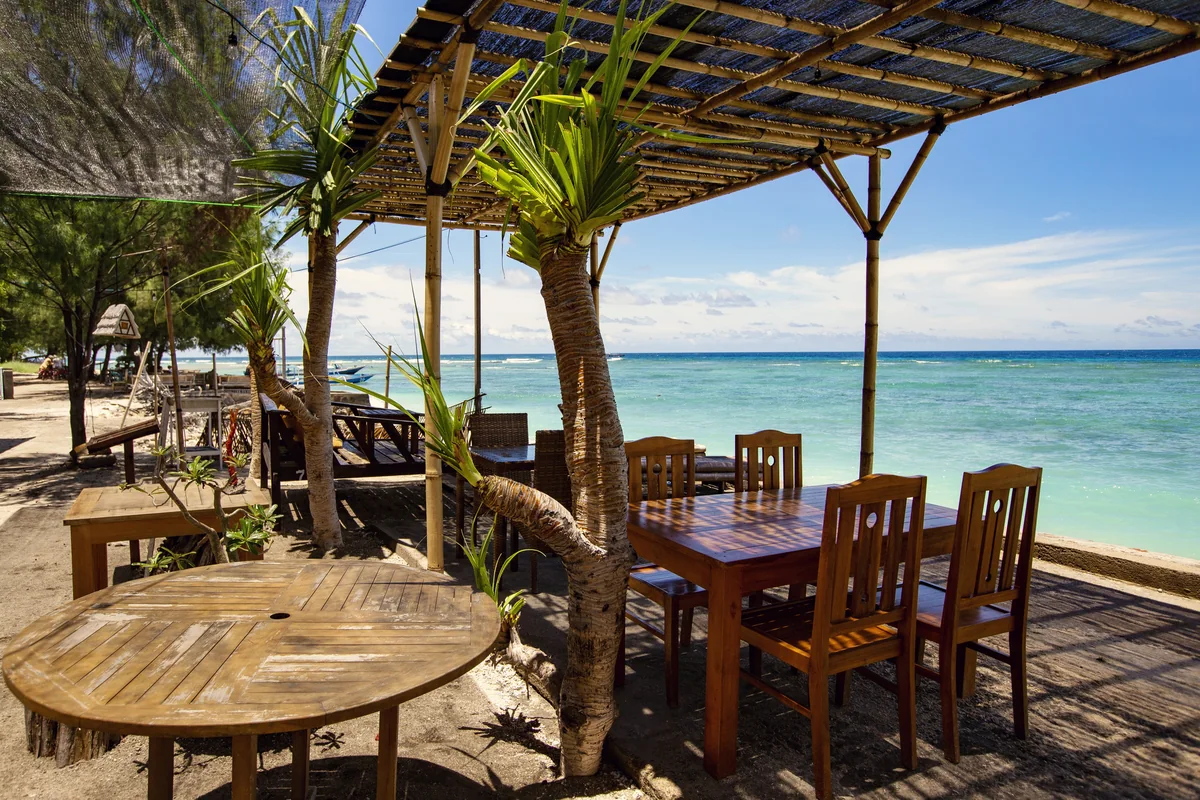
Slow travel is not a reason to fly across the world on its own, but it fits the island. If your Indonesia trip has been moving quickly, Gili Air is a useful place to stop rushing.
Visit Gili Meno or Gili Trawangan
If you have enough time, you can visit one of the other Gili Islands by local boat or as part of a snorkeling trip.
Go to Gili Meno for a quieter beach day, the underwater statues and a much slower atmosphere.
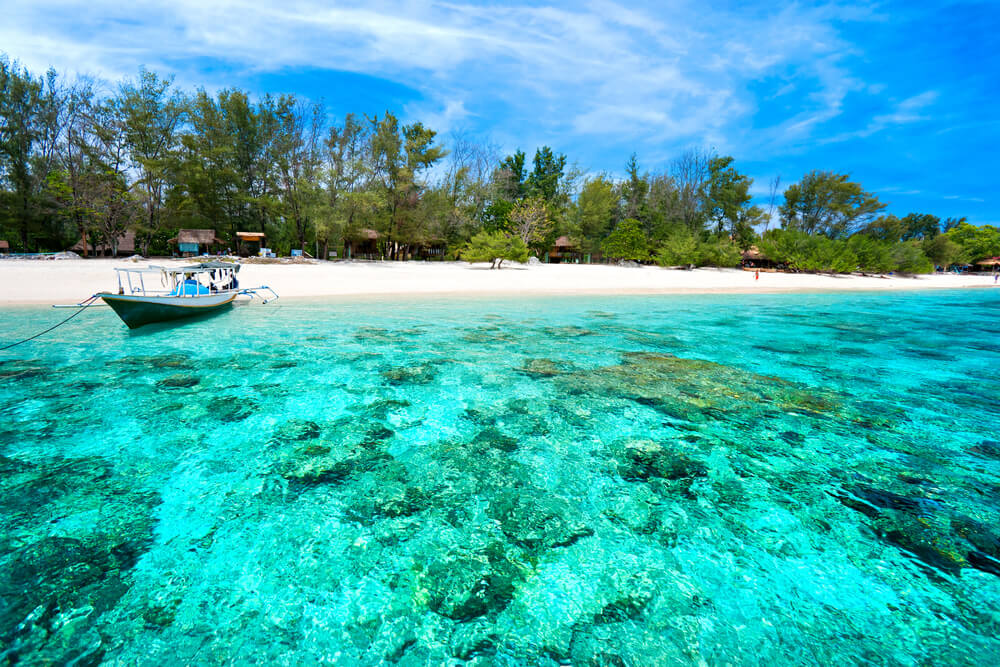
Go to Gili Trawangan if you want more restaurants, shops, nightlife or a livelier evening.
Check return schedules at the harbor before you leave. Late-afternoon options can be limited, and private boats cost more.
Best Beaches and Where to Swim on Gili Air
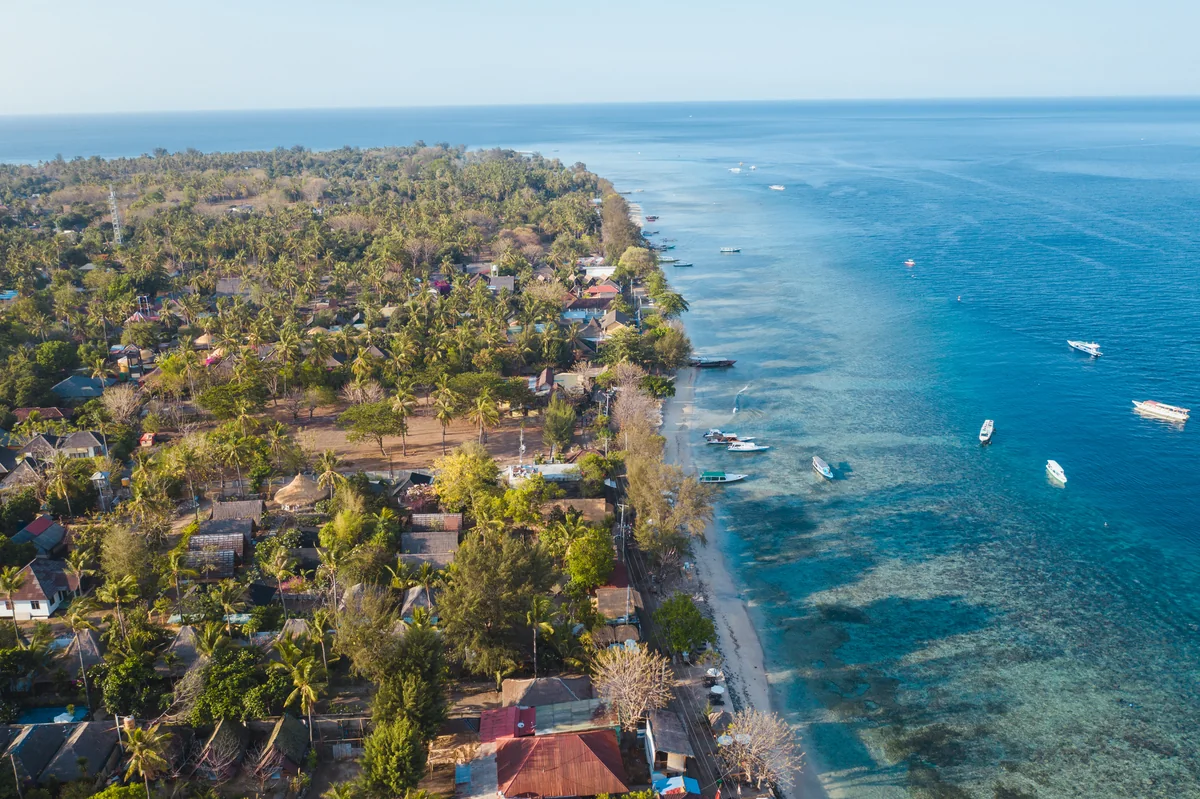
One of the most important things to know before booking accommodation is that swimming conditions vary.
Hotel photos can make every beach look equally easy, but the reality changes by tide, coral, boat traffic and exact location. If swimming and snorkeling matter to you, choose your area carefully.
East and Northeast Coast
The east and northeast are the most practical parts of Gili Air for swimming and shore snorkeling.
East coast has dive centers, snorkeling rentals, restaurants, sunrise views and easier access from the harbor. This side is a strong choice if you want the sea to be part of your everyday routine.
Beachfront varies, so do not assume every beachfront property here has a soft sandy entry. Some stretches have coral rubble or very shallow water at low tide.
South and Southeast Coast
The south and southeast include the harbor and some of the busiest parts of Gili Air. This is the easiest area for short stays.
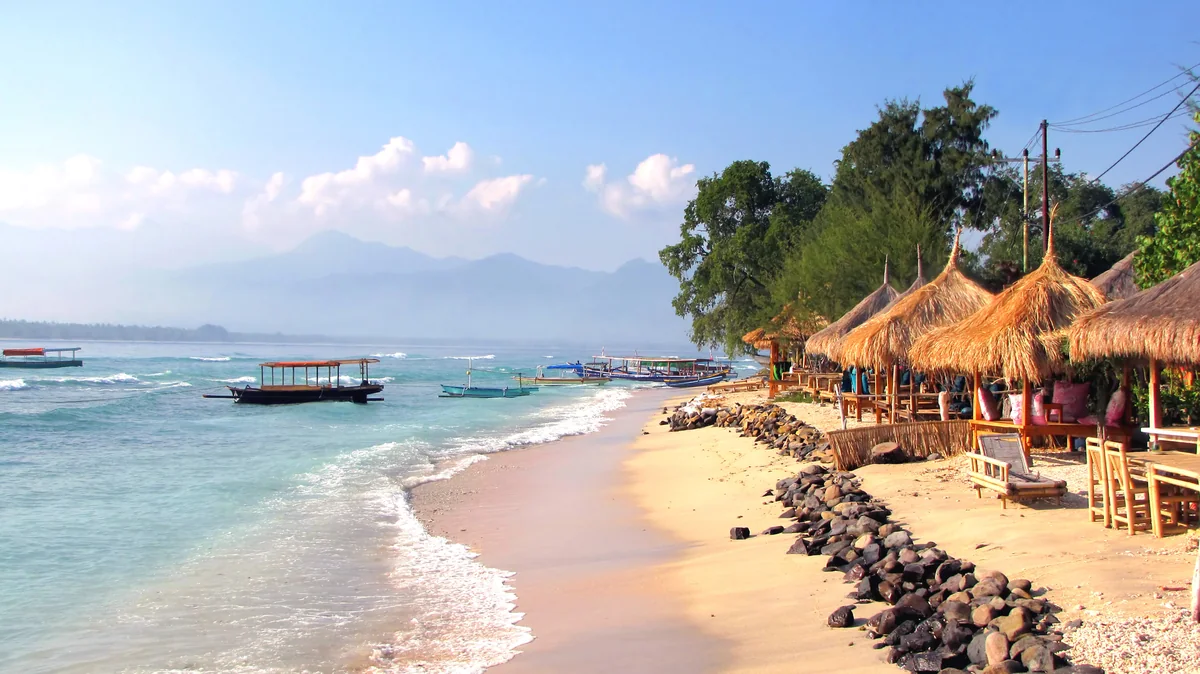
The downside is that parts of the waterfront are used by boats, so it is not automatically the nicest swimming area. If a hotel is near the harbor, check recent photos and reviews before assuming “beachfront” means “easy to swim.”
West Coast
The west coast is best for sunset and beach-bar atmosphere.
Stay west if you like ending the day by the water and do not mind being farther from the harbor. Just know that swimming can be less reliable, especially at low tide when the water pulls back over the reef flat.
North Coast
The north is quieter and can be a good base for longer stays.
Some north-coast sections have snorkeling nearby, while others require a short walk to a better entry point. Restaurants are more spread out, and paths can feel dark after dinner, so a bicycle or a small light helps.
Inland
Inland accommodation can be better value than beachfront stays. It can mean more space, a pool and a quieter garden setting for less money.
The trade-off is simple: no direct beach access. This works well if you are happy to walk or cycle to the sea and want better value than the front-row hotels.
How Many Days Do You Need on Gili Air?
For most travelers, three nights is the sweet spot.
- Day trip from Lombok: possible because the Bangsal crossing is short, but you will spend much of the day managing harbor logistics and miss the best evening atmosphere.
- Two nights: one full day once arrival and departure are included. Fine for a quick island break, but it feels rushed if your boat arrives late or the sea is rough.
- Three nights: one active day for snorkeling, diving or a boat trip, plus one slower day for swimming, walking, cafés and sunset.
- Four nights or more: worthwhile for a dive course, a few remote-work days, proper rest, or relaxed visits to Gili Meno and Gili Trawangan.
How to Get to Gili Air
You can reach Gili Air from Bali, mainland Lombok or the other Gili Islands.
Route choice depends on where you start, how well you handle boat travel, how much luggage you have, and whether speed, comfort or price matters most.
From Bali to Gili Air
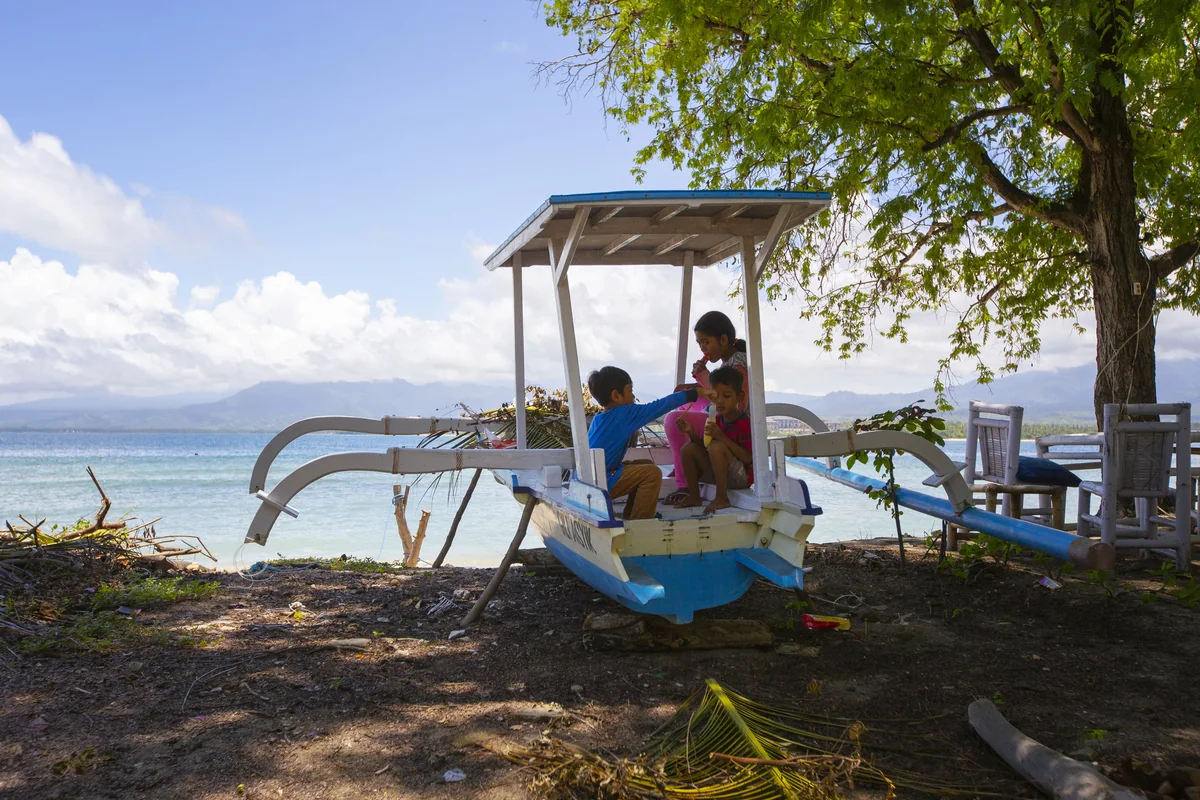
Most travelers coming from Bali take a fast boat. Boats leave from ports such as Padang Bai, Sanur and Serangan, depending on operator and season.
Padang Bai is one of the most common departure points because it is closer to the Gilis than South Bali. The boat leg is shorter from here, but you still need to reach the port from places like Canggu, Seminyak, Uluwatu or Ubud.
Sanur and Serangan can be more convenient if you are already in South Bali, but the full trip can take longer and include more stops. A ticket sold as “Bali to Gili Air” does not always mean a simple direct crossing.
Before booking, check booking details: the real departure port, number of stops, total travel time, pickup area, luggage allowance, port fees and cancellation rules.
The boat itself may take roughly 1.5 to 4 hours, depending on port, operator, stops and sea conditions. Door-to-door travel often takes much longer once pickup, check-in, waiting and delays are included.
Backindo Tip: Do not return from Gili Air to Bali on the same day as an international flight. Spending your final night on Bali makes much more sense as boat trips might get cancelled due to poor weather conditions.
From Lombok to Gili Air
The easiest short crossing is from Bangsal Harbor in North Lombok.
From Bangsal, you can take a public boat, scheduled/shared fast boat or private speedboat. The crossing to Gili Air is short — often around 10 to 20 minutes — but waiting time and boarding can add extra time.
The public boat is the cheapest choice and works well if you are flexible. It is basic and can wait for enough passengers before leaving. Buy your ticket only from the official counter.
Shared fast boats cost more but are more predictable. Private speedboats from Bangsal or nearby Teluk Nare are the most flexible and can make sense for families, small groups or late arrivals.
Online platforms can show much higher prices than the local counter, especially when the ticket includes a van, private operator, booking fee or onward transfer. So take your time and compare the prices accross various platforms such as GetYourGuide or 12go.
From Lombok Airport to Gili Air
Lombok International Airport is in the south of Lombok, while Bangsal is in the northwest. The drive takes around two hours, sometimes longer with traffic or stops.
If your flight lands late afternoon, check carefully whether you can still reach the harbor in time. It may be easier to sleep on Lombok first and continue the next morning.
The simplest combinations are private car to Bangsal plus public/shared boat, or private car plus private speedboat if you want the smoothest transfer.
Bangsal Harbor: What to Watch Out For
Bangsal can feel chaotic if it is your first time there. Expect people offering porter help, private boats or “special” tickets before you have even found the official counter.
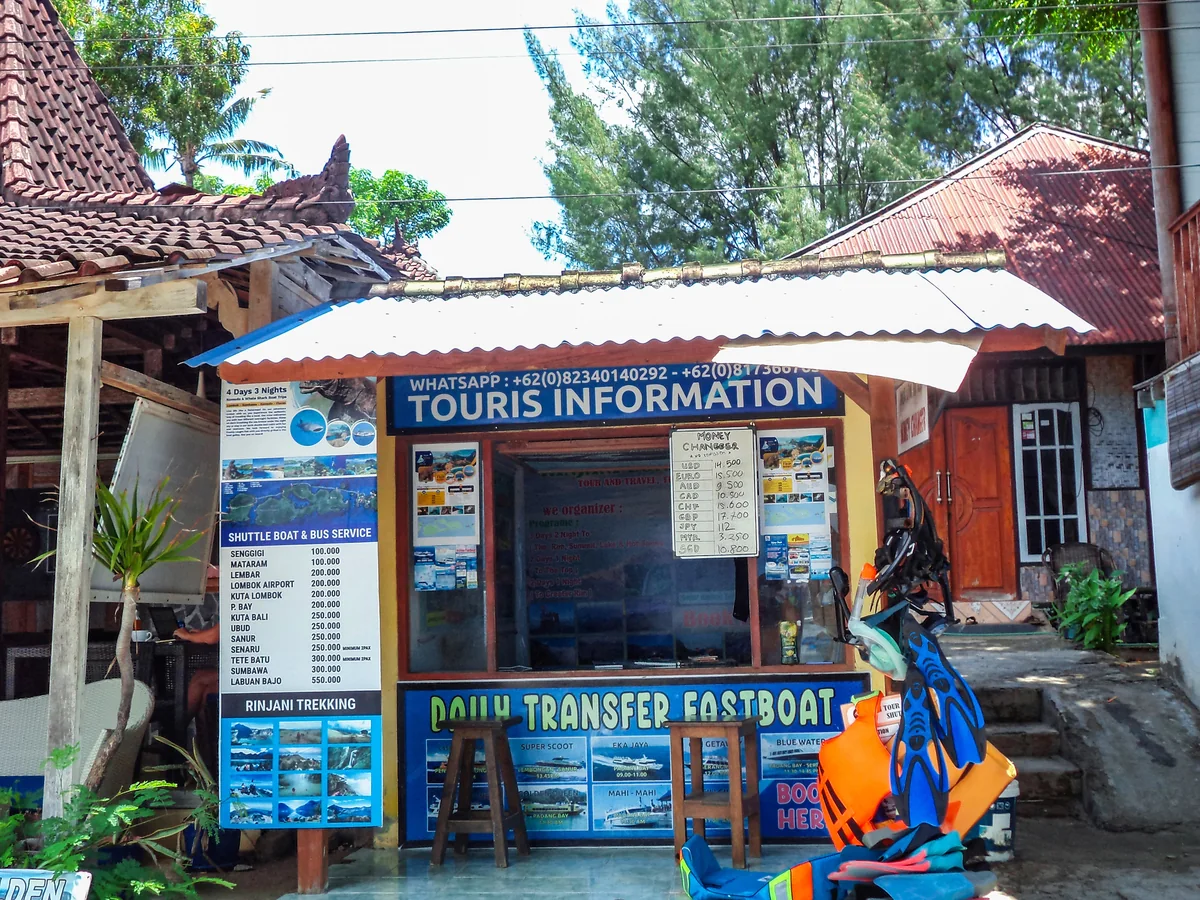
Use the counter: buy from the official counter, confirm the destination printed on your ticket, agree on porter fees before accepting help, and do not hand over your bags unless you know who is taking them.
If someone says the public boat has finished or that you must take an expensive private transfer, check at the counter before believing it.
Traveler reviews still mention late boats, confusing check-in desks and awkward onward van transfers. Keep your schedule loose on transfer days and do not plan a tight connection just because the crossing itself looks short on paper.
From Gili Trawangan or Gili Meno
Local boats connect the Gili Islands. The rides are short, but they do not run continuously all day.
Check the schedule at the harbor, arrive early and avoid planning your last onward connection around the final boat of the day.
What to Expect When You Arrive
The main harbor is on the southeast side of Gili Air.
Once you get off the boat, there are no normal taxis or motorized vehicles at all. You continue on foot, by bicycle, or by cidomo, the local horse-drawn cart.
Nearby hotels are easiest if you want to walk from the harbor. If you stay in the north, west or inland, dragging a heavy wheeled suitcase over sandy paths can get annoying very quickly.
Before arrival, check the real walking distance, ask whether your accommodation can help with luggage, and pack lighter if possible. A backpack or soft duffel is much easier than a delicate hard-shell suitcase.
Wet landings can happen; some boats also require passengers to step through shallow water, so keep valuables in a dry bag and wear footwear you can remove easily.
Getting Around Gili Air
Walking is enough for many travelers because the island is small. Distances look short on the map, but heat and sandy paths can make the walk feel longer.
Bicycles are useful for moving between beaches and restaurants, especially if you stay outside the main eastern/southeastern area. Expect to push through some sandy sections.
Cidomo horse carts are mainly used for luggage or longer transfers from the harbor. Animal welfare standards vary, so this is a personal choice. If you use one, avoid overloading the cart, agree on the price first and do not use a horse that looks exhausted or injured.
Where to Stay on Gili Air
- East and southeast: best for a first stay, short stays and luggage. You are close to the harbor, restaurants, cafés, dive centers and easier swimming and snorkeling access, but it can feel busier.
- South: easy for the harbor and food, sometimes calmer than the main eastern strip. Being close to the sea does not guarantee an easy swimming beach.
- West: choose it for sunset and atmosphere, not maximum convenience. It is farther from the harbor and low tide can make swimming unreliable.
- North: a quieter base for longer stays. Restaurants are more spread out and some paths are dark after dinner, so a bicycle helps.
- Inland: often better value, with gardens or pools for less than beachfront properties. It suits you if walking or cycling to the sea is fine.
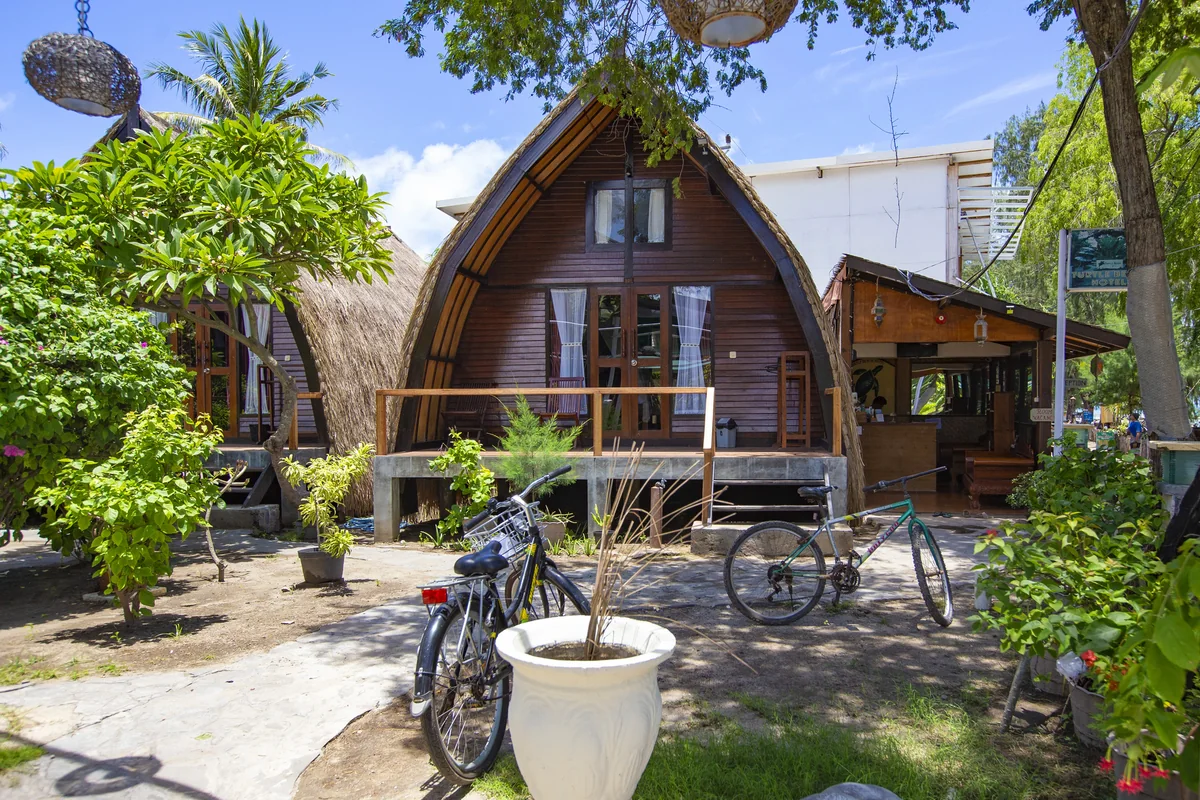
Before you book: Check recent reviews for beach access, noise, water quality, air conditioning, pool, the exact walk from the harbor and whether the beach in front is actually comfortable for swimming.
The hotels below are useful starting points, depending on your budget and preferred side of the island.
- Gili Air Lagoon Resort: close to the harbor, with rooms around a lagoon-style pool rather than a simple beachfront bungalow setup.
- Manta Dive Gili Air Resort: a practical option if diving is a main reason for coming, on the eastern side near dive centers and snorkeling access.
- Santorini Beach Resort Gili Air and Sunrise Resort: worth comparing for a more comfortable stay around the sunrise/eastern side.
The Mosque, Local Life and What to Wear
Gili Air is a tourist island, but it is also a lived-in Muslim island with local families, prayer times, village streets and everyday routines behind the beach cafés.
Beachwear is normal on the beach and at hotel pools. Away from the beach, cover up with a shirt, dress, shorts or sarong. Do not walk through the village in only a bikini.
Prayer calls are part of the island. You will hear the call to prayer, including early in the morning. During Ramadan, prayers and evening recitations may be more noticeable, and some opening hours can shift around Eid.
Light sleepers should check recent reviews for mosque, bar or construction noise and bring earplugs.
Practical Planning: Costs, Weather and Useful Tips
Gili Air costs more than mainland Lombok because supplies, drinking water and building materials arrive by boat.
Local warungs are cheaper than beachfront Western restaurants, inland guesthouses are cheaper than beachfront resorts, and private boats or small-group trips cost much more than shared options.
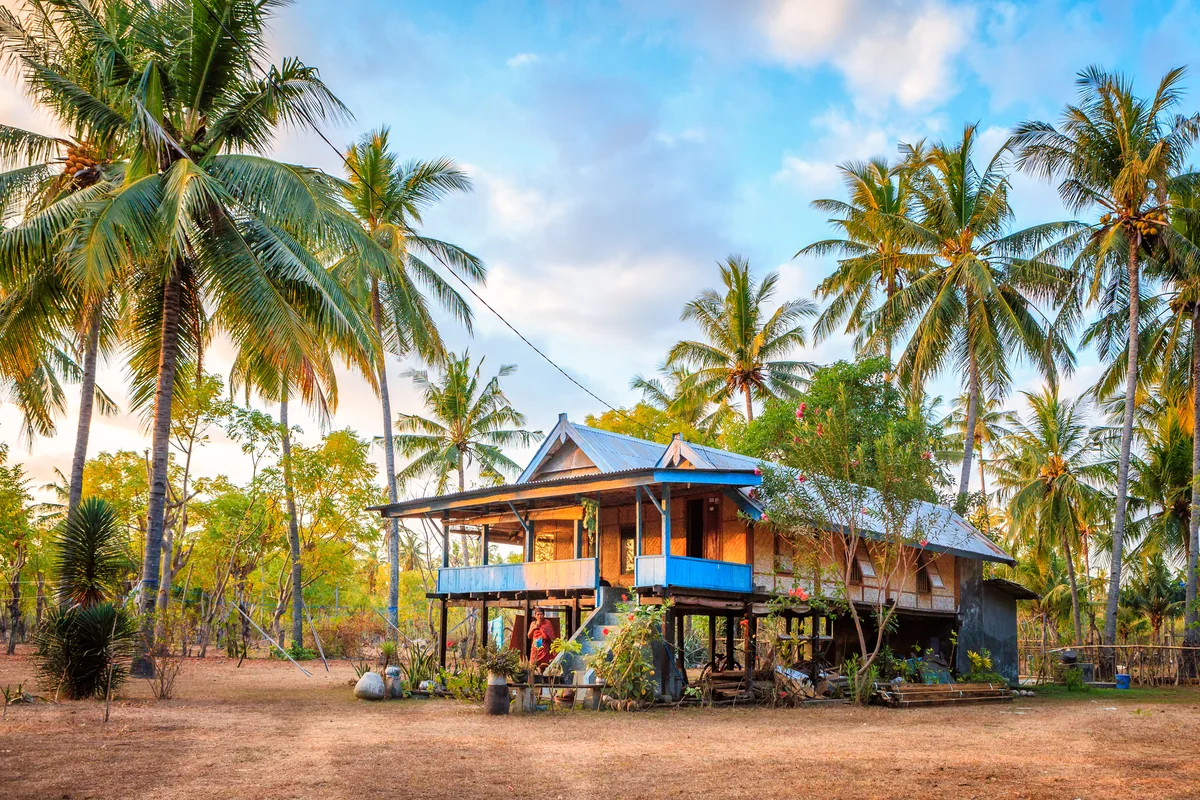
The dry season, roughly May to September or early October, is the most popular time to visit Gili Air. These months bring the best chance of sunny weather, clearer water and calmer boat conditions.
Peak season is July and August. Book accommodation and boats ahead if your dates are fixed.
May, June, September and early October are the best balance of weather and crowds.
The wetter season, roughly November to March, can still have good days, but rain, wind and rougher seas become a bigger planning issue. If your schedule is tight, build in buffer time before flights or important onward travel.
- Bring backup cash: ATMs can run out of money, go offline or reject foreign cards. You will need cash for boats, small restaurants and bike rental.
- Use refill stations: tap water is not safe to drink, but hotels, cafés and dive centers often provide refills for a reusable bottle.
- Pack water shoes: coral pieces, sharp rubble and awkward entries make them useful, especially at low tide.
- Bring earplugs and a small light: mosque calls, roosters, bars or construction can affect sleep, and inland paths can be dark after dinner.
- Check Wi-Fi before a work stay: coverage is widespread but property quality varies; ask if you need video calls.
- Have suitable insurance: Gili Air has basic clinics, while serious treatment can require evacuation to Lombok or Bali. Diving needs appropriate cover.
Responsible Travel on Gili Air
Gili Air is small and popular, which means waste, water use and reef damage matter.
The Gilis sit within the Gili Matra marine conservation area, and local groups such as Gili Eco Trust work on reef restoration, turtle protection, waste management and animal welfare. That sounds like background information, but it affects the simple choices travelers make every day: where boats anchor, how snorkelers behave, how rubbish is handled and how working horses are treated.
Refill your water bottle, avoid unnecessary single-use plastic, do not leave cigarette ends on the beach, and never stand on coral.
If you see turtles, keep your distance. Do not touch them, chase them, block their way to the surface, or crowd them for photos.
Avoid handling turtles or any turtle activity that lets tourists handle hatchlings or treats baby turtle releases as entertainment. The most respectful turtle experience is seeing them in the sea and leaving them alone.
If you use a cidomo, keep the load reasonable and look at the horse before agreeing. Choose another cart if the animal looks injured, exhausted or poorly cared for.
Is Gili Air Worth It?
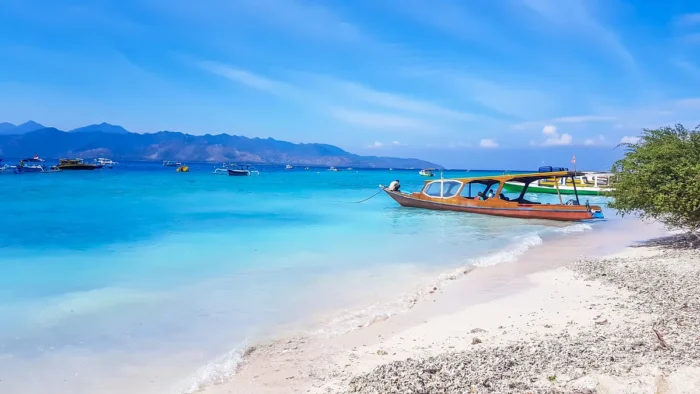
Gili Air is worth it when you want a few slower island days with snorkeling, diving, good food and sunset, without choosing an island built around nightlife. It is the best middle ground of the three Gilis: easier than Gili Meno and calmer than Gili Trawangan.
Choose it for a relaxed stop between Bali and Lombok, not for perfect empty beaches or a tightly packed itinerary. Stay at least three nights, pick your accommodation area for the way you actually want to use the sea, and leave a buffer around boat transfers.