
Climbing Rinjani is one of the most powerful mountain experiences in Indonesia. The country’s second-highest volcano (3,726 m) rises dramatically above the island of Lombok, commanding respect and, on clear days, drawing attention even from the neighboring islands of Bali and Sumbawa.
Why Is Rinjani Worth Visiting?
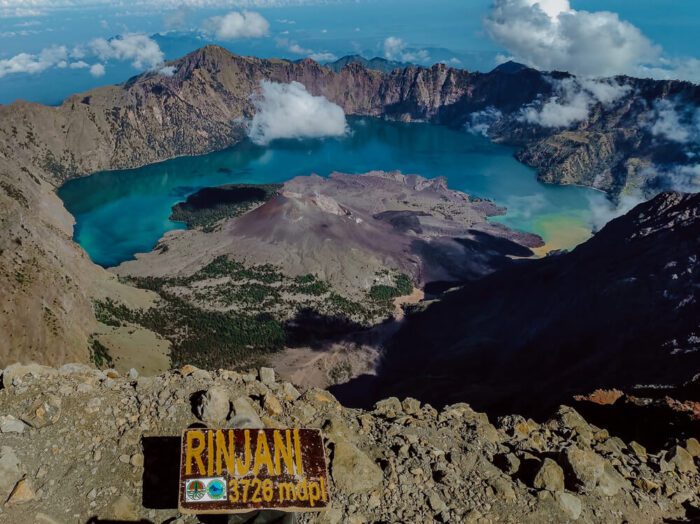
Watching the sunrise from the very summit is a moment you’ll remember for the rest of your life. While some other volcanoes offer views only of the distant landscape below, Rinjani opens up a dramatic panorama straight into its enormous caldera, home to Lake Segara Anak, with the young volcano Gunung Barujari rising from its center.
On clear days, you can even spot the silhouette of Gunung Agung on Bali and Gunung Tambora on Sumbawa on the horizon.
But the experience doesn’t begin only at the summit. Unlike many other Indonesian volcanoes, one of Rinjani’s great advantages is the relatively long distances, with the trek spread over several days.
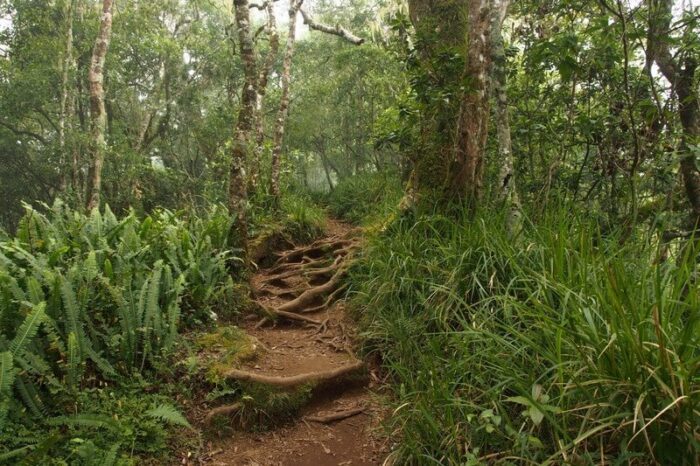
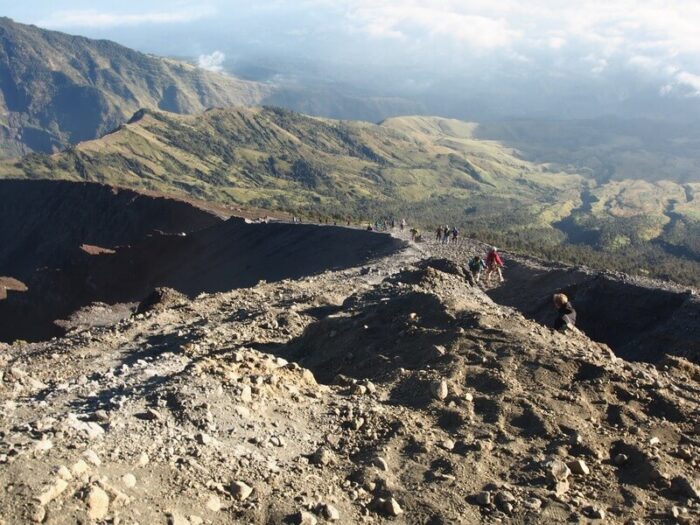
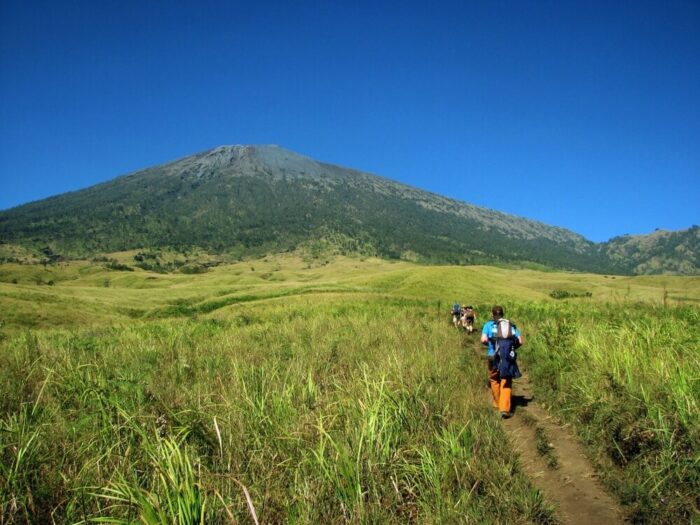
The landscape changes dramatically as you ascend. From dense tropical forest, you gradually move into more open savannah, and during the final climb to the summit, volcanic sand starts to shift beneath your feet while strong winds hit you from both sides of the exposed crater ridge. Far below, the turquoise surface of the lake slowly comes into view. On the descent toward the village, you pass through thinner mountain forest before emerging onto wide, open plains. Each section of the trek has its own atmosphere, its own level of challenge, and its own rhythm.
After Kerinci on Sumatra, Rinjani is the second-highest volcano and the third-highest peak in the Indonesian archipelago, which in itself is another compelling reason to conquer this summit during your visit to Indonesia.
Thinking about summiting Indonesia’s highest volcano? Let’s take a closer look at what awaits you How to Hike Mount Kerinci in Sumatra.
Volcanic Activity of Rinjani
The Rinjani massif is the remnant of a much older and far more powerful volcano. It is believed that the most dramatic event in its history occurred sometime in the 13th century, when the original summit collapsed and a vast caldera was formed. Today, Lake Segara Anak stretches across its center. Some geological studies suggest that this eruption may even have influenced the climate across the wider region.

From the floor of the caldera — which covers approximately 50 km² and reaches depths of up to 230 meters — a new cone gradually emerged: Gunung Barujari. Its name means “newly formed mountain” in the Sasak language, and it is now the main source of volcanic activity.
The most recent eruptions in 2015 and 2016 confirmed that the volcano remains active and that its activity follows a certain cycle. Rinjani continues to be closely monitored by the Indonesian Center for Volcanology and Geological Hazard Mitigation (PVMBG).
Backindo Tip: At present, PVMBG lists Rinjani at Level I (normal), but it is essential to check the current status before planning your visit.
How to Get to Rinjani
You can reach the island of Lombok from both Bali and Sumbawa, either by boat or by plane.
By Boat from Bali
Regular ferries operate 24 hours a day between Bali and Lombok on the Padang Bai – Lembar route. This is the cheapest option and also the only way to transport your own vehicle. The crossing takes approximately 4–5 hours.
A faster alternative is the speedboat service, which runs for example between the ports of Padang Bai and Senggigi. The journey takes around 1.5–2 hours, but it is not possible to bring your own scooter or car on board.
By Boat from Sumbawa
Regular ferries operate between the ports of Poto Tano and Labuan Lombok. The crossing takes approximately 1.5 hours and is a commonly used connection between the two islands.
By Air
Lombok International Airport is accessible by domestic flights from Bali, Surabaya, Yogyakarta, Jakarta, Bima, and Waingapu. There are also international connections, for example from Kuala Lumpur. The airport is located near the town of Praya, about 40 km from the main city of Mataram.
Before you fly domestically, make sure you know what to expect. Read Guide to Domestic Flights in Indonesia.
From the airport or the ports, the easiest way to continue to Senaru, Sembalun Lawang, or other starting villages below Rinjani is by car with a driver. Public transport in this area is neither very reliable nor regular. Depending on your starting point, the journey takes approximately 1.5–2.5 hours.
Climbing Mount Rinjani
The Rinjani trek has several variations depending on the time available and your physical condition. The most common options are two-day and three-day programs, but longer four-day crossings are also available. The exact itinerary always depends on the chosen route and the agency’s offer.
2 Days / 1 Night
This option usually leads to the crater rim and back along the same route. It is time-efficient but very intense.
The first day involves a long ascent to the campsite on the edge of the caldera, followed by an early descent back to the village on the second day. This program typically does not include the summit, but it does offer the chance to bathe in the hot springs near the lake and spend the night in a tent overlooking the entire crater.
3 Days / 2 Nights
The most popular and well-balanced option is the three-day trek. The most common route runs between the villages of Senaru and Sembalun Lawang, in either direction. We recommend starting in Sembalun Lawang. This way, the summit climb awaits you on the second day, while you still have enough energy. In the opposite direction, the summit comes on the third day, when fatigue is usually much more noticeable.
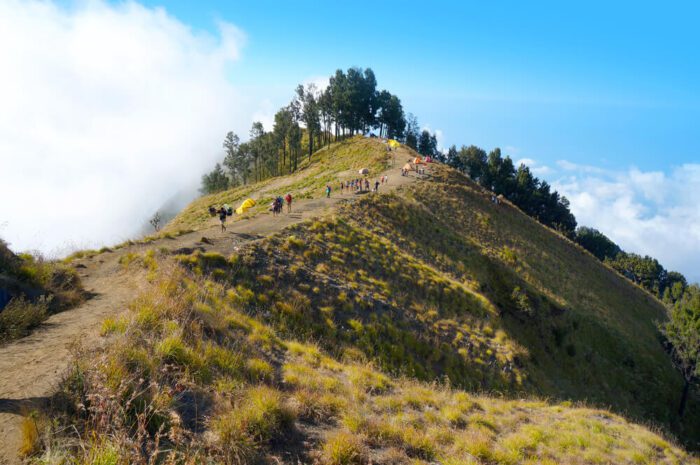
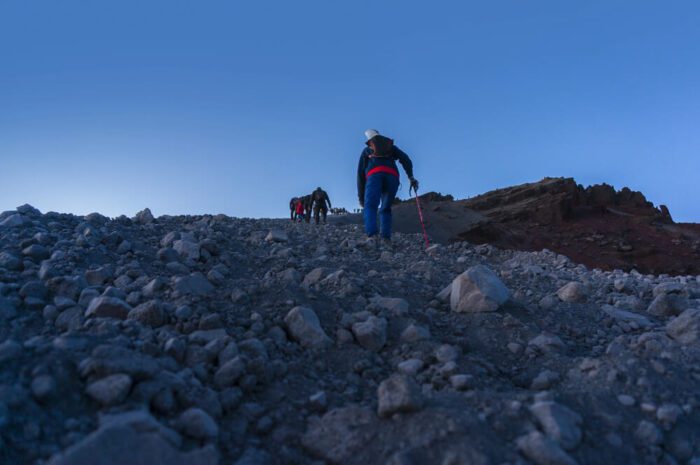
From Sembalun Lawang, the first day ascends through open landscapes and savannahs up to the campsite on the crater rim near the summit area. The second day begins very early, usually around 2 or 3 a.m., with the climb to the top. The final section is the most challenging part of the entire expedition.
You hike at night, headlamps lighting up the steep slope covered in loose volcanic sand, where every step forward often means sliding half a step back. It is physically demanding and mentally exhausting, especially in strong winds. The reward is sunrise and panoramic views over the whole of Lombok, the silhouette of Bali, and the surrounding islands.
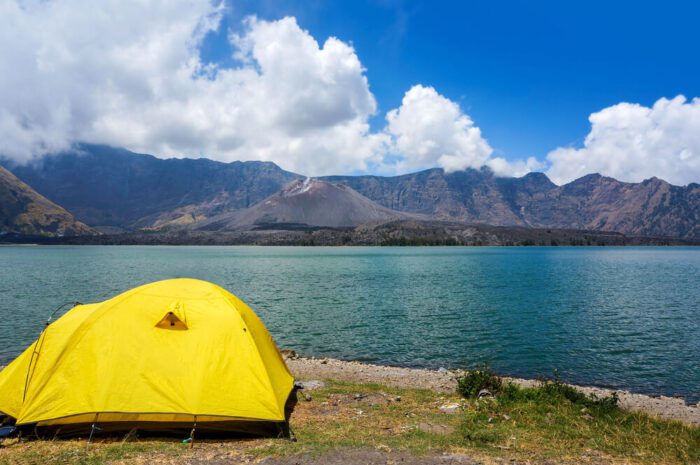
After returning to camp, the descent continues down to Lake Segara Anak. The water is cold, and swimming is not very common — most people simply cool off their feet. The nearby hot springs are far more inviting, offering a perfect way to recover after a demanding day. In the afternoon, the trail usually climbs up to the northern crater rim, where you spend the night. On the third day, only the long descent down to Senaru remains, where the trek comes to an end.
Route via Torean
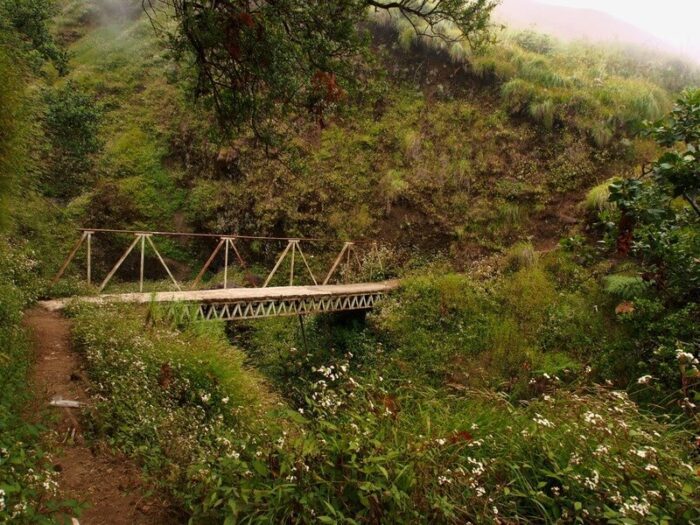
A newer and quieter option is the ascent or descent via the village of Torean. This route leads through a more dramatic valley filled with rivers, waterfalls, and towering rock walls. It is more scenic than the classic trail to Senaru, but in some sections also more technical. The route most often starts in Sembalun Lawang and gradually descends through Torean.
Although three-day options do exist, we recommend choosing a four-day program for this route. The summit climb still takes place on the second day, while the third and fourth days are more relaxed and focused on the journey itself, following the river and passing waterfalls along the way.
Backindo Tip: One of the main advantages of this trek is that you avoid the largest tourist groups.
Practical Information and Recommendations
The main season runs roughly from April to November, during the dry period. In the rainy season (usually January–March), the national park is closed for safety reasons, and access to the volcano is not possible.
What to Bring
- Sturdy footwear suitable for dusty volcanic terrain
- Clothing for both warm and cold conditions — this is not something to underestimate, as night temperatures at the Crater Rim (2,600 m) range between 5–15°C. At the summit before sunrise, it is even colder. Knitted gloves and warm socks for the night are highly recommended.
- A raincoat or waterproof jacket
- A headlamp, insect repellent, sunscreen, a basic first aid kit, plenty of water, and energy snacks
- A power bank
Backindo Tip: Don’t forget to clarify in advance with your guide whether food and water are provided or if you need to carry your own supplies. Most organized treks include a tent, sleeping mat, and meals, but you are usually responsible for bringing and carrying your own water.
Prices and Permits
Rinjani is located within the protected area of Mount Rinjani National Park (TN Gunung Rinjani), which means the climb is only possible with a valid permit (e-ticket). The fee is charged per trekking day, and prices may vary depending on the season and the entry point you choose.
For the most common starting points — Sembalun, Senaru, and Torean — foreign visitors can expect to pay approximately 200,000–250,000 IDR per person per day. For less frequented entry points such as Timbanuh, Aik Berik, or Tetebatu, the fee may be slightly lower. The permit is processed and paid for through the official eRinjani mobile application.
In practice, however, most travelers do not arrange the permit themselves but go through an agency or organizer who secures the e-ticket within the national park system and manages registration and daily quotas. This is particularly important during the high season, when spots fill up quickly.
It is essential to choose an agency with an official license. In addition to the permit, they usually provide a full service package — guide, porters, tent, meals, and all necessary equipment for a multi-day trek. Although it is possible to arrange a guide on arrival, we recommend booking in advance to ensure service quality, safety, and a guaranteed valid permit.
An organized two- to three-day trek typically costs around 3–4 million IDR per person, depending on the length, season, and level of service.
It is also important to know that hiking independently is illegal for foreigners. The trek is permitted only with a local guide, in accordance with national park regulations and safety rules.
Backindo Tip: When climbing, always pack out everything you bring in. Leaving trash behind can lead to blacklisting and fines.
Where to Stay around Rinjani
Before and after the trek, most travelers stay in the mountain villages of Senaru and Sembalun. Each has a different atmosphere.
Senaru
Senaru is a peaceful village surrounded by lush greenery, with views over the jungle and nearby waterfalls. It sits on slopes dotted with terraced rice fields and feels slightly livelier than Sembalun. For budget-friendly options, we recommend Rumah Kawan Homestay and Ila Homestay. If you would like to treat yourself to more comfort after a demanding trek, the more upscale Rinjani Lodge is a great choice.
Sembalun Lawang
In contrast, Sembalun Lawang lies in a more open landscape, surrounded by fields and savannah. The atmosphere here is calmer and less touristy. The area carries the scent of onions and garlic, which are widely grown here. We can recommend Sembalun Kita Cottage or Rautani Sembalun.
If you plan to start the trek in one village and finish in the other, there is no need to worry about transferring luggage or changing accommodation. Most organized packages include transport back to your original place of stay.
What to Watch Out For
The climb to Rinjani is not technically difficult, but it is physically demanding. Long hours of walking, significant elevation gain, and especially the challenging final stretch to the summit over loose volcanic sand await you. The slope can be very steep in places, and fatigue builds up quickly.
Weather conditions at higher elevations can change rapidly. Even during the dry season, you may encounter strong winds, fog, or sudden drops in temperature. Powerful winds along the ridge are completely normal and can make the ascent considerably harder, with the perceived temperature feeling much lower than what the thermometer shows.
And finally, safety. Rinjani is an active volcano, and conditions can change. Always check the latest information about volcanic activity, follow the instructions of the rangers, and stay on official trails. If a part of the mountain is closed, there is always a reason for it.
Surroundings of Rinjani
Tiu Kelep and Sendang Gile Waterfalls
The village of Senaru is not only one of the main bases for the ascent, but also the gateway to Lombok’s two most famous waterfalls.
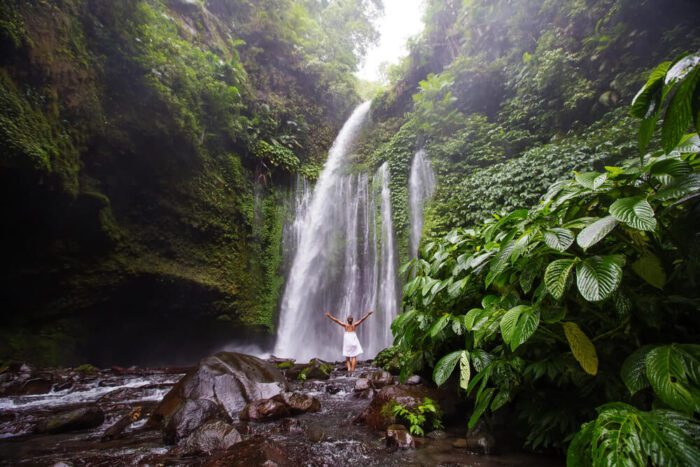
Tiu Kelep and Sendang Gile are located just a short walk from the village. The path leads through peaceful tropical vegetation, along stone steps and beside an irrigation channel. Both waterfalls are part of the same trail, so you can easily visit them during a single walk. At Tiu Kelep Waterfall, you can cool off with a swim, but caution is needed, especially when swimming close to the falling water.
Sembalun Lawang
The Sembalun Lawang area is worth visiting in its own right. The village lies in a highland valley surrounded by green hills and, unlike the tropical north, feels more open and drier. The valley is dotted with fields of strawberries, garlic, and other vegetables.
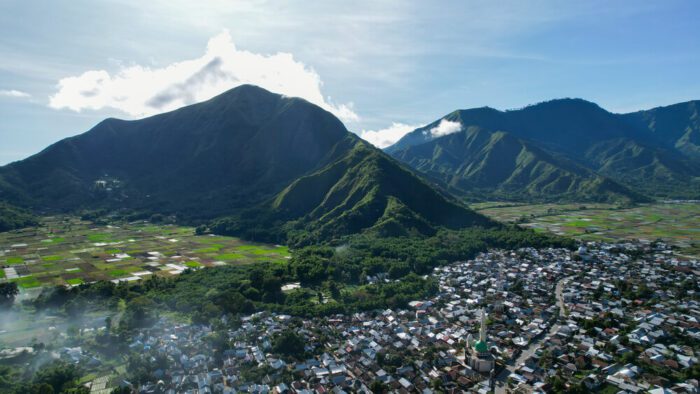
Viewpoints above the valley offer panoramic views of the landscape as well as Mount Rinjani itself. If you have time before or after the trek, it is worth walking among the fields and hiking up to one of the viewpoints to soak in the atmosphere of this mountain valley.
Traditional Villages
Senaru itself is not only a starting point for Rinjani, but also a place where you can glimpse the original culture of the mountain Sasak people. The older part of the village has preserved traditional houses with thatched roofs and simple bamboo and wooden structures.
A better-known village is Sade, located on the way south toward the town of Kuta. However, it is far more touristy than the one in Senaru.
Gili Islands
After a demanding climb, a few days by the sea come as the perfect reward. Northwest of Lombok lie three small islands known as Gili Trawangan, Gili Air, and Gili Meno.
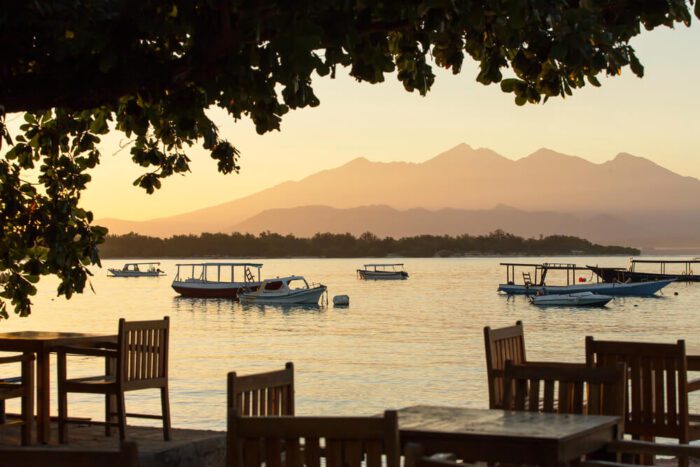
Each has its own atmosphere. Gili Trawangan is livelier, with restaurants and evening entertainment, Gili Air offers a balanced mix of relaxation and services, and Gili Meno is the quietest, ideal for pure rest. White beaches, crystal-clear water, and easily accessible coral reefs make the Gili Islands a perfect way to end the active part of your journey.
Should You Climb Rinjani?
Rinjani is rightfully one of the most popular treks in Indonesia. It offers an experience that is not easy to earn, but one that stays with you for a lifetime. It is important not to underestimate the volcano and to prepare properly for the demanding climb, but there is no need to fear it so much that you miss out — if you are already in Lombok, this trek is absolutely worth undertaking.
Continue reading :