
Alor Island lies at the far eastern edge of Indonesia’s Lesser Sunda Islands, far away from the main tourist trails and typical travel itineraries. For many, it remains an unknown spot on the map—yet it’s one of the most fascinating regions, especially for those drawn to stunning seas and a rich underwater world.
Why Visit Alor Island?
One of Alor’s main attractions is its remoteness. While tourism does exist here, it’s still quite limited. You won’t find busy resorts or overpriced tourist attractions—instead, the island maintains its own natural rhythm, moving in harmony with the land and local traditions.

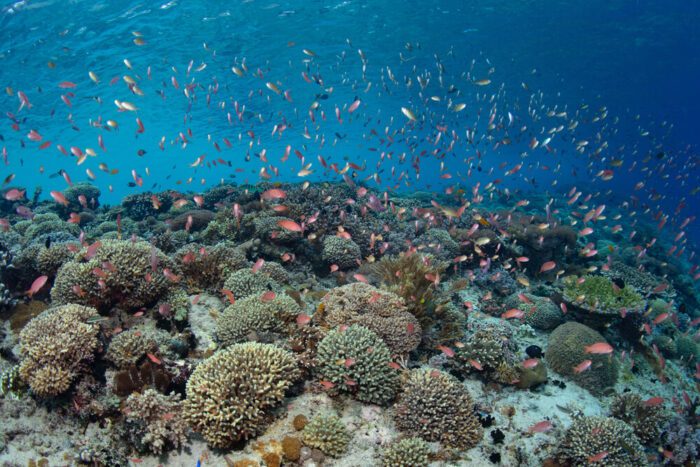
Alor is also often regarded as one of the best diving destinations in Indonesia. The underwater world here is incredibly rich—strong currents bring nutrients that support the growth of corals and attract a wide variety of fish. The area appeals to both experienced divers and those who prefer snorkeling, whether directly from the beach or by boat.
But the island’s inland offers just as many rewarding experiences. Alor is home to thirteen ethnic groups who reportedly speak up to sixty local languages. It’s no surprise, then, that you’ll encounter a wealth of cultural traditions and diversity. Traditional villages, handwoven textiles, and the daily life of local people give travel in Alor a deeper and more meaningful dimension.

What to Experience in Alor
Diving
Alor is considered one of the most fascinating diving destinations in all of Indonesia and has long held a reputation as a place with healthy and untouched coral reefs. The diving here is diverse—ranging from steep walls and coastal slopes to black volcanic seabeds perfect for muck diving and night dives.
It’s not uncommon to encounter large schools of fish, sharks (especially wobbegong, reef, and hammerhead sharks), as well as a wide variety of small marine creatures like nudibranchs, frogfish, and various species of octopus. During the summer months, you might also be lucky enough to spot whales migrating through the area.

Diving here is more suitable for experienced divers, but there are also calmer spots that offer great conditions for snorkeling, either directly from the shore or by boat. Among the most renowned locations are Pantar Strait, Kalabahi Bay, Abila, Biatabang, and Anemone City.
For snorkeling, the nearby coral reefs located close to dive centers are often used. The underwater world is so rich that you can essentially snorkel anywhere, but it’s best to have someone show you the ideal spots.
If you’re interested in these activities, we recommend staying at one of the resorts that have their own dive centers, such as Nautika Dive Alor (the only PADI five-star dive resort on the island), Dive In Alor, or Air Dive Alor.
Meeting a Dugong at Pulau Sika
One of the most extraordinary experiences Alor has to offer—and one that you’re unlikely to encounter elsewhere in Indonesia—is the opportunity to observe a wild dugong up close from a small fishing boat. The Indian dugong is an endangered species, and this encounter happens naturally, without chasing or organized “attractions.” The entire experience is relaxed and typically without the presence of other tourists.
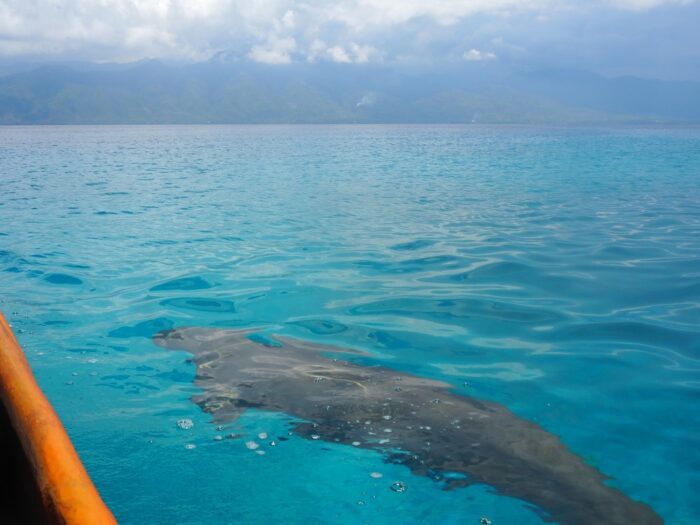
Dugongs in this area swim in the shallow coastal waters where they feed on seagrass. They are known for their calm nature and curiosity, and if they appear, they often approach the boat on their own. Although sightings can’t be guaranteed, the chances of seeing one are truly high.
You can experience this encounter during a trip to the small island of Sika, located near the airport. If you’re lucky, you might even get to touch a dugong. In the past, it was possible to snorkel with them, but this is now prohibited due to safety reasons—for both you and the dugongs—as tourism continues to grow.
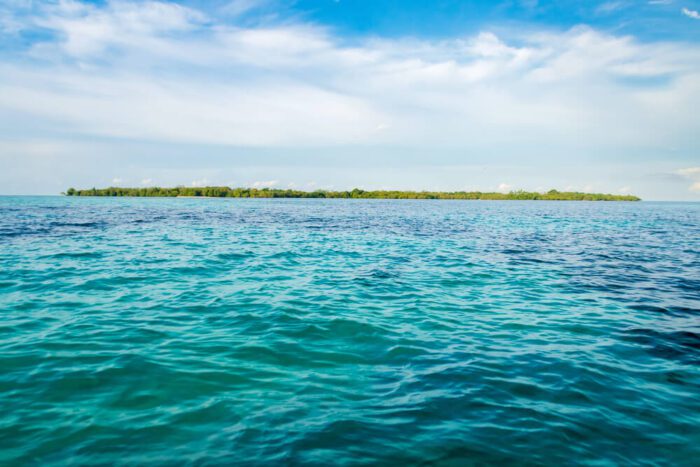
The easiest way to go on this trip is to arrange it directly with local fishermen on the beach in the Mali area, where you can usually negotiate a reasonable price. If you prefer more certainty and want to organize everything in advance, the trip can also be arranged through your accommodation or local agencies.
Backindo Tip: Looking for a recommendation to help you arrange the trip? Send us a message at hello@backindo.com and we’ll happily share our tips.
Traditional Villages
Beyond its underwater wonders, the island also attracts visitors with its well-preserved animist culture and meaningful contact with local communities. Alor is culturally diverse, home to dozens of ethnic groups and languages. The local communities have maintained a strong connection to traditional ways of life, which are markedly different from those in Indonesia’s more tourist-heavy regions.
The most well-known traditional village is Kampung Adat Takpala, located in the hills near the town of Kalabahi. The village is inhabited by the Abui ethnic group and consists of a cluster of traditional houses with tall thatched roofs. The residents mainly rely on farming and livestock, and they offer visitors a glimpse into their local customs, dances, and crafts.
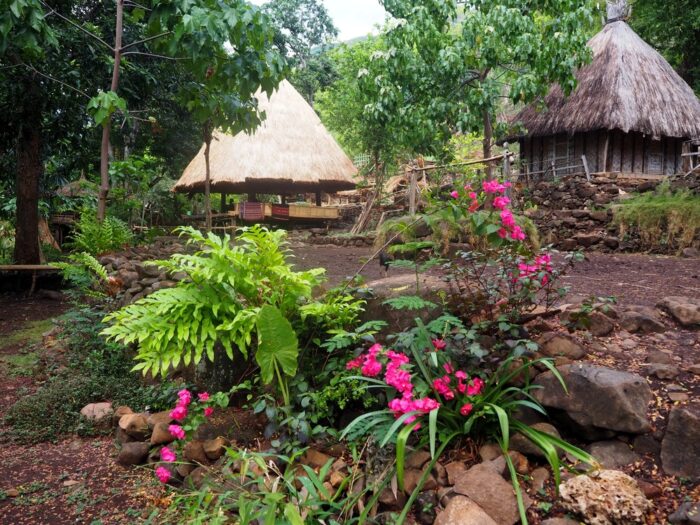
Takpala is now open to tourists and also serves as a venue for cultural demonstrations. Yet the village still retains its authentic atmosphere and doesn’t feel commercialized. For those interested, traditional clothing is available to try on. It’s a truly unique experience that we definitely recommend.
Besides Takpala, it’s also worth mentioning Matalafang Village (also known as Latifui), although it has started to feel a bit more commercial.
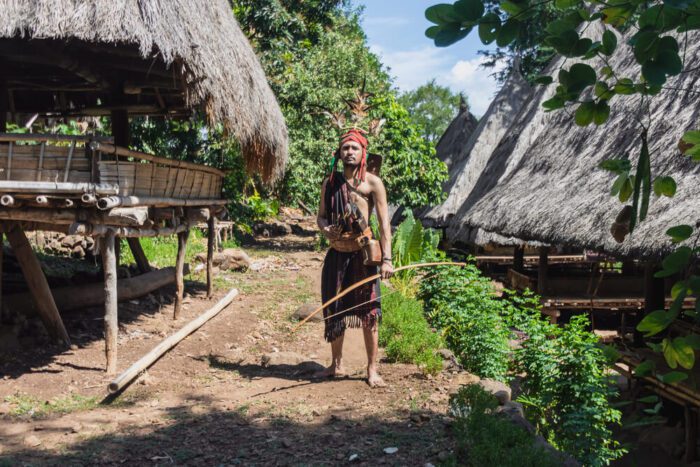
There are also villages in the island’s highland areas, such as Kampung Adat Bang Towo or Desa Kopidil, where visitors can observe traditional houses and daily life without organized performances, and discover a different style of traditional dress—the people here, from the Kabola ethnic group, wear clothing made from tree bark.
Visiting these places usually requires a local guide and arrangements in advance, especially due to the language barrier, as English is still not widely spoken here.
Traditional villages are one of the highlights of Sumba island. Learn more in Waikabubak, Sumba: Travel Guide Full of Local Tips.
Beaches, Beaches, Beaches
Alor is not an island of long sandy beaches lined with sunbeds and bars—and that’s exactly where its charm lies. Most of the beaches are peaceful, often nearly deserted, and better suited for swimming, relaxing, and snorkeling rather than classic beach tourism. The sea here is usually clean, with easy access to the water and minimal tourist crowds.

Some of our recommended spots include Mali and Maimol beaches, located near the airport and easily accessible. They offer calm waters and softer sand. On the northern coast, Batu Putih Beach is worth a visit, surrounded by dramatic landscapes and turquoise water.
You can also visit many other beautiful beaches, especially in Java—such as those in Malang and Yogyakarta.
Kalabahi
Kalabahi is the capital of Alor Island and, for most travelers, the main entry point to the region. The town itself isn’t a tourist attraction in the traditional sense, but it offers a great glimpse into the daily life of local residents. A visit to the local markets is especially worthwhile, where you can observe the town’s everyday rhythm and sample local fruits, fish, or simple dishes.
An interesting stop is the Museum of 1000 Moko, which showcases traditional bronze moko drums—one of Alor’s most important cultural symbols, still used today in ceremonies, weddings, and rituals. Visiting the museum helps deepen your understanding of local traditions and the social significance of these objects.
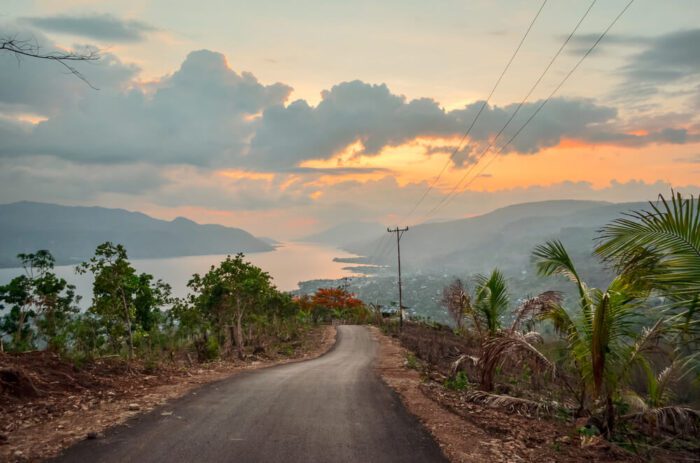
For a relaxing break after walking around town, head to Pantai Reklamasi, the town’s seaside promenade, where locals go to stroll, sit, and watch the sunset over the bay.
Adventurous Inland
While most visitors stay near the coast and around Alor Kecil Island, the true raw character of Alor lies hidden in the interior of the main island. The mountainous terrain, deep valleys, and isolated villages form a region that is significantly more interesting for adventurous travelers—but also much harder to access. Roads are often narrow, sometimes in poor condition, and travel times can be much longer than the distances on a map might suggest.

Yet it’s precisely this difficult accessibility that has allowed Alor’s interior to retain its authentic character. Traditional villages, agricultural landscapes, and daily life unfold here with little influence from tourism. Traveling through this part of the island requires more planning, patience, and ideally a local guide, but it offers a deeper insight into the culture and environment—something that’s hard to find along the coast.
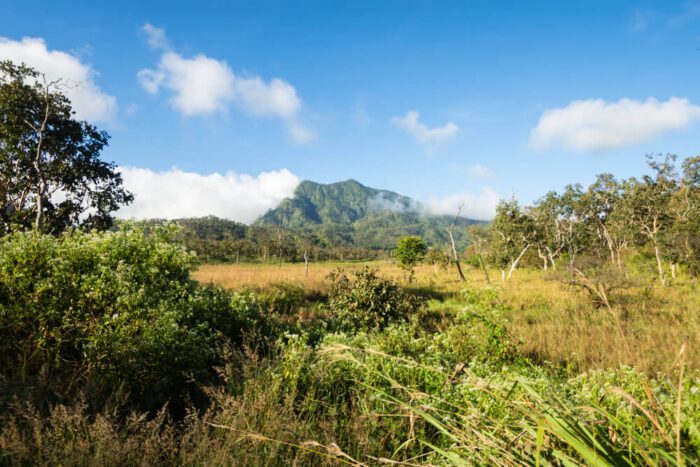
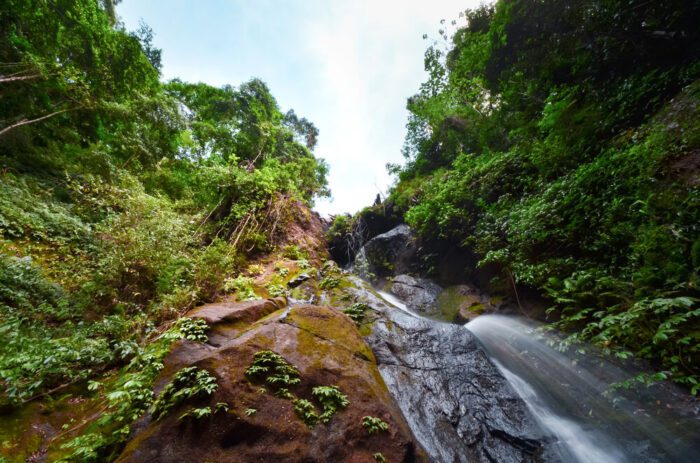
If you decide to venture inland, be sure to visit the Tuti hot springs, which are still easily accessible from Kalabahi. With a local guide, you can head out to the Binafui and Bientali waterfalls, or hike to the island’s highest peak—Mount Dola Koyakoya. Standing at 1,821 meters above sea level, with an elevation gain of around 1,200 meters, this six-hour climb is a solid challenge—but your reward is a breathtaking view over the entire Alor inland.
Interested in hiking some of the less known mountains in Indonesia? Read How to Hike Mount Tambora: Indonesia’s Volcanic Giant.
How to Get There
The easiest way to reach Alor is by flying into Kalabahi (Alor Island Airport), which serves as the main gateway to the island. There are no direct international flights, so at least one stopover is always required. Regular flights operate from Kupang, with a flight time of approximately one hour. It’s important to keep in mind that flight schedules can change and delays are not uncommon.
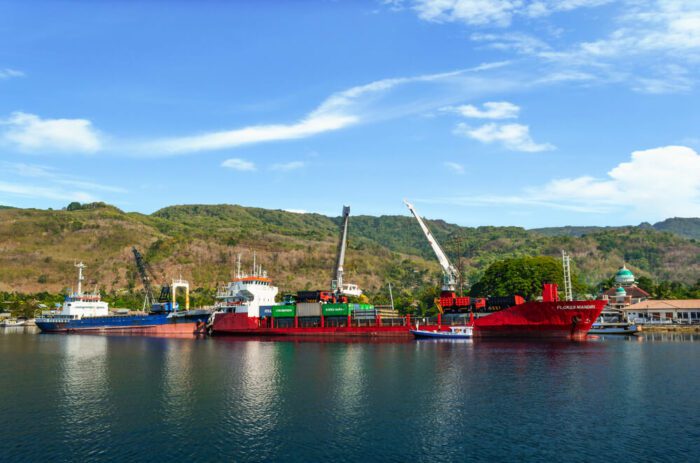
A more adventurous option is to travel by boat, most commonly from Kupang or Flores. However, boat schedules depend on the weather and are not ideal for travelers on a tight schedule. For those with more time and a desire to experience Indonesia from a different perspective, it can be a fascinating journey. ASDP ferries and passenger ships such as the AWU typically depart from Kupang about twice a week.
When Is the Best Time to Go?
The most suitable time to visit Alor is during the dry season, from April to November. During this period, the sea is calm, underwater visibility is ideal for diving and snorkeling, and travel around the island—even on unpaved roads—is generally smooth.
During the rainy season, roughly from December to March, some areas may become harder to access—roads can be slippery, ports less reliable, and weather conditions might complicate trips to smaller islands or underwater excursions.

How to Get Around
Alor is an island with fairly scattered villages, bumpy roads, and minimal tourist infrastructure, so it’s best to plan ahead. The most popular and convenient way to get around is by renting a motorbike. However, roads can be narrow and slippery in places, so it’s important to drive carefully and slowly. The cost of renting a motorbike here is about two to three times higher than in Bali.
For groups or longer trips between villages, a car with a driver is ideal. If you plan to explore the island’s interior, off-road vehicles are a must.
From the airport, you can take a taxi to your accommodation, but it’s better to arrange transport in advance. The better hotels offer free pick-up services.

Where to Stay
The best base for exploring the island is Kalabahi, the capital and main transport hub of Alor. It’s located about 15 minutes from the airport and offers a range of accommodation options, from simple guesthouses to more comfortable hotels with air conditioning and sea views. Kalabahi is also an ideal starting point for travelers who want to combine day trips, diving, and getting a feel for local life. In this area, we recommend Mokkolipa Guesthouse and Simfony Hotel.
For the more adventurous, there’s the option to spend the night in a traditional village. In places like Takpala or Latifui, this is quite common. This type of accommodation offers an authentic experience and connection with the local community. However, be prepared for very basic conditions—no hot water, unreliable electricity, and beds without clean sheets.
For divers and those who prefer to spend more time by the beach than on the road, we recommend one of the dive resorts such as Nautika Dive Alor, Dive In Alor, or Air Dive Alor.
It’s always a good idea to arrange accommodation in advance, and keep in mind that many budget places don’t have an online booking system—you’ll need to contact them directly.
What to Taste
Alor’s cuisine is heavily influenced by Sumbawa, Flores, and eastern Indonesia in general—expect plenty of fish, seafood, and simple, spiced dishes. Definitely worth trying is ikan kuah kuning (fish in a mildly spiced turmeric and coconut milk sauce) and sambal roa (a local chili sauce made from smoked fish, perfect with rice or meat).
If you get the chance, choose boiled or steamed cassava as a side dish, and at the market, grab a local mango (mangga kelapa)—different from regular mangoes not just in size, but also in its creamy texture and intense, sweet flavor.
Where to Go Next
There are plenty of small islands around Alor that you can reach on day trips by boat. Most of these nearby islands are only accessible via local boats, so it’s a good idea to arrange your trip through a homestay or a local guide who knows the safe routes and current sea conditions.
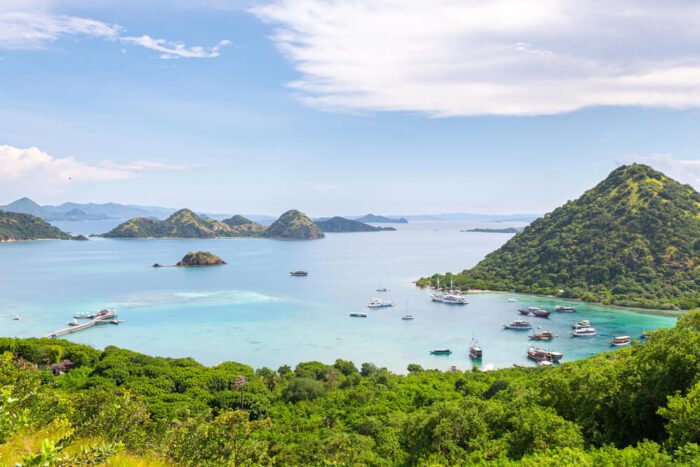
From Alor, you can continue your journey by air or sea to the islands of Flores or Timor.
In Conclusion
Alor is a place where Indonesia shows its wild side. There’s no mass tourism or crowded beaches here—instead, you’ll find fishing villages, stunning coral reefs, and untouched landscapes.
The island and its surroundings offer a combination of adventure and tranquility: from diving among colorful fish and corals, to spotting unique species, to exploring nearby islands and small communities where culture and tradition are still very much alive.
For travelers seeking authentic Indonesia, off-the-beaten-path adventures, and a deep connection with nature and local people, Alor is truly second to none.
Continue reading :