
Orangutans are the largest primates in Asia, found only in Indonesia and parts of Malaysia, and sadly, they are now critically endangered.
Sure, you can spot orangutans in zoos all over the world, but let’s be honest — it is much more special to have the chance to watch them roaming free.
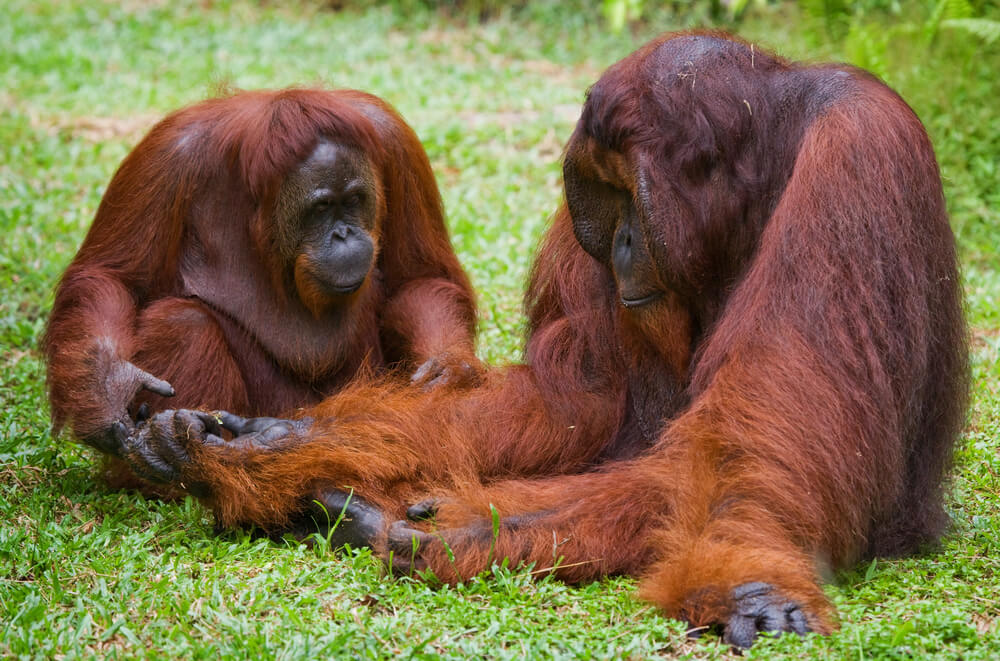
Wild orangutans live in the tropical rainforests of Sumatra and Borneo (the island shared by Indonesia, Malaysia, and Brunei). So, how exactly can you see them in the wild or semi-wild?
In this guide, I’ll walk you through the life of orangutans in the wild, introduce you to the different species, and share the best places to see them ethically.
Meet the Orangutan Species in Indonesia
In Indonesia, there are three different species of orangutans, and each has its own unique physical traits and habitat. Two live in Sumatra, and the other is found in Borneo. Here’s a quick overview:
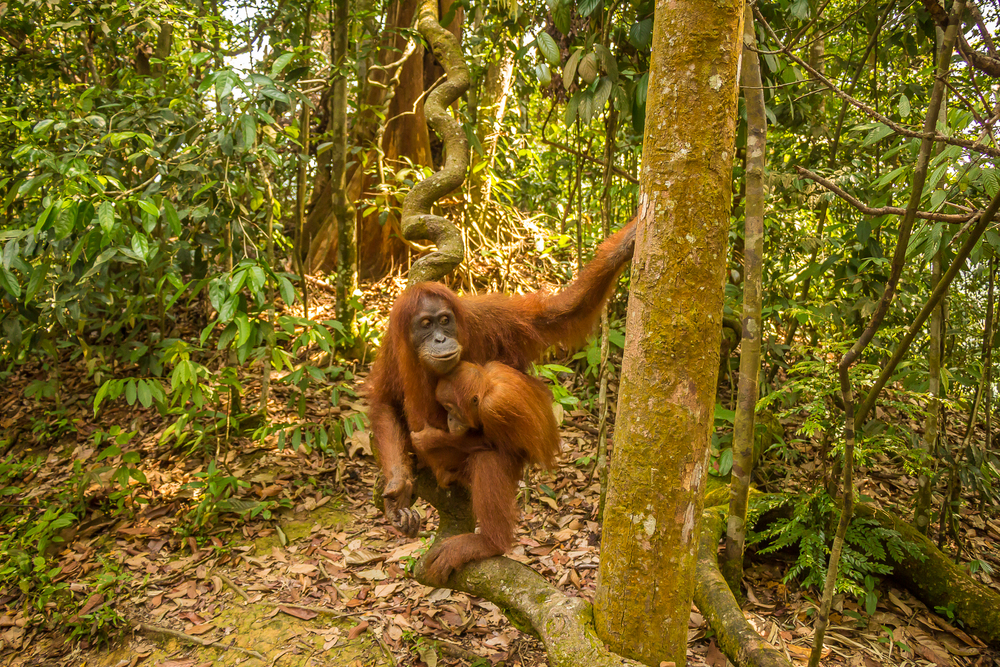
1.Sumatran Orangutan (Pongo abelii)
Native only to Sumatra. They have slimmer bodies, shorter hair, and reddish-brown fur. With just around 13,846 individuals left, this species is listed as Critically Endangered.
2.Bornean Orangutan (Pongo pygmaeus)
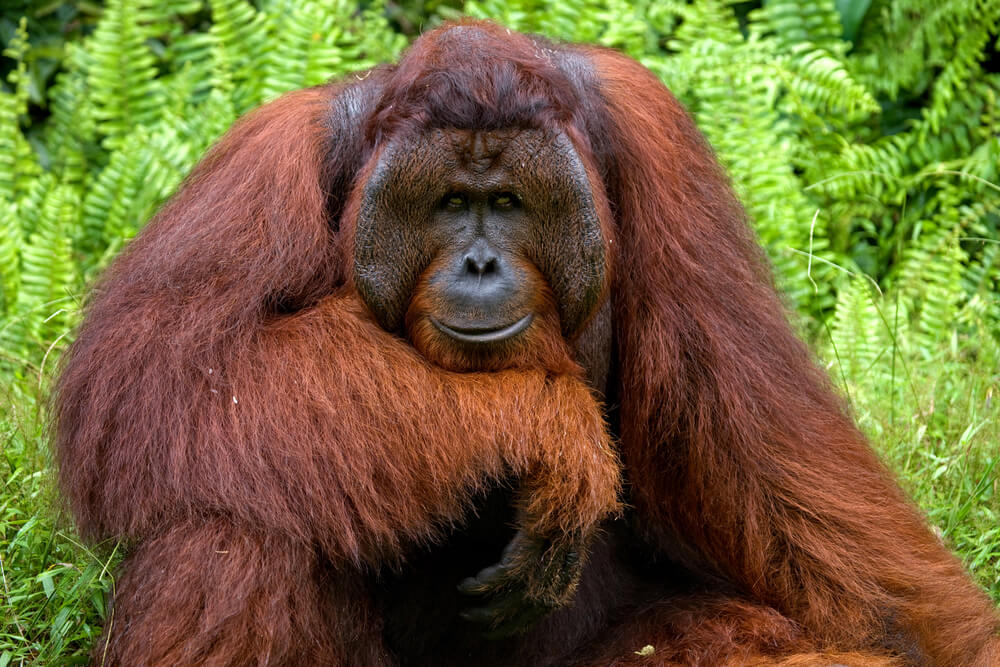
Found in Borneo Island (Kalimantan), as well as parts of Malaysia and Brunei. They’re larger, weighing between 50–100 kg, with darker brown fur, longer arms, and the males have a large throat pouch. They are the most numerous, with an estimated 104,700 individuals left.
3.Tapanuli Orangutan (Pongo tapanuliensis)
The most genetically distinct species. They look similar to the Sumatran orangutan but have thicker, curlier hair, plus a mustache and beard. Males also have cheek pads like the Bornean species. Found only in the Batang Toru forest in North Sumatra, their population is extremely small — just around 800 individuals, making them also Critically Endangered.
If you want to see all three species in the wild, you’ll have to travel to different locations. Even though both the Sumatran and Tapanuli orangutans live on the same island, their habitats don’t overlap. The Tapanuli orangutans are found only in the Batang Toru Ecosystem in South Tapanuli, while Sumatran orangutans can be spotted in Gunung Leuser National Park or Bukit Lawang in North Sumatra.
Fun fact: 97% of orangutan DNA is identical to humans. They’re emotionally intelligent, know how to use tools, and even build their own nests. Pretty amazing — and also a reminder of how unethical it is that our closest relatives in the animal kingdom are now so close to extinction.
Difference Between Semi-Wild and Wild Orangutans
In Indonesia, most orangutans still live in the wild, but many are also cared for in rehabilitation centers. These are usually individuals rescued from illegal captivity or human-wildlife conflict. In these centers, they’re taught the skills they need to survive before being released back into the forest.
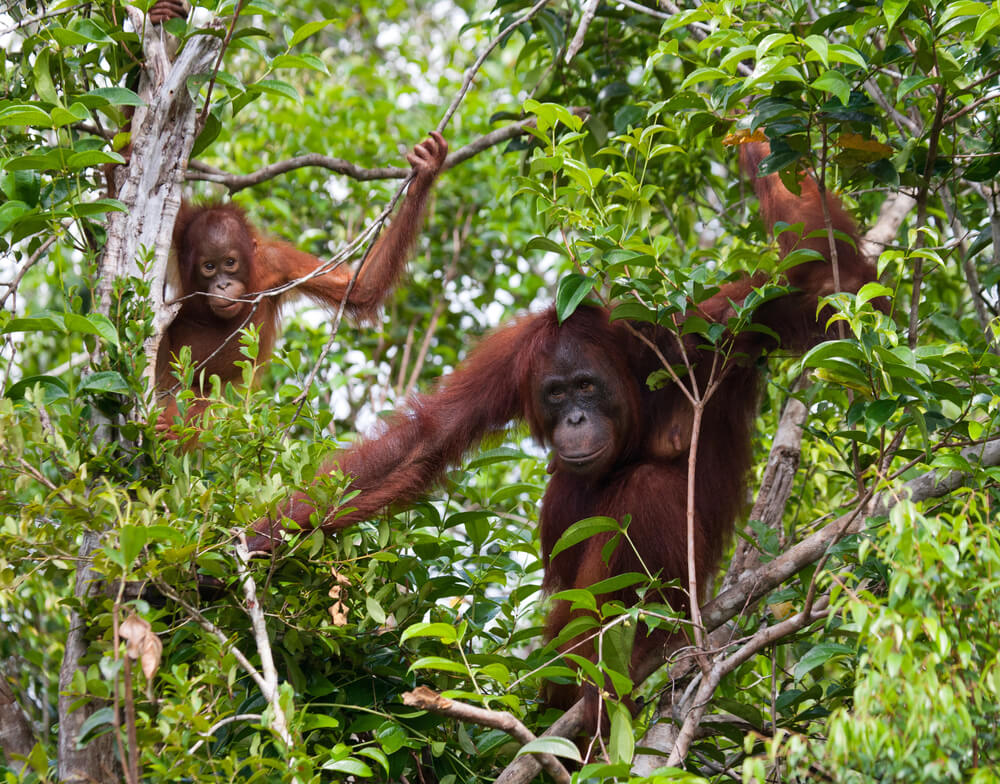
Visiting a rehabilitation center gives you the chance to watch orangutans learn to forage, get used to their environment, and interact with each other. Unlike their wild counterparts, semi-wild orangutans here are more familiar with humans, which makes them easier to observe.
So, if you want to see semi-wild orangutans, head to a rehabilitation center. If you’re after a truly wild experience, you’ll need to venture into national parks — either in their untouched habitats or in areas where rehabilitated orangutans are released.
Know the latest rules before traveling to Indonesia All Indonesia: New Arrival Requirement for Travelers
Where to Spot Them Exactly?
Indonesia is without doubts home to some of the best places in the world to see orangutans. Each location offers a different kind of experience, from jungle trekking to river journeys on wooden boats.
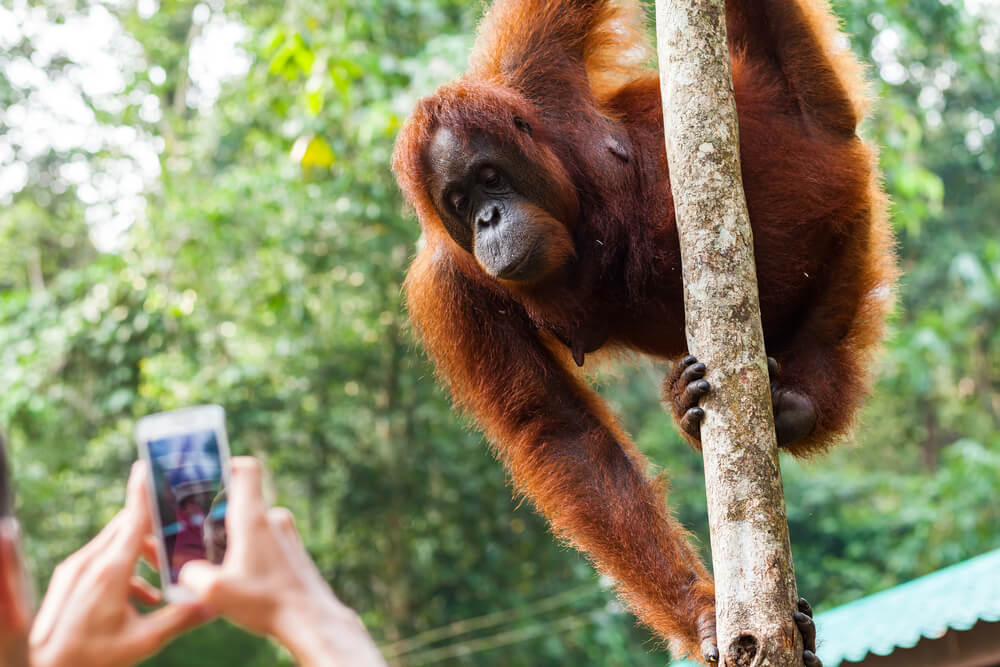
Here are some of the top areas where you can get close to these incredible primates.
Bukit Lawang, North Sumatra
Bukit Lawang is one of the most popular places to see both wild and semi-wild orangutans. It’s located within Gunung Leuser National Park, about a 3-hour drive from Medan.
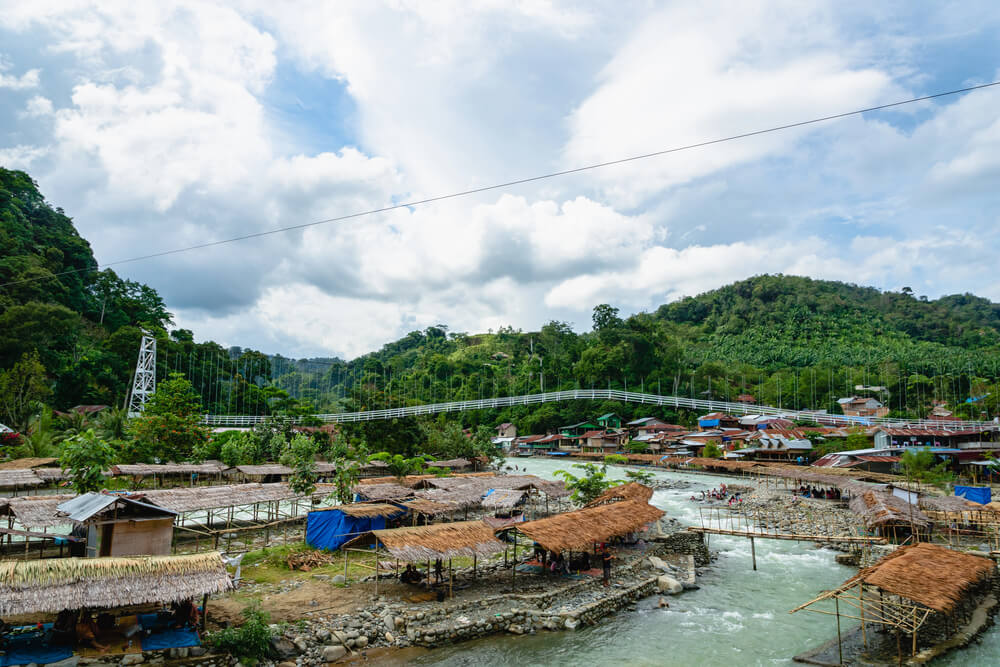
Here, you’ll likely spend hours trekking deep into the rainforest — sometimes 6 hours or more — while spotting orangutans and other wildlife along the way. Be prepared: the trails can be tough, so good physical condition is a must.
Hiring a local guide is mandatory, and it’s also the best way to make the most of your visit. Guides will lead you to the best spots for wildlife viewing, explain the forest’s ecosystem, and often include lunch, tubing on the river, or even camping packages with tents set up for you.
Planning to visit Bukit Lawang? We’ve covered it in detail in our full guide How to See Wild Orangutans in Bukit Lawang (Sumatra).
Tanjung Puting, Central Kalimantan
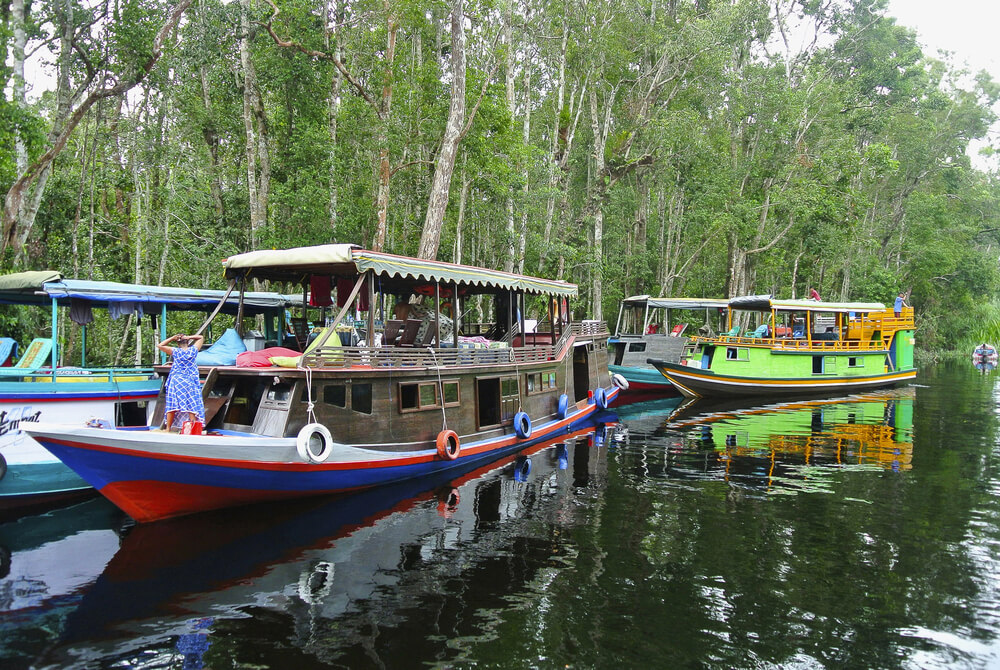
Tanjung Puting National Park is probably the most famous place in Indonesia to see orangutans in the wild. Here, the adventure is as much about the journey as the destination: you’ll go on a multi-day trip by klotok (wooden riverboat) for several days along the Sekonyer and Black Rivers, spotting wildlife as you go. Orangutans here can be both wild and semi-wild.
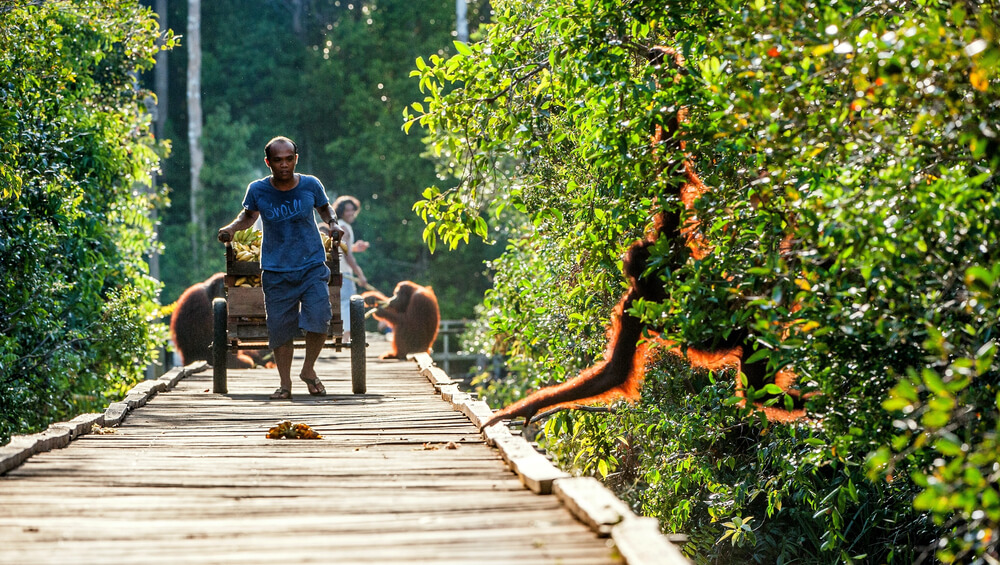
Inside the park, you’ll find Camp Leakey, a legendary rehabilitation center founded by Dr. Biruté Galdikas in 1971. At the feeding stations, it’s easy to watch semi-wild orangutans up close. The scenes can feel like a live Discovery Channel episode — orangutans swinging between trees, chasing each other, fighting over food, while even wild boars show up to grab leftovers.
Besides orangutans, you might also encounter the proboscis monkey (bekantan) with its distinctive big nose.
Backindo Tip: Don’t swim in the rivers here — crocodiles are still very common.
Visiting Tanjung Puting usually takes more time and a higher budget than Bukit Lawang, but it’s definitely a once in a lifetime experience.
Lamandau Wildlife Reserve, Central Kalimantan
Also in Central Kalimantan, Lamandau Wildlife Reserve is another key site for orangutan release and rehabilitation. This swampy forest sits along the river and depends heavily on the tides. The atmosphere feels similar to Tanjung Puting, but here you’ll explore with smaller boats instead of big klotoks.
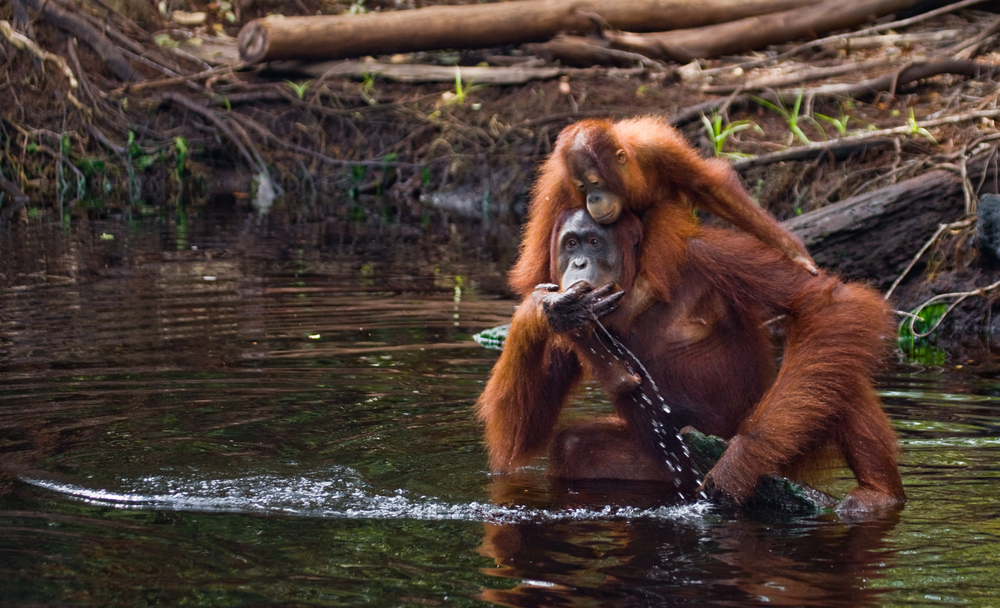
The reserve has nine guard posts and five rehabilitation camps, where orangutans rescued from captivity are prepared for release back into the wild.
Lamandau is also a home to a bird lake, an important stopover for migratory birds and a conservation spot for native species. You might also see proboscis monkeys, crocodiles, and other primates during your visit.
If you’re into authentic village life, you can visit Waikabubak, Sumba: Travel Guide Full of Local Tips
Ketapang Orangutan Rehabilitation Centre, West Kalimantan
Run in collaboration with International Animal Rescue (IAR), this center in West Kalimantan is often called the “orangutan school.” Here, young orangutans — many rescued from forest fires or captivity — learn the survival skills they’ll need before being released into the wild.
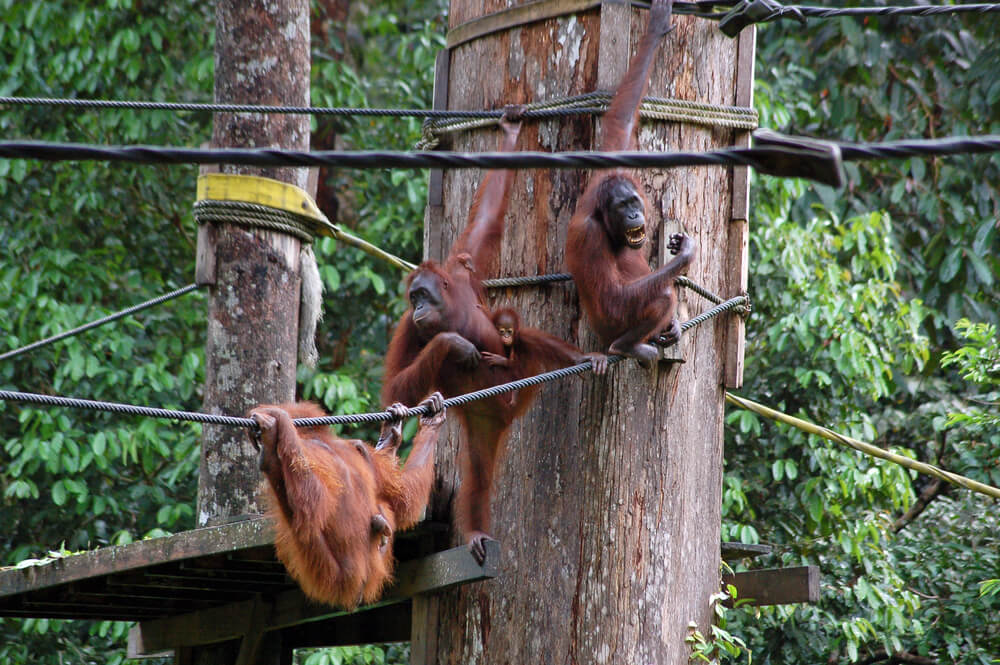
The center also runs programs for adoption, donations, and volunteering. Volunteers can help care for baby orangutans, bottle-feed them, or even teach them simple forest skills. It’s a rare chance to interact with these endangered primates up close.
Other Places in Borneo (Malaysia Side)
If your trip also takes you to Malaysian Borneo, there are a couple of well-known spots to see orangutans. The Sepilok Orangutan Rehabilitation Centre in Sabah is one of the most famous, where orphaned and injured orangutans are trained to return to the forest.
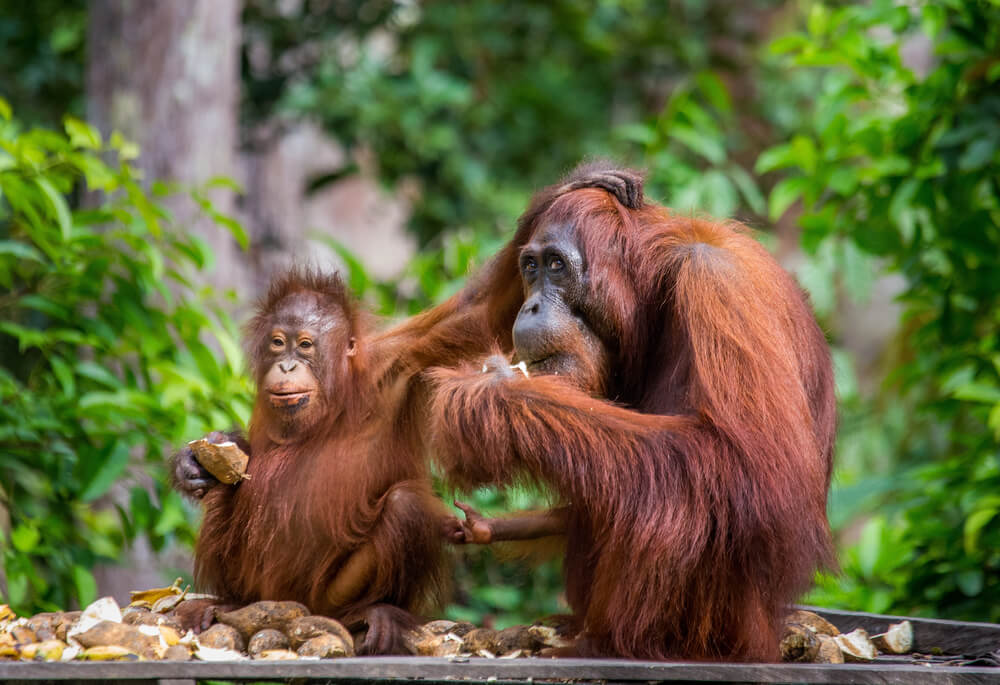
In Sarawak, the Semenggoh Nature Reserve near Kuching offers a great chance to see semi-wild orangutans during feeding times. Both places are easy to visit and give you a closer look at conservation efforts outside Indonesia.
What to Prepare Before Seeing Orangutans
Before you set out into the jungle, there are a few things worth preparing:

- Bring binoculars: Orangutans spend most of their time high up in the trees, so binoculars will make it much easier to spot them.
- Be physically ready: Trekking can take hours, sometimes even more than a full day. Make sure you’re fit enough for the hike.
- Wear the right clothes: Long sleeves and long pants are the best protection against mosquitoes, insects, and leeches.
- Wear proper footwear: Closed shoes and socks are essential for muddy and slippery forest trails.
- Pack light: Don’t overload your bag. Just bring essentials like drinking water and some snacks. Meals are usually provided by local guides.
And most importantly, always respect the ethics of seeing orangutans. Your visit should never disturb their natural behavior or threaten their survival.
Seeing Orangutans Responsibly
Spotting orangutans in the wild can be an incredible experience, but it’s just as important to make sure your visit doesn’t disturb them. So how to join orangutan trekking or watching ethically?
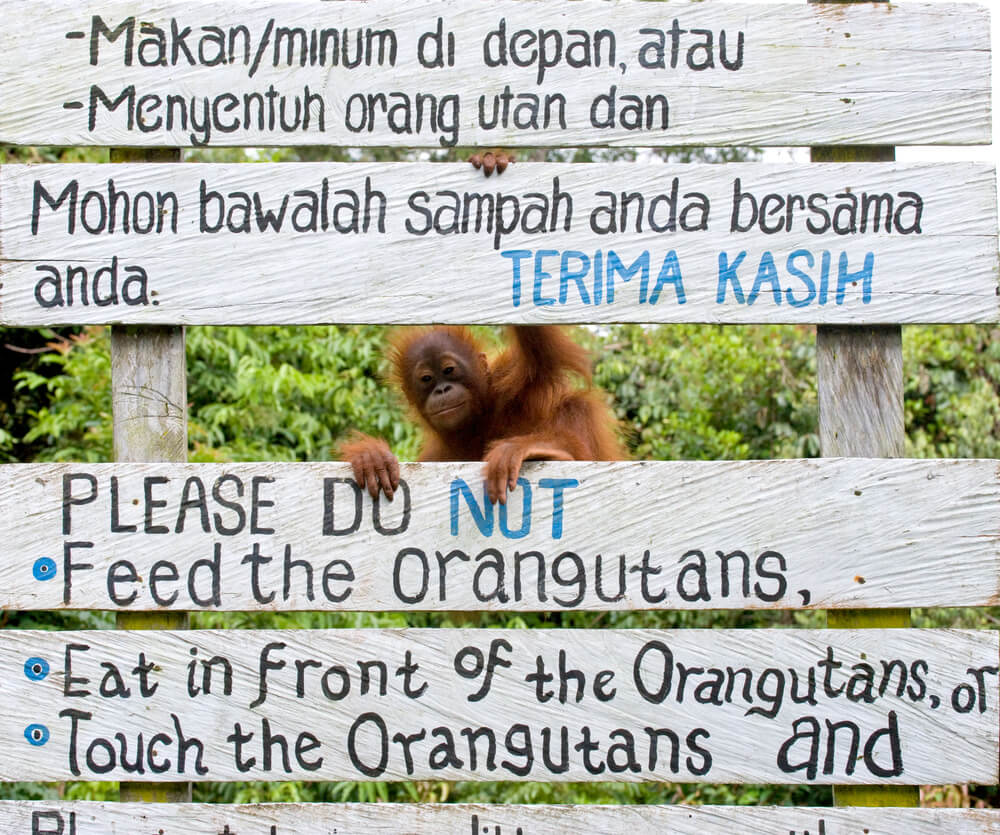
Pick guides who respect the jungle and its rules — the good ones won’t feed the animals or get too close. Walk quietly and in small groups so you don’t disturb their natural behavior. Never try to touch them, and keep your camera flash off. Most importantly, take your rubbish with you. Even a candy wrapper can harm the forest and its wildlife.
Why Orangutan Habitat Matters
Orangutans are primates that live in small groups of 1–3 individuals. They do not form large colonies but instead move daily, traveling several kilometers and swinging from tree to tree.
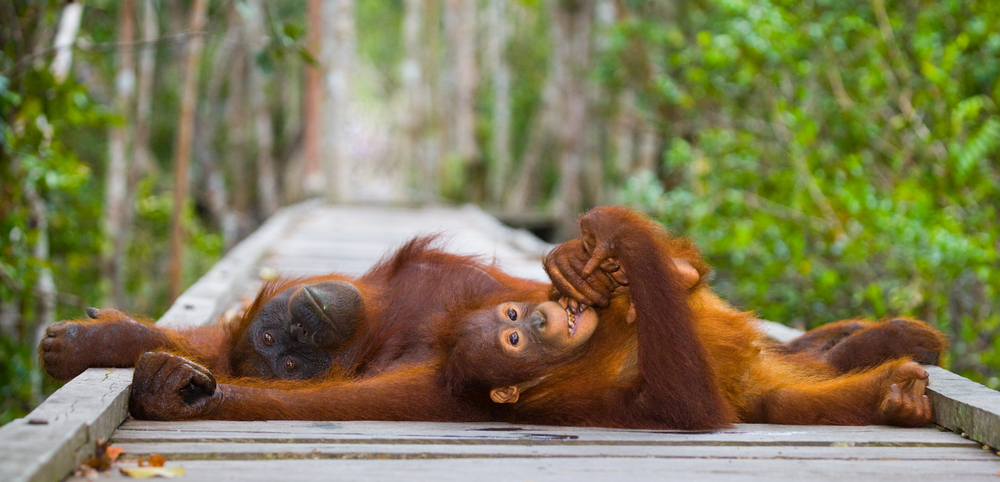
About 60% of their diet comes from forest fruits and seeds. As they feed, they help spread seeds across the forest, which later grow into new plants. This makes orangutans vital for forest regeneration and the overall health of tropical rainforests.
Unfortunately, the biggest threat to orangutans is habitat loss caused by deforestation, palm oil expansion, and forest fires. A lack of food sources and frequent human-wildlife conflict make their survival even harder. According to Greenpeace, Indonesia loses around 51 km² of forest every day — the equivalent of 300 football fields every hour.
As a result, orangutan populations continue to decline and are now classified as Critically Endangered. Protecting their natural habitat is crucial not only for the survival of these primates but also for the preservation of tropical rainforests — the lungs of our planet.
What Next?