
Just a short ride from Prambanan, Ratu Boko is often mistaken for another temple — but that’s not quite right. In reality, this site was once a royal palace complex, a keraton, not a religious structure.

Today, it stands mostly in ruins, but that’s part of its charm. Scattered across a breezy hilltop, you’ll find stone gates, terraces, foundations of pavilions (pendapa), bathing pools, and remnants of walls that hint at what once stood here. There’s even a dry moat, suggesting Ratu Boko may have served both as a residence and a fortress.
A Brief Story
Ratu Boko has been watching over the plains of Central Java since at least the 8th century AD. It’s believed to have been built by Rakai Panangkaran, a king from the Ancient Mataram Kingdom, as a quiet retreat on the hill—a place to step back from courtly life. Interestingly, Rakai Panangkaran later abdicated the throne to pursue a more spiritual path. Around 792 AD, he founded Abhayagiri Wihara, a Buddhist monastery. A fragment of that history still lingers here, most notably in the form of a Dhyani Buddha statue found on-site.
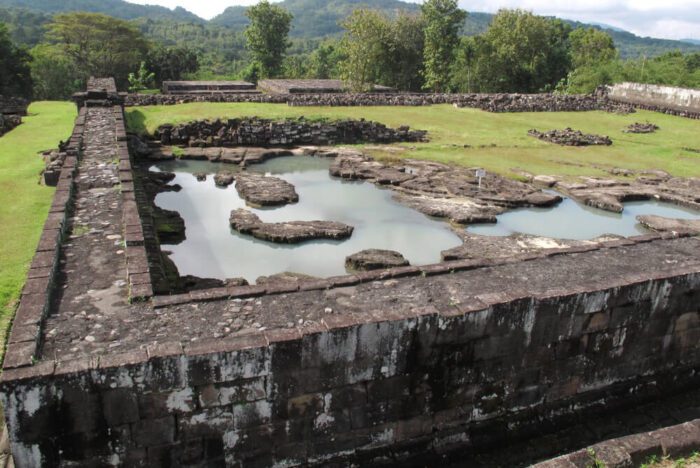
But the story doesn’t end with Buddhism. Ratu Boko also bears the marks of Hindu influence—statues of Durga, Ganesha, and a Yoni have all been discovered here, pointing to a layered and shifting spiritual past. Over time, the site evolved from a spiritual retreat into a fortified palace, possibly under the rule of Rakai Walaing Mpu Kumbhayoni, a subordinate king.
And then came the power struggles. According to the Siwagrha Inscription, Ratu Boko was once described as a stronghold built from hundreds of stacked stones, used during political conflict in the era of Balaputra.
So when you walk among the ruins today, you’re actually stepping through what used to be a center of power, spirituality, and military strategy from centuries ago.
Ratu Boko isn’t really a temple, but it’s still one of the most unique historical sites to visit in Java. Curious about actual temples? Read Best Temples to Visit in Java.
What to Do and See in Ratu Boko
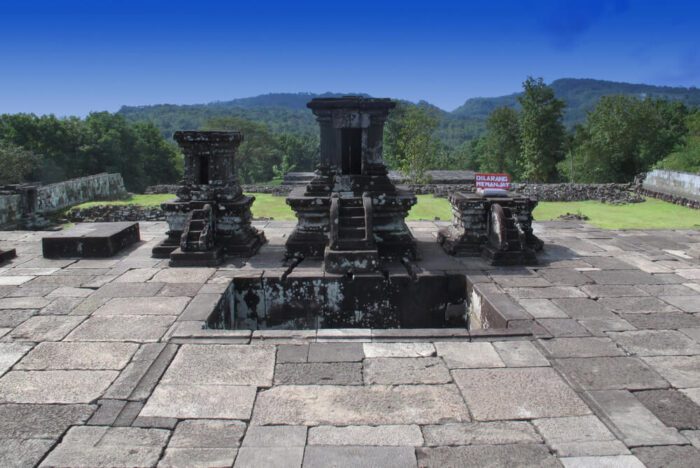
The Ratu Boko complex is fairly large and spread out, but let’s set the right expectation: it’s mostly ruins. While the layout gives you a sense of the former palace’s scale, many of the structures are just stone foundations, collapsed walls, and scattered remains. There’s not a lot of “wow” architecture left — and if you’ve just come from Prambanan or Borobudur, this place might feel more subdued.
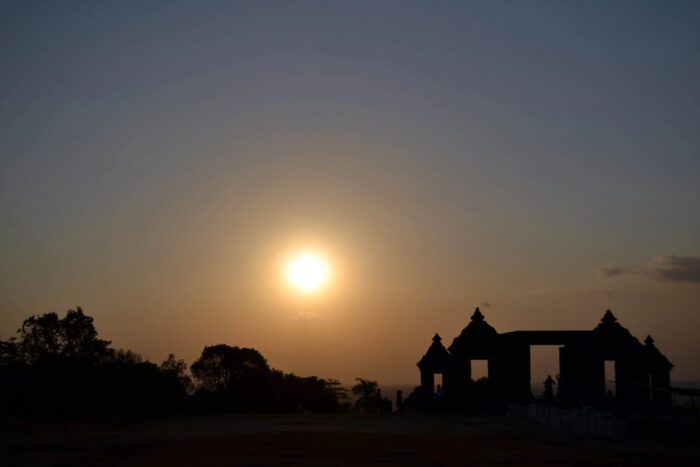
That said, the setting itself is beautiful. Perched on a hill with open views, Ratu Boko is one of the best spots around Yogyakarta for a quiet walk and a sunset experience. The golden light in the late afternoon, a light breeze, and the wide view over the valley (and sometimes Mount Merapi in the distance) really do make it worth the trip — especially if you time it right.
There’s also the option to book a picnic experience, which includes a setup with mats, snacks, and a lovely view. It’s a fun idea in theory, but in practice, it’s become a bit of a tourist cliché — and it comes at a price. The picnic package costs 360,000 IDR per person, including the entrance fee. Not cheap, especially considering that the regular entry ticket itself is already on the higher side compared to other local attractions.
Practical Info
Ratu Boko is open daily from around 07:00 to 17:30, with the last entry usually around 16.30 — so don’t arrive too late if you want enough time to explore.
The ideal time to explore Ratu Boko is around 1.5 to 3 hours, especially if you’re planning to stay for the sunset. Since the site is quite spacious and the terrain isn’t completely even, make sure to wear comfortable shoes, and don’t forget to bring a hat, sunscreen, drinking water, and maybe some snacks.
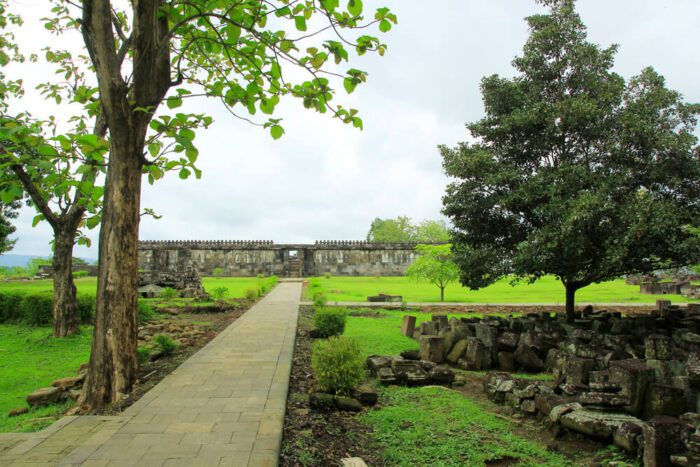
A few important things to keep in mind: don’t touch or climb on the ruins, as some structures are quite fragile. Drones are not allowed unless you have special permission, and it’s a good idea to bring cash, since some small vendors or cafés may not accept cards. If you’re visiting in the late afternoon, bring insect repellent — mosquitoes tend to come out around sunset.
Ticketing
As of the beginning of 2026, for international travelers, regular admission tickets to Ratu Boko start at IDR 200,000 ($12 USD) for children aged 3–10 years, and IDR 275,000 ($16.5 USD) for visitors over 10 years old. If you’re planning to explore more than one site, there are two combo ticket options that offer great value and convenience.
The first is the Ratu Boko – Borobudur package, priced at IDR 625,000 ($38 USD) for adults and IDR 400,000 ($24 USD) for children —this ticket is valid for two days, giving you plenty of time to enjoy both locations at a relaxed pace.
The second package combines Ratu Boko – Prambanan, with tickets at IDR 675,000 ($41 USD) for adults and at IDR 450,000 ($27 USD) for children, and it already includes a free shuttle service between the sites to make your journey even easier.
You can purchase your tickets through several trusted official platforms such as Traveloka, and Klook —my little tip is to check a few of them first, because sometimes you’ll find better deals or special promos that make your trip even sweeter.
How to Get There
The most convenient and flexible option is hiring a private driver — especially if you plan to visit multiple places in one day. Many travelers combine Ratu Boko with Prambanan, Plaosan, or Tebing Breksi, and having a car makes it easy.
Looking for a reliable driver in the Yogyakarta area? Drop us a message at hello@backindo.com — we’ll gladly share our trusted recommendations.
You can also book a tour from platforms like Klook and GetYourGuide, often as part of a full-day or sunset combo tour.
If you prefer independence and are confident in traffic, you can rent a scooter (from ~IDR 70,000/day). Google Maps will get you there — just search “Ratu Boko Palace.” The roads are in good condition, though the final stretch up the hill is narrow and winding.
Backindo Tip: Riding a scooter can be stressful if you're not used to local traffic, so think twice if you're new to Southeast Asian roads.
Online ride apps like Grab or Gojek are a simple option from anywhere in Yogyakarta. Although it might be harder to get the ride back.

There’s also the public transport route. Take the TransJogja bus (Route 1A) to Prambanan Terminal, then hop on a motorbike taxi (ojek) or GrabBike for the short uphill ride to Ratu Boko (about 10–15 minutes).
Where to Stay
If you want to stay close to Ratu Boko, there are a few comfortable guesthouses and resorts near Prambanan, such as Abhayagiri – Sumberwatu Heritage Resort, which offers great views and quick access to both Prambanan and Ratu Boko. For a simpler and more budget-friendly stay, options like Rumah Desa Homestay in central Yogyakarta make a good base — especially if you’re planning to visit several sights in the area.
Staying in the city means more variety for food, cafés, and nightlife, while staying closer to the temples helps save time and avoid traffic, especially if you want to catch the sunset at Ratu Boko.
Is It Worth It?
Honestly, whether Ratu Boko is “worth it” depends on what you’re looking for. If you imagine a big, well‑preserved temple like Prambanan or Borobudur, you might be underwhelmed — most of what you see here are ruins and foundations, and the interpretive signs that explain the site’s history are limited. For that reason, the entrance price can feel a bit steep compared to what you actually get to explore.
For me personally, if you’re already planning to visit Prambanan and Borobudur, you might get more out of exploring other historical sites with stronger architectural remains, like Cetho or Sukuh Temples on the slopes of Mount Lawu — they tend to feel more distinctive and visually striking.
That said, Ratu Boko does have its moments: the views from the hill, the open space, and especially the sunset can be pleasant if you go with relaxed expectations. It’s just not the must‑see highlight that some guidebooks make it out to be — it’s more of a nice addition to a Prambanan trip than a standout destination on its own.
Continue reading: