
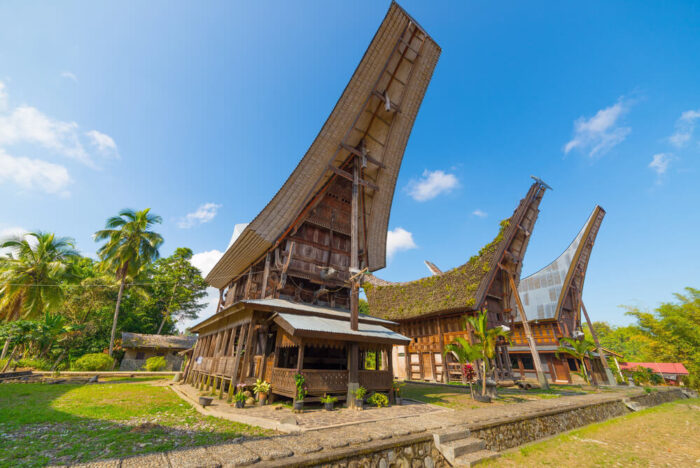
Tana Toraja, often translated as the land of the Toraja people, is one of the most interesting regions in Indonesia. Around the small town of Rantepao, you’ll find mountain landscapes, traditional villages with iconic tongkonan houses, and a culture that still has a very strong identity today.
This Tana Toraja guide was written by Nikol, who has a master’s degree in Indonesian Studies and currently lives in Sumba, another island where traditional culture is still deeply rooted in everyday life. In this article, she’ll walk you through the most important things to know before visiting Tana Toraja — from traditional villages, funeral ceremonies and burial sites to transport from Makassar, where to stay in Rantepao, and what to expect once you arrive.
Why Visit Tana Toraja
Tana Toraja is one of the most distinctive regions in Indonesia. Its traditional tongkonan houses, with boat-shaped roofs, green hills covered in morning mist and villages built around family compounds can feel almost unreal at first sight. At the same time, reminders of death are everywhere here — not as something hidden away, but as a natural part of everyday life.
For many visitors, Tana Toraja is a powerful experience because of its funeral culture. Animal sacrifices, cliff graves, wooden effigies and skulls are not staged tourist details, but part of a living tradition. Still, Toraja is not only about funerals. The region also offers beautiful highland scenery, village walks, coffee, viewpoints and a cooler climate than the lowlands around Sulawesi.
Toraja Culture
To understand Tana Toraja at least a little, it helps to know that the Toraja people see death very differently from most Western societies. A funeral is not a short private event focused only on grief. It is one of the most important moments in the life of the family and the wider community.
Large funeral ceremonies can last several days, sometimes even weeks, and often cost a huge amount of money. Relatives come from different parts of Indonesia, buffaloes and pigs are sacrificed, and the whole ceremony carries both social and spiritual meaning.
This is why graves, burial sites and places connected with death are so present across the region. But they should not be treated as attractions for tourists looking for something shocking. For local people, they are part of life, family history and culture that has stayed alive for generations. In Indonesia, one of the few places with similarly strong traditional and funeral rituals is Sumba.
What to See and Do in Tana Toraja
Traditional Villages
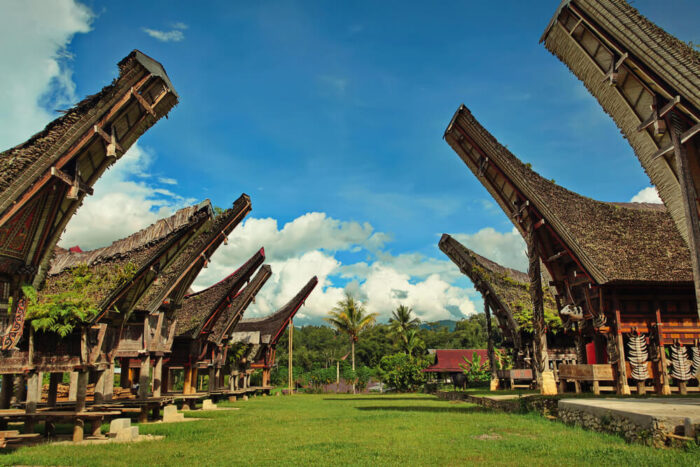
One of the main reasons to visit Tana Toraja is to see traditional villages with tongkonan houses. These wooden ancestral homes have roofs shaped like an upside-down boat and are decorated with colorful carvings. Over time, they have become one of the strongest visual symbols of the region.
Each village has a slightly different look and atmosphere, so it is worth visiting more than just one if you have enough time.
Ke’te Kesu’
Ke’te Kesu’ is one of the best-known and most visited traditional villages in Tana Toraja. You’ll find well-preserved tongkonan houses, traditional rice barns and cliff graves with wooden tau tau figures representing deceased ancestors.
Even though it receives more visitors than some other villages, the place still has a strong atmosphere. If this is your first time in Toraja, Ke’te Kesu’ is often a good introduction to the local architecture, burial traditions and village layout.
Buntu Pune
Buntu Pune feels much quieter and less touristy than some of the better-known villages nearby. Because of that, it can be easier to notice everyday life around you and feel the atmosphere of the area without many distractions.
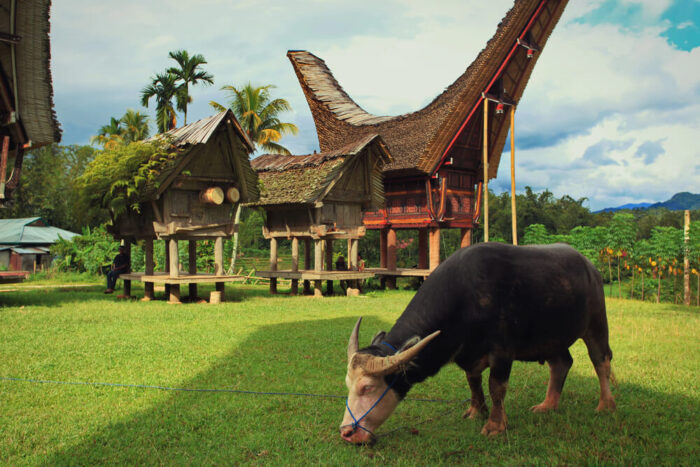
Besides the traditional tongkonan houses, you’ll also find burial sites and beautiful views of the surrounding landscape. The area is especially pleasant in the morning or late afternoon, when you may have it almost to yourself.
Pallawa
Pallawa is known mainly for its row of traditional tongkonan houses with richly decorated walls and buffalo horns displayed on the front. The number of horns shows the wealth and social status of the family.
It is a popular stop when traveling around Tana Toraja because it gives a very photogenic look at traditional architecture in a fairly small area. It works best as a shorter stop, so it makes sense to combine it with other places nearby.
Marante
Marante is an interesting combination of a traditional village and cliff burial sites. Alongside the typical houses, you’ll find tombs carved into the rock and wooden tau tau figures placed high on the cliff face.
Compared with some of the more famous sites, Marante feels a bit rawer and less arranged for tourists. That is also what gives it a more grounded atmosphere.
Londa and Lo’ko Mata Burial Sites
Toraja burial sites are among the most unusual places you can visit in Indonesia.
Londa is known for its caves filled with coffins and human remains. Local guides often take visitors inside with kerosene lamps, and the atmosphere can feel very strange and intense. For local people, this is part of tradition. For a foreign visitor, it can feel almost surreal.
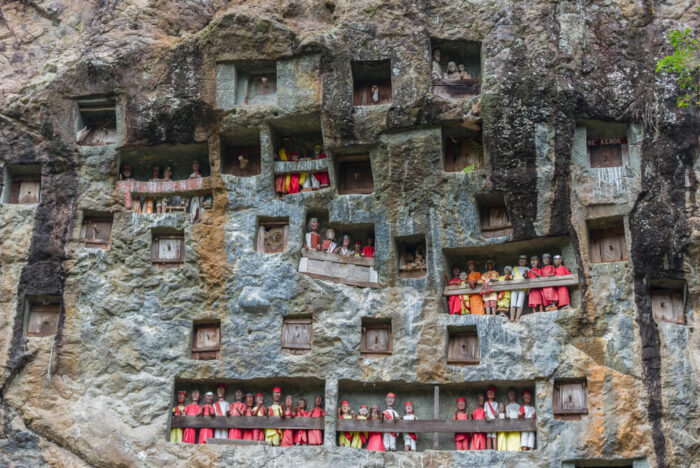
Lo’ko Mata offers a different experience. Here, coffins are placed directly inside a large rock wall. The whole site feels dramatic and shows how differently the Toraja people approach death and burial.
Kambira Baby Graves
Kambira is one of the most emotionally difficult places in the region, and it is definitely not for everyone. In this village, the graves of small children were carved directly into living trees. According to local tradition, this was done for babies whose teeth had not yet grown. The tree was believed to symbolically continue their growth.
Bori Megalithic Site
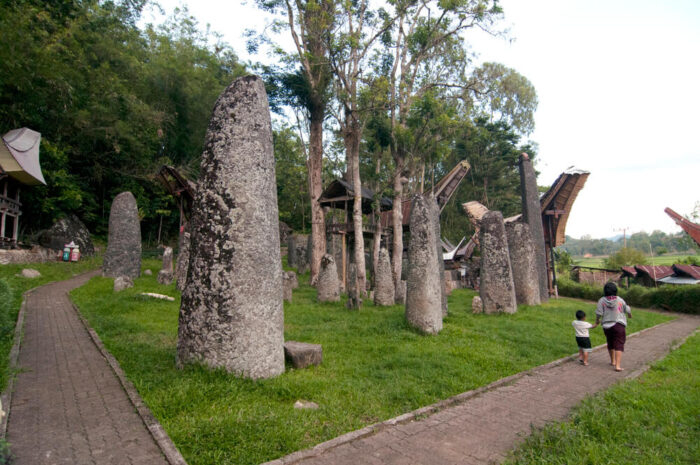
In Bori, you’ll find stone megaliths that look a little like menhirs. These stones were raised during important funeral ceremonies and symbolized the social status of the family. The site has a very particular atmosphere, especially in the morning or late afternoon, when there are fewer people and the low light reaches the stones.
Funeral Ceremonies
If you have the chance to attend a traditional funeral ceremony in Tana Toraja, it will probably be the strongest experience of your visit. But it is important to remember that this is not a tourist show. It is a real ceremony. Local families are often open to visitors, but respect is essential. Dress modestly and follow local guidance.
It is common to bring a small gift for the family, such as cigarettes or sugar. Sometimes locals may invite you for coffee or food, and the atmosphere can feel surprisingly social and welcoming.
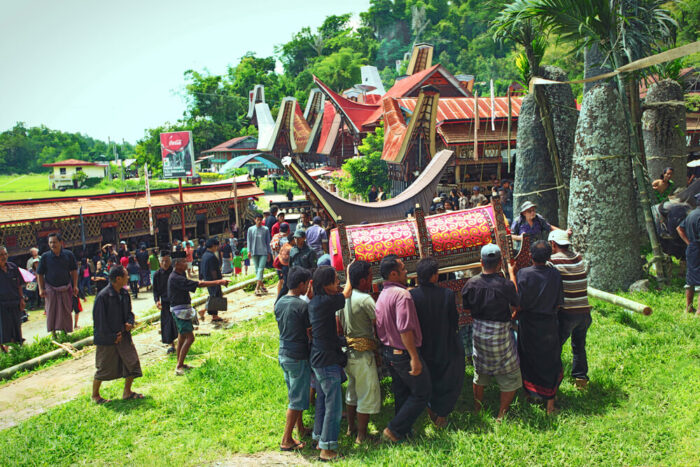
For funeral ceremonies, it is better to go with a local guide. This helps you avoid awkward mistakes and gives you much more context for what is happening around you. Otherwise, it is easy to only watch the ceremony without understanding its meaning. Your accommodation in Rantepao can usually help you find out whether any ceremonies are taking place during your stay.
Traditional Weaving in Sangkombong
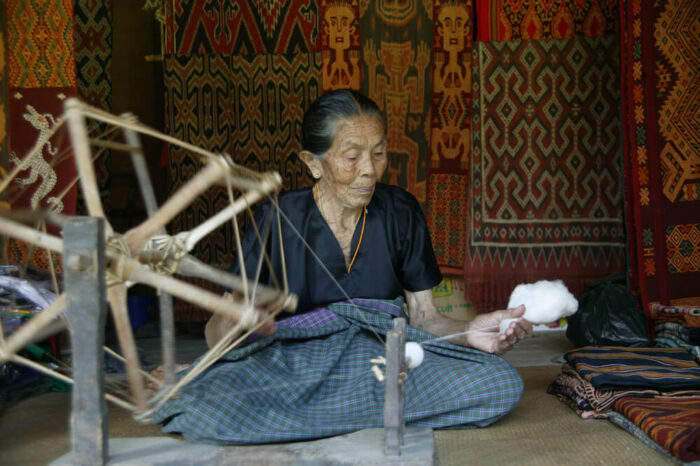
If you want to understand local culture a little more deeply, the weaving workshops around Sangkombong are worth visiting. Local women make traditional textiles used in ceremonies and everyday life. It is interesting to see how much time and work goes into each piece of fabric. In some places, visitors may even be able to sit at the loom and try weaving themselves.
Natural Pools, Hot Springs and Waterfalls
Tana Toraja is not only about graves and funeral traditions. Tilanga Natural Pool can be a pleasant stop if you want to cool down during the day. It is a natural pool surrounded by greenery and known for the eels that live in the water.
For a quieter break, you can also visit Makula Hot Spring. Do not expect a luxury spa resort. The place is simple, and that is part of its character.
If you like waterfalls, Sarambu Waterfall is located not far from Rantepao. The journey there can be a bit challenging, and visiting during the rainy season is not recommended.
Lolai and Batutumonga
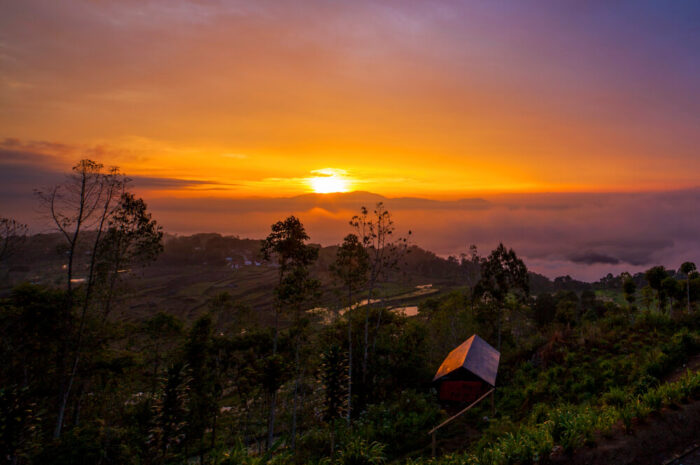
If you want a break from the funeral sites, head into the highland areas around Lolai or Batutumonga. Some of the best views in Tana Toraja are found here. In the morning, the valleys are often covered in mist, and the landscape feels very different from the lower parts of Sulawesi.
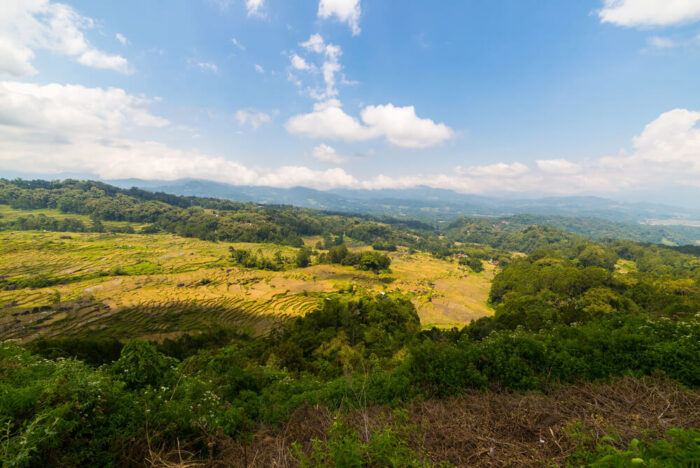
Lolai is sometimes called the “land above the clouds”, although it is now fairly well known. A less famous but also interesting viewpoint is Buntu Kapolang.
Coffee Plantations
Toraja coffee is one of the best-known coffees in Indonesia. Around Batutumonga and the northern villages, you may come across small family plantations quite often. Do not expect large tourist-style coffee plantations like in Bali. Here, it is usually more about small family-run businesses.
How to Get to Tana Toraja
The main gateway to Tana Toraja is Makassar, the capital of South Sulawesi. Most travelers first fly to Sultan Hasanuddin International Airport in Makassar and then continue overland to Rantepao, the main base for exploring Tana Toraja.
The journey from Makassar to Rantepao is long, but fairly common. By road, it usually takes around 8–10 hours. The route passes through lowlands, coastal areas and later mountain roads, so don’t expect a quick transfer.
Below is a short summary. If you're interested in more details, check How to Get from Makassar to Tana Toraja.

By Night Bus
The most common way to get from Makassar to Tana Toraja is by night bus. Several bus companies operate this route, usually with fairly comfortable reclining seats. Buses commonly leave Makassar in the evening and arrive in Rantepao early the next morning.
Most buses depart from Terminal Regional Daya in the northern part of Makassar, although some companies may also offer pick-up points or offices elsewhere in the city. So make sure to check when booking.
Tickets usually cost roughly IDR 180,000–390,000. The night bus is the best option if you want to save money and avoid losing a full day on the road. The downside is that you may not sleep very well.
By Day Bus or Private Car
Day buses also exist, but many travelers prefer the night bus because the journey is long. Traveling during the day gives you views along the way, but it also means spending most of the day in transit. And longer travel time.
A private car with driver is the more comfortable and flexible option, especially if you’re traveling as a family or in a small group. It allows you to stop along the way and avoid dealing with bus terminals. However, it is much more expensive than taking the bus, and the journey is still long and tiring.
Backindo Tip: If you prefer not to organize the journey yourself, an organized 3D2N trip from Makassar to Tana Toraja can be a practical option. Transport is included, and having a guide can help you better understand Torajan culture instead of just moving between the main sites.
By Flight to Toraja Airport
Tana Toraja also has a small airport, Toraja Airport, near Mengkendek. Flights from Makassar to Toraja can be very convenient when they are operating, as the flight takes around 55 minutes.
However, this route is not always as reliable or frequent as major domestic routes in Indonesia. In October 2025, the Makassar–Toraja route was reported to be operating again with Wings Air on Wednesdays and Fridays.
Tickets are usually much more expensive than the bus, and you’ll still need transport from the airport to your accommodation in Rantepao.
Flying can (in theory) save a lot of travel time, but that's not always the case. Why? Read Guide to Domestic Flights in Indonesia.
Best Time to Visit Tana Toraja
The best time to visit Tana Toraja is usually from June to September, during the dry season. This is also when many traditional funeral ceremonies take place, especially in July and August.
More funerals may also happen in December and January, when relatives often return home, but this period is wetter and you should expect more rain.
How to Get Around Tana Toraja
Public transport in Tana Toraja is limited and not very practical for most foreign travelers. The most common options are hiring a car with a driver or renting a scooter.
A scooter gives you a lot of freedom and makes it easier to stop at villages, viewpoints and small places along the way. It can also make the whole trip feel more personal. However, the roads are narrow, often steep and sometimes in poor condition, so you need to ride carefully.
Backindo Tip: Only rent a scooter if you are confident riding on narrow mountain roads and have the correct motorbike license and international driving permit. If not, hiring a driver is the safer and easier option.
Where to Stay in Tana Toraja
Rantepao is the best base for exploring Tana Toraja. You’ll find simple homestays here, as well as a few more comfortable hotels. Toraja Sanggalangi Homestay and The Singki Home Family can be good mid-range choices, with clean rooms and reasonable prices.
Another lovely option is Bait Lino, with bungalows set among rice fields in the hills above town.
Backindo Tip: For most travelers, Rantepao is the most practical base. Staying nearby makes it easier to arrange local guides, visit villages and check whether any ceremonies are happening during your stay.
What to Eat in Tana Toraja
Toraja food has strong flavors, and pork is much more common here than in Muslim-majority parts of Indonesia because the region is mostly Christian.
One local specialty to try is pa’piong — a mix of meat, fish or vegetables cooked inside bamboo over fire. Because of the cooking method, the dish has a slightly smoky flavor and is difficult to compare with other Indonesian food.
And of course, you should try Toraja coffee. It is one of the most famous coffees in Indonesia, known for its strong, earthy taste. Locally, it is often prepared in a very direct way, with coffee grounds and sugar.
Where to Go Next
Most travelers continue either back to Makassar and possibly further to the beaches around Bira, or north toward the Togean Islands.
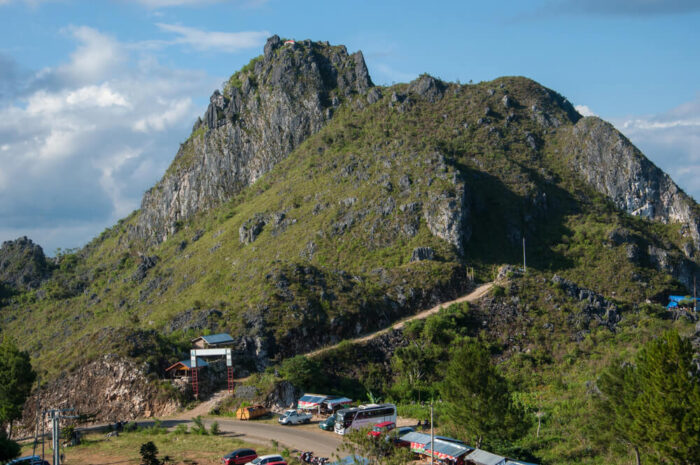
If the traditional culture and funeral rituals of Tana Toraja interest you most, Mamasa can also be worth considering. It is sometimes described as a “lesser-known Toraja”, with similar architecture, mountain landscapes and traditional culture, but far fewer tourists.
If you want to experience another island with strong traditional culture, Sumba can be a great choice. Compared with Tana Toraja, it feels even rawer in some ways and is much less shaped by tourism.
Backindo Tip: Tana Toraja works best as part of a longer Sulawesi route. If you continue north, allow enough buffer time before heading to the Togean Islands, as transport across Sulawesi can take longer than it looks on the map.
Is Tana Toraja Worth Visiting?
Tana Toraja combines strong local culture, beautiful highland scenery and traditions that are still part of everyday life. This is what makes it one of the most interesting places in Sulawesi and in eastern Indonesia more broadly.
At the same time, it is not a place to rush through. Tana Toraja deserves at least a few days and a slower approach than simply moving from one burial site to another. The more context you have, the more meaningful the visit becomes.
Optional FAQ Section
How many days do you need in Tana Toraja?
Plan at least 3 days in Tana Toraja. This gives you enough time to visit traditional villages, burial sites, viewpoints and possibly a funeral ceremony if one is taking place. If you want a slower trip, 4–5 days is better.
Is Tana Toraja worth visiting?
Yes, Tana Toraja is worth visiting if you are interested in culture, traditional architecture and highland landscapes. It is less suitable if you only want beaches or easy, quick sightseeing.
Can you visit Tana Toraja without a guide?
Yes, you can visit many villages and viewpoints independently. However, a local guide is highly recommended for funeral ceremonies and burial sites, where context and respectful behavior matter.
What is the best time to visit Tana Toraja?
The dry season from June to September is usually the best time to visit. July and August are also the main months for traditional funeral ceremonies, but they can be busier.
How do you get to Tana Toraja from Makassar?
The most common way is by overnight bus or private car from Makassar to Rantepao. The journey usually takes around 8 to 10 hours. There is also a small airport near Toraja, but flights can be more limited and less predictable.