
Indonesia’s province of Nusa Tenggara Timur (NTT) is a dream destination for island hopping—an archipelago of hundreds of islands, from well-known names like Flores, Sumba, Timor, Alor, and Lembata to dozens of smaller, inhabited gems. But exploring this remote corner of Indonesia comes with one essential rule: boat transport isn’t optional—it’s the backbone of travel here. Whether you’re heading from Flores to Sumba, Timor to Rote, or exploring the islands around Komodo, ferries and boats are often the only way to get around.
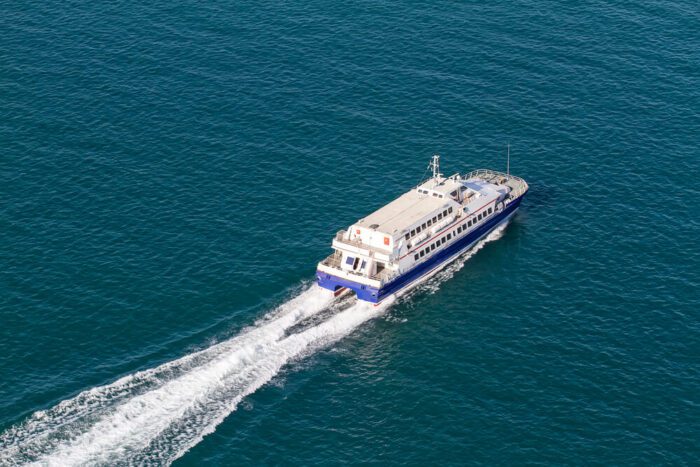
At first glance, you might expect that getting around such a “boat-heavy” region would be simple—book your ferry online, arrive at the port, and go. In reality, boat travel in NTT is far from straightforward. Ferry schedules can be unpredictable, connections limited, and comfort basic at best. But that’s also part of the adventure. Once you understand how ferries in Nusa Tenggara Timur work, traveling between islands becomes not just manageable, but one of the most authentic experiences Indonesia has to offer.
In this guide, we’ll explain how ferries between islands work, where to buy tickets, and what to watch out for when planning your island hopping adventure in Indonesia.
How Boat Transportation Works in NTT
In NTT, getting around by boat is a mix of government ferries, large passenger ships, and small local boats. Each serves a different purpose, and there’s no single, unified system tying it all together.
Planning is never exact, so you’ll need a flexible itinerary and plenty of time. Delays and cancellations are common—sometimes at the last minute—usually because of weather, but also due to technical issues or maintenance.
Another thing to keep in mind is how schedules work. Departure times are often just an estimate rather than a fixed time. It’s normal for boats to leave anywhere from a few minutes to several hours late, and smaller boats may not depart until there are enough passengers on board.
The main gateways to the surrounding islands are Labuan Bajo (western Flores), Ende and Aimere (central Flores), Maumere (eastern Flores), and Kupang in Timor. These ports form the backbone of boat transport across the region.
Most Common Routes
When traveling around NTT, a few routes come up again and again. The overall pattern is pretty simple—most trips start from Kupang or Flores and then branch out to the surrounding islands.
Here’s a quick overview of the most common routes and the boats that run them:
Kupang (Timor) – Aimere/Ende (Flores) – Waingapu (Sumba)
This is probably the most common route, running via Flores—usually through Ende (KM Awu) or Aimere (KM Inerie II)—before continuing on to Waingapu after a short stop.

It’s generally more reliable, but also more time-consuming, with the journey taking around two days. If Sumba is your main goal, it is worth comparing this sea route with our practical guides on how to get to Sumba and how to get from Bali to Sumba before you decide.
Kupang (Timor) – Waingapu (Sumba)
If you want something faster, there’s a direct connection operated by KM Dharma Kartika 5, which skips Flores entirely.
At 153 meters long, it’s very well equipped by local standards, and the journey takes about 12–15 hours.
Kupang – Sabu – Sumba
This route is operated by KM Sabuk Nusantara (PELNI). However, it’s not a regular service, so you’ll always need to check availability locally.
Travel time is roughly 15–20 hours, though delays are quite common.
Kupang – Alor
The connection to Alor is mostly served by large PELNI passenger ships like KM Sirimau or KM Wilis, which stop here as part of longer inter-island routes.

In other words, it’s not a dedicated direct service, but rather one stop along a bigger journey.
The trip to Kalabahi (Alor) usually takes 18–24 hours, depending on the ship and number of stops.
There’s also a faster option with Express Bahari, which takes around 6 hours, but doesn’t carry vehicles.
Kupang – Rote
This is one of the easiest and most accessible routes in NTT. Connections are relatively frequent, with both ferries and fast boats available.
The Express Bahari fast boat usually departs around noon and takes about 2 hours. Ferries run twice daily, but the crossing takes longer.

Types of Boat Transport
To get around NTT, it helps to understand the different types of boats you’ll come across. Ferries are the cheapest option and the only choice if you’re traveling with a vehicle. PELNI ships are better for longer inter-island journeys, while fast boats save time on shorter routes.
In more remote areas, local boats are often the only option. In reality, you’ll almost always end up combining several types of transport on one trip.
Ferries
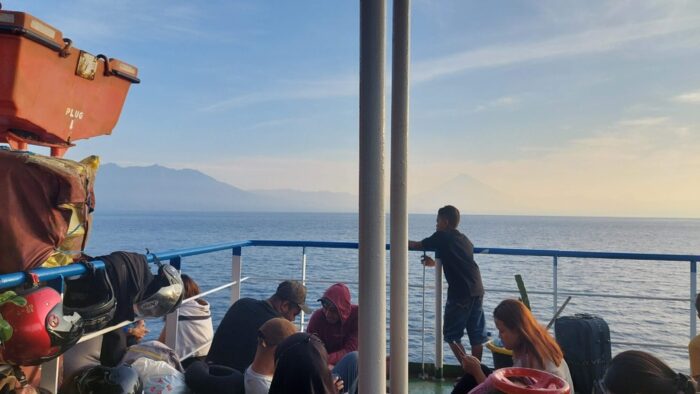
Ferries are the most common—and cheapest—way to travel between islands. They carry passengers, motorbikes, cars, and cargo.
They’re slow but fairly reliable, and if you’re bringing your own vehicle, they’re basically unavoidable.
Most ferries operate between the larger islands. Comfort is pretty basic—expect simple seating or open deck space rather than anything fancy.
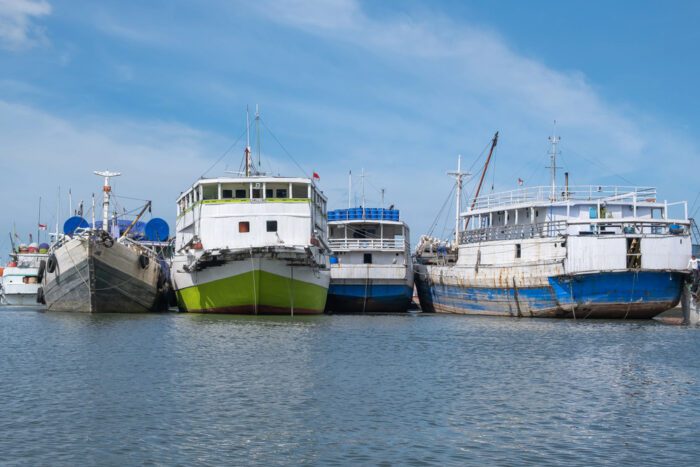
In Indonesia, these ferries are usually called “roro” (roll-on/roll-off). Most of them are run by the state company ASDP, which handles ferry transport across the country.
If you’re trying to find schedules, the easiest way is usually a quick Google search like “ASDP + route” (for example, ASDP Kupang Larantuka).
Within NTT, some of the key ferry routes include:
- Kupang – Rote
- Kupang – Kalabahi (Alor)
- Kupang – Aimere – Waingapu
- Labuan Bajo – Sape (connecting NTT with Sumbawa in NTB)
These routes are essential for locals and often the most practical way to get around the islands.
Large Passenger Ships (Pelni, kapal penumpang)
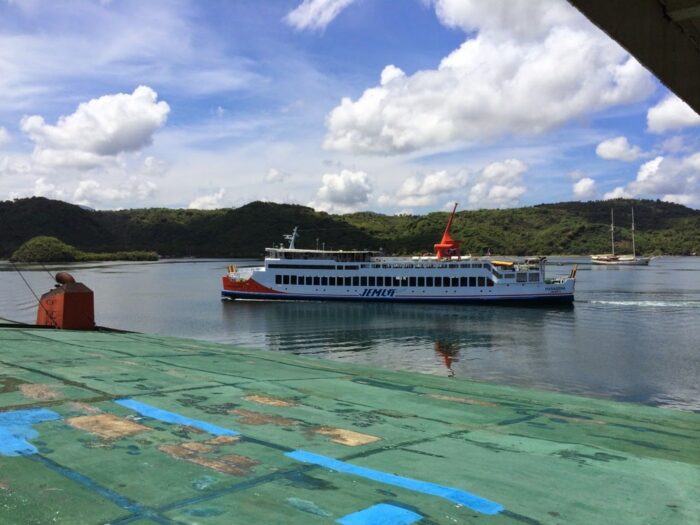
If you’re not traveling with your own vehicle, your best bet is usually the large PELNI passenger ships. These vessels connect distant parts of Indonesia, with stops in NTT often being just one leg of a much longer journey.
They’re a solid choice for longer inter-island trips, especially if you’re coming from places like Java, Bali, or Sulawesi.
What to expect on board of PELNI boats
PELNI ships typically offer several classes, ranging from basic economy to private cabins along with basic facilities. Small kiosks selling snacks, and on longer routes, basic meals are often included in the ticket price.
The difference between classes can be quite noticeable. Economy class usually means large shared spaces with mats or seats, while higher classes offer private cabins and more comfort.
For shorter trips, most people go with economy. But on longer journeys, upgrading can make a huge difference in comfort—and these cabins tend to sell out quickly, so it’s best to book in advance.
Some port agents may claim that upgrades can be arranged on board, but in reality, that’s rarely reliable due to high demand.
And remember. Schedules can change—even at the last minute—so always double-check your departure. During the trip, keep an eye on your belongings and be ready for limited or no signal at sea.
Key PELNI ships in NTT
KM Binaiya
One of the most useful ships for travelers in NTT, connecting Bali, Lombok, Flores, and South Sulawesi.
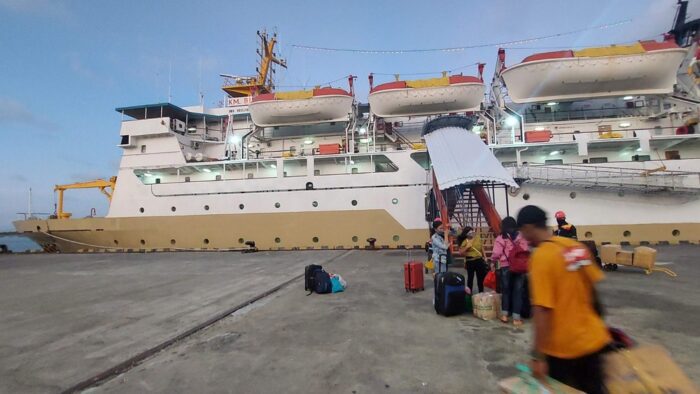
It runs on two rotating routes, looping between places like Bima, Labuan Bajo, Makassar, Pare Pare, and Benoa (Bali).
- Bima – Labuan Bajo – Makassar – Pare Pare – Makassar – Labuan Bajo – Bima – Benoa (Bali) – Labuan Bajo – Benoa (Bali)
- Benoa (Bali) – Bima – Labuan Bajo – Makassar – Pare Pare – Makassar – Labuan Bajo – Bima – Benoa (Bali) – Waingapu – Benoa (Bali) – Waingapu – Bima – Benoa (Bali)
A full cycle takes roughly two weeks.
KM Awu
This ship connects several key locations across Indonesia, including Bima – Denpasar – Surabaya – Kumai – Waingapu – Ende – Kupang – Kalabahi.
Like most PELNI ships, it operates on a loop that takes about two weeks to complete.
KM Wilis
Slightly different from the others—this ship works more like a ferry (roro) and can carry vehicles.
It mainly connects smaller ports within NTT, making it especially useful for local travel.
As of 2026, its current route is Ende – Waingapu – Bima – Waikelo – Labuan Bajo – Makassar – Batulicin – Kupang – Kalabahi – Kupang.
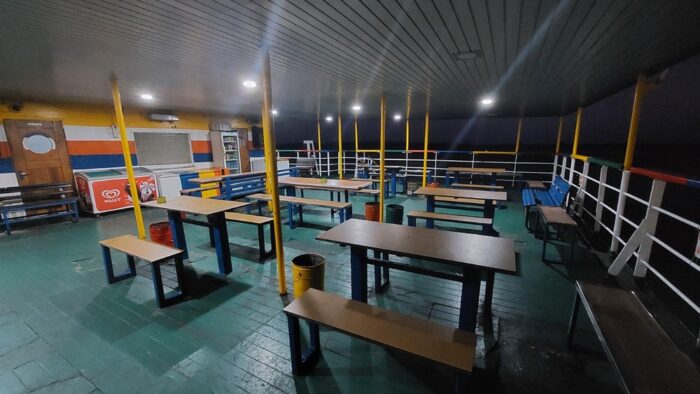
KM Sirimau
This ship has one of the longest and most complex routes in Indonesia. It connects NTT with West Papua and Sulawesi.
The current route within NTT is Kalabahi – Kupang – Lewoleba – Maumere, and it then continues in one direction to Merauke (Papua) and in the other direction to Makassar (Sulawesi).
KM Bukit Siguntang
A similar route connecting NTT with other islands: Pare Pare – Makassar – Maumere – Kupang – Lewoleba and back.
Sabuk Nusantara ships
Part of the PELNI fleet includes the so-called Sabuk Nusantara ships, which serve as essential connections for remote areas across Indonesia. These vessels provide transport to regions that are not reached by regular commercial routes, and they play a particularly important role in eastern Indonesia, including NTT.
For travelers, they can be especially interesting because they reach less accessible and off-the-beaten-path destinations, but it’s important to be prepared for limited comfort, irregular schedules, and very basic facilities.
Fast Boats
Fast boats are mainly found in more touristy areas, especially around Labuan Bajo and Komodo National Park. They are significantly faster than ferries, but also more expensive.
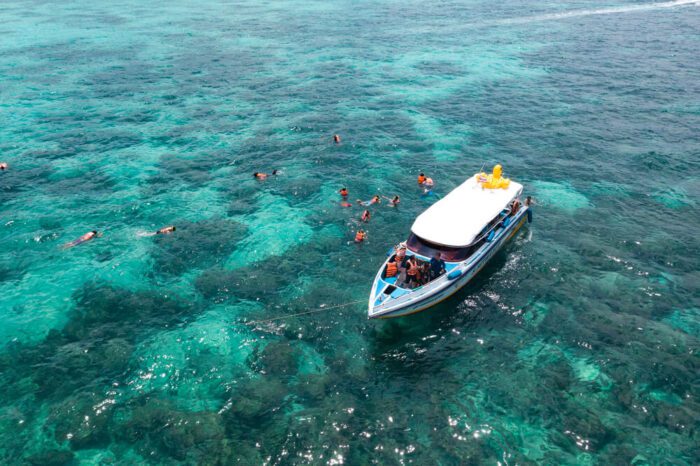
They are mostly used for trips to Komodo, Rinca, and nearby islands, or for shorter transfers between close destinations. There are also a few more practical routes, such as the Kupang – Rote connection operated by Express Bahari, or Lewoleba – Larantuka, where boats like Ina Maria 3 or KM Cantika Express 08 operate.
It’s important to keep in mind that these boats are highly dependent on weather conditions, and in rough seas, departures are often canceled—sometimes at the last minute.
Thinking about exploring Rote? Read our detailed guide first Rote Island Guide: What to See, Do & Know Before You Go.
Local Boats and Small Vessels (perahu and public boats)
Small local boats are often the only way to reach smaller or more remote islands. They don’t follow fixed schedules and operate in a very simple way—usually leaving only once they are full.
Departure times are therefore always approximate, and information is usually obtained directly on the spot. For locals, this is a completely normal part of everyday life, but for travelers it can feel a bit chaotic—at the same time, it’s exactly what makes traveling around NTT such an authentic experience.
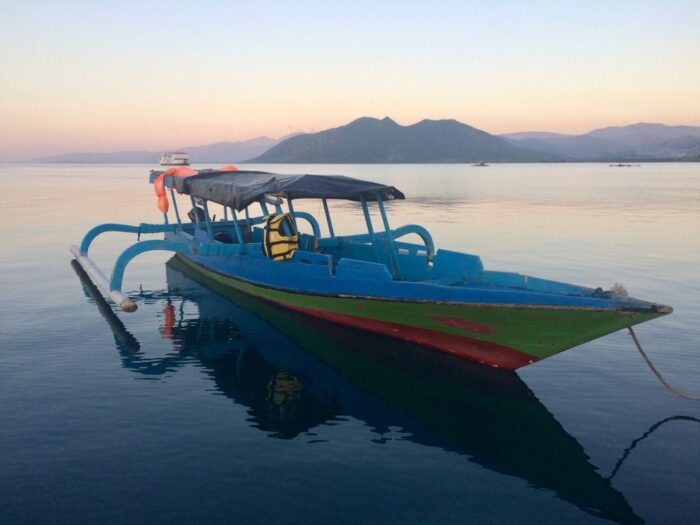
In practice, if you want to reach a place that isn’t served by larger boats, the easiest approach is to head to the port and ask around. Locals will usually point you to a so-called public boat, or may even offer their own transport.
How to Buy Tickets for Boats in NTT
Online booking in NTT is more the exception than the rule, so in most cases, you’ll end up buying tickets directly at the port or through local agents.
For ASDP ferries, one important thing to know is that payment is cashless. You’ll need an electronic card (such as BRIZZI, e-Money Mandiri, TapCash BNI, or Flazz BCA) to buy a ticket, and if you don’t have one, it can quickly become a real hassle at the port.
Because of that, many travelers find it easier to go through a local agent, who can sort everything out in advance. There’s also the Ferizy system, where some routes support e-wallet payments—but this isn’t consistently available, so it’s not something you can fully rely on.
For PELNI ships, tickets can technically be booked online, but foreign cards often don’t work. In those cases, payment is usually handled locally, for example through Indomaret or Alfamart, which is a common workaround.
For ferries, you can also try trip.ferizy.com, where tickets for selected routes (like Kupang–Rote, Kupang–Sabu, Larantuka–Adonara, or Maumere–Pemana) are available. The site is in English, which helps—but it’s not always the most reliable.
Some fast boat operators (for example on the Kupang – Rote route) have their own websites, such as expressbahari.com, but these are usually only in Indonesian, and again, foreign cards often don’t work.
In reality, tickets are often arranged through a local contact or simply bought on the spot, which is still the most common way to travel around NTT.
Backindo Tip: Some of the tickets might be available also via 12go, so it’s worth checking it.
What to Watch Out For
Boat travel in NTT isn’t always comfortable or predictable. Weather plays a huge role, and wind or waves can easily delay connections or cancel them altogether.
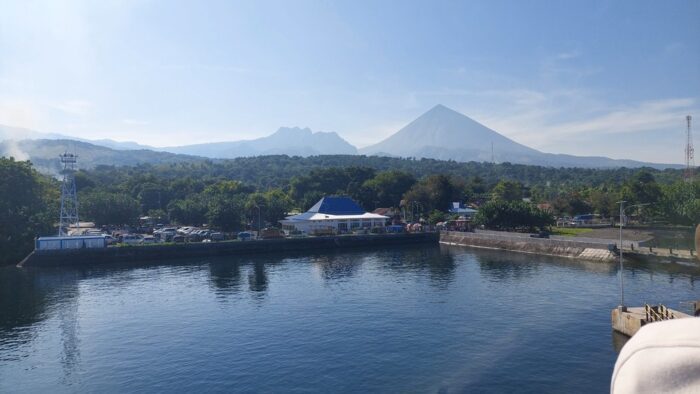
It’s also worth thinking about safety, as standards can vary—not just between different types of boats, but even between individual services. Life jackets aren’t always available in the expected quality or quantity, and boarding procedures tend to be fairly informal.
Even though there are efforts to manage this, boats are often more crowded than they should be. NTT simply isn’t Bali, and it’s something to keep in mind at all times.
Practical Tips
It’s a good idea to bring more with you than you might expect. Light, breathable clothing is essential, but a hoodie or scarf can be surprisingly useful—nights at sea can get cold.
Food is usually available on board, or from local vendors at the port, but it’s still smart to carry a few snacks, especially in case of delays. Bottled water is a must.

Keep your valuables and documents with you at all times, and be prepared for little to no signal at sea. Cash is still essential, as cards are generally not accepted on boats.
For longer routes, it’s also worth bringing a simple mat or sarong, since seating can be limited.
Bonus: How to Get Between NTT and Bali
Although Bali isn’t part of NTT, it acts as the main gateway to the region for most travelers. If you’re not flying, there are two main options.
The first is taking large PELNI ships, which connect Benoa (Bali) with islands in NTT like Sumba or Flores. The advantage is a direct connection, but departures are less frequent and schedules can vary. If Sumba is your destination, our route guide on how to get from Bali to Sumba compares this option directly with flights.
The second option is combining ferries via Lombok and Sumbawa. The typical route goes from Bali → Lombok → Sumbawa → Sape → Labuan Bajo (Flores).
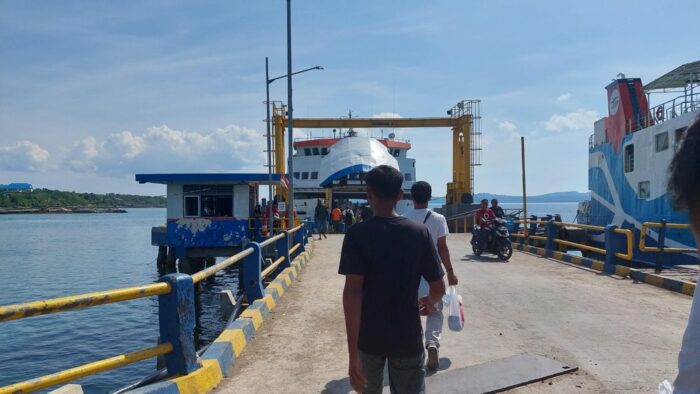
This is the most common sea route between NTB and NTT. It’s cheaper and more flexible, but also more time-consuming—usually taking one to two days.
Sumba is becoming one of the top Indonesian destinations. What are the best ways to reach the island? Read How to Get to Sumba: Flights and Ferries and How to Get from Bali to Sumba.
Summary
Boat transport in Nusa Tenggara Timur is often the only way to travel between islands. It’s not always fast or comfortable, but if you know what to expect, it’s completely manageable.
This way of traveling has its own charm and offers a very different kind of experience. It’s not just about getting from point A to point B, but also about the unexpected moments, social interactions, and long hours at sea—all of which are simply part of traveling in NTT.
Continue reading:
- How to Get from Bali to Sumba: Flights, Ferries and Best Routes
- How to Get to Sumba: Flights, Ferries, Airports and Best Routes
- Alor Island, Indonesia: A Complete Travel Guide
- Rote Island Guide: What to See, Do & Know Before You Go
- A Travel Guide to Kupang and West Timor
- Best Things to Do in Labuan Bajo & Hidden Gems
- Kelimutu Volcano & Moni Guide: Lakes, Waterfalls & Hidden Gems