
The Dieng Temple Complex is one of the oldest Hindu heritage sites on the island of Java. While the structures may not be grand or massive, their architecture carries deep symbolic meaning and reflects the culture and spirituality of the past.
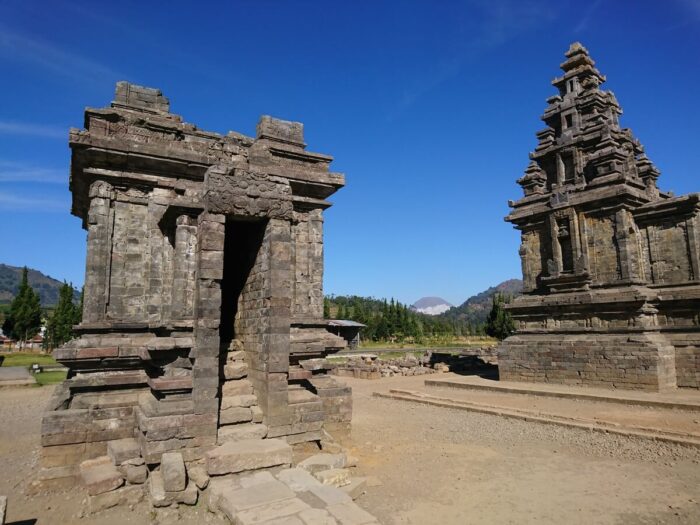
What makes it even more special is its highland location, where you can enjoy cool, fresh air while strolling through a peaceful setting.
The temples here are named after characters from the Mahabharata epic. Although there’s no clear record of why these names were chosen, the use of wayang (Javanese shadow puppet) names adds a unique cultural flavor that blends local tradition with ancient heritage.
A Glimpse Into the History of Dieng Temples
Long before Dieng became a cool mountain escape, it was considered sacred land. The temples were built around the 8th–9th century during the Mataram Kingdom, making them some of the oldest Hindu structures in Indonesia. The name “Dieng” is believed to come from the Old Javanese Di Hyang, meaning “abode of the gods” — a fitting name for this misty highland plateau.
Unlike monumental sites such as Prambanan Temple, the Dieng temples are smaller and simpler. They represent an early stage of Javanese Hindu architecture, deeply connected to the surrounding volcanic landscape.
Archaeologists estimate that hundreds of shrines once stood here, although only a small number remain visible today. Many were buried over centuries by volcanic activity and natural sediment.
What makes Dieng even more fascinating is that the story isn’t finished. New temple structures are still being discovered and gradually uncovered. Because we live in the Banjarnegara region, we’re in contact with the local Dinas Pariwisata (Tourism Office), and there are archaeologists actively working on excavations in the area. So it’s very possible that what you see today won’t be the final version of the Dieng Temple Complex.
Interested in the history of Java? Learn more in Best Temples to Visit in Java.
TOP Temples in Dieng
Here’s a list of must-visit temples when you’re traveling to Dieng:
Arjuna Temple Complex
Arjuna Temple is the heart of the Dieng Temple Complex and the place where most visitors start their exploration. It stands in an open grassy field, with smaller temples—Semar, Srikandi, Puntadewa, and Sembadra—scattered around it, making the whole area feel compact and easy to explore on foot.
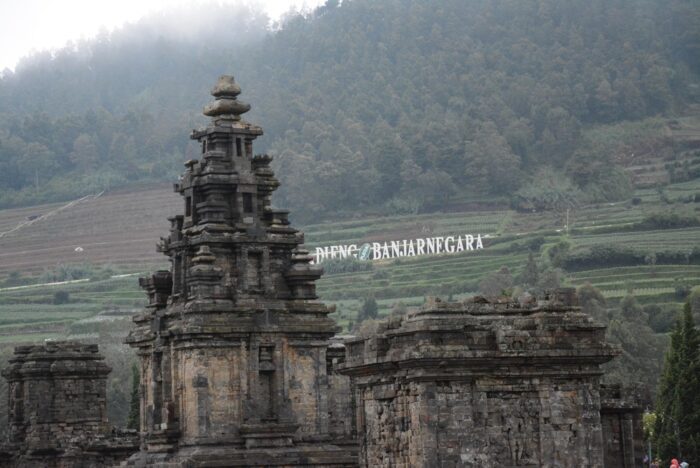
Architecturally, Arjuna Temple is modest and relatively simple compared to temples like Prambanan. That simplicity reflects the early stage of Javanese Hindu architecture, visible in its clean lines and minimal ornamentation.
The entrance ticket to Arjuna Temple is combined with Sikidang Crater. For international visitors, it’s 50,000 IDR (around 3 USD) and the ticket will be checked at both locations—so keep it with you. Children over 5 years old require their own ticket.
Bima Temple
Bima Temple is one of the most visually distinct temples in Dieng. Unlike the temples in the Arjuna Complex, this one stands alone, slightly apart from the main cluster, which already makes it feel different.
What immediately catches your eye is the roof. It resembles a shikhara—a North Indian-style tower—which is unusual for temples in Java. The vertical, tiered design gives Bima Temple a stronger and more dramatic silhouette compared to the simpler forms found elsewhere in Dieng.
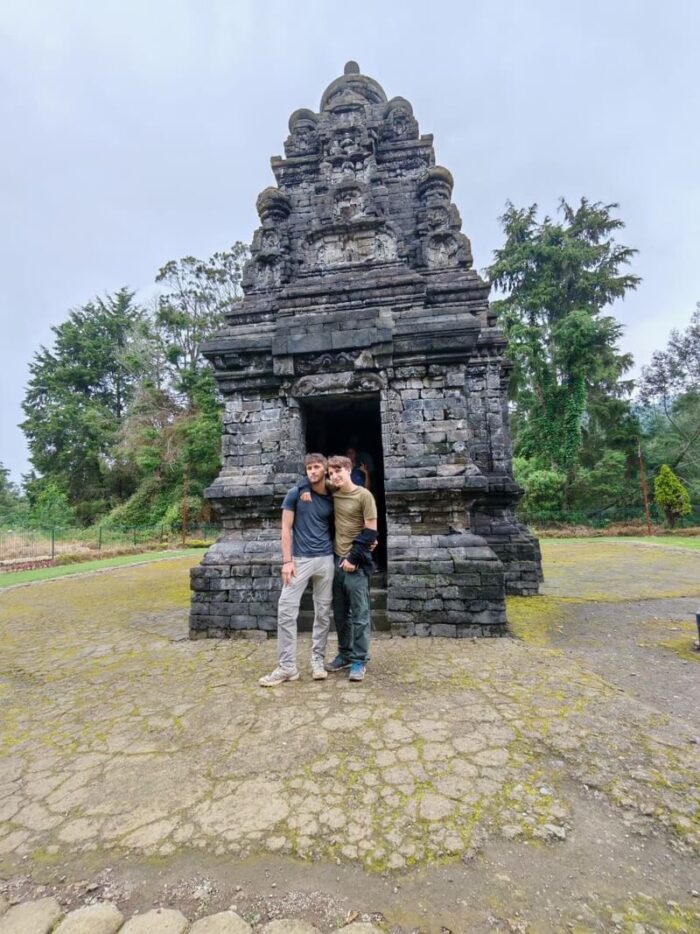
Because it’s separated from the main complex, Bima is often quieter and less crowded. It’s a quick stop, but worth it if you want to see something architecturally unique without spending too much time.
You’ll find it near the road leading to Sikidang Crater, on the right-hand side before the main crater entrance. Entry is usually free or included in the Sikidang combo ticket, so there’s no additional fee.
Backindo Tip: There’s a local saying that if you walk around Bima Temple seven times, you’ll soon find a boyfriend or girlfriend. Whether you believe it or not, it’s a fun little tradition to try.
Gatotkaca Temple
Gatotkaca Temple is one of the smaller and less-visited temples in Dieng, located just a short walk from the Arjuna Temple Complex. Because of its proximity, it’s easy to include as a quick stop while exploring the area.
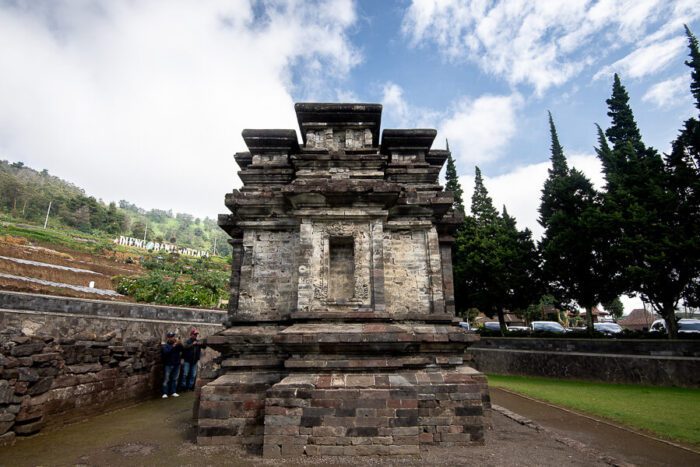
The structure itself is modest and compact, but its location in an open field gives it a pleasant, uncluttered setting. It doesn’t require much time — 10 to 15 minutes is usually enough — yet it adds another layer to understanding how scattered the original temple network once was.
Entry is free, which makes it an easy addition to your route. Right nearby, you’ll also find the Kailasa Museum, a small museum displaying archaeological findings from Dieng.
Dwarawati Temple
Dwarawati Temple is considered one of the eight main temples in Dieng and was once believed to be a place of worship for the Trimurti—the three principal deities in Hinduism. The temple is more secluded compared to the others, offering a quieter and more peaceful atmosphere.
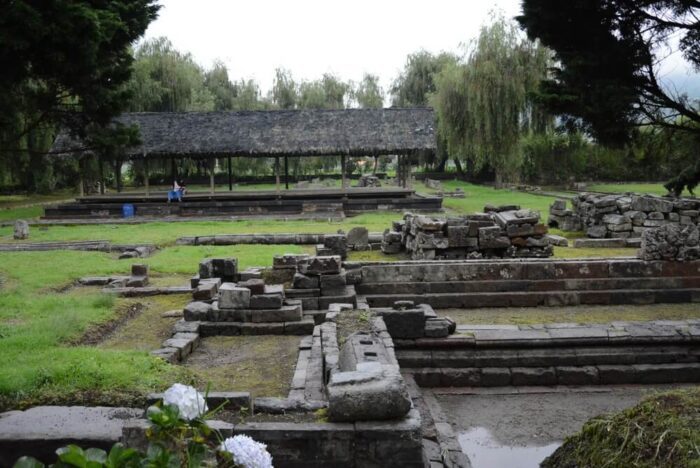
In terms of structure, Dwarawati Temple is similar to Sembadra Temple. It was once surrounded by three other temples—Abiyasa, Pandu, and Margasari Temples—but all three have since collapsed, leaving behind only traces of history. The top part of Dwarawati Temple is also no longer intact, so its original shape can’t be fully determined.
Dwarawati Temple is also located near the hiking trail to Mount Prau via Dieng Kulon, making it a great stop for those who enjoy hiking or leisurely walks in nature. Plus, entry to Dwarawati Temple is free.
Setyaki Temple
Setyaki Temple is one of the smaller temples in the Dieng area that often gets overlooked by visitors, even though it’s located within the same area as the Arjuna Temple Complex. You can easily reach it on foot, so no extra effort is needed.

In this area, you can also see a few other temple structures like Petruk Temple and Antareja Temple. What’s unique about Setyaki Temple is that it consists of only one main building, without any accompanying smaller temples.
Entry to Setyaki Temple is free, but it’s good to know that the entrance is different from the one to Arjuna Temple. So, even though they’re located in the same area, you’ll need to take a separate path to reach Setyaki Temple.
Practical Info
Since Dieng is known for its chilly weather—especially in the early morning—it’s best to wear a warm jacket and comfortable shoes. Temperatures can drop below 10°C, so staying warm is important as you walk around the wide, grassy temple grounds.
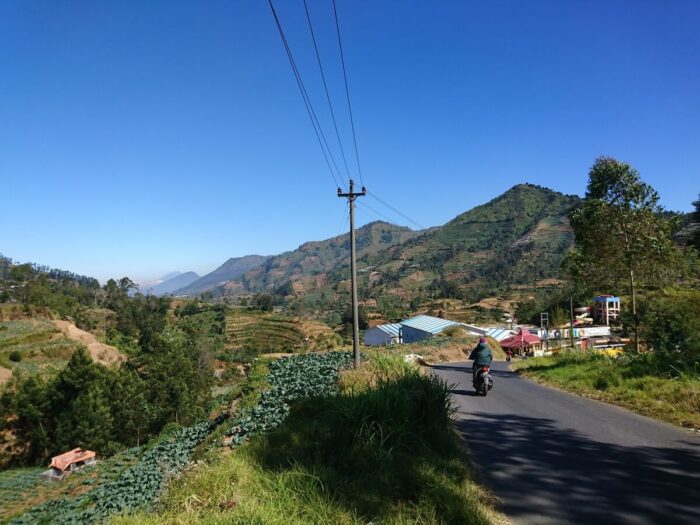
If possible, come during the dry season (around July to August), as the skies tend to be clearer, making your photos even more stunning.
Backindo Tip: There is no strict dress code like in some active Hindu temples in Bali, but modest clothing is still recommended. It’s respectful to keep your shoulders and knees covered, especially if you’re visiting multiple temple sites in one day.
Early mornings are when Dieng truly shines. For unforgettable sunrise views, read our detailed guides to Sikunir, Mount Bismo, and Mount Prau.
How to Get There
Getting to the Dieng Temple Complex is fairly easy, especially from the town of Wonosobo, which serves as the main gateway to the Dieng Plateau. From Wonosobo, you can take a minibus or local public transport to Dieng—it’s about a 45-minute to 1-hour journey, depending on road conditions.
If you prefer more flexibility, renting a motorbike or car is also a convenient option—especially if you plan to visit multiple attractions along the way. Just keep in mind that the road to Dieng is winding and uphill, so make sure your vehicle is in good condition and the driver is experienced.
Looking for a reliable driver in Dieng? Contact us at hello@backindo.com and we will happily share our tips.

Where to Stay
If you’re looking for a comfortable place to stay near the temples in Dieng, there are several great options to consider. Awana Farm House offers a peaceful countryside vibe—perfect for relaxing after a full day of exploring. Better House Dieng is also a cozy choice with a strategic location, close to Arjuna Temple, Telaga Warna, and Sikidang Crater.
If you prefer a laid-back atmosphere and want to meet other travelers, Tani Jiwo Hostel is a great pick. It’s just a short walk from Arjuna Temple, making it ideal for backpackers or solo travelers.
Continue reading:
- Dieng Plateau: Top Attractions and Travel Tips
- Prambanan Temple Guide: A Majestic Hindu Temple Complex
- Borobudur Temple Guide: A Wonder of the World from Indonesia
- Cetho Temple: A Hindu Temple in Solo, Central Java
- Candi Sukuh: An Erotic Temple Near Solo, Central Java
- Gedong Songo Temple: A Hidden Gem in the Highlands of Semarang