
Java Island offers many treasures to uncover. While Yogyakarta often steals the spotlight as Java’s cultural capital, its quieter sibling Surakarta — also known as Solo — has a charm and depth that’s equally captivating, if not more intimate. Once the beating heart of Javanese royalty, Surakarta carries centuries of tradition in its kraton (palaces), wayang performances, and batik workshops.
Whether you’re a history lover, food enthusiast, or slow traveler seeking an authentic glimpse into Central Java, this guide will help you explore Surakarta like a local. From royal heritage sites and vibrant markets to street food gems and peaceful neighborhoods — Solo offers a rich cultural experience without the tourist crowds.
About Surakarta (Solo)
Historically, before the establishment of the Kraton Ngayogyakarta Hadiningrat in Yogyakarta, there was the Surakarta Hadiningrat Palace, founded by Susuhunan Pakubuwono II in 1744 in what is now Surakarta (previously Sala). This palace continued the legacy of the Islamic Mataram Kingdom. The Giyanti Agreement later divided the Mataram Kingdom into two—Surakarta under Pakubuwono III and the Sultanate of Yogyakarta led by Hamengku Buwono I, established in 1755.
Thus, Surakarta holds a wealth of historical significance, preserving remnants of the former glory of the Kasunanan Surakarta Kingdom. This history gave rise to rich Javanese traditions and customs that are deeply embedded in this small city.

Surakarta, or Solo, has also witnessed numerous historical events, such as the Surakarta General Offensive in 1949 against Dutch military aggression, the Geger Pecinan (a historic conflict involving Chinese communities), and the unrest of 1998. Yet, the indomitable spirit of its people has led the city through difficult times, helping it to rise from crises.
Today, Surakarta is a peaceful city, home to a variety of ethnic groups living side by side. The majority are Javanese, but there are also Chinese, Arab, and other ethnic communities. Conflicts between ethnic or religious groups are rare, as tolerance is deeply valued by its residents.
The city’s diverse ethnicities have resulted in a fascinating cultural blend, expressed through its food and arts. This cultural richness makes this small city truly special and full of tradition. The resilience and unity of its people have earned Surakarta its nickname, ‘The Spirit of Java’.
What to Do and See in Surakarta
As a city rich in cultural heritage, Surakarta offers plenty of tourist attractions and activities to enjoy. Here are some recommended places to visit during your stay in Surakarta:
Keraton Surakarta Hadiningrat (Kasunanan Palace)

The Keraton Surakarta Hadiningrat or Kasunanan Surakarta serves as the residence of the royal family in Solo (Surakarta). Established in 1744 by Pakubuwono II, this palace continues the legacy of the Islamic Mataram Kingdom. The architecture blends Javanese and European styles, characterized by its white and blue painted walls. The design was crafted by Sri Sultan Hamengkubuwono I, the first king of the Yogyakarta Palace, explaining the architectural similarities between the two palaces.
The Keraton Kasunanan is open to the public, where you can explore museums featuring royal family genealogy, horse-drawn carriages with Javanese-European styles, ship figureheads, and other artifacts. The palace also has beautiful gardens with shady trees, perfect for photos. You can also admire buildings like the pendopo (pavilion) adorned with Cupid statues, a gift from European kingdoms.

Outside the palace, there is the historic Masjid Agung Surakarta, an old mosque still used for worship. To the south, you’ll find Alun-Alun Kidul (Southern Square) outside the palace’s fort walls, complete with two railway carriages and a sacred buffalo stable known as Kyai Slamet.
Not far from the palace is Pasar Klewer, the largest batik and fabric market, where you can gain deeper insight into Javanese cultural heritage.
Basic Information:
- Operating Hours:
- Open every Monday to Thursday at 9 AM – 2 PM
- Weekend: 9 AM – 3 PM
- Ticket Price: IDR 15,000 (USD 1)
- Tour Guide: Start from IDR 70,000 (USD 4,40)
Dinner at Keraton Mangkunegaran (Pura Mangkunegaran)
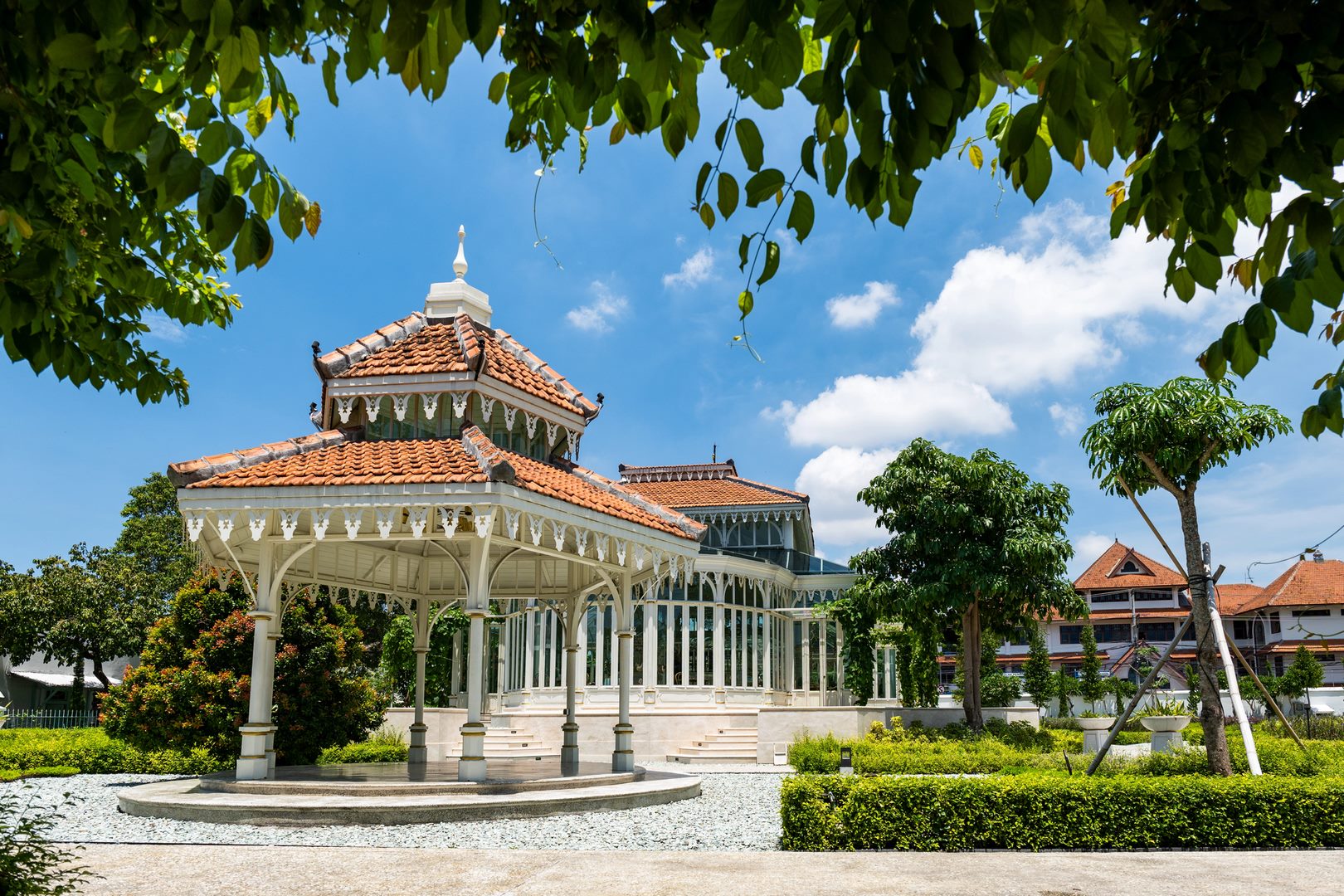
The Keraton Mangkunegaran, or Pura Mangkunegaran, is another royal residence in Surakarta, located north of the Kasunanan Palace. It was established following the division of the Islamic Mataram Kingdom through the Giyanti Agreement. Though traditionally more private, it recently opened to the public in 2023, allowing visitors to experience its luxurious Javanese cultural heritage. You can even enjoy dinner in Pracimasana, the restaurant inside the palace’s courtyard, feeling like a true Javanese noble. Proper attire is recommended, or you can dress in traditional Javanese clothing for an authentic experience.
Basic Information:
- Operating Hours: 10 AM – 10 PM
- Price: Minimum order IDR 100,000 (USD 6,29)
- Reservations: To enjoy the culinary offerings at Pracimasana, visitors are required to make a reservation in advance through the link provided in their Instagram account.
Vastenburg Fort
Vastenburg Fort is located to the north of the Kasunanan Palace, at the eastern end of Slamet Riyadi Street. This rectangular fort, with its white perimeter walls, dates back to the Dutch colonial era. The fort often hosts art performances and festivals, such as the Solo International Art Culture (SIAC) festival, Solo City Jazz, and culinary events. Most weekends feature performances, making it a great spot to catch a show. Be sure to check event schedules in advance.
However, it’s important to note that the fort is not always open to the public, so visitors typically cannot enter the inner area.

Not far from Vastenburg Fort, you’ll find the Galabo night food center and the Solo Wholesale Center (PGS), which offers a wide range of fashion products at affordable prices.
Culinary & Herbal Hunt at Pasar Gede

Pasar Gede is one of Surakarta’s oldest and most active markets, offering a wide array of goods, including herbal medicines (jamu), fruits, vegetables, and meats. It is also a haven for legendary culinary treats. Don’t miss out on trying the refreshing Dawet Selasih—a sweet drink with cendol (sago-based jelly), coconut milk, basil seeds, and syrup. You might want to order two servings, as the small bowls leave you craving more! You can also enjoy other treats like es kembang tahu (soy pudding dessert) at the market’s outer areas.
On the second floor of Pasar Gede, you’ll find a café serving Western-style breakfasts, while the northern section of the market offers pork dishes legally.
Exploring Triwindu Antique Market

Near Pura Mangkunegaran, Triwindu Antique Market or Ngarsopuro Market is a must-visit for antique lovers. You’ll find everything from vintage cassette tapes, vinyl records, and antique plates and glasses, to clocks, paintings, and other artistic treasures. The beautifully displayed items make it a feast for the eyes, even if you’re just browsing.
Every Saturday night, in front of this market, the Ngarsopuro Night Market takes place — a lively event offering a wide variety of local food and street activities, including live drawing and various art booths.
Learning Batik at Kampung Batik Laweyan and Kauman
As a city with a rich Javanese heritage, Solo is well-known as a center for batik in Central Java. In the Kampung Batik Laweyan (Laweyan Batik Village) area, located to the west of Surakarta, you can find many skilled batik artisans. They run batik workshops and sell high-quality batik fabrics. If you’re interested in learning the art of batik, Kampung Batik Laweyan is the place to go. It is located on Jalan Sidoluhur in the Laweyan District, about 4.5 km west of the Keraton Surakarta.
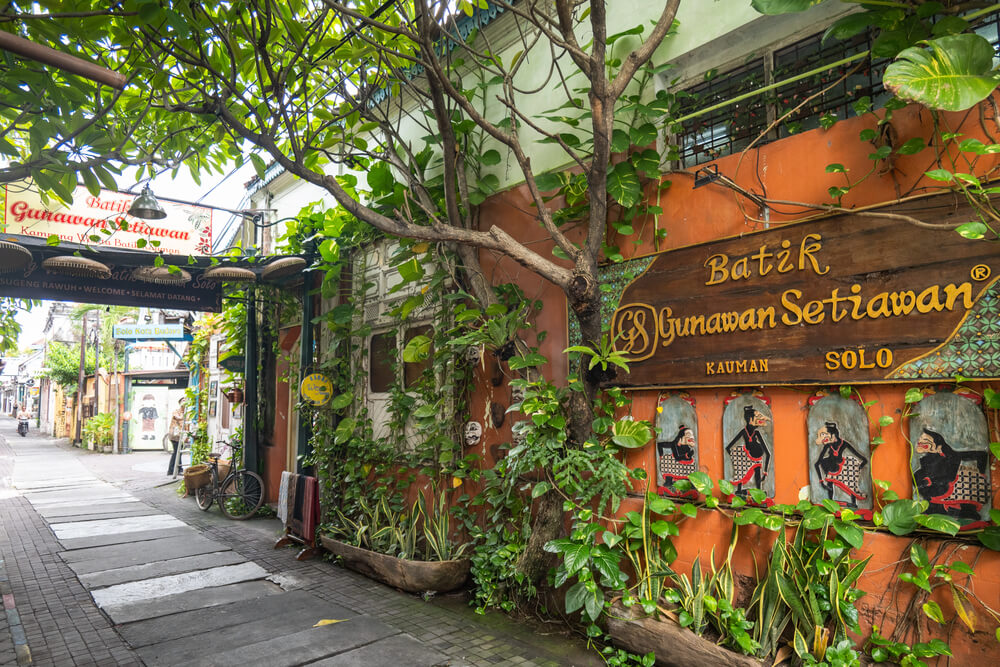
In the heart of Surakarta city, there’s also the Batik Kauman village located on Wijaya Kusuma Street. There, you can find many batik shops and even join a batik-making workshop. One of the most well-known stores in Solo is Batik Danar Hadi.
As you walk along the street, you’ll see many people taking photos and enjoying a relaxed stroll through the batik village.
Watching Wayang Orang Performances at Taman Sriwedari (Traditional Theater)
Taman Sriwedari is a public area, also it is a venue for wayang orang performances (traditional theater), showcasing stories from the Ramayana, along with other Javanese entertainment like Ketoprak (a Javanese comedic play). Built during the era of Pakubuwono X, this park has long served as a night entertainment spot for Javanese society. Regular performances, starting at 7.30 PM, demonstrate the passion of Surakarta’s people for preserving Javanese culture.
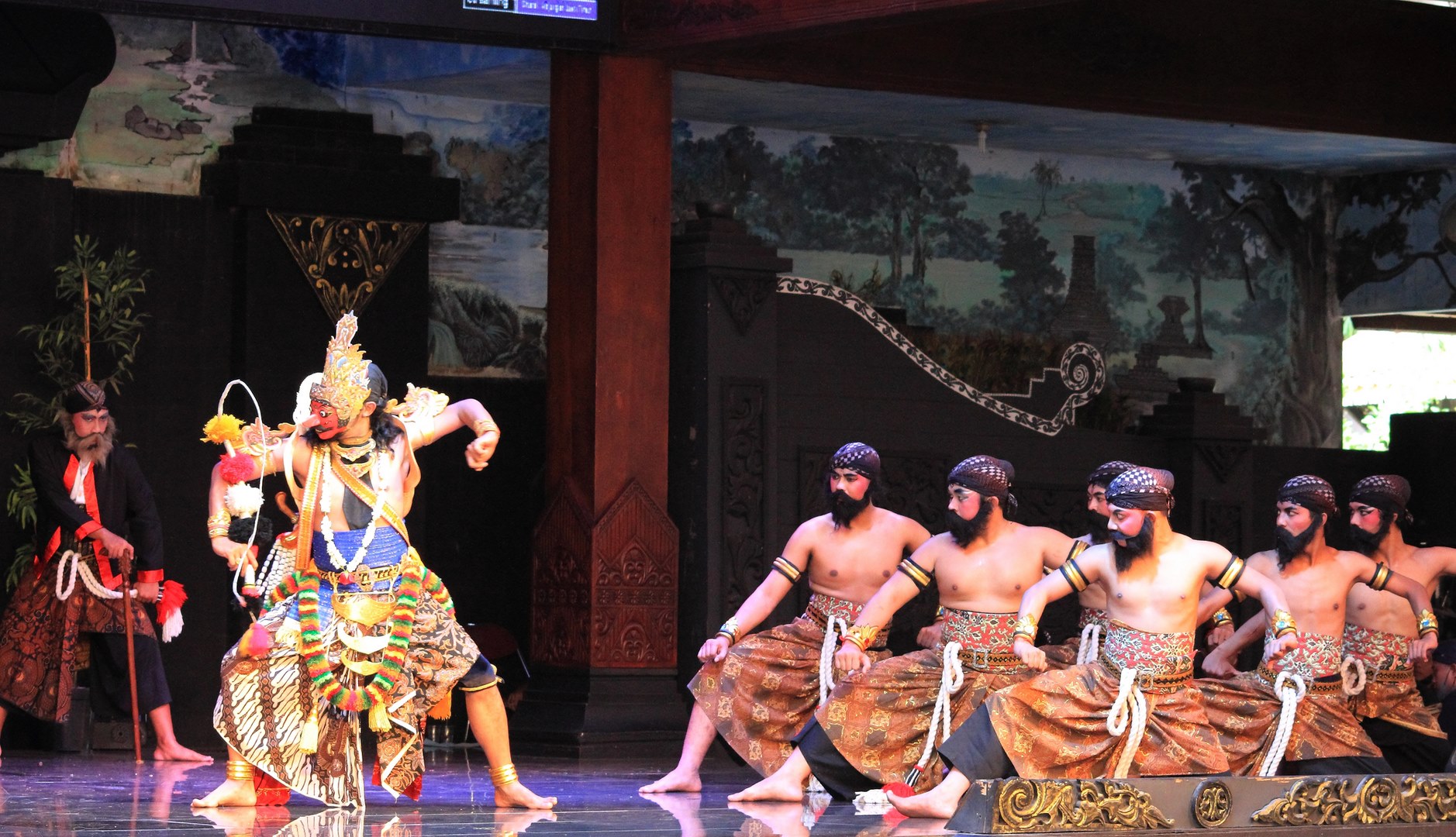
During the day, you can enjoy activities around the park, such as feeding deer, fishing, and more. Taman Sriwedari is situated on Jalan Slamet Riyadi, about 3.2 km from Surakarta’s northern square. On Sundays, it becomes a popular spot during Car Free Day, with food vendors offering a variety of dishes in front of the park. It’s the longest and largest Car Free Day event in Central Java, providing a great opportunity to enjoy local food and activities.
Basic Information:
- Operating Hours: Monday – Saturday at 7.30 PM
- Ticket Price: IDR 50,000 (USD 3,14)
- Official Account: For more info and schedule performance check their instagram account.
You can also watch the Wayang Orang theater performance at Prambanan Temple, known as the Ramayana Ballet. For more details, check out our Prambanan Temple Guide: A Majestic Hindu Temple Complex.
Sheikh Zayed Grand Mosque in Surakarta
The Sheikh Zayed Grand Mosque in Surakarta is the new landmarks, and so impressive. Inspired by the famous mosque in Abu Dhabi, it features stunning white domes, tall minarets, and elegant architecture that combines Middle Eastern and local Javanese elements. The mosque is open to visitors during prayer times only, and all guests are expected to dress modestly. Women, in particular, should cover their hair and wear loose clothing; rented cover-up garments are available near at the entrance.
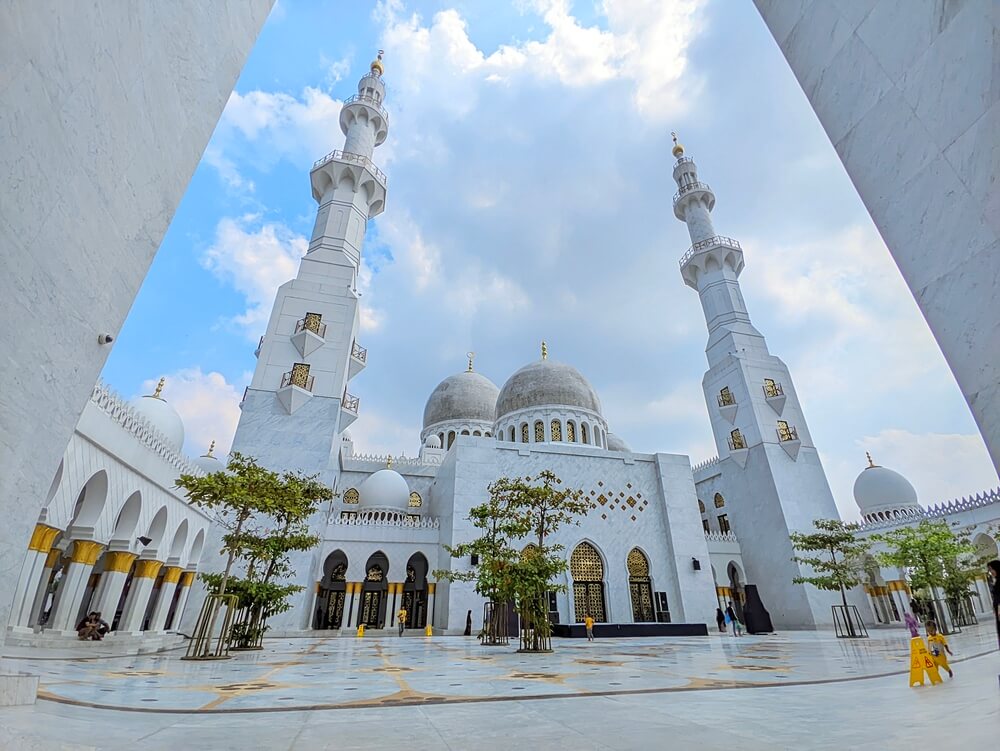
My mother once stopped by at 3 a.m., but the mosque was still closed (even though mosques are usually open 24 hours). She was informed that it only opens during prayer times. So, it’s best to visit during the day or in the late afternoon.
Day trip near Surakarta
If you haven’t explored enough of Surakarta, try visiting some of the areas around the city. Many of these places are not too far from Surakarta. Below are some destinations you can visit as a day trip while you’re in the city.
Tawangmangu
Only 1,5 hours you can find a cool and calming spot name Tawangmangu, located at the base of Mount Lawu. Tawangmangu is also known for its wide variety of natural and historical attractions.
The most famous destination in Tawangmangu is Grojogan Sewu Waterfall, hidden among the lush greenery of Mount Lawu’s forest. To reach the waterfall, you’ll need to walk down hundreds of steps.
If you’re looking for waterfalls to visit, we’ve compiled them in 12 Best Waterfalls to Visit in Java
Other nearby attractions include Cetho and Sukuh Temples, often referred to as “erotic temples” due to their carvings depicting genitalia and scenes resembling the Kama Sutra. While they may seem inappropriate at first glance, these temples are believed to have been built as philosophical symbols of fertility and purification in ancient times.
Want to discover other temples in Indonesia? Check out our article Best Temples to Visit in Java.

One of the highlights of these temples is their location high in the mountains, offering stunning views often wrapped in a mystical layer of mist that adds to the magical atmosphere of the site.
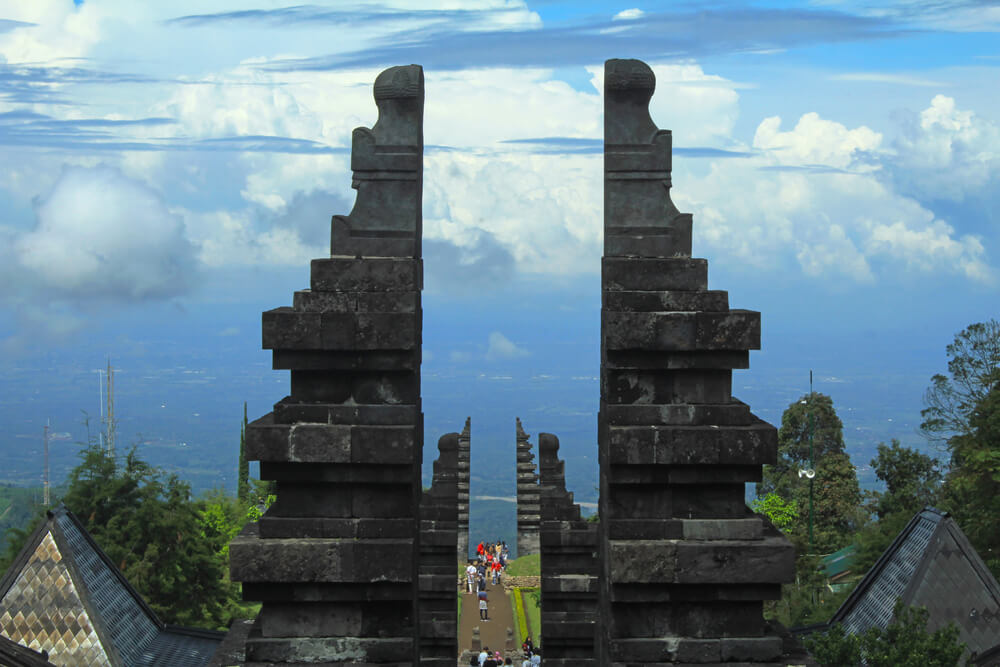
There are still many other places to explore in Tawangmangu, such as Jumog Waterfall, which is still relatively undiscovered, and Ndoro Dongker Tea Café located in the middle of the Kemuning tea plantation. You can also visit Rumah Atsiri Indonesia, a center for essential oils and botanical experiences. As you approach the border with East Java, don’t miss Cemoro Sewu, the main entrance to the Mount Lawu hiking trail, and Telaga Sarangan, a scenic mountain lake located in Magetan.
Klaten
Klaten is located between Yogyakarta and Surakarta, and it’s known as the city of a thousand natural pool. The natural water here is incredibly clear, and the surroundings are well-maintained thanks to the local community’s collective efforts to preserve these water sources.
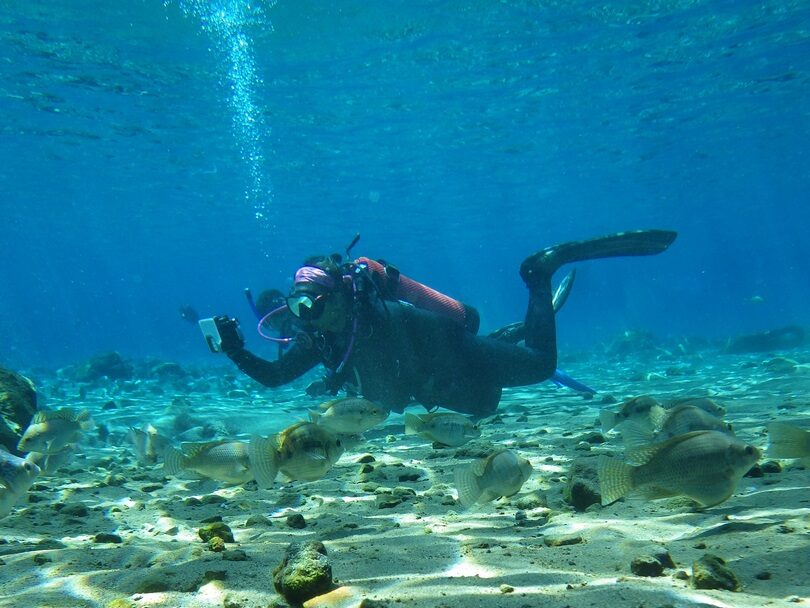
Here, you can do more than just swim or soak — you can also enjoy the beauty of the underwater scenery. One of the highlights is Umbul Ponggok, a natural spring pool with a depth of over 3 meters, perfect for underwater exploration.
If you’re curious about Klaten, we’ve covered it in more detail in our article about Klaten Natural Pool: Hidden Gem Near Yogyakarta.
Wonogiri
If you want to ride the Batara Kresna train — a train that passes through the heart of Solo — you can head to Wonogiri. This town is located south of Solo and borders Pacitan. In Wonogiri, you can go street food hunting at the market near the train station or visit Gajah Mungkur Reservoir. Around the reservoir, you’ll also find local snacks and souvenirs like fried shrimp and wader (small crispy fish).
If you’re planning to explore even further, you can rent a car or a motorbike. You can start your journey either from Solo or Yogyakarta, taking the route through Gunung Kidul.
How to Get to Surakarta (Solo)
You can reach Surakarta (Solo) using various modes of transport, including the commuter train (KRL), regular trains, buses, or cars. The city also has Adi Sumarmo International Airport, which serves commercial flights from various regions.
From Yogyakarta to Surakarta
Traveling from Yogyakarta to Surakarta is easy. You can take the Commuterline train from Yogyakarta’s Tugu Station (YK) or Lempuyangan Station (LPN). The ride takes about 1 hour 10 minutes, with stops at several stations, including Klaten, Delanggu, Purwosari, Solo Balapan, and Jebres.
If you plan to explore the city, getting off at Solo Balapan or Jebres Station is convenient, as they are close to Pasar Gede, a central market in Surakarta.
If you're planning to take the train from Yogyakarta to Surakarta, we've got you covered with a guide on the public transportation options available in Yogyakarta.
You can also travel by bus from Yogyakarta’s Giwangan Terminal and go down at Tirtonadi Terminal in Surakarta.
Alternatively, you can rent a car for a more flexible trip. Driving from Yogyakarta to Solo is quite easy and safe, whether you take the main road or the Prambanan toll road.
Backindo Tip: Need a reliable driver in Java? We can share contacts of trusted locals we know personally – just drop us an email at hello@backindo.com.
From Jakarta to Surakarta (Solo)
To get to Surakarta from Jakarta, you can choose between traveling by train or by plane. Flights depart from Soekarno-Hatta Airport and Halim Perdanakusuma Airport in Jakarta, with Adi Soemarmo Airport (SOC) in Surakarta as the destination.
After that, you can continue your journey by taking the airport train and getting off at Balapan Station, or by taking a Grab ride. The airport train ride takes only about 18 minutes, and tickets can be purchased online or on the spot.
However, in my opinion, taking a taxi or Grab is a better option—it’s more flexible and the travel time isn’t much different from the train.
If you prefer the train, you can take one from Gambir Station for executive class or from Pasar Senen Station for economy and executive classes. You can go down at Purwosari, Solo Balapan, or Jebres Station in Surakarta.
Curious about how trains work in Indonesia? Check out our guide on How to Travel by Train in Indonesia or learn the differences between Jakarta’s Train Stations: Gambir vs Pasar Senen.
How to Get Around Surakarta
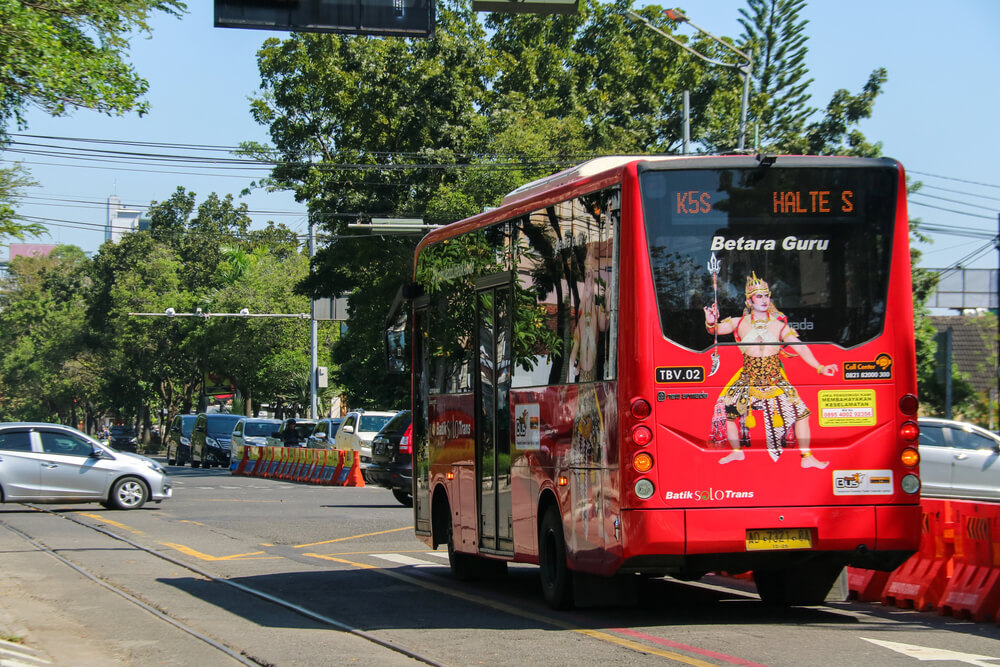
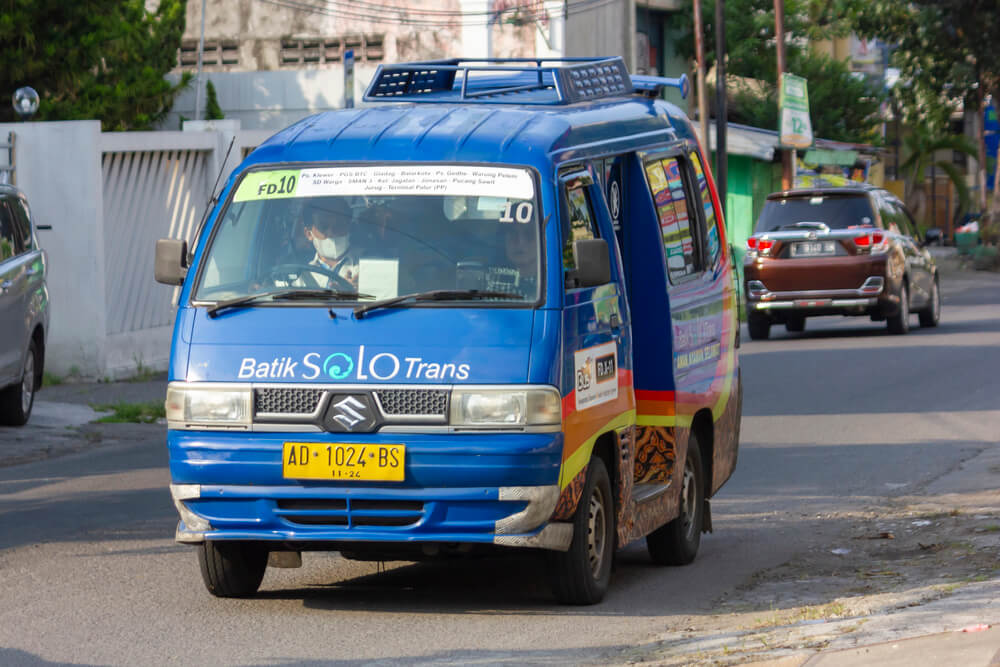
Surakarta offers various public transportation options to help you explore the city with ease. One of the most popular choices is the Batik Solo Trans (BST) bus service, which has numerous stops and covers many areas around the city.
Batik Solo Trans (BST)
BST is one of the most popular public transport options in Surakarta. There are at least six main corridors and six feeder corridors that connect to key locations across the city. You can find BST stops along Jalan Slamet Riyadi, in front of Purwosari Station, Solo Balapan Station, and other areas serviced by this bus route. The fare for using the BST bus is very affordable, costing around IDR 4,000 (USD 0,25) per ride.
Bus Wisata Werkudara (City Tour)
Another great way to explore Solo is by taking a tour on the Werkudara sightseeing bus. This double-decker bus, which features a semi-open roof on the upper deck, operates on Saturdays and Sundays with departures at 9 AM, 12 PM, and 3 PM.
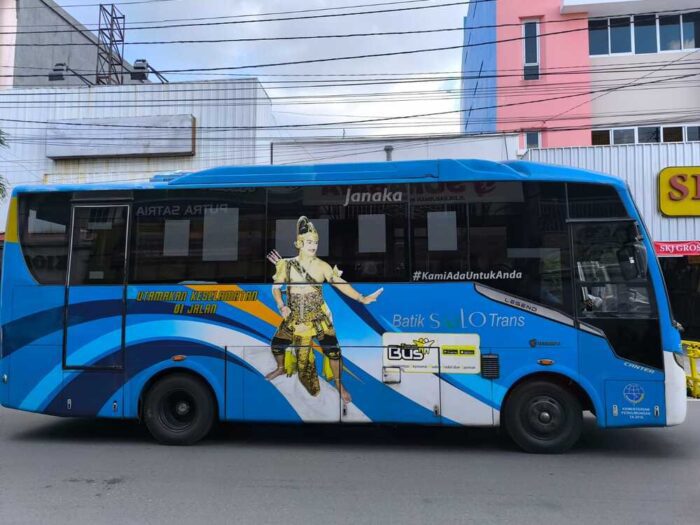
The bus tour lasts approximately three hours and starts from the Manahan Office of the Transportation Department. It travels over the Manahan flyover, along Jalan Slamet Riyadi, stops briefly at the City Hall, and continues to the Bank Indonesia for photo opportunities. Passengers then proceed to Safari Solo, where those seated on the upper deck switch places with passengers below. The route ends back at the Transportation Department Office. Tickets for the Werkudara bus are reasonably priced at IDR 20,000 (USD 1,26), available at the Transportation Department ticket counter.
Taxis and Online Rides (Grab/GoJek)
Like other major cities, Surakarta offers private transportation services, such as taxis and online ride services like Grab and Gojek. These options are convenient and affordable, so you don’t have to worry about finding transport when you need it.
Becak (Pedicabs)
You’ll find plenty of becak (traditional pedicabs) in Surakarta. For a unique experience exploring areas like the palace and its surroundings, taking a becak can offer a fun, memorable way to see the city.
Batara Kresna Train
The Batara Kresna train is a local railway service connecting Surakarta to Wonogiri. The train runs alongside the main roads of Surakarta, including Jalan Slamet Riyadi, making it a distinctive experience as it travels parallel to motorbikes. The journey takes about an hour, with departures twice daily.
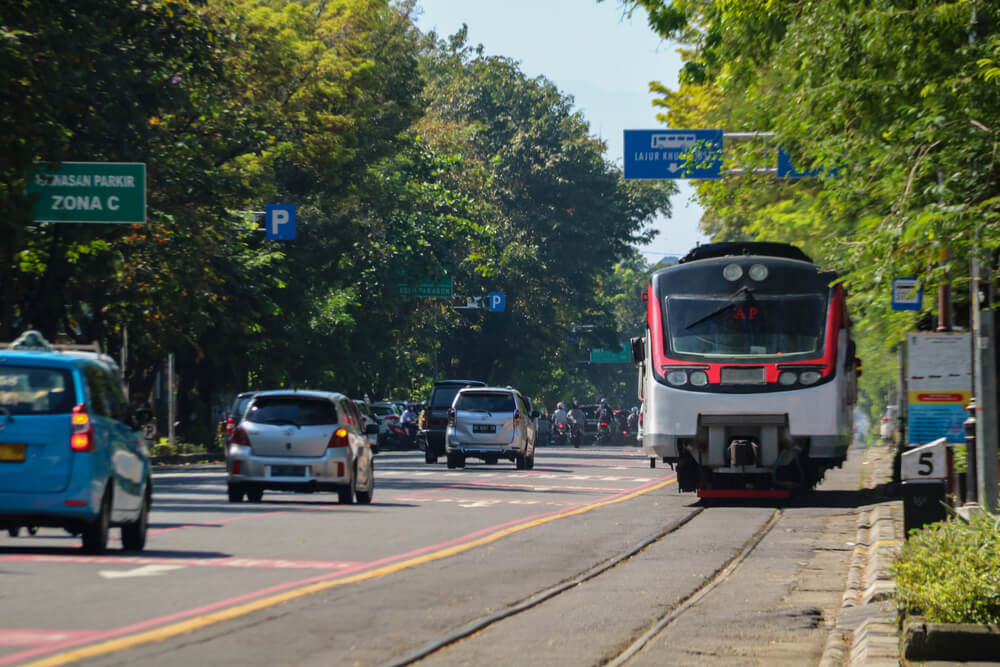
You can board at Purwosari Station and, if you prefer not to travel all the way to Wonogiri, you can get down at Solo Kota Station. Tickets are very affordable at just IDR 4,000 (USD 0,25) per trip. The train’s first departure from Purwosari is at 6:21 AM, followed by another at 10 AM. Departures from Wonogiri are at 8 AM and 12 PM.
Events and Festivals in Surakarta

Although Surakarta may not have as many tourist spots as some larger cities, it is constantly buzzing with events and festivals. Nearly every week, you can find events ranging from national to international scales. Most of these events focus on culture and traditional performances. Annual cultural festivals such as Grebeg Sudiro during the Chinese New Year celebration, Kirab Pusaka Dalem for cleaning the Pusaka (heirlooms) of the Mangkunegaran Palace, and Kirab Malam Satu Suro—a procession during the Javanese New Year’s Eve, where palace servants carry sacred objects around the Kasunanan Palace and then climb Mount Lawu—are never missed.
Other popular events, both nationally and internationally recognized, include Solo 24 Jam Menari (24 Hours Dancing), Solo Batik Carnival, Solo Keroncong Festival, Solo City Jazz, Solo International Performing Arts, the International Mask Festival, and the Indonesian Umbrella Festival. These festivals are highly anticipated by locals and visitors alike, both from within and outside Indonesia. Visiting Surakarta during these events can add a memorable dimension to your trip.
Culinary Delights in Surakarta: What to Eat
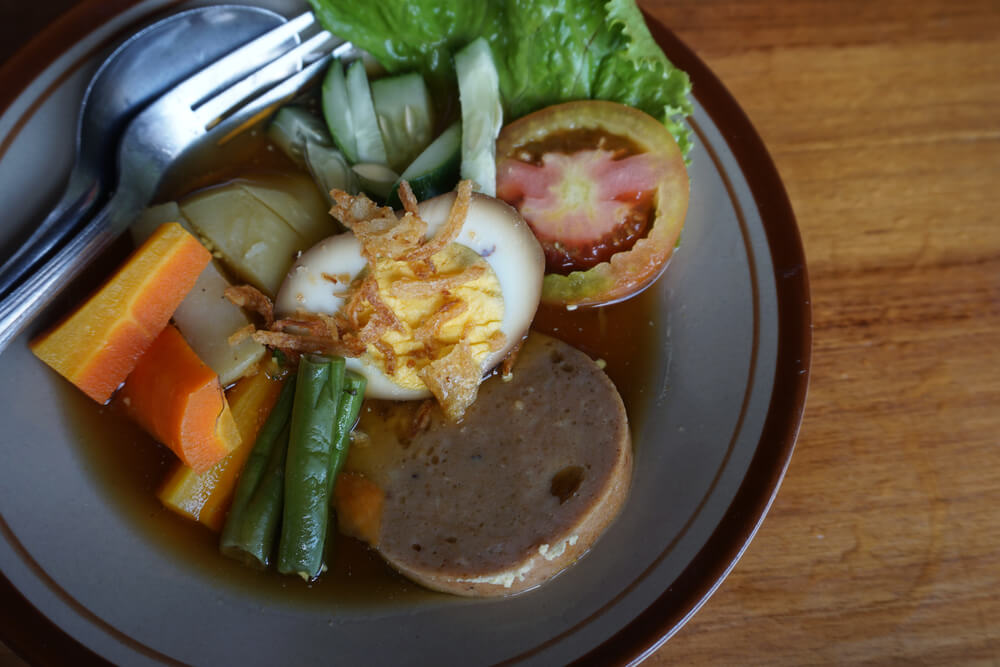
Surakarta’s diverse population has given rise to a wide array of delicious and enticing foods. Local dishes reflect the influence of Javanese-European, Javanese-Chinese, and Javanese-Arabic cultural blends, creating endless culinary options to explore.
When in the city, be sure to try Selat Solo, a dish combining European and Javanese flavors—a type of meat steak served with boiled vegetables and a sweet barbecue-like sauce.
Another must-try dish is Timlo, a soup with clear broth containing shredded chicken, boiled egg, carrots, vermicelli, and other vegetables, blending oriental and Javanese culinary traditions.
For a taste of Javanese-Arabic fusion, try Sate Buntel, made from minced seasoned goat meat wrapped in goat fat and grilled to perfection. The unique flavors of this satay are delicious even without additional sauce.
Other iconic dishes to sample include Tengkleng Kambing (goat stew), Cabuk Rambak, Sate Kere (simple, affordable satay), Nasi Liwet (rice with savory side dishes), and more.
Solo is also home to street food similar to Yogyakarta’s angkringan, known locally as HIK, short for Hidangan Istimewa Kampung (Special Village Delicacies). HIK stands out for its variety of fresh milk drinks with different flavors.
If you’re looking for something warm to drink on a cool evening, try Wedang Ronde, a ginger drink with roasted peanuts and mochi balls, or Wedang Asle, made from coconut milk with toppings like palm fruit, jelly, bread, and tapioca pearls. Exploring Surakarta’s culinary scene will enhance your appreciation for the rich flavors found throughout Indonesia.
Indonesia offers a diverse array of culinary delights. Don’t miss out—check out our guide to the Best 15 Indonesian Street Foods: A Flavorful Journey Through Local Delights
Where to Stay in Surakarta
As a tourist destination, Surakarta offers a variety of accommodations to suit your needs.
Alsalam Syariah Guest House
This guest house is conveniently located near the Keraton Kasunanan Surakarta, on the east side of Surakarta’s northern square. It is centrally situated, making it easy to access local cuisine, supermarkets, and tourist attractions. Despite its affordable rates, Alsalam Syariah Guest House offers clean and comfortable rooms.
Doeloerkoe Homestay
Also located near the Surakarta palace, Doeloerkoe Homestay offers a classic stay experience with wooden furniture that has been well-maintained. In the middle of the homestay, you will find a refreshing garden, creating a cozy, homey atmosphere. Guests can enjoy a fabulous breakfast and excellent room service.
Hotels
In addition to affordable homestays and guesthouses, Surakarta has many star-rated hotels, such as Harris Hotel, Solo Paragon Hotel, and The Royal Surakarta Heritage. You can book these hotels through Traveloka for special discounts.
Why Should You Visit Surakarta?
Surakarta (Solo) is often called the “Spirit of Java” — and for good reason. As one of the cradles of Javanese culture, the city offers a glimpse into centuries-old traditions that are still alive today. From royal palaces and cultural performances to daily rituals and crafts, Solo is a place where heritage is not just preserved, but lived. Often referred to as “Little Indonesia,” it reflects the diversity and harmony of the country in a more intimate setting.
Only about an hour from Yogyakarta by train or commuter rail (KRL), Surakarta is easily accessible yet feels refreshingly less touristy. The city may be hot in the day, but its walkable areas like Supriadi Street make exploring enjoyable — especially if you love observing local life. Venture just outside the city to find cool mountain air in Tawangmangu, a peaceful retreat at the foot of Mount Lawu. With its authentic food, welcoming locals, rich traditions, and plenty of things to see and do — without the crowds — this is exactly why you should visit Surakarta.