
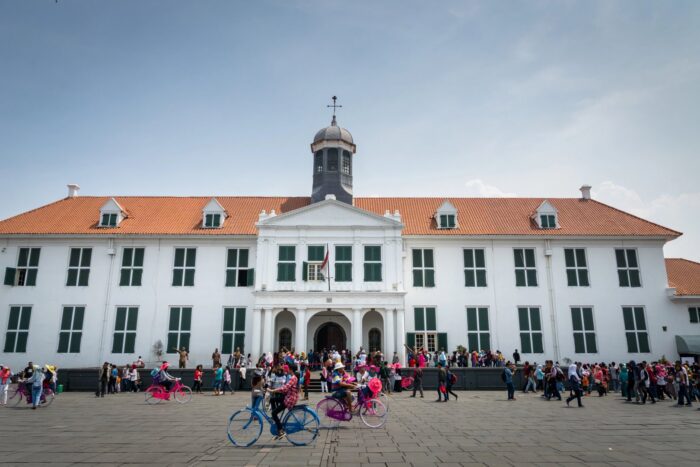
Kota Tua Jakarta, also known as Jakarta Old Town or Old Batavia, is one of the easiest places in the capital to explore on foot. If you only have limited time in Jakarta and want to see a more historical side of the city, this is a good place to start.
The area is centered around Fatahillah Square, where you can visit museums, see colonial-era buildings, stop for coffee or jamu, and combine your visit with nearby places such as Glodok Chinatown or Sunda Kelapa Harbor.
In this guide, we’ll explain the best things to do in Kota Tua Jakarta, how long to spend there, entrance fees, opening hours, where to eat, how to get there by public transport, and how to plan a simple Jakarta Old Town route.
Kota Tua Jakarta Quick Guide
- Best for: history, museums, colonial architecture, easy walking, and a short introduction to old Jakarta.
- How long to spend: around 2-4 hours for the main square and museums, or half a day if you also visit Glodok or Sunda Kelapa Harbor.
- Nearest station: Jakarta Kota Station, about a 5-minute walk from Fatahillah Square.
- Entrance fee: walking around Kota Tua is free, but museums usually charge around IDR 50,000 (about USD 3-4) for foreign visitors.
- Best time to visit: morning for museums or late afternoon for cooler weather and a livelier square.
- Important note: many museums are closed on Mondays, and opening hours can change during public holidays.
Planning a trip to Jakarta? This Jakarta guide gives you the overview, but we’ve also prepared separate detailed guides for many places and practical topics mentioned here:
- Jakarta Places to Visit
- Practical Jakarta Travel Tips
Is Kota Tua Jakarta Worth Visiting?
Kota Tua is worth visiting because it is one of the easiest historical areas in Jakarta to explore on foot. Most of the main sights are located around Fatahillah Square, so you can visit several museums, see colonial-era buildings, stop at a café and take photos without needing much transport between places.
It’s not a perfectly polished old town, and some buildings still look worn. But that is also part of the experience. Kota Tua feels more like a living historical area than an open-air museum.
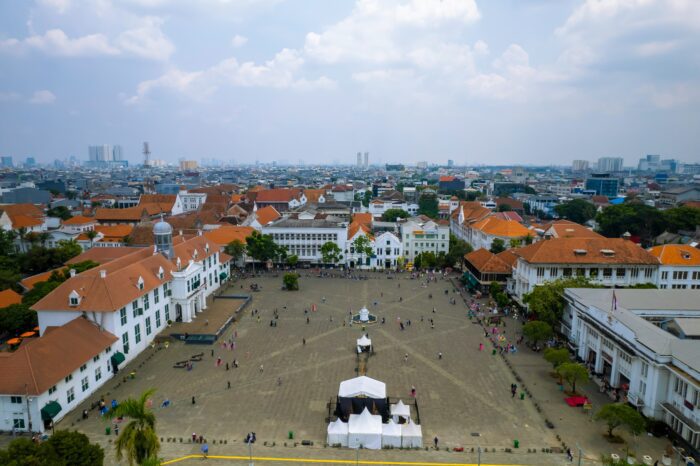
You can also combine the visit with nearby places such as Glodok, Jakarta’s Chinatown, or Sunda Kelapa Harbor if you want to understand more of old Jakarta in one day.
Wondering about how safe Jakarta is? Read Safety in Jakarta: A Guide for Travelers
A Short History of Kota Tua Jakarta
Kota Tua Jakarta was once known as Batavia, the main base of the Dutch East India Company, or VOC, in the region. Its location near Sunda Kelapa Harbor made it an important trading and government center during the colonial period.
Before the Dutch period, the area was connected to Sunda Kelapa Harbor. In 1527, Fatahillah captured the harbor and renamed it Jayakarta. Later, in 1619, the VOC destroyed Jayakarta and built Batavia in its place.
The city was designed with canals, administrative buildings and colonial architecture inspired by Dutch cities. During World War II, Batavia was renamed Jakarta under Japanese occupation.
In 1972, Jakarta Governor Ali Sadikin designated Kota Tua as a heritage area to help protect its historical buildings. Today, it remains one of the most accessible places in Jakarta to learn about the city’s colonial past.
Best Things to Do in Kota Tua Jakarta
Most travelers visit Kota Tua for Fatahillah Square and the museums around it. The area is compact, so you can see the main highlights without moving around Jakarta too much. Here are the most useful stops to include in your Kota Tua route.
Looking for a budget stay near Kota Tua? Read our personal Wonderloft Hostel Review: The Best Budget Choice in Jakarta
Fatahillah Museum
The Fatahillah Museum, also known as the Jakarta History Museum, is a significant landmark that once served as the administrative center or city hall of Batavia. It was constructed between 1707 and 1710 by order of Governor-General Joan Van Hoorn.
Inside the museum, you’ll find extensive information about Jakarta’s history, with displays in both Indonesian and English. The museum houses a collection of historical artifacts, including replicas from the Tarumanegara and Padjajaran kingdoms, archaeological finds from Jakarta, and antique furniture dating from the 17th to the 19th centuries.
In addition to its historical exhibits, the museum also has several photogenic corners, but it is most useful if you want a clearer introduction to Jakarta’s colonial history before walking around the rest of Kota Tua.
Basic Information
- Entrance Fee: The entrance fee for foreigners is Rp. 50,000 (approximately 3.5 USD).
- Museum Hours:
- Tuesday, Wednesday, Thursday, and Sunday: 09:00 AM – 03:00 PM
- Friday: 09:00 AM – 01:30 PM
- Saturday: 09:00 AM – 01:00 PM
- Monday and public holidays: CLOSED
Puppet Museum (Museum Wayang)
Not far from the Fatahillah Museum is the Puppet Museum, which houses an extensive collection of puppets from various regions of Indonesia and abroad.
Puppetry, or wayang, is a traditional drama performance using human-shaped puppets made from carved leather or wood, typically operated by a puppeteer known as a dalang.
At the Puppet Museum, you can explore a wide range of puppet collections, including Wayang Kulit (shadow puppets) from Java and Bali, Wayang Golek (rod puppets) from Sunda, and many other types of puppets from different regions across Indonesia.
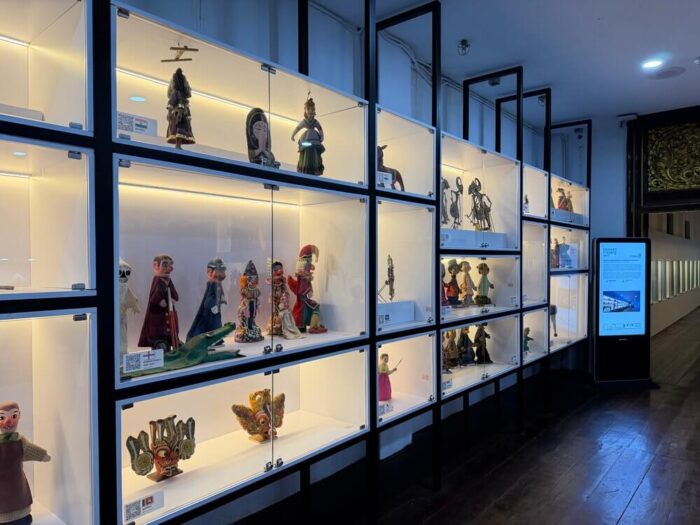
The museum also showcases puppets from around the world, with examples from Malaysia, Thailand, Suriname, China, Vietnam, France, India, and Cambodia.
In addition to its exhibits, the Puppet Museum occasionally hosts puppet performances accompanied by traditional gamelan music, offering a unique cultural experience. These performances typically take place once a month, with details and schedules usually shared on the museum’s official Instragram account.
Basic Information
- Admission Fee: The admission fee to the museum for foreigners is Rp. 50,000 (approximately 3.5 USD).
- Museum Hours:
- Monday: CLOSED
- Tuesday to Sunday: 09:00 AM – 03:00 PM
- Official Instagram Account: For updates on monthly performances, check the museum’s official Instagram account
Looking for the best hotels or budget stays in Kota Tua? Discover our top recommendations in Where to Stay in Jakarta: Top Areas and Accommodations.
Museum of Fine Arts and Ceramics
Another must-visit destination in Kota Tua Jakarta is the Museum of Fine Arts and Ceramics. This museum features a diverse collection of artworks by Indonesian artists, dating back to the 1800s.
For a hands-on experience, you can also join pottery-making classes offered at the museum. These classes teach various techniques, including pinching, molding, and using a potter’s wheel. Each workshop lasts between 30 to 45 minutes, and if your group has fewer than four people, no reservation is needed—just inform the staff at the counter when you enter the museum.
Although the workshop is conducted in Indonesian, this doesn’t mean you can’t participate as a foreigner. It will still be a unique and enjoyable experience, where much can be learned through observation and practice.
Basic Information
- Admission Fee: The admission fee to the museum for foreigners is Rp. 50,000 (approximately 3.5 USD). The pottery workshop also costs Rp. 50,000 (approximately 3.5 USD)
- Museum Hours:
- Monday: CLOSED
- Tuesday to Sunday: 09:00 AM – 03:00 PM
- Official Instagram Account: For updates on events and workshops, check the museum’s official Instagram account
Sunda Kelapa Harbor and Bahari Museum
Still within Kota Tua Jakarta, you can walk (or better take taxi) north to Sunda Kelapa Harbor, a site that witnessed the glory of maritime trade during the Dutch East Indies administration.
At the harbor, you’ll see various Indonesian ships, including historic vessels and the pride of Indonesia, the Pinisi ship.
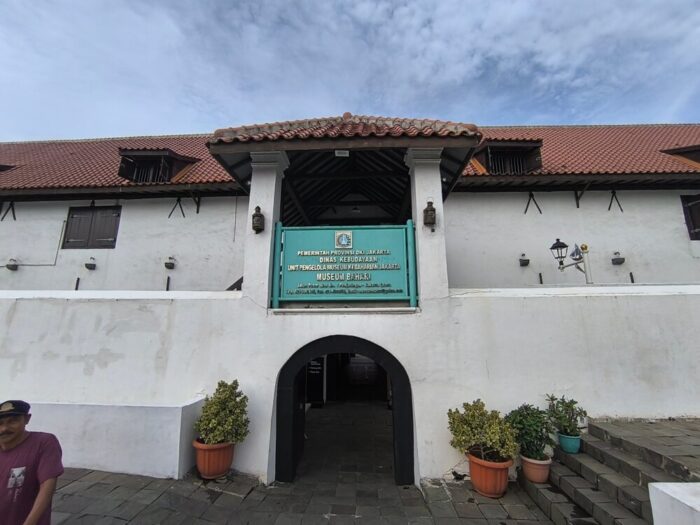
Not far from Sunda Kelapa Harbor is the Maritime Bahari Museum, which showcases a wide range of maritime artifacts. These include ships, anchors, cannons, telescopes, and other maritime equipment that reflect Indonesia’s rich maritime heritage.
Basic Information
- Admission Fee: The admission fee to the museum for foreigners is Rp. 50,000 (approximately 3.5 USD).
- Museum Hours:
- Monday: CLOSED
- Tuesday to Sunday: 08:00 AM – 03:00 PM
- Official Instagram Account: For updates, check the museum’s official Instagram account
Sunda Kelapa is a public space without an entry fee.
Kali Besar Area and Kota Intan Bridge
If you want to enjoy the evening in Kota Tua Jakarta, consider spending time walking in the Kali Besar area and visiting the Kota Intan Bridge.
Located on the west side of Kota Tua Jakarta, along the Ciliwung River, this area offers a scenic spot for a leisurely stroll. The Ciliwung River is one of the longest rivers in the region, originating in Bogor, West Java, and flowing into Jakarta.

A floating pedestrian path runs along the river, perfect for capturing moments with the historic Kota Tua buildings as your backdrop.
One of the highlights of this area is the Kota Intan Bridge, one of the oldest bridges in Jakarta, built during the Dutch colonial era in 1628. The bridge was ingeniously designed to be flexible, opening and closing to allow ships to pass through the Ciliwung River, while also helping to prevent flooding.
Performances and Bicycle Rentals
Fatahillah Square in Kota Tua Jakarta often comes alive with art performances and attractions by groups of street performers. These include traditional acts like Debus, Kuda Lumping, magic shows, and more.
To show your appreciation for these performances, it’s a good idea to make a minimum donation of Rp. 50,000.
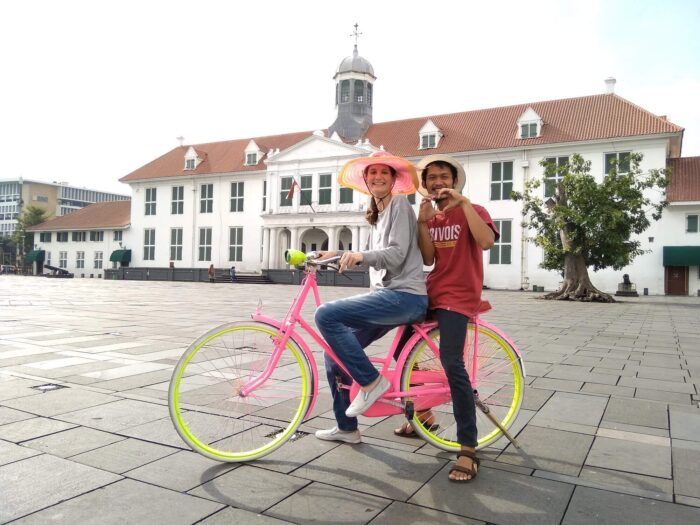
Around the museum, you can also take photos with “silver men” who mimic Indonesian freedom fighters or colonial-era figures.
For a more immersive experience, consider renting an old-fashioned bicycle, complete with accessories like hats or costumes, to enhance the retro vibe as you explore the area.
Acaraki Cafe
Tired of walking around Kota Tua? Refresh yourself with traditional herbal drinks, known as jamu, made from various Indonesian spices. Jamu offers numerous health benefits, such as relieving fatigue, reducing pain, and cleansing the body.
Acaraki Café serves jamu in a unique and modern way. Here, a barista prepares jamu with the same flair as a coffee barista, blending traditional practices with a contemporary twist. The art of making these drinks is not only entertaining but also invigorating, especially with the distinctive aroma of jamu that refreshes the body.
If you’re new to jamu, start with Jamu Beras Kencur, made from pounded rice and kencur extract, with added sugar or honey for sweetness. This light and tasty drink is great for treating stomach problems, refreshing the body, and increasing appetite.
Another popular option is Jamu Kunyit Asam, made from turmeric and tamarind. It helps alleviate stomach issues and reduces body pain. Jamu Kunyit Asam is especially delicious when served with ice and a touch of sugar if you prefer a sweeter taste. You can also request ice and sweeteners separately to adjust the flavor to your liking.
In addition to traditional drinks, Acaraki Café offers a variety of Indonesian dishes rich in flavors from local spices. You can enjoy dishes like Nasi Bakar Ayam Asam Manis, Nasi Kare Singkong, Tempe Mendoan, and more.
Prices for drinks and food at Acaraki Café are quite affordable, ranging from Rp. 10,000 to Rp. 100,000.
Batavia Cafe
Within Kota Tua Jakarta, you’ll find Batavia Café, a popular dining spot that offers a variety of coffee and serves both Western and traditional Indonesian dishes. The café is located directly across from Fatahillah Park, making it a prime location to soak in the historic atmosphere.
Batavia Café is renowned for its charming setting, occupying one of the historic buildings in Kota Tua Jakarta. The interior is designed in a 19th-century style, with furniture inspired by the 1930s, creating a nostalgic and elegant ambiance.
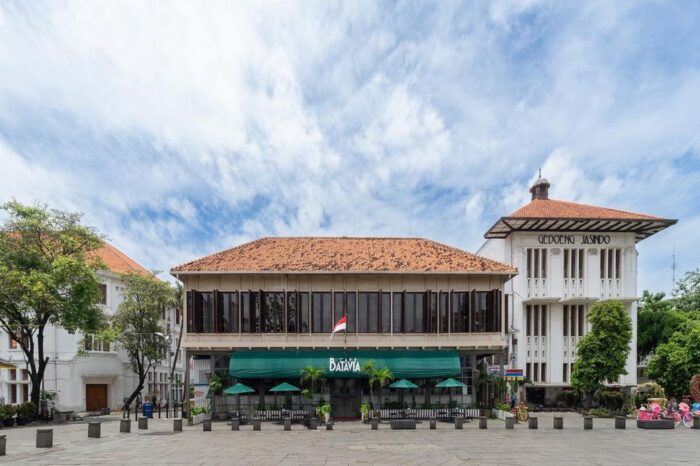
The café features a spacious area with two floors, offering both indoor and outdoor seating options. Here, you can enjoy a selection of coffees from different regions across Indonesia, as well as traditional Indonesian dishes.
I recommend Nasi Meener, a flavorful mixed rice dish with yellow rice, meat, chicken satay, urap-urap (a vegetable salad with grated coconut), and peanut chips. Other popular menu items include oxtail soup, tongue steak, and eggplant with chili sauce, all traditional Indonesian dishes presented with a modern twist.
If you prefer Western cuisine, Batavia Café also offers pasta, burgers, and desserts with authentic flavors.
For those who enjoy cocktails, the café serves unique drinks made with a blend of alcohol and Indonesian spices. One standout is The Ronde, a mix of honey whiskey, brown sugar, peanuts, and Beer Pletok, a traditional Jakarta drink made from ginger and other spices.
However, it’s worth noting that the food at Batavia Café can be quite expensive, with prices ranging from Rp. 60,000 to several hundred thousand rupiahs. Despite the cost, dining in this 1930s-style café is an experience that will leave a lasting impression.
Café Hours: Batavia Café is open from 09:00 AM to 12:00 AM, allowing you to enjoy the nighttime atmosphere of Kota Tua Jakarta while sipping a cup of hot coffee.
How to Get to Kota Tua Jakarta
Kota Tua Jakarta is easily accessible by various modes of public transportation. Here are the routes and ways to reach Kota Tua Jakarta:
How to Get to Kota Tua by KRL
You can easily get to Kota Tua Jakarta by taking the KRL commuter line, an intercity electric train in Jakarta. Just purchase a KRL ticket at any train station and head to Jakarta Kota Station.

If you’re arriving from the airport and want to go straight to Kota Tua, take the Airport Train to Duri or BNI Station. The fares for the Airport Train vary depending on whether you choose executive or premium class. The executive class ticket costs around Rp. 70,000, while the premium class ticket is about Rp. 30,000.
Arriving to Soekarno-Hatta Airport? Read How to Get from Jakarta Airport (CGK) to City Center.
Once you arrive at Duri or BNI Station, hop off the train and head to the ticket counter to buy a KRL ticket to Jakarta Kota Station. The KRL ticket costs around Rp. 3,000.
KRL Commuter Line tickets are available as electronic cards, including the Kartu Multi Trip (KMT), JakLingko, and JakCard, as well as bank-issued cards like BRIZZI (BRI), TapCash (BNI), Flazz (BCA), and e-Money (Mandiri). These cards are reloadable and can be used across various public transportation systems in Jakarta. Typically, a KMT card is priced at 30,000 IDR (around 2 USD), which includes a Rp 10,000 balance for immediate use. You can top up these cards at vending machines inside train stations or at ticket booths.
Getting around with e-cards for public transport in Jakarta can be a bit tricky. To make it easier and help you pick the right one for your trip, check out JakCard vs JakLingko: Which Card Travelers in Jakarta Need.
The KMT can also be used for other transportation modes like Transjakarta (busway), Jakarta LRT, Jakarta MRT, and even electric trains to nearby cities.
Once you arrive at Jakarta Kota Station, it’s just a 200-meter walk to Kota Tua Jakarta—about a 5-minute stroll.
📍Download the Map of Jakarta 📍
All the places we mention in this article — plus a few extra tips and nearby trip ideas — are saved on a Google Map you can use right on your phone.
After purchase, you’ll get a private link and the map will show up in your Google Maps across all your devices.
How to Get to Kota Tua by Transjakarta
Transjakarta, also known as the Busway, is the most popular public transportation in Jakarta. If you want to take the Busway to Kota Tua, first check where you’re staying and ask the hotel staff where the nearest Transjakarta stop is. The Transjakarta route that passes this area is called Blok M.
Even though you can find all the bus stops on Google Maps, it might be useful to download the Transjakarta app, especially if you’re staying in Jakarta for a while. The app provides bus routes and schedules from the nearest stop, making it easier to navigate the city.
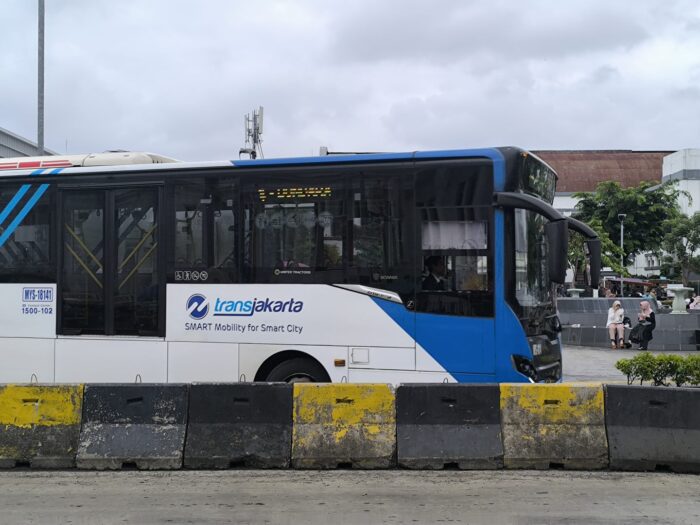
To buy a ticket, you can purchase a Multi Trip Card (KMT) at the Busway stop ticket counter or any other e-card as mentioned before.
Transjakarta ticket prices vary depending on the time of day:
- 05:00 AM – 07:00 AM: Rp. 2,000
- 07:00 AM – 12:00 AM: Rp. 3,500
- 12:00 AM – 05:00 AM: Rp. 3,500
How to Get to Kota Tua by Grab or Gojek
For short trips, Gojek and Grab are often the easiest options. You can choose a motorbike taxi if you are traveling light and want to move faster through traffic, or a car if you prefer more comfort.
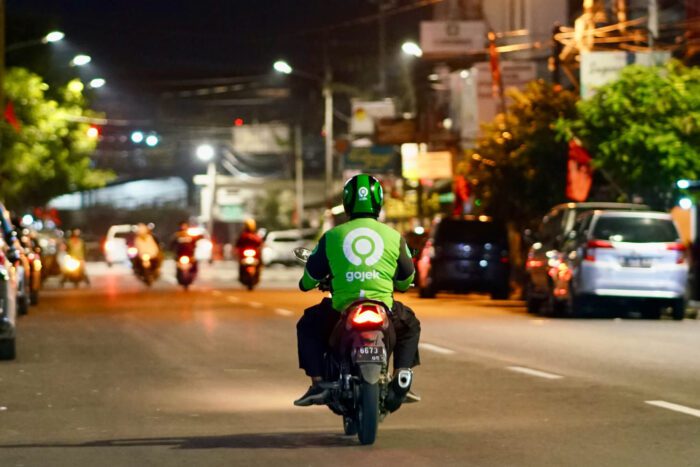
Just download the Gojek or Grab app from the Play Store or App Store. Keep in mind that when setting up your Gojek account, you’ll need an Indonesian phone number.
Backindo Tip: In Jakarta's traffic, motorbikes are not only faster but also cheaper than cars. If you’re traveling alone, we highly recommend avoiding booking cars altogether, especially during rush hours (7:00-9:00 AM and 4:00-6:00 PM).
Simple Half-Day Kota Tua Itinerary
If you want an easy route, start at Jakarta Kota Station and walk to Fatahillah Square. Visit the Jakarta History Museum first, then choose either Museum Wayang or the Museum of Fine Arts and Ceramics depending on your interests.
After the museums, take a break at Café Batavia or Acaraki Café. If you still have energy, walk through the Kali Besar area or continue by taxi to Sunda Kelapa Harbor and Museum Bahari.
For a fuller old Jakarta day, combine Kota Tua with Glodok Chinatown. This gives you a better mix of colonial history, Chinese-Indonesian heritage, food, temples, markets and local street life.
Should You Visit Kota Tua With a Guide?
You can visit Kota Tua independently, especially if you are comfortable using Jakarta’s public transport. A guide is more useful if you want historical context, want to combine Kota Tua with Glodok and Sunda Kelapa Harbor, or prefer not to plan the route yourself. Platforms such as Klook or GetYourGuide, where you can see all the details, prices, and reviews beforehand. Check out our favorite tips:
Frequently Asked Questions
Is it easy to reach Kota Tua Jakarta?
Yes, reaching Kota Tua Jakarta is easy. The main area is close to Jakarta Kota Station, Transjakarta stops and Sunda Kelapa Harbor, so it works well for travelers using public transport or ride-hailing apps.
How much is the entrance fee to Kota Tua Jakarta?
Walking around Kota Tua Jakarta is free. If you plan to visit museums or specific attractions, expect separate entrance fees. Museum tickets for foreign visitors are usually around IDR 50,000 (about USD 3-4), but prices can change.
When is the best time to visit Kota Tua Jakarta?
The best time to visit Kota Tua Jakarta is in the morning if you want to focus on museums, or in the late afternoon when the weather is cooler. Many museums are closed on Mondays, so Tuesday to Sunday is usually better.
Where to stay around Kota Tua?
If you want to stay close to Kota Tua, Wonderloft Hostel is one of the most practical budget options near Fatahillah Square. For more area advice, read our full guide to where to stay in Jakarta.
How long should you spend in Kota Tua Jakarta?
Most travelers need around 2-4 hours for Fatahillah Square and one or two museums. If you also want to visit Glodok, Sunda Kelapa Harbor or Museum Bahari, plan at least half a day.
What is the nearest station to Kota Tua Jakarta?
The nearest station is Jakarta Kota Station. From there, it is about a 200-meter walk to Fatahillah Square, the main area of Kota Tua Jakarta.
Is Kota Tua Jakarta safe to visit?
Kota Tua is generally safe to visit during the day and early evening, especially around Fatahillah Square. As in other busy parts of Jakarta, keep an eye on your belongings, use Grab or Gojek late at night, and avoid quiet side streets after dark.
Can you combine Kota Tua with Glodok?
Yes. Kota Tua and Glodok are close enough to combine in one trip. This is one of the best simple routes in Jakarta if you want history, local food, temples, markets and a better look at old Jakarta.