
If you’re visiting Bandung, chances are you’re planning a trip to White Crater (Kawah Putih). But don’t overlook Tangkuban Perahu. This active volcano, standing at 2,084 meters above sea level, offers a fascinating story, a cool mountain atmosphere, and stunning views that will make you want to linger a little longer.

Up here, the air feels refreshingly crisp, and you’re surrounded by pine forests and rolling tea plantations. And thanks to the legendary tale of Sangkuriang, the experience isn’t just about natural beauty.
A Legend of Sangkuriang and Creation of Tangkuaban Perahu
A long time ago, there was a young man named Sangkuriang who fell in love with a beautiful woman named Dayang Sumbi—without knowing that she was actually… his own mother! When Dayang Sumbi realized who Sangkuriang really was, she of course rejected his proposal. But Sangkuriang insisted.
To stop her son, Dayang Sumbi set an impossible condition: Sangkuriang had to build a lake and a giant boat in just one night. Sangkuriang almost succeeded, but Dayang Sumbi tricked him by creating a false dawn. Furious after failing, Sangkuriang kicked the boat until it flipped over.
The large hole Sangkuriang dug is believed to have become a lake, while the overturned boat became Mount Tangkuban Perahu. “Tangkuban” means upside down, and “Perahu” clearly means boat.
What to Do or See in Tangkuban Perahu
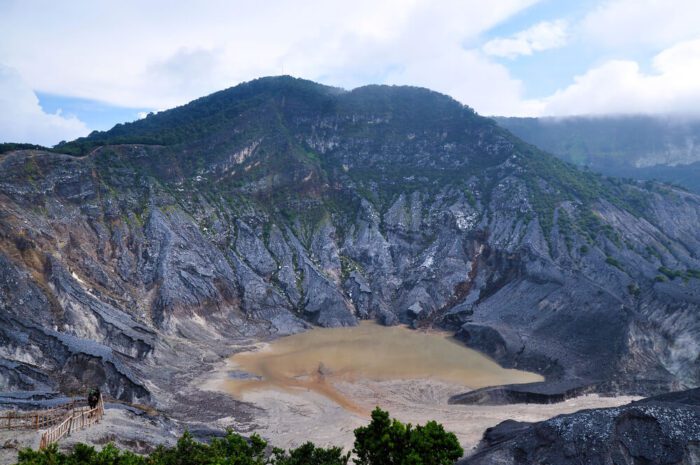
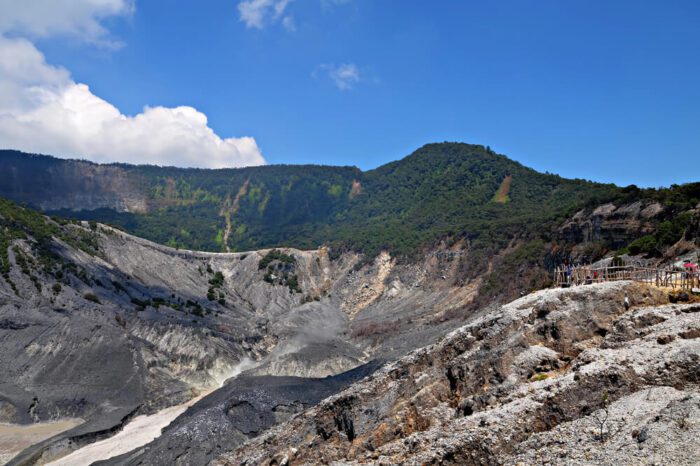
If you visit Tangkuban Perahu, there are plenty of fun things to do. The main highlight is definitely Kawah Ratu, the biggest and most famous crater there. You can take a relaxing walk along the crater rim, enjoy the view of rising sulfur smoke, and snap some dramatic panoramic photos—especially if you come in the morning when the mist is still hanging low.
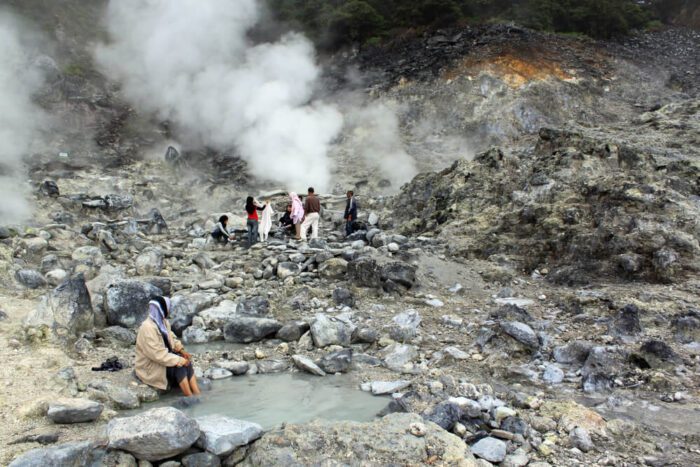
If you’re into a bit of adventure, you can also try trekking to Kawah Domas. There, you can soak your feet in natural hot springs or even boil eggs in the bubbling mud.
There’s also Kawah Upas, another crater located not far from Kawah Ratu. It’s smaller, but has its own charm with a quieter and more peaceful atmosphere. However, access to Kawah Upas is usually more restricted and not always open to the public for safety reasons, so it’s best to check the latest info or ask local staff before heading there. If you’re lucky, you’ll get to see a different side of the volcano’s activity that’s just as fascinating.
Don’t miss the chance to try some local snacks like grilled corn, warm bajigur (a traditional Sundanese coconut milk drink), and fresh strawberries sold around the tourist area. The cool mountain air makes these treats taste even better. Near the entrance, you can also shop for unique local souvenirs, from wooden crafts and miniature boats to local tea and herbal oils.
Backindo Tip: If you’re not planning to buy anything, it’s best not to make eye contact at all, as that’s often seen as an invitation to engage. But if you do catch their eye, simply smile and politely say “no, thank you” before continuing on your way.
Practical Info
Tangkuban Perahu is open daily from 8 AM to 5 PM. Entrance fees for foreign visitors are around IDR 200,000 on weekdays (around USD 13) and IDR 300,000 on weekends (approx. USD 19)—significantly more expensive than many other attractions in the area, so it’s good to factor that into your budget.
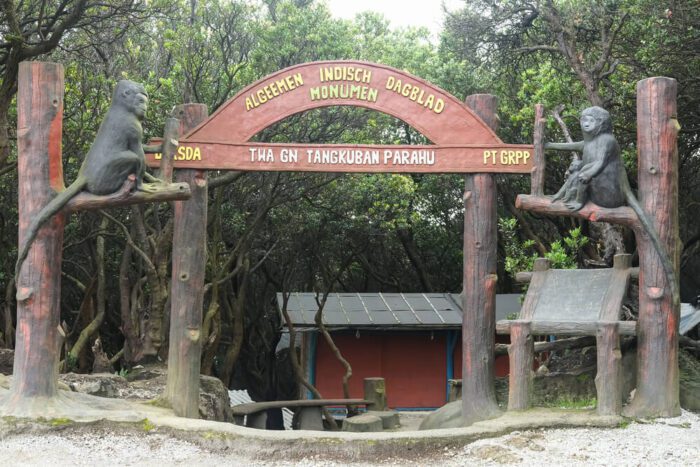
If you’re only planning to explore Kawah Ratu, set aside about 1–2 hours to enjoy the views and take photos at a relaxed pace. However, if you’d like to continue on to Kawah Domas, plan for 3–4 hours so you won’t feel rushed and can fully enjoy the short trek and unique volcanic landscape.
The best time to visit is early in the morning, when the area is still quiet, the mountain air feels fresh, and the views are usually much clearer. If you’re traveling during the rainy season, be prepared for limited visibility—thick fog and volcanic steam can easily cover the crater, leaving you staring at a wall of white mist. Whenever possible, try to visit on a clear day to make the most of your experience.
For more detailed tips, you can read this article: Java in the Rainy Season: A Practical Guide for Travelers.
Don’t forget to bring a jacket (it gets cold), comfortable walking shoes, a mask if you’re sensitive to the sulfur smell, and cash for snacks or souvenirs. The sulfur can be quite strong, so if you have respiratory issues, take extra care. Drones aren’t allowed without permission, and if a local guide offers you their service, always ask the price upfront to avoid any surprises later.
Backindo Tip: Don’t forget to bring enough water. If you start feeling dizzy from the strong sulphur smell, rinse your mouth with water and spit it out—it can help ease the discomfort.
How to Get There
If you’re traveling from Bandung, the journey to Tangkuban Perahu takes about 30–45 minutes by car or motorbike, depending on traffic. Public transportation in this area isn’t very reliable, so your best options are renting a motorbike or hiring a local driver.
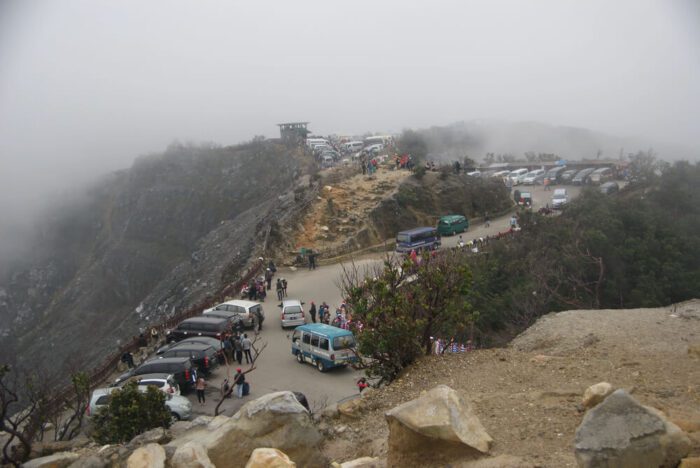
The road is fully paved but quite winding, and traffic can get heavy—especially on weekends and as you approach the main tourist area. I’d personally avoid peak midday hours if possible. An early start not only means clearer views at the crater, but also a much smoother ride up the mountain.
Backindo Tip: If bargaining isn’t your thing, it’s easier to hire a local driver or join one of the day-trip packages that include fun nearby stops around Tangkuban Perahu.
The parking area at Tangkuban Perahu is conveniently located close to the entrance. From there, it’s only about a 5–10 minute easy walk to Kawah Ratu. Super convenient if you’re traveling with family—just step out of the car, take a short stroll, and you’re already at the crater viewpoint.
If you’re planning a vacation with your kids, we have a helpful guide article: How to Travel Java with Kids: Tips from an Expat Mom.
Where to Stay
Tangkuban Perahu makes a perfect morning trip from Bandung, so technically you don’t need to stay overnight. But if you’re planning to explore more of the cool and scenic Lembang area, it’s worth spending a night nearby. To make it easier, here are the options grouped by area:
Stay in Lembang
If you want fresh mountain air and a slower pace, Lembang is the perfect base. It also means shorter travel time in the morning and fewer traffic headaches—especially on weekends.
Lembang Asri Resort offers a peaceful retreat surrounded by greenery, with a cool climate and beautiful views. For something more unique and playful, Rumah Stroberi Organic Farm & Family Lodge combines simple accommodation with a fun farm experience, where you can actually pick strawberries straight from the garden. And if you’re traveling on a tighter budget, Hotel Asia Express is a practical and affordable option.
Stay in Bandung
If you prefer more variety, food options, and city energy, Bandung is a great choice.
Grand Mercure Bandung Setiabudi delivers a comfortable four-star experience with full facilities. For something modern and budget-friendly, Bobobox Bandung offers stylish capsule-style rooms that are popular with young travelers.
Backpackers will also find plenty of affordable guesthouses and hostels around Dago or Braga Street, with social vibes and easy access to cafés and street food.
Is Tangkuban Perahu Worth a Visit?
Tangkuban Perahu isn’t a hidden gem—it’s popular, a bit touristy, and yes, pricier for foreigners. But it’s still worth the visit for the unique experience of standing on the rim of an active volcano without needing to climb for hours. Go early, bring a jacket, and take it for what it is: a cool, surreal slice of West Java that’s just a short ride away from the city.
Continue reading: