
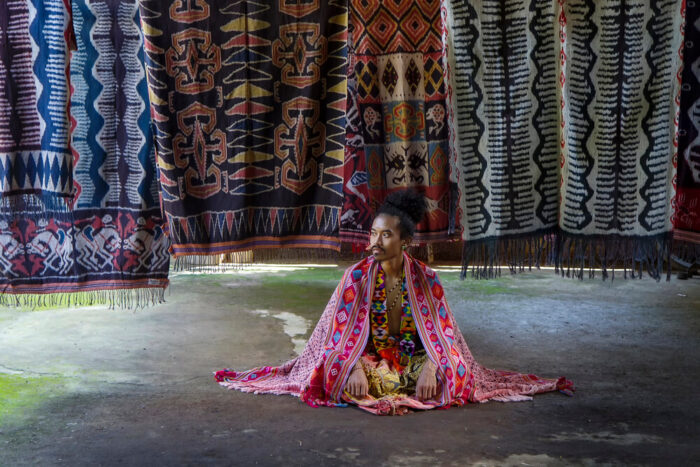
If you visit Sumba, you’ll probably see colorful handwoven fabrics hanging in villages, markets or small roadside galleries. Many of the best-known Sumba textiles are called ikat, and they are one of the most important traditional crafts on the island.
Ikat is a type of traditional weaving. The pattern is not printed on the finished fabric. Instead, the threads are tied, dyed and dried before they are woven. Only when the weaving begins does the design slowly appear in the cloth.
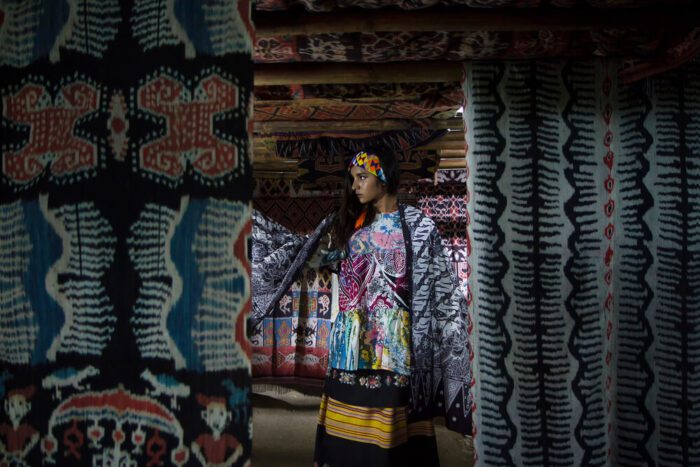
In Sumba, this process can take weeks or months. It’s time-consuming especially when the textile is made by hand with natural dyes. Some pieces are made for daily use or sale, while others are connected to ceremonies, family identity, social status and local beliefs.
This guide explains what Sumba ikat is, why it matters, how it fits into the wider tradition of Sumba textiles, where to see weaving in Sumba, how much ikat usually costs, and how to buy it in a more respectful way.
What Is Sumba Ikat?
Sumba ikat is a traditional handwoven textile from Sumba Island in East Nusa Tenggara. It is also one of the best-known Sumba textiles, and woven cloth has long been used in important moments such as weddings, funerals, family exchanges and traditional ceremonies.
Some textiles show status. Some carry motifs connected to animals, ancestors, protection, fertility or power. Others are simpler pieces made for everyday use or for people who want to bring home something from the island.
How Is Ikat Made in Sumba?
At first, it may look like a patterned cloth, but the way it is made is very very different. With ikat, the pattern is created on the threads before the weaving starts. This is the “ikat” part — the word ikat means “to tie” in Indonesian.
The process begins with bundles of white threads. The weaver first decides where the pattern should appear, then tightly ties selected sections of the threads so the dye cannot reach them. After that, the threads are soaked in dye. The exposed parts absorb the color, while the tied parts stay white.
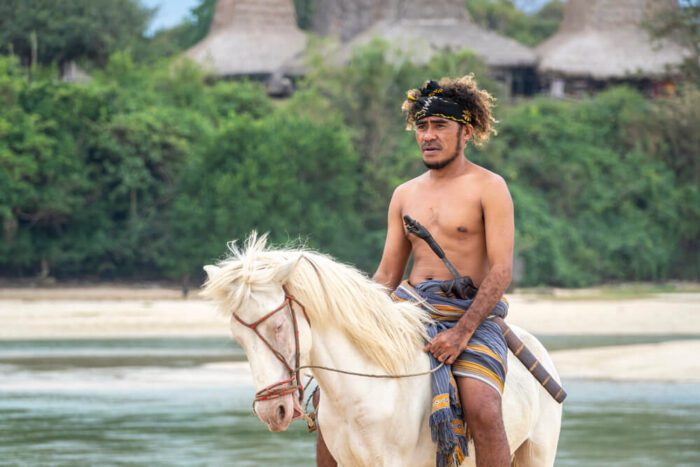
Then the threads are dried, untied, and tied again in different places before being dyed in another color. This can be repeated several times, depending on how many colors and details the design needs. Step by step, the threads become multi-colored, even before they are woven into fabric.
Only after this long preparation are the threads arranged on a loom. As the weaving begins, the motif slowly appears line by line. This is why handmade ikat often has slightly blurred edges. The pattern comes from the dyed threads themselves.
In Sumba, the whole process is usually done by women and passed down through families. A small piece may take weeks. A larger textile with natural dyes and more detailed motifs can take several months or even longer.
Natural Dyes in Sumba Ikat
Natural dyes are one of the reasons traditional Sumba ikat can take so long to make. The threads are not dyed just once. They may be soaked, dried, tied again and dyed several times before the final colors are ready.
In traditional weaving, colors often come from plants, roots, bark, leaves or other local materials. The exact recipes can vary by village and weaver, but some common natural dye sources include:
- Kayu kuning / yellow wood — used for yellow tones
- Mangrove bark (kulit kayu bakau) — used for brown tones
- Indigo leaves (daun nila) — used for blue tones
- Mengkudu / noni root (akar mengkudu) — used for red tones
- Candlenut (kemiri) — used in the oiling process
These natural colors usually look softer, earthier and less bright than chemical dyes. And that’s why cloth made with natural dyes may not look as “perfect” or vivid as a modern synthetic textile.
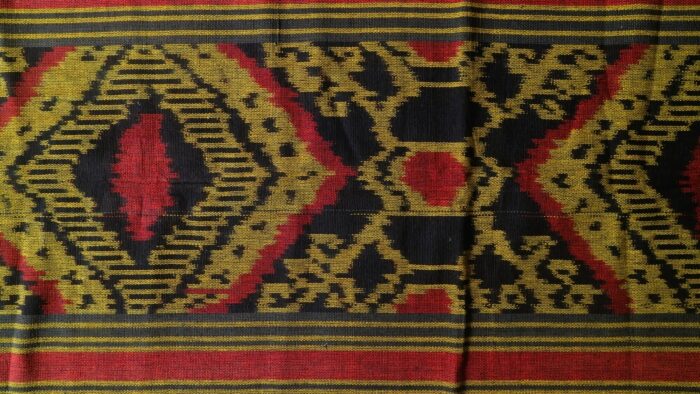
Chemical dyes are common today too. They make the process faster, the colors stronger and the final textile more affordable.
Backindo Tip: If you want a small souvenir or a decorative piece, chemically dyed ikat can still be a good option. But if you are looking for a more traditional piece, natural dyes are usually part of what you are paying for.
Common Motifs in Sumba Weaving
Many Sumba textiles use patterns inspired by animals, people, plants and traditional beliefs. You may see horses, birds, roosters, crocodiles, deer, human figures or geometric shapes.
The meaning can vary depending on the area, family or weaver, so it is better to ask locally for the details. But in general, the motifs are not random. They often reflect status, protection, ancestry, fertility or the natural world around Sumba.
Horses, for example, are strongly connected with Sumbanese identity and prestige. Roosters and birds often appear in traditional designs, while human figures may refer to ancestors or community life. Some shapes are more symbolic and may not be easy to understand without someone local explaining them.
Backindo Tip: To understand the meaning behind ikat, we recommend visiting villages with a local guide.
Hinggi and Lau: Two Types of Sumba Cloth
When looking at Sumba textiles, you may hear words like hinggi and lau.
A hinggi is a large rectangular cloth traditionally worn by men. It can be wrapped around the waist or draped over the shoulder, especially during ceremonies. East Sumba hinggi often have bold motifs and can also be used as wall hangings.
A lau is a tube-shaped skirt traditionally worn by women, similar to a sarong. Some lau are decorated with additional weaving, embroidery, beads or shells, depending on the region and style.
East Sumba vs West Sumba Textiles
You can find weaving traditions across the island, but the style is not the same everywhere.
East Sumba is especially known for larger textiles with bold figurative motifs. You may see horses, birds, human figures and other symbolic designs. Many of the most famous Sumba ikat pieces come from this part of the island.
West Sumba textiles often use more geometric patterns, stripes or darker tones. This does not make them less valuable. The style is simply different.
Where to See Ikat Weaving in Sumba
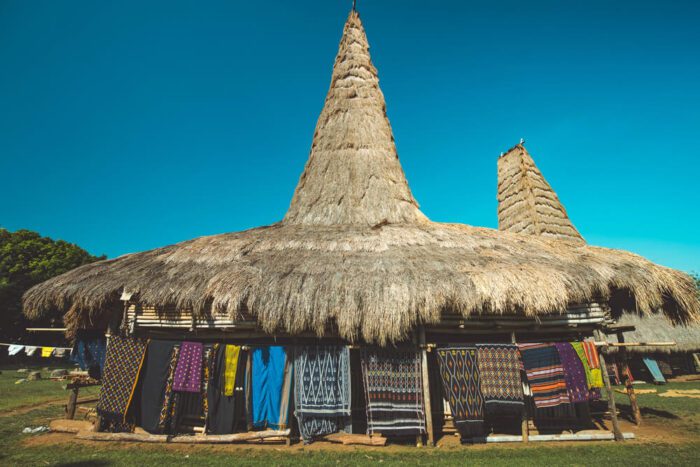
The easiest way to see ikat weaving is to visit a weaving village, small gallery or traditional village where textiles are still made or sold.
Some places are easy to visit independently, especially near Waingapu. Others are better with a local guide, especially if you want more explanation or want to avoid turning the visit into only a quick shopping stop.
Prailiu Village, East Sumba
Prailiu is one of the easiest places to see ikat weaving in Sumba. The village is located close to Waingapu, so it works well as a short cultural stop when you are staying in East Sumba.
You can usually see traditional houses, textiles displayed for sale, and women weaving or preparing thread. Because Prailiu is easy to reach, it is a good first stop if you want to understand Sumba ikat without traveling far from town.
It is also a practical place to buy textiles, especially if you do not have time to visit more remote weaving communities.
Rende Village, East Sumba
Rende is better known for its traditional houses and megalithic tombs, but textiles are also part of the cultural landscape here.
A visit to Rende works well if you want to combine weaving with traditional architecture, local history and a better sense of how textiles fit into wider Sumbanese culture.
Lambanapu and Villages Around Waingapu
Around Waingapu, villages such as Lambanapu are also associated with weaving and natural dye traditions. These places may feel less set up for visitors than Prailiu, so the experience can depend more on local contacts, timing and whether someone can introduce you properly.
If you are genuinely interested in the process, ask your driver or guide in advance. Otherwise, a visit may easily become just a quick stop to look at finished textiles.

Kaliuda, East Sumba
Kaliuda is often mentioned as an important ikat-producing area in East Sumba. It is especially interesting if you are serious about textiles and want to go deeper than the most accessible village stops.
For casual travelers, Kaliuda may be less convenient than Prailiu. But if ikat is one of the reasons you are visiting Sumba, this place should be on your list.
Planning to visit traditional villages on the island? Read 7 Traditional Villages in Sumba Worth a Visit.
Practical Tips
What to Expect When Visiting a Weaving Village
A weaving village is not a museum or a factory. In many places, weaving happens around homes, verandas or small family spaces.
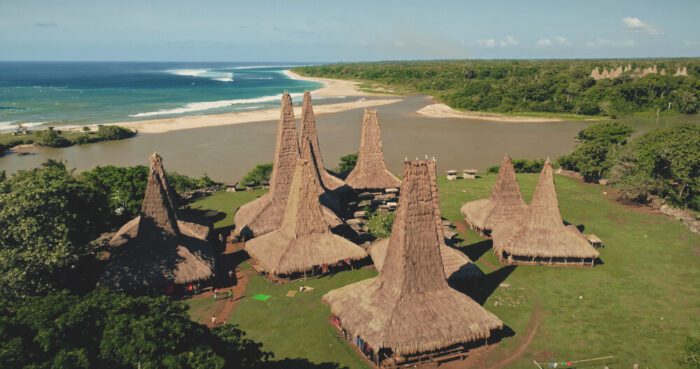
Which means that sometimes you will see the full process, but sometimes you will only see women weaving or finished textiles for sale. It all depends on the day, the village and what stage of the work the weavers are in.
Do not expect everything to be staged for visitors. Also, do not expect every weaver to speak English or explain the full process. If you want deeper context, visit with a local guide.
Backindo Tip: A respectful visit usually means asking before taking close-up photos, not touching textiles without permission, bringing cash if you want to buy something, and not bargaining too aggressively.
Also, don’t forget to dress modestly. You do not need formal clothes, but covered shoulders and respectful clothing are a good idea when visiting traditional, and conservative, villages.
Before traveling to Sumba, read our Sumba Travel Guide: All You Need to Know.
Where to Stay If You Want to Visit the Villages
If you’re looking for a comfortable place to stay in Sumba, here are a few great options to consider. Praikamarru Guest House is a top pick if you want to stay close to Prailiu Weaving Village—it’s super convenient, located just about 5 minutes by vehicle from the village center.
If you prefer something quieter and more stylish, Casa Kandara is also a great choice, though it’s a bit farther, around 15–20 minutes to Prailiu. For a more beachside vibe, Kambaniru Beach Hotel and Resort and Padadita Beach Hotel are both excellent—offering beautiful sea views and only about 10–15 minutes by vehicle to Prailiu. That way, you can enjoy the local weaving culture without staying far from your accommodation.
How Much Does Sumba Ikat Cost?
First of all, prices vary a lot.
A small souvenir piece can cost only a few hundred thousand rupiah. A larger handwoven cloth may cost several million rupiah. High-quality natural-dyed pieces, especially large hinggi or ceremonial textiles, can be much more expensive.
As a rough guide:
- small souvenir pieces: around IDR 100,000–500,000
- medium decorative pieces or simpler sarongs: around IDR 500,000–1,500,000
- larger handwoven ikat: around IDR 1,500,000–5,000,000+
- high-quality natural-dyed or ceremonial pieces: several million rupiah or more
These prices are only approximate. The final price depends on size, age, material, whether the cotton is handspun, whether natural dyes were used, how complex the motif is, and where you buy it.
If the price feels high, ask about the process. How long did it take? Are the dyes natural? Who made it? Is it handwoven or machine-made? A good seller should be able to explain at least some of this.

How to Tell if Sumba Ikat Is Handmade
Not every textile sold as ikat is the same quality. If you want to buy a handmade Sumba piece, it helps to look closely at the fabric and ask a few simple questions.
First, check whether the pattern is woven into the cloth rather than printed on top. Handmade ikat often has slightly soft or blurred edges because the design comes from dyed threads, not from a machine print.
It is also normal to see small irregularities. Handmade textiles usually do not look perfectly identical from edge to edge, and that is part of what makes them different from mass-produced fabric.
If natural dyes were used, the colors may look softer and less bright than synthetic ones. That does not mean the textile is lower quality. In many cases, it means the process was slower and more traditional.
Before buying, ask who made the piece, how long it took, whether the dyes are natural, and whether the cloth is fully handwoven. If the seller cannot explain much and the price seems unusually low, it is worth being more careful.
Where to Buy Sumba Ikat
You can buy Sumba ikat in weaving villages, small local galleries, and sometimes in markets around the island. The best option depends on what kind of piece you are looking for.
Buying directly from a weaver or village gallery is usually the most meaningful option if you want to support the maker more directly. It also gives you a better chance to ask about the process, the origin of the cloth, and the meaning of the motifs.
Small galleries can be a good option if you want more choice in one place or if you do not have time to visit several villages. Prices may be higher, but the selection is often easier to compare.
Markets can be interesting too, especially for smaller souvenir pieces. But quality and origin may be less clear, so it helps to ask more questions before buying.
If you are looking for a serious handmade piece rather than a cheap souvenir, do not choose only by price. Ask about the dyes, the weaving process, and where the textile comes from.
Can You Join a Weaving Workshop?
In some places, yes, but it usually needs to be arranged in advance.
You may be able to sit at the loom for a short try, see how the threads are prepared, watch how motifs are tied, or learn how natural dyes are made. Even a short demonstration can help you understand the work behind one piece of cloth much better than only seeing the finished textile.
If textiles are one of your main interests in Sumba, ask your guide to arrange a slower visit rather than only stopping at a village for photos.
Looking for a reliable driver in Sumba? Send us a message at hello@backindo.com and we’ll happily share our trustworthy contacts.
Is Sumba Ikat Worth Buying?
A real Sumba ikat is one of the most meaningful things you can bring home from the island. It is beautiful, useful and closely connected to local culture. But it should not be treated like a cheap souvenir.
If your budget is limited, choose a smaller piece directly from a weaver or local gallery. If your budget allows, a natural-dyed handwoven textile can be a valuable piece of craftsmanship that took serious time and skill to make.
FAQ About Sumba Ikat
What is Sumba ikat?
Sumba ikat is a traditional handwoven textile from Sumba, Indonesia. The pattern is created by tying and dyeing the threads before they are woven, rather than printing the design onto finished fabric.
Where can I see ikat weaving in Sumba?
Prailiu Village near Waingapu is one of the easiest places to see ikat weaving. Other places include Rende, Lambanapu, Kaliuda and weaving communities in West Sumba or Kodi, depending on your route.
Is Sumba ikat expensive?
It can be. Small souvenir pieces may be affordable, but large handwoven textiles, especially those made with natural dyes, can cost several million rupiah. The price reflects the time, skill, material and cultural value behind the piece.
How do I know if Sumba ikat is handmade?
Look at whether the pattern is woven into the cloth rather than printed on top. Handmade ikat often has slight irregularities, softer edges in the pattern and a more textured feel. You can also ask about the maker, dyes and weaving process.
Are natural dyes better?
Natural dyes are more traditional and usually take longer to prepare, so textiles made this way are often more expensive. Chemical-dyed textiles are also common and can be a more affordable option, especially for smaller souvenirs.
Can I take photos in weaving villages?
Usually yes, but always ask first, especially before taking close-up photos of weavers, homes or children. Some people are happy to be photographed, while others may not feel comfortable.
Is it better to buy from a market or directly from a weaver?
Buying directly from a weaver or village gallery usually gives more support to the maker. Markets can be interesting too, but quality and origin may vary, so ask more questions before buying.
Continue reading: