
When traveling around Java, staying connected is much easier than most people expect — especially compared to more remote islands in Indonesia. Whether you’re navigating busy cities, booking transport, or planning your next stop, the internet is generally reliable and widely available. But like anywhere in Indonesia, it’s not perfect everywhere.

In this guide, we’ll break down what you can realistically expect, where things might not work as smoothly, and how to stay connected without unnecessary hassle throughout your trip.
WiFi on Java – better than you might expect
WiFi is widely available across Java and is often the first thing you’ll rely on after arriving. Almost every accommodation — from budget homestays to mid-range hotels — includes it, and in cities it’s usually fast enough for maps, messaging, or light work. You’ll also find WiFi in many cafés and restaurants, especially in larger places like Jakarta or Yogyakarta.
Even airports offer free WiFi, although it doesn’t always work perfectly. At Soekarno-Hatta airport in Jakarta, for example, the signal often doesn’t reach the Grab or Gojek pick-up points, which can be frustrating right after landing. The good news is that airport staff are usually helpful and may assist you with connecting or even ordering your ride.
So while WiFi is easy to find and works well in many situations, relying on it entirely isn’t always practical.
How good is mobile coverage actually?
Once you move beyond WiFi, mobile data becomes the most reliable way to stay connected across Java.
There are several providers in Indonesia, but the difference between them is noticeable:
- Telkomsel → best coverage across the island, especially outside cities
- XL Axiata → cheaper, but weaker in rural areas
- Indosat (IM3) → decent balance, but less consistent than Telkomsel
If you want the least hassle while traveling, Telkomsel is the safest choice.
With Telkomsel, you’ll have signal in most cities, towns, and many rural areas. 4G is widely available and reliable for everyday use like maps, ride-hailing apps, and bookings. In larger cities such as Jakarta, Bandung, or Surabaya, you may also come across 5G in some areas.
Speeds can drop outside urban zones, but for normal travel needs, it’s still more than enough. Just don’t expect to be online absolutely everywhere.
Where you might lose connection
Even with good overall coverage, there are still places where being offline is completely normal.
Mountain areas, waterfalls, and volcano regions — especially places like Baturaden or Ijen — often have weak signal or none at all, particularly once you get deeper into national parks. In smaller or more remote villages, the connection can also be unstable or drop unexpectedly.

So before heading somewhere less connected, it’s worth taking a few minutes to:
- download Google Maps offline
- screenshot tickets and bookings
- save your accommodation location
- download offline translation
Internet on trains
Trains deserve a special mention because they’re one of the best ways to travel across Java. When it comes to the internet, it’s a bit mixed. Most economy trains don’t offer WiFi, but some newer or more premium (luxury) trains do include onboard WiFi, which is a nice bonus. The connection can vary, but it’s often good enough for basic browsing or messaging.
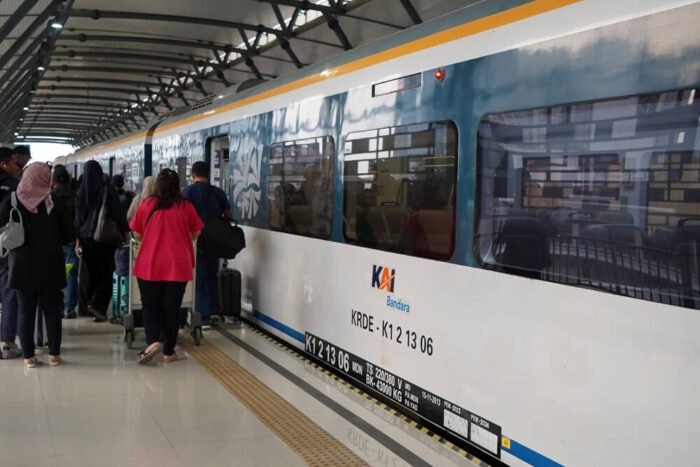
Mobile signal is available along much of the route, although it may drop occasionally in rural areas, tunnels, or mountainous sections. Overall, if you have local mobile data, you can stay connected for most parts of the journey.
Do you actually need mobile data (and what’s the best option?)
While WiFi is widely available, relying on it alone can be limiting — especially when you’re moving around. Mobile data makes everything much easier.
Apps like Grab, Gojek, Google Maps, or translations all depend on it. Unless you’re traveling very slowly and planning everything in advance, having your own data will save you time and small frustrations.

eSIM vs Local SIM in Java
You have two main options:
- eSIM is the easiest — you can set it up before arrival and start using it immediately. It’s slightly more expensive, but completely hassle-free. Some nice options are eSIMs from Airalo or Klook.
Backindo Tip: Thinking about getting an eSIM from Airalo? Use the code NEWTOAIRALO15 at checkout to get 15% off if you’re a new user.
- Local SIM card is the most common choice. The best provider is Telkomsel, which offers the strongest and most reliable coverage across Java. Their app also makes it easy to top up data anytime.
You can buy a Telkomsel tourist SIM card at the airport (around 160,000 IDR), which is the most convenient option. Cheaper alternatives are official Telkomsel stores (Grapari), but they might be located quite far from your hotel, which usually isn’t worth your time, especially right after arriving in Jakarta.
IMEI Registration for Local SIM Cards
To buy a SIM card in Indonesia, you’ll need your passport, as every SIM must be registered under your name.
For most travelers, the SIM will work without any issues for up to 90 days. After that, Indonesia’s IMEI regulations come into play. If your phone isn’t registered in the system, your SIM card will stop working on your device — and buying another one won’t fix it.
In practice, this means:
- Short trips (under 3 months) → no problem, everything works normally
- Longer stays → you’ll need to register your phone’s IMEI
IMEI registration can be done at the airport on arrival. If you’re planning to stay longer, it’s best to take care of it right away — otherwise you may lose access to mobile networks after the initial period. Read Guide to SIM Cards & IMEI Registration in Indonesia.
How much data do you really need?
You don’t need a huge amount of data to travel comfortably. If you’re mainly using maps, transport apps, and basic browsing, you’ll probably go through around 1–2 GB per week. Adding social media or occasional video calls brings it closer to 3–5 GB per week. If you’re working remotely or using hotspot regularly, then 10 GB or more is a safer choice.
Most tourist SIM packages in Indonesia offer between 10–50 GB, which is more than enough for typical travel, so you don’t need to overthink it too much.
Working remotely on Java
If you plan to work while traveling, don’t rely on WiFi alone. Get a larger mobile data package (ideally Telkomsel) so you can use hotspot as a backup whenever needed.
Choose better-rated accommodation with reliable WiFi, and make sure there are cafés or coworking spots nearby where you can move if the connection drops. The key is simple: always have at least one backup option.
Internet on Java in a Nutshell
Internet on Java is generally reliable, easy to access, and much better than many travelers expect — especially compared to more remote parts of Indonesia. While WiFi is widely available, having mobile data (ideally with Telkomsel) makes everything significantly smoother, especially when you’re on the move. Just keep in mind that signal can still drop in mountains and remote areas, but overall, staying connected on Java is simple — and one less thing to worry about during your trip.
Continue reading :