
Are you dreaming of seeing wild orangutans in their natural habitat? In my previous guide, I took you to Bukit Lawang in North Sumatra, where we explored the wild orangutan population. Now, I’m excited to take you on a journey to Borneo, specifically to Tanjung Puting National Park, one of the best places to spot these incredible creatures.
In this guide, I’ll walk you through everything you need to know about visiting Tanjung Puting to see wild orangutans – from the best ways to spot them, to what you can expect on your tour, an overview of the costs, and helpful tips for making your adventure as smooth and meaningful as possible.

About Tanjung Puting National Park
Deep in the heart of Central Kalimantan lies Tanjung Puting National Park, a 400,000-hectare haven for wildlife. This UNESCO-protected sanctuary is best known for its Bornean orangutans (Pongo pygmaeus), but the park is home to a rich array of rare species, including proboscis monkeys, hornbills, and even saltwater crocodiles.
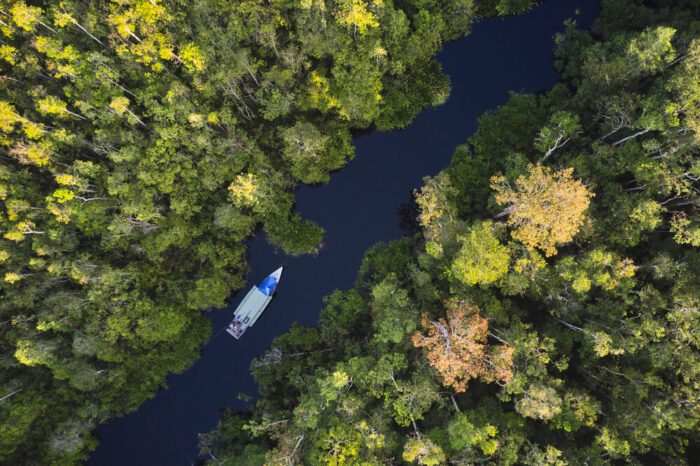
A visit here is more than just a wildlife experience—it’s a journey into the wild, where you’ll travel aboard a traditional klotok, a wooden boat that doubles as a floating lodge. As you glide along the Sekonyer River, keep your eyes peeled for orangutans swinging through the trees, monkeys calling from the canopy, and birds soaring overhead. It’s an immersive experience where you’re not just observing nature but becoming part of it.
The park is not just a beautiful escape—it’s a conservation hub. One of its most iconic places, Camp Leakey, has been at the forefront of orangutan rehabilitation for decades. Managed by the Indonesian government and conservation partners, Tanjung Puting continues to protect and preserve one of the world’s most vital ecosystems.
What to Do and See in Tanjung Puting
Sailing the Sekonyer River
To see orangutans in their natural habitat, you’ll take a klotok, a traditional wooden boat, along the Sekonyer River in Tanjung Puting National Park. These boats are designed with two levels: an open-air upper deck where you can relax and enjoy the views as you cruise through the forest. The boat is the best spot for orangutan sightings, as you’ll often see them perched on riverside trees or swinging through the branches.
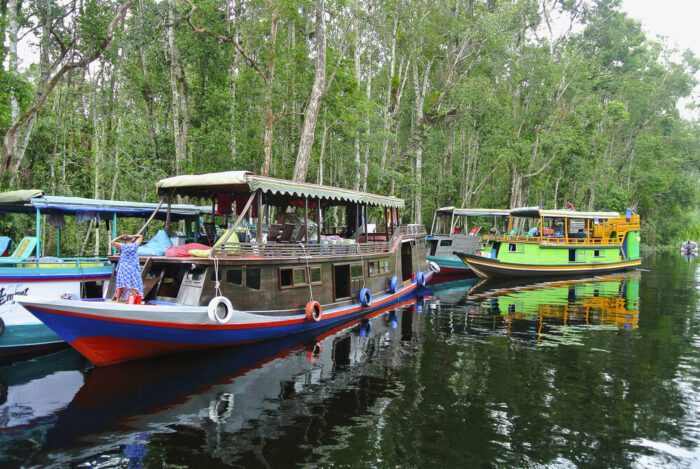
You’ll also spend the night aboard the klotok. The crew will set up sleeping areas on the upper deck, with mattresses, mosquito nets, and blankets, allowing you to fall asleep under the stars while listening to the sounds of the jungle.
Most tours last between 3 to 4 days, depending on the route and which conservation camps you visit along the river. The longer you spend on the klotok, the more you’ll get to experience the wilderness of Kalimantan up close.
See Wild Orangutans in Tanjung Puting
Beyond river cruising, Tanjung Puting also offers short jungle treks. With the guidance of park rangers, you can follow forest trails between stations, giving you a chance to observe the dense ecosystem more closely.

Trekking is usually light to moderate, but the humidity and muddy paths add a layer of adventure. Along the way, you might spot wild pig-tailed macaques, gibbons calling from the treetops, or giant ants marching across the forest floor.
Backindo Tip: Bring long-sleeved clothing, insect repellent, and a waterproof jacket to stay comfortable during the trek.
Visiting the Camp Leakey
The best way to see orangutans here is by visiting one of the park’s rehabilitation and feeding stations, such as Camp Leakey—the most renowned sanctuary in Tanjung Puting. Established in 1971 by primatologist Dr. Biruté Mary Galdikas, Camp Leakey has played a vital role in orangutan research, rescue, and rehabilitation for over five decades.
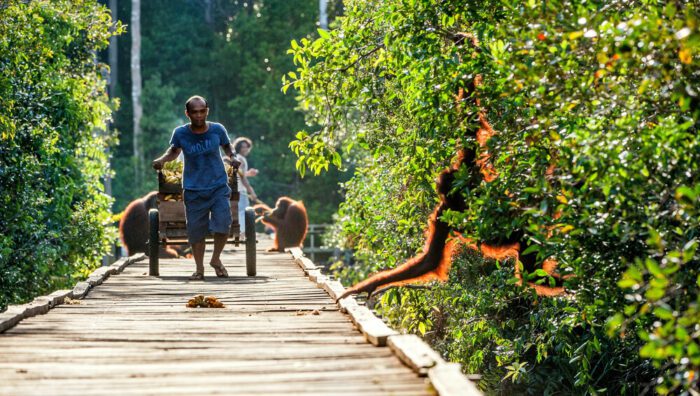
These sites offer a balance between supporting orangutan conservation and providing meaningful wildlife encounters for visitors. Feeding times are scheduled—usually once or twice a day—and during these moments, orangutans often emerge from the treetops to collect bananas and milk placed by forest rangers. But always remember: the orangutans here are wild and free. They come and go on their own terms.
In addition to Camp Leakey, there are other feeding stations you can visit within the park, including Tanjung Harapan and Pondok Tanggui, each offering its own unique atmosphere and orangutan encounters.
How to Get to Tanjung Puting
To reach Tanjung Puting, you’ll need to fly to Sultan Iskandar Muda Airport in Pangkalan Bun, Central Kalimantan. There are daily flights from major cities like Jakarta and Surabaya. Once you land, a local guide—usually arranged in advance as part of your tour—will pick you up and take you to Kumai Port, the starting point for your journey along the Sekonyer River.
The drive from Pangkalan Bun to Kumai is short and easy, taking only about 20 to 25 minutes. From there, your adventure on the ‘klotok’ begins.
Flying within Indonesia? Read Guide to Domestic Flights in Indonesia.
How Much Does a Trip to Tanjung Puting Cost?
Seeing orangutans in Tanjung Puting can range from a budget-friendly day trip to a more luxurious river cruise experience—it all depends on your travel style. Compared to jungle trekking in other areas, the Tanjung Puting experience is unique: around 80% of your time is spent on a boat, sailing through the rainforest for 3 to 4 days. This slow-paced, immersive journey can feel almost like a mini cruise.
For a multi-day ‘klotok’ tour, expect to spend around USD 500 or more, depending on the type of boat and level of comfort. These packages typically include your park entrance fee, meals during the tour, guide service, and even a donation toward orangutan conservation. But it’s always a good idea to confirm what’s included with the tour operator beforehand.
Backindo Tip: For the best experience, make sure to check offers on various platforms such as GetYourGuide or Viator.
If you’re short on time, some companies offer day tours by speedboat that still reach Camp Leakey. These tours usually cost between USD 160–200, making it a more affordable option while still offering a glimpse of the orangutans and the park’s beauty.
Best Time to See Orangutans in Tanjung Puting
The best time to explore Tanjung Puting National Park is during the dry season, from April to September. During these months, the weather is more predictable, river conditions are smoother, and jungle trails are easier to navigate. It’s also the fruiting season in many parts of the forest, which means orangutans are more active and easier to spot as they search for food in the wild.

Visiting in the rainy season, such as in November or December, is still possible, but be prepared for muddy and slippery trails, especially if you plan to do any jungle trekking. The rain can also make boat travel less comfortable. That said, the rainforest is always beautiful year-round—just make sure you pack accordingly.
What to Pack for Tanjung Puting
Here are a few essentials to keep you comfortable and prepared during your trip to the jungle:
- Insect repellent and long-sleeved clothing – To protect yourself from mosquito bites, especially during jungle treks. Lightweight, breathable fabric works best.
- Comfortable, non-slip sandals or shoes – You’ll be walking on muddy, uneven trails, so sturdy footwear is a must.
- Raincoat or umbrella – Weather in the rainforest can change quickly. Better to be safe (and dry)!
- Personal medication – Bring any medicines you may need, as you’ll be far from pharmacies once you’re deep in the park.
Backindo Tip: You don’t need to pack lots of food—your guide will usually provide plenty of meals throughout the trip.
Where to Stay Around Tanjung Puting
Accommodations near Tanjung Puting are mostly centered around Pangkalan Bun, offering a range of options from simple guesthouses to more comfortable eco-lodges. If you’re looking for a comfortable place to stay not too far from Tanjung Puting National Park, check out Mercure Pangkalan Bun or Arsela Hotel. Both are mid-range options with decent facilities and a great location.
If you’re looking for something more comfortable, Rimba Eco-Lodge it’s offer a more nature-focused experience with better facilities, perfect for those who want to enjoy the jungle while still having comfort.
Other Places to See Orangutans in Borneo
While Tanjung Puting is one of the most iconic destinations in Indonesia, the Malaysian part of Borneo offers several other incredible locations where you can see wild or semi-wild orangutans in their natural habitat:
- Kinabatangan River (Sabah, Malaysia) – A great place to spot wild orangutans while cruising along the river, often alongside pygmy elephants, proboscis monkeys, and other wildlife.
- Danum Valley Conservation Area – One of the oldest and most pristine rainforest reserves in Sabah. Wild orangutans are frequently sighted here, often high up in the canopy.
- Sepilok Orangutan Rehabilitation Centre – Located near Sandakan, this world-famous center helps rehabilitate orphaned or rescued orangutans and gradually reintroduces them to the wild.
- Semenggoh Nature Reserve (Sarawak) – A key rehabilitation center near Kuching where semi-wild orangutans often return during feeding times, especially in fruiting seasons.
Backindo Tip: If you’re traveling with a visa on arrival (single-entry visa) for Indonesia, keep in mind that crossing into Malaysia will void your visa. If you plan to return to Indonesia later for the remainder of your trip or to catch your international flight, you may need to apply for a new visa or consider alternative entry options.
Looking for more? Check out my other articles for a broader perspective: