
As a tropical archipelago stretching from Sabang to Merauke, Indonesia is home to an incredible variety of wildlife. Among its natural wonders, the presence of unique and endemic animals attracts travelers who are eager to experience the wild side of the archipelago. From komodo dragons in the east to orangutans in the rainforests of Kalimantan, seeing these animals in their natural habitats can be an unforgettable experience.
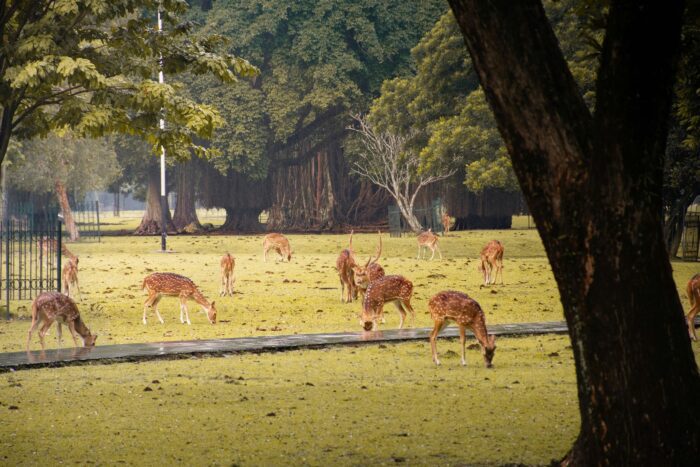
However, not all animal attractions are created with the same ethical standards. Behind their popularity, some places still prioritize profit over animal welfare. In this guide, I’d like to help you understand the different types of animal attractions in Indonesia, learn how to enjoy them responsibly, and choose destinations that treat animals with the care and respect they deserve.
Understanding Animal Attractions in Indonesia
When it comes to animal tourism in Indonesia, don’t let the labels fool you. Terms like “conservation area” or “wildlife park” often sound more ethical than they really are. So before you visit any animal-focused spot, it’s worth doing some homework.
Zoos & Animal Parks
Zoos are popular—especially with families—but the quality varies widely. Some still have tiny cages, poor hygiene, and not happy animals. If animal welfare matters to you, choose places with better standards—or skip the zoo altogether and support wildlife in more natural ways.
Conservation & Rescue Centers
Some centers do great work helping rescued animals. But others—like certain sea turtle spots—prioritize tourists over the animals. Hatchlings are sometimes held back or released early for the sake of a “fun” experience. Look for smaller, low-tourism centers that follow proper conservation guidelines.
Wildlife in the Wild
Seeing animals in their natural habitat—like orangutans in Bukit Lawang or Komodo dragons in Rinca—is always a highlight. But it comes with responsibility: no feeding, no touching, and always listen to the local rangers or guides. This is where you see animals as they’re meant to be.
Behind the Scenes of Indonesia’s Animal Attractions
Indonesian Elephants
Indonesia is home to two endangered subspecies of Asian elephants: the Sumatran elephant and the Bornean elephant, found in parts of Sumatra and East Kalimantan. Though smaller than their African cousins, these elephants play a vital role in maintaining the health of forest ecosystems. Sadly, widespread deforestation has destroyed much of their natural habitat, forcing wild elephants into human areas and often leading to serious conflict.
In other parts of the country, many elephants are still exploited for unethical tourism—elephant rides, circus-like shows, and “breakfast with elephants” experiences in Bali, where elephants do not naturally live.
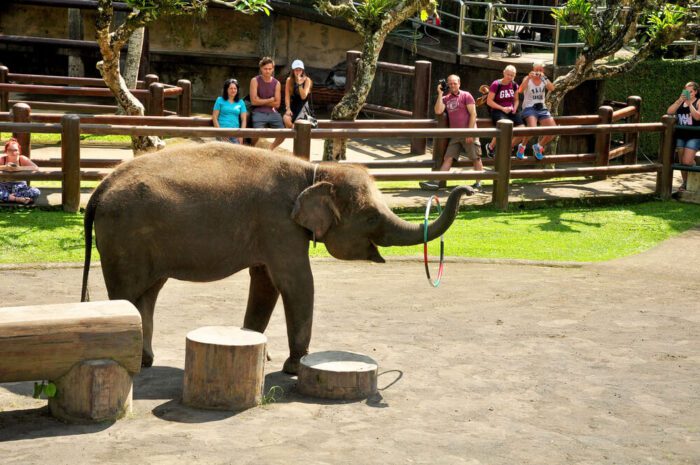
What many travelers don’t see is the harsh training behind the scenes. To make elephants obedient and perform on command, they are often subjected to harsh physical and psychological conditioning from a young age, a practice known as “the crush.”
These elephants may spend their lives in chains, confined to small enclosures, and forced into unnatural routines. Over time, such treatment can lead to severe physical injuries, stress-related behaviors, and a shorter lifespan.
What to do instead:
- Choose experiences that allow elephants to behave naturally—like feeding, bathing in rivers, and walking at their own pace.
Tigers
Indonesia is home to the Sumatran tiger, the country’s only remaining tiger subspecies, and it is now critically endangered. Smaller than other tigers (around 2.4 meters in length), Sumatran tigers have darker orange fur, tighter stripes, and a more rounded face. They are territorial animals that roam alone within their home range, but deforestation and habitat fragmentation often force them to travel further to find food or mates. This brings them dangerously close to human settlements, leading to conflict, illegal capture, or even death.
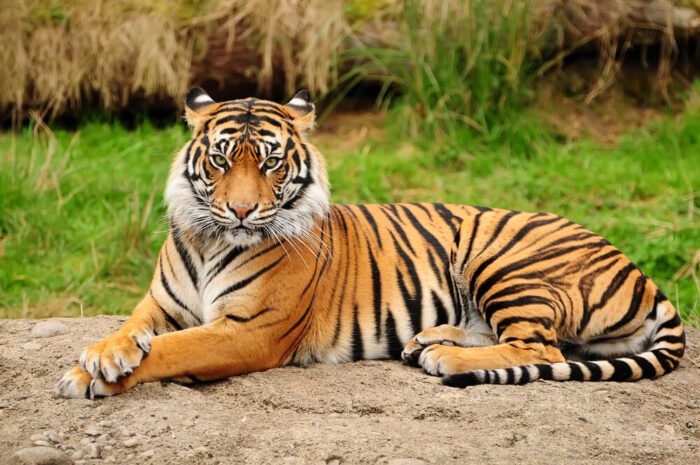
Outside their natural habitat, many tigers are exploited in unethical tourism and entertainment. They’re used in circus shows, confined in small cages, or displayed as photo props—often with metal collars around their necks, while cubs are handled by visitors.
Tigers that appear “calm” or sleepy in these situations are often sedated or drugged to suppress natural behaviors like growling or moving. This not only hides signs of stress and suffering, but also causes serious physical and mental harm over time.
What to do instead:
- Visit responsibly managed national parks or wildlife sanctuaries where tigers live in natural habitats without being forced into interactions.
- Choose guided wildlife tours that follow natural tracking paths, where animals are not baited, sedated, or staged for photos—so you can observe them ethically and respectfully.
Orangutans
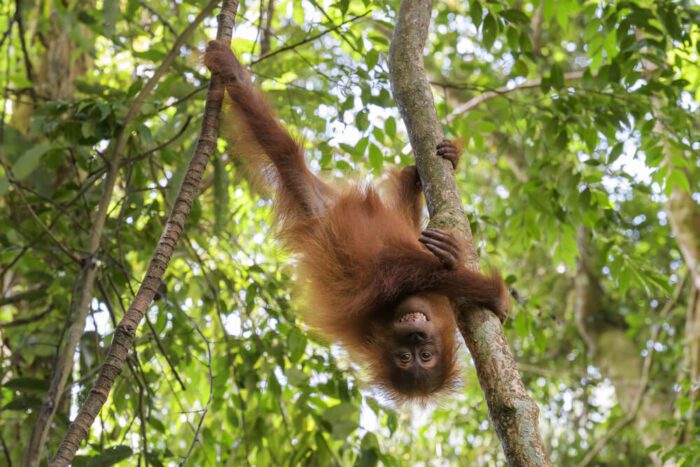
Orangutans are one of Indonesia’s most iconic and intelligent animals, found only in the rainforests of Sumatra and Borneo (Kalimantan). These great apes share around 97% of their DNA with humans, which is why their expressive eyes and human-like behavior leave such a lasting impression. In the wild, orangutans live mostly in trees, using their long arms to swing through the forest canopy while feeding on fruits, leaves, and insects.
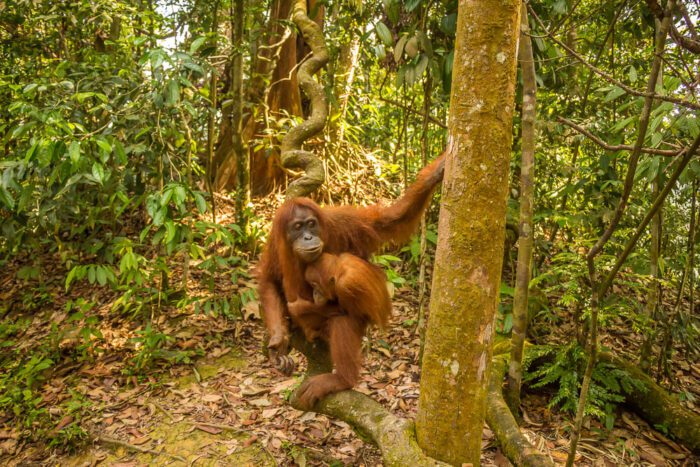
Sadly, orangutans are critically endangered due to deforestation, habitat loss, and illegal wildlife trade. Palm oil plantations, logging, and forest fires have destroyed huge areas of their natural habitat. As a result, many orangutans are displaced or captured—sold as exotic pets or used in unethical tourist attractions.
Some facilities allow visitors to hold baby orangutans, take selfies, or watch them perform tricks—activities that may look fun but often involve cruelty behind the scenes, such as separating infants from their mothers and training them through harsh methods.
What to do Instead:
- Visit responsible rehabilitation centers like those in Bukit Lawang (Sumatra) or Tanjung Puting National Park (Borneo), where orangutans are free to roam in semi-wild or protected areas.
- Choose trekking experiences with guides who follow strict no-contact policies and emphasize conservation education.
- Never support places that offer selfies or touching sessions with orangutans—it’s a clear sign the animals are being exploited, not helped.
Civet Cats (Luwaks)
Civet cats, known locally as luwak, are nocturnal mammals native to Indonesian forests. They’re best known for their surprising connection to coffee: kopi luwak, a high-priced coffee made from beans that have been eaten and naturally fermented through a civet’s digestive system. While it may sound exotic and harmless, the high commercial value of this coffee has led to widespread exploitation.
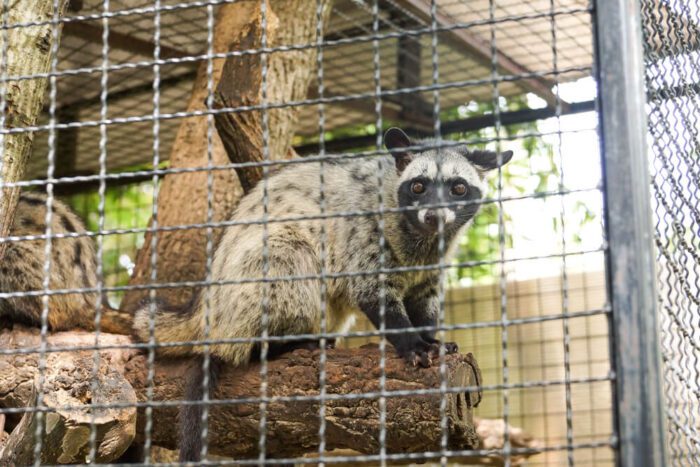
To meet demand, many civets are kept in small wire cages, often in poor conditions, and force-fed coffee cherries in unnatural quantities. This is harmful to their health, disrupts their natural behaviors, and causes significant stress. Civets are solitary and wild by nature—they are not suited to captivity, and breeding them in farms is extremely difficult. Yet the image of these “cute” animals in cages continues to be promoted for tourist photos and marketing.
What to do instead:
- Look for kopi luwak from certified humane sources that ensure civets are not kept in cages and live in enriched, natural environments such as in Bukittinggi.
- Better yet, support wild-grown or sustainably farmed coffee where no animals are involved—enjoying your cup without contributing to animal cruelty.
Sea Turtles
Indonesia is home to six out of the world’s seven sea turtle species, making it one of the most important countries for turtle conservation. These majestic creatures come ashore to nest on many Indonesian beaches—from the green turtles that visit Java, to the hawksbill and leatherback turtles spotted in Bali, and others found in places like Karimunjawa, the Thousand Islands, and Derawan. Sadly, despite their protected status, sea turtles in Indonesia still face serious threats.
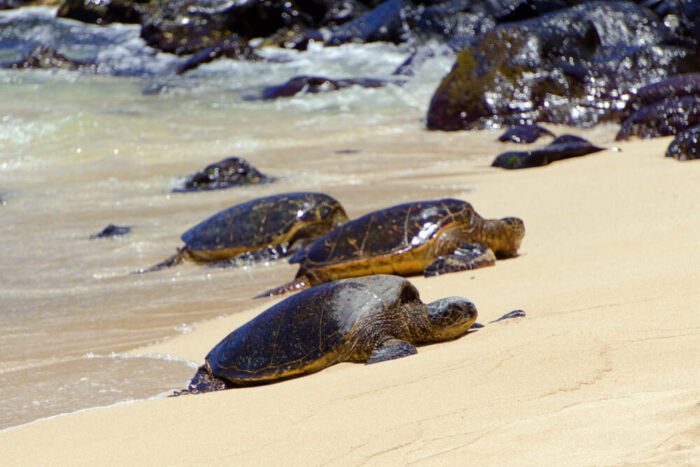
Human-turtle conflict has been ongoing for decades. In Bali, turtle meat was once widely consumed, sparking public debates, while in Kalimantan, turtle eggs are still illegally traded for food. Even in conservation settings, you might see turtles kept in small tanks, baby turtles being passed around by tourists, or worse, turtles tangled in plastic waste or abandoned fishing nets.
What’s the problem?
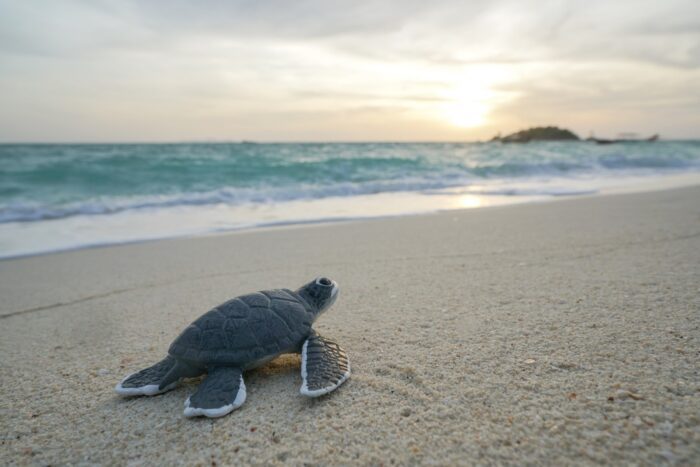
Baby turtles are often kept in crowded tanks for days or even weeks, just so tourists can release them on demand. While the release may seem like a kind act, handling hatchlings too often can disrupt their instincts, making it harder for them to survive in the wild. Some centers also release them during the day—right under the hot sun—when the sand becomes scorching. This can burn the soft bellies of the baby turtles, causing injuries before they even reach the ocean.
It’s not just hatchlings that suffer. In some places, adult sea turtles are kept in small concrete pools as tourist attractions. They’re often fed inappropriate food like cabbage or raw meat, which can harm their digestive systems. These turtles are usually stressed, and in crowded conditions, they may start biting each other’s flippers or shells. As a general rule: if you see a full-grown turtle being kept in a shallow tank for display or selfies, it’s best to steer clear. No matter how “eco” the place claims to be, that setup is a red flag.
What to do instead:
- Visit licensed conservation programs that allow you to join ethical release events—usually held in the early morning or evening when the sand is cooler and safer for baby turtles.
- Avoid holding or feeding turtles unless under supervision from trained staff, using appropriate food and minimal handling.
- Best practice: turtles should be released into the ocean with as little human contact as possible, giving them the best chance to thrive in the wild.
Dolphins
Indonesia’s calm coastal waters—like North Bali, Karimunjawa, and Teluk Kiluan in Lampung—are home to wild dolphins, and spotting them in their natural habitat is an unforgettable experience for many travelers. Watching dolphins swim freely in the ocean is a magical sight. However, as dolphin-watching tours grow in popularity, ethical concerns are also on the rise.
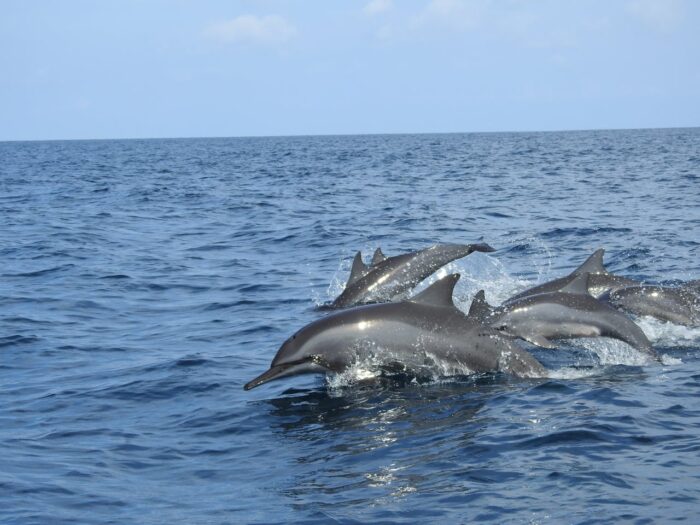
In many places, tour boats get too close, speed toward the pods, or even encourage tourists to jump in the water to swim with or ride the dolphins—which is highly stressful and unnatural for the animals. The loud noise of boat engines can also scare and disorient dolphins, disrupting their communication and migration patterns.
What to do instead:
- Choose responsible tours that observe dolphins from a respectful distance, follow strict marine guidelines, and turn off the engine when near dolphins.
- Never attempt to ride or swim directly toward dolphins—let them approach you, not the other way around, and always prioritize their well-being over the perfect photo.
Whale Sharks
In the waters around East Flores, Maumere, Lembata, and Alor, whale sharks—the largest fish in the world—can often be seen gliding peacefully through the sea. These gentle giants are naturally drawn to areas rich in plankton, their primary food source. In some parts of the Flores–Lombok corridor, interactions between locals and whale sharks have become part of daily life. But unfortunately, tourism has turned these encounters into unethical wildlife experiences.
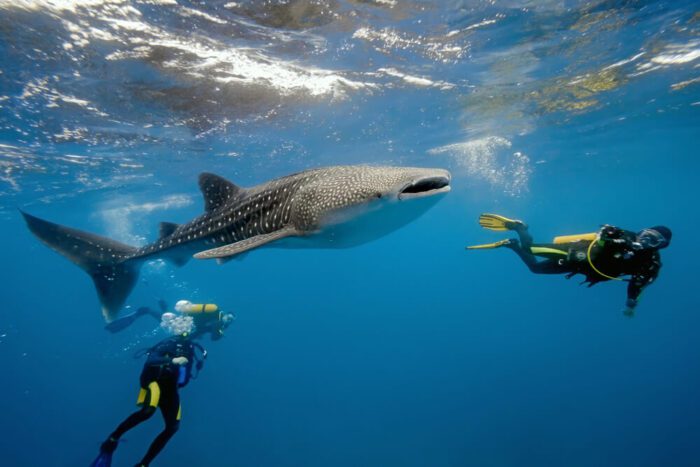
Many tour boats lure whale sharks by throwing food into the water to get them closer to tourists. This might seem harmless, but it disrupts the whale sharks’ natural behavior, causing them to rely on boats instead of foraging for plankton.
Tourists often crowd the animals, jumping into the water too close, which can cause stress and even physical injury. The increasing number of boats and swimmers also interferes with their natural movements and feeding patterns.
What to do instead:
- Choose eco-friendly tours that observe whale sharks from a safe distance, follow strict no-feeding policies, and limit time spent near the animals.
- Respect guidelines, avoid crowding, and never touch or chase whale sharks—they’re wild animals, not performers.
Starfish (Sea Stars)
Starfish, or sea stars, are commonly found in shallow coastal waters across Indonesia and come in various beautiful shapes and colors. Because of their striking appearance, they often attract the curiosity of beachgoers. However, many people make the mistake of picking them up for photos, unaware that this simple act can be deadly.
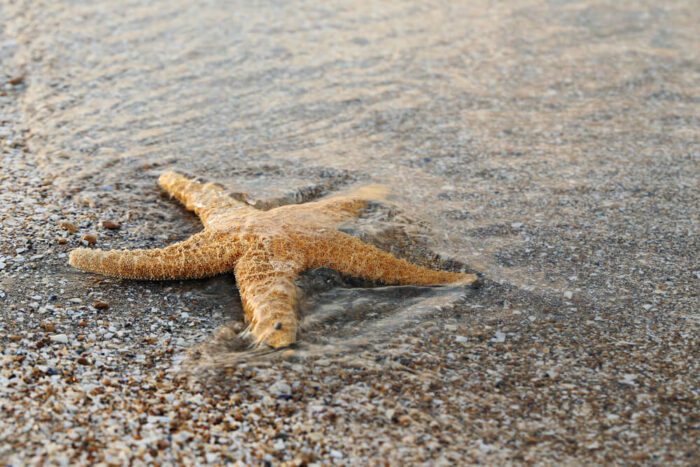
Starfish are marine animals that must stay underwater to survive. Removing them, even for a few seconds, can cause internal damage, dehydration, and eventually death—even if they appear fine at the time. Their bodies are not built for air exposure, and the stress of being handled by humans only worsens their chances of survival.
What to do instead:
- Enjoy starfish from a distance, whether while snorkeling, walking in shallow water, or observing from the shore.
- Never lift a starfish out of the water, even if someone says it’s okay “just for a moment.” Admiring them in their natural habitat is not only safer for them—it’s a better experience for you, too.
Note: As beautiful as marine life may be, please don’t touch or pick up sea creatures. Even gentle contact can remove protective layers, cause stress, or introduce harmful bacteria. The same goes for coral—what may look like a rock is often a living organism. Touching or stepping on coral can kill it, and broken reefs take years or even decades to recover. The best way to protect ocean life is to observe with care and leave everything exactly as you found it.
Ethics of Seeing Animals in Indonesia

Watching animals can be a beautiful and memorable experience, but it’s important to do it ethically. Here are a few things to keep in mind:
- Avoid places that allow visitors to ride animals, such as elephants or dolphins.
- Be cautious of animal shows that entertain by forcing animals to behave unnaturally.
- Choose places that provide animals with enough space and freedom to move naturally.
- Respect their living space, especially in the wild. Don’t touch, feed, or make loud noises that could disturb them.
- Support places that focus on education and conservation—not exploitation.
- Pay attention to your guide. Not all guides understand or respect ethical animal practices. If they say things like “It’s okay, go ahead” just to please you, don’t follow their lead.
- Observe animals from a respectful distance so you don’t disrupt their natural behavior.
Backindo Tip: Sometimes, locals may not fully understand the ethics of wildlife encounters. Just to keep you happy, they might say things like “It’s okay, you can touch it,” or “Sure, you can ride it.” In moments like these, it’s important to stay mindful and respectful of the animals. Your awareness makes all the difference.
Recommended Ethical Animal Attractions in Indonesia
Here are a few places known for their strong commitment to animal conservation and ethical wildlife education:
Tanjung Puting National Park, Central Kalimantan
One of the most authentic wildlife experiences you can have in Indonesia is at Tanjung Puting National Park in Central Kalimantan. Here, you’ll explore the Sekonyer River by klotok (a traditional wooden boat) over several days, passing through dense jungle and spotting wild orangutans swinging through the trees.

You can also visit Camp Leakey, a well-known rehabilitation center dedicated to the protection and study of these great apes.
Bukit Lawang, North Sumatra
Just like Tanjung Puting, Bukit Lawang is also a sanctuary for orangutans—this time, the critically endangered Sumatran orangutans. Located in North Sumatra, Bukit Lawang offers a different kind of adventure.
To see these animals in the wild, you’ll need to go on a jungle trek that can take anywhere from 6 to 7 hours, or even several days, depending on your route and luck. It’s a physically challenging but incredibly rewarding experience that brings you closer to Indonesia’s unique wildlife in their natural environment.
For more details, read the full article: How to See Wild Orangutans in Bukit Lawang (Sumatra).
Komodo National Park, East Nusa Tenggara
This is the only place on Earth where you can see komodo dragons in their natural habitat. These ancient reptiles have survived for millions of years, and today they still roam freely across Komodo Island. The indigenous people of the island have lived alongside them for generations, and the island has become one of Indonesia’s most iconic nature destinations.
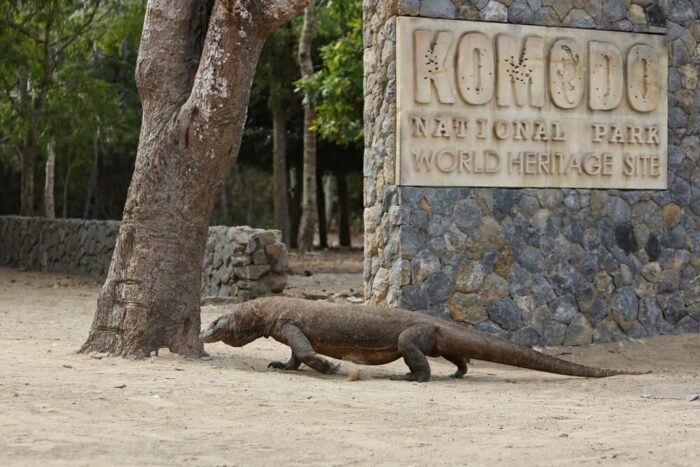
You can observe komodos in the wild, but it’s important to keep a safe distance and always follow the ranger’s instructions. Komodos have toxic saliva and can be dangerous if provoked. As long as you stay calm, avoid disturbing them, and respect your guide’s directions, the experience will be both safe and unforgettable.
Baluran National Park, Banyuwangi
If you’re looking for an African-style safari experience without leaving Indonesia, head to Baluran National Park in East Java. Often referred to as the “Little Africa of Java,” this park is home to herds of deer, wild banteng (Javanese cattle), primates, and green peafowls. You can explore the savannah-like landscape and watch groups of banteng running freely across the open grasslands.

Visitors can take a safari-style drive through the park, and there’s also a hidden gem: Bekol Beach. It’s a quiet coastal spot within the park where you might spot deer wandering near the shore. Just remember to keep the noise down—sudden sounds or shouting can stress the animals and disrupt their natural behavior.
Watching Wild Dolphins Swim in the Ocean
Seeing dolphins swim and leap in the wild is a rare and exciting experience. One of the most well-known places to witness this in Indonesia is Lovina Bay in Bali. However, during peak holiday seasons, the area can get crowded with tourists, many of whom hope to get very close to the dolphins—often unintentionally disturbing them.
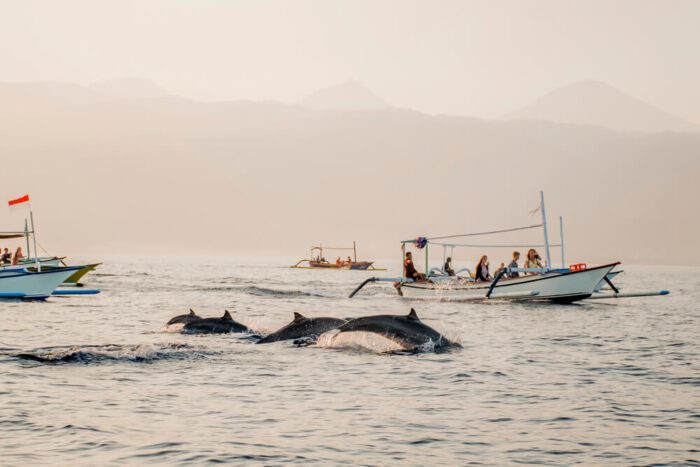
If you plan to visit Lovina, it’s important to talk with your boat captain beforehand. Ask them to keep a respectful distance and turn off the engine when near the dolphins, so the animals won’t feel threatened or stressed.
Read more: Lovina Guide: What to See and How to Watch Dolphins Responsibly.
For a calmer and more peaceful dolphin-watching experience, consider Kiluan Bay in Lampung, Sumatra. It’s less crowded and offers a more natural setting to enjoy the sight of wild dolphins in open waters.
Final Thoughts
Seeing animals up close can open our eyes and hearts to the importance of protecting nature. But the experience becomes far more meaningful when we choose ways that do not harm them. In Indonesia, there is still a lot of work to be done when it comes to wildlife protection—but by being a mindful and responsible traveler, you can help support positive change.
So before visiting places that offer animal attractions, take a moment to read reviews, learn about who manages them, and make sure they have clear conservation goals. The choices you make today could help protect wildlife for the future.
Continue reading :