
Ende Village is one of the traditional Sasak villages you can visit in South Lombok. It sits not far from Kuta Lombok and Lombok International Airport, so it is easy to add as a short cultural stop when you are already exploring the area.
Most travelers hear about Sade Village first. Sade is larger, more famous and appears in many South Lombok tours. Ende is smaller and less busy, which can make the visit feel more personal — especially if you take time to speak with a local guide instead of only walking through quickly.
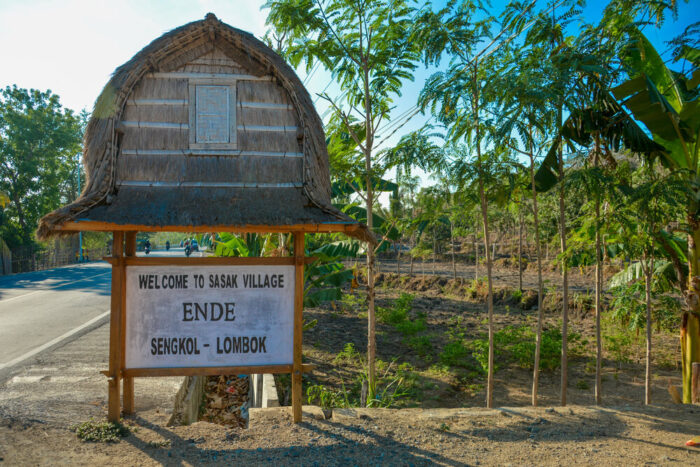
This does not mean Ende is untouched by tourism. The village is prepared for visitors, and you can expect local guiding and woven textiles for sale.
In this guide, we’ll cover what to expect in Ende Village, how it compares with Sade and Sukarara, how donations and local guides work, how to get there, and whether it is worth adding to your Lombok itinerary.
About Ende Village
Ende Village is a traditional Sasak settlement in Sengkol, Southern Lombok. It lies close to the main route between Lombok International Airport and Kuta Lombok, which is one reason it works well as a short stop.
The Sasak are the indigenous people of Lombok. Most Sasak people are Muslim today, but local culture also carries older Hindu and animist influences that appear in house design, marriage customs, rituals, weaving and community life.
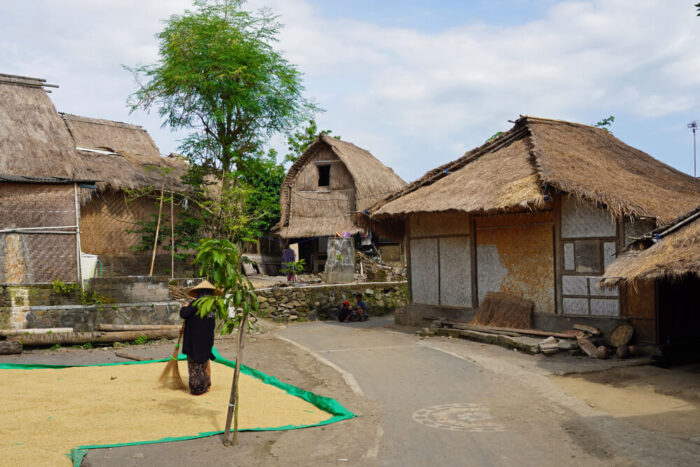
Ende is much smaller than Sade, with around 30 families living in the village. It only started gaining more attention as a visitor village around 2011, and this smaller scale is one of the reasons the visit can feel more direct and less busy.
Daily life in Ende is still closely connected to farming and weaving. Men often work in the fields or help maintain the houses, while women are closely associated with weaving. Children go to school outside the village, and after school, some practice traditional dance or Gendang Beleq, a traditional Sasak musical performance.
What to Expect During Your Visit
A visit to Ende Village usually takes around 30 minutes to 1 hour. That is enough time to walk through the village, enter a traditional house, see weaving and hear the basic explanation of Sasak customs.
Because the village is small, the visit depends a lot on the person guiding you. Without explanation, you may only see houses, textiles and a few daily activities. With a good guide, the same details start to make more sense: why the entrances are low, how the house is divided, why weaving matters, and how family life is organized.
Traditional Sasak Houses: Bale Tani
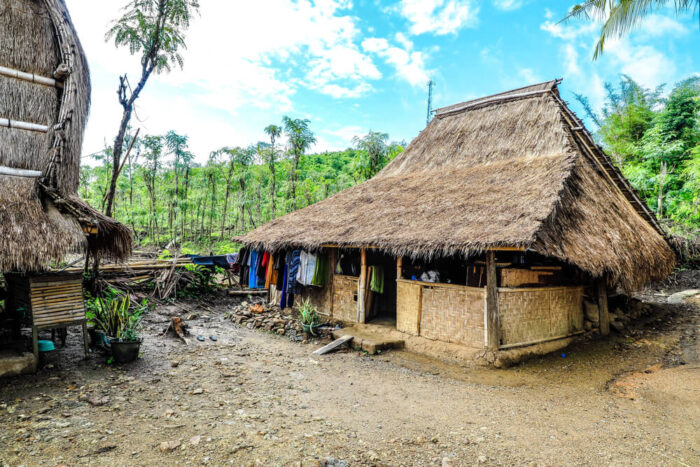
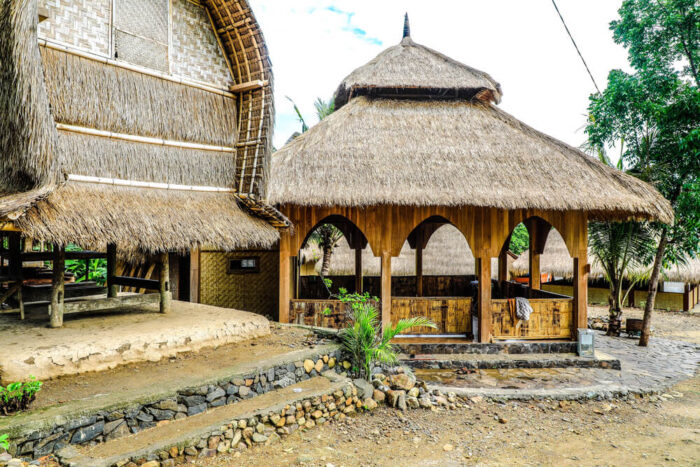
One of the main reasons to visit Ende Village is to see the traditional Sasak house, known as Bale Tani.
These houses are built from natural materials such as bamboo, wood and thatched grass. The entrance is low, so you usually need to bow slightly when entering. Local guides often explain this as a small sign of respect when stepping into someone’s home.
The floor is one of the details most visitors remember. Traditionally, it is made from clay or compacted earth and treated with buffalo dung. It may sound unusual at first, but the method helps keep the floor firm, less dusty and easier to maintain. Plus it helps reduce mosquitoes.
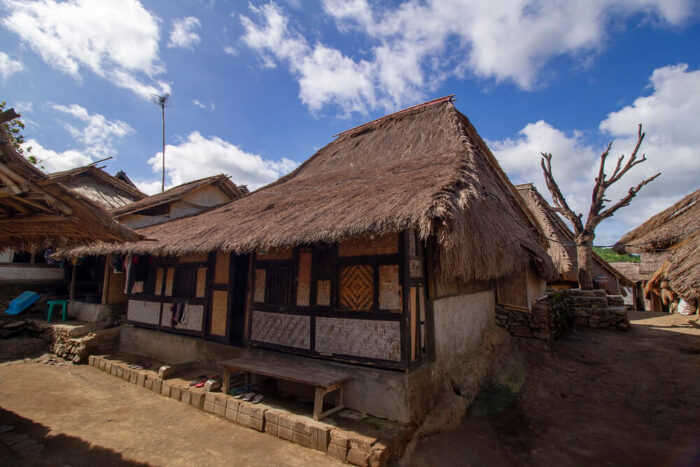
Inside, the house is divided into different areas. The front part is usually used for receiving guests or as a sleeping space for men, while the inner area is used as the kitchen and sleeping space for women. This layout gives more privacy inside a small traditional home.
Women traditionally clean the floor once a week using a mixture of clay and buffalo dung. Outside some houses, you may also notice seashells hanging. These were traditionally used as simple lighting at night, although electricity is now available in the village.
Daily Life and Weaving in Ende Village
Ende still keeps a strong connection to farming and weaving. Men usually work in the fields, while women weave at home or near their houses.
For Sasak women, weaving is an important skill. Girls are traditionally expected to learn how to weave before marriage, so it is not only a craft for visitors.
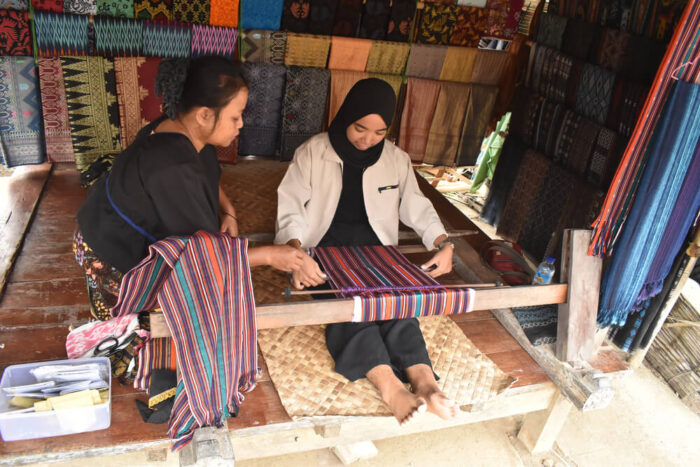
The process starts with preparing the thread and can include dyeing it with natural materials. The finished fabrics are used locally or sold as handmade products such as woven sarongs or scarves.
What makes Ende interesting is not only the weaving itself, but the way it sits inside everyday life. You may see someone cooking, children practicing dance, people sitting together outside a house, or women weaving between other household tasks.
Backindo Tip: If weaving is your main interest, consider also visiting Sukarara Village. Ende gives you a broader look at Sasak village life, while Sukarara is more focused on weaving and Lombok textiles.
Local Interaction and Traditional Activities
Because Ende is small, the visit can feel more personal than a quick stop in a larger tourist village. Depending on the timing, you may see children practicing traditional dance, hear Gendang Beleq music, or notice people gathering around the houses.
These things are not guaranteed every day. Ende is still a real village, not a performance schedule. But if something is happening while you are there, it can give the visit more texture.
You may also be offered local coffee, sometimes mixed with rice, or hear about nginang, the tradition of chewing betel leaves. You can accept it if you are comfortable, but it is completely fine to say no politely.
The Merariq Marriage Tradition
Also in Ende, one of the unique customs is Merariq, usually translated into English as “bride kidnapping.”
The English phrase sounds dramatic, but in Sasak culture, Merariq is part of a recognized marriage process. Traditionally, a man takes the woman he wants to marry, often at night and without informing her family first. After that, both families communicate and negotiate the next steps and the legal side of the wedding.
If the couple is discovered before the process is properly handled, the man may be required to pay a fine. Marriages within the wider community, including between cousins, have also traditionally helped keep family ties close.
Your guide may explain this tradition in more detail during the visit. It is one of those topics where local context matters.
Other Things to Know About Life in Ende
Ende Village is traditional, but it is not frozen in time. Children go to school outside the village, electricity is available, and you may notice mobile phones, lights or other modern details mixed with older architecture.
Tourism is now one way for local families to earn income, especially through guiding and textile sales. That is why it helps to bring small cash, pay fairly for someone’s time, and remember that the houses you see are still part of people’s everyday lives.
Things to Know Before Visiting Ende Village
There is usually no fixed entrance fee for Ende Village. Visits are generally donation-based, and if you go with a local guide, tipping separately is common.
Because the system is not always clearly explained, ask at the beginning how the visit works. You can ask whether there is an entrance fee, whether the visit is donation-based, and whether the guide expects a fixed fee or a tip at the end.
Bring small cash in rupiah. For a short visit, a donation of IDR 20,000–50,000 should be enough. If a guide spends time explaining the houses, weaving, family structure and traditions, it makes sense to pay more than only a symbolic amount.
A local guide is worth considering here. Ende is small, and the village can feel very quick if you walk around without context. A good guide helps explain the small details that are easy to miss.
Is Ende Village Touristy?
Ende is less touristy than Sade, but it is still a village that receives visitors. You should expect a guided walk, donation requests and woven textiles for sale.
The difference is mostly in scale. Sade is larger, more famous and often receives more tour groups. Ende is smaller, so the visit can feel calmer, especially outside busy hours.
Learn more in our other guide Sade Village, Lombok: Sasak Culture & Fees.
This makes Ende a good choice if you want a Sasak village experience but prefer a quieter setting. Just do not expect a completely untouched village with no tourism influence. Ende has adapted too, only in a softer and smaller way.
If you have time for only one short cultural stop near Kuta, Ende can be a good alternative to Sade. If you want the most established and easiest tourist stop, choose Sade. If you care most about textiles, choose Sukarara.
How to Get to Ende Village
Ende Village is located in Sengkol, Pujut District, Central Lombok. It is about 8 km from Lombok International Airport and around 10 km from Kuta Lombok.
There is no useful public transport for most travelers, so the easiest ways to visit are:
- private driver
- scooter
- organized South Lombok tour
From Kuta Lombok, the ride usually takes around 15–20 minutes by scooter or car, depending on where you start. The road is fairly straightforward, so Ende is easy to combine with other places in South Lombok.
If you ride a scooter, make sure you are comfortable riding in Lombok and have the correct license and insurance.
Where to Stay Around Ende Village
Most travelers do not stay directly in Ende Village. The most practical base is Kuta Lombok, about 15–20 minutes away by car or scooter. This is where you’ll find the best choice of guesthouses, hotels, cafés and restaurants, with easy access to beaches such as Tanjung Aan, Mawun and Selong Belanak.
Places worth checking include Jati Kuta Lombok or Mango Room Mandalika for a more relaxed mid-range stay, Batatu Resort if you prefer more privacy, and Pullman Lombok Merujani.
If you arrive late or have an early flight, staying near Lombok International Airport can make sense for one night. Here, you can check Tiara Homestay for a simpler stay, ILLIRA Lite Praya for a basic hotel option, or Swiss-Belcourt Lombok.
Another option is Selong Belanak, especially if you want a quieter beach stay instead of being based in Kuta. Places worth checking include Sempiak Seaside Resort, Amber Lombok Beach Resort or Seven Havens Residence.
Is Ende Village Worth Visiting?
Ende Village is worth visiting if you want a smaller and more personal introduction to Sasak culture. It is especially useful if you are already exploring South Lombok and want to add a short cultural stop between beaches, airport transfers or other nearby places. The village gives you a chance to see traditional houses, weaving, daily life and local customs without needing to travel far.
FAQ About Visiting Ende Village
Is there an entrance fee for Ende Village?
There is usually no fixed entrance fee. Visits are generally donation-based, and if you use a local guide, tipping separately is common. Bring small cash in rupiah and clarify the expected payment before you start.
Do you need a guide in Ende Village?
A guide is not always strictly required, but it makes the visit much more useful. A local guide can explain the houses, weaving, family structure, Merariq marriage tradition and daily life in the village.
How long do you need in Ende Village?
Most travelers spend around 30 minutes to 1 hour in Ende Village. Allow more time if you want to ask questions, watch weaving, sit with locals if invited, or buy textiles.
Is Ende Village touristy?
Ende is less touristy than Sade, but it is still prepared for visitors. Expect local guiding, donation requests and textiles for sale, but usually in a smaller and calmer setting than Sade.
Is Ende Village better than Sade Village?
It depends on what you want. Ende is smaller and quieter, while Sade is larger, more famous and more established as a tourist stop. If you want a calmer visit, Ende may fit better. If you want the most well-known Sasak village, choose Sade.
Is Ende Village better than Sukarara?
Ende is better for a broader look at Sasak village life. Sukarara is better if your main interest is traditional weaving and Lombok textiles.
Can you visit Ende Village from Kuta Lombok?
Yes. Ende Village is only around 10 km from Kuta Lombok and is easy to visit by scooter, private driver or organized South Lombok tour.
What should you wear to Ende Village?
Wear light, comfortable and respectful clothing. You do not need anything formal, but avoid walking through the village in only swimwear or very revealing beachwear. Covering your shoulders and knees is a good habit when visiting local villages in Lombok.
Can you buy textiles in Ende Village?
Yes. You can usually buy woven fabrics and small handmade products directly from villagers. Ask about the material and process if you are looking for handmade pieces, and bargain politely if needed.