
Sade Village is one of the easiest places to learn about Sasak culture if you are staying in South Lombok. It sits close to the main road between Lombok International Airport and Kuta Lombok, which makes it a practical stop either after arrival, before your flight, or as part of a short cultural trip around the area.
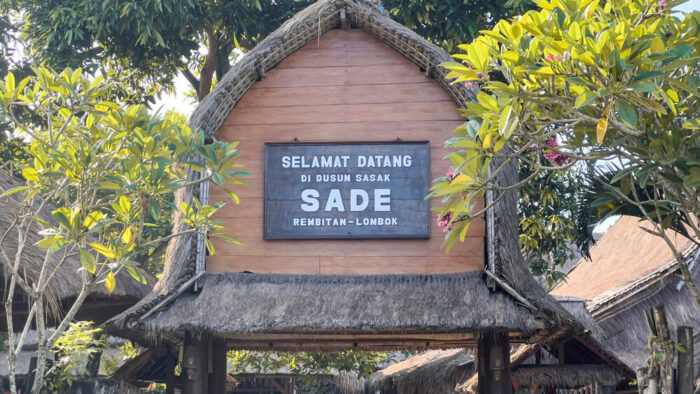
The village is known for its traditional Sasak houses, woven textiles, local guides and community life that still reflects older customs passed down through generations. It is also one of the most visited traditional villages in Lombok, so it is better to come with realistic expectations.
In this guide, we’ll cover what to expect in Sade Village, how donations and local guides work, how to get there, where to stay nearby, and whether it is the right stop for your Lombok itinerary.
About Sade Village
Sade Village is a traditional Sasak village in the South Lombok region . The Sasak are the indigenous people of Lombok and are believed to have lived on the island for centuries, long before Lombok became known for beach tourism.
Most Sasak people are Muslim today, but local culture still carries older influences from Hindu and animist beliefs. In Sade, you can still see this mix in traditional house design, marriage customs, rituals, weaving and the way community life is organized.
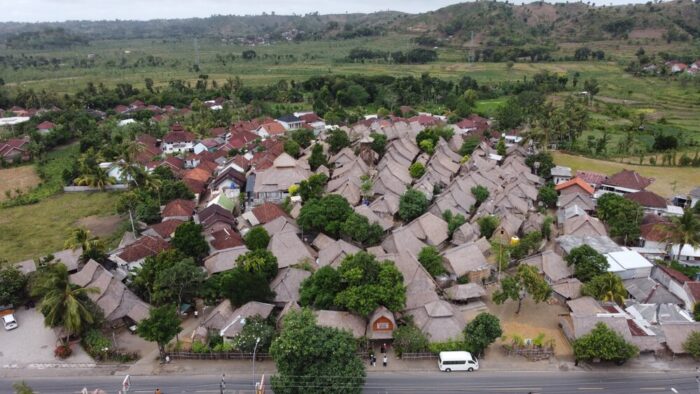
The village covers around 5.5 hectares and is often said to have about 150 traditional houses. Around 700 people live here, and many families are closely related. Marriage within the wider community, including between cousins, has traditionally helped keep family ties strong.
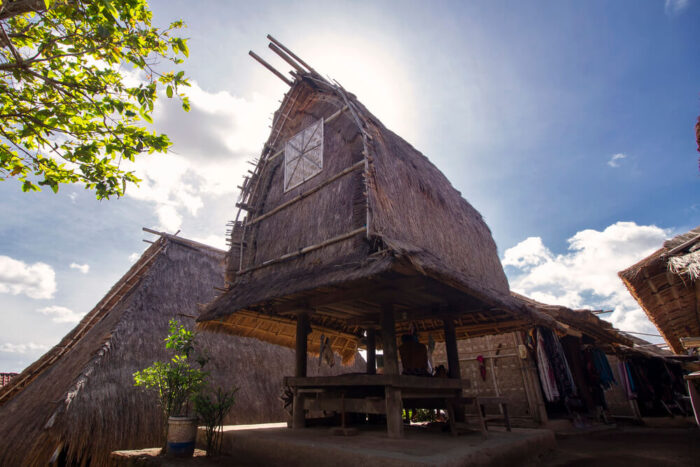
The first thing most visitors notice is the architecture: low thatched roofs, bamboo and wooden structures, compacted earth floors and narrow paths between the houses. The village is small, and you can walk through it quite quickly.
What to Expect During Your Visit
A visit to Sade Village is usually short. Most travelers spend around 30 minutes to 1 hour here, depending on whether they take a guide, enter one of the houses, watch weaving or buy textiles.
A typical visit may include:
- walking through the village lanes
- seeing traditional Sasak houses
- entering a Bale Tani house
- learning about the buffalo-dung floor
- seeing women weaving
- visiting small textile stalls
- hearing about Sasak marriage customs
- leaving a donation or tipping a local guide
The experience can feel interesting and useful, but also quite tourist-facing. Some visitors enjoy the explanations and the chance to learn about Sasak culture. Others feel the visit is too focused on donations or textile sales.
The best approach is to go in with clear expectations. Sade is easy to visit and culturally interesting, but it is not a deep, untouched village experience. It works best as a short introduction to Sasak culture, not as a full-day destination.
Traditional Sasak Houses: Bale Tani
One of the main things to see in Sade Village is the traditional Sasak house, known as Bale Tani.
These houses are built from natural materials such as bamboo, wood and dried grass for the thatched roof. The entrance is low, so you usually need to bow slightly when stepping inside. Local guides often explain this as a gesture of respect when entering someone’s home.
The most famous detail is the floor. Traditionally, it is made from compacted earth and treated with buffalo dung. It may sound strange at first, but the method helps make the floor firm, cleaner and less dusty. Local explanations also often mention that it helps reduce mosquitoes.
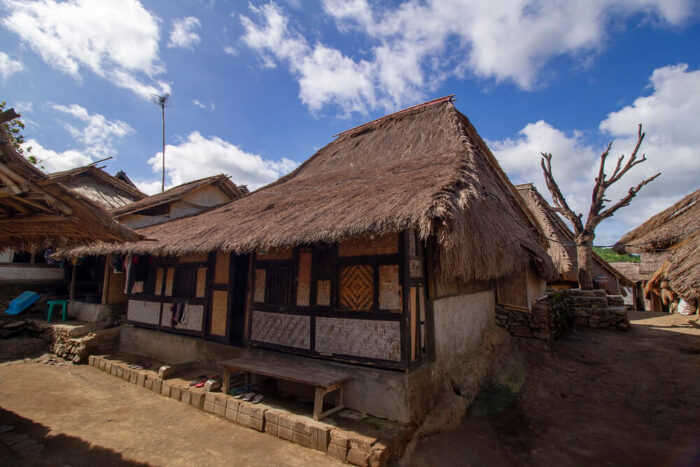
Inside, the layout is simple and practical. The front area is usually used as a sleeping space for men, while the inner area serves as both a kitchen and a sleeping space for women. Cooking is still done using traditional wood-fired stoves.
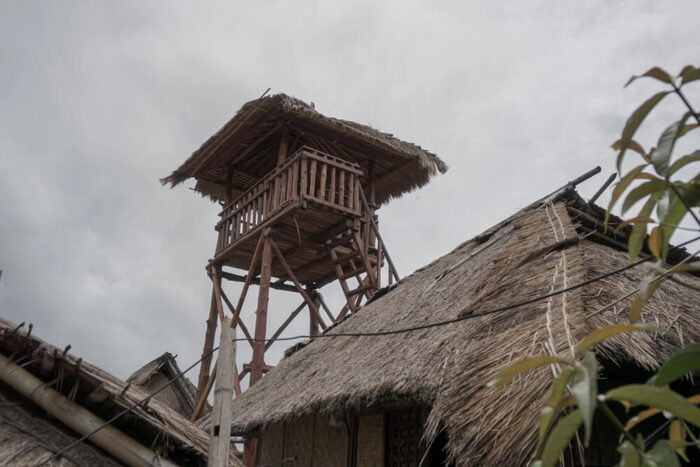
Around the village, you’ll also find other communal structures such as a mosque, meeting halls, and rice barns. In the center, there is a small tower that acts as a viewpoint, where you can see the village from above.
Daily Life and Weaving in Sade Village
People in Sade traditionally lived from farming, weaving and community-based work. Today, tourism has also become an important source of income for many families.
The roles in the village are still quite traditional. Men often work in the fields, guide visitors or help maintain the houses, while women are closely connected with weaving. In Sade, girls are expected to learn how to weave before marriage, so this skill is not only a craft but also part of growing up in the community.
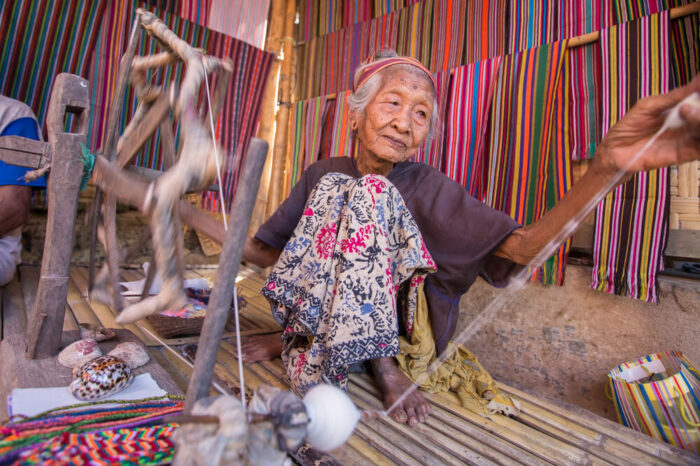
The process starts with preparing and spinning the thread, then coloring it with natural dyes. For example, turmeric is traditionally used to create yellow tones. The finished fabrics are worn locally or sold as handmade products, and visitors can buy them directly from the villagers.
One detail you may hear during your visit is that weaving is done only by women. This also applies to visitors who want to try sitting at the loom.
Backindo Tip: If weaving is your main interest, consider also visiting Sukarara Village. Sade is better for a quick introduction to Sasak village life, while Sukarara is more focused on weaving and textiles.
Farming in Sade still depends heavily on rainfall, so it is usually done once a year. In front of many houses, you may notice clay containers used to collect and store rainwater. After harvest, crops are kept in traditional rice barns. One barn can usually support around five or six families until the next harvest season.
The Merariq Marriage Tradition
One of the traditions often explained in Sade Village is Merariq, usually translated into English as “bride kidnapping.”
This translation can sound shocking, but the reality is more complex than the English phrase suggests. In Sasak culture, Merariq is part of a recognized courtship and marriage process. Traditionally, a man takes the woman he wants to marry, often at night, and then both families enter a negotiation process.
Within the community, this is understood as part of local custom. In fact, directly asking the woman’s family for permission in a formal way can be seen as inappropriate.
The wedding celebration is also quite lively. The couple is brought in a procession to the bride’s house, accompanied by traditional music.
The dowry usually includes around 25 pieces of woven fabric and a traditional dagger (keris). The marriage ceremony follows both local customs and Islamic traditions, and it is officially registered by the government.
After the wedding, the bride will move to the groom’s family home. If the couple wants to build their own house, they must move outside the village, as land in Sade is limited and new construction is not allowed.
Other Things to Know About Life in Sade
Sade Village is traditional, but it is not separated from modern life. Children go to school, electricity is available, and you may notice modern details such as lights, fans, mobile phones or tiled floors in the mosque. This does not make the village “less real” — it simply shows that local communities change over time.
Things to Know Before Visiting Sade Village
There is usually no fixed entrance fee for Sade Village. Instead, visitors are expected to leave a donation to support the local community.
Many travelers leave around IDR 20,000–50,000 (about USD 1.50–4) as a donation, depending on the group size and how the visit is arranged. You may also be able to check the visitor book to see how much other travelers have given.
If you use a local guide, tipping separately is common. For a more detailed explanation, around IDR 75,000 or more for a guide can be appreciated, especially if they take time to explain the houses, weaving and local customs properly.
That said, this donation-based system is also one of the most criticized parts of visiting Sade. Some travelers report feeling pressured to give more than expected, or being told that certain donations or guide fees are mandatory. In practice, the experience can feel more commercialized than visitors expect, especially compared with other traditional villages in Lombok.
Because payment arrangements can vary, it is best to clarify the costs at the beginning of your visit, especially if you plan to explore the village with a guide.
Ask whether there is an entrance fee or if visits are donation-based. If donations are expected, ask what amount is usually considered standard. If you take a guide, also check whether there is a fixed guiding fee or whether visitors normally leave a tip at the end.
Backindo Tip: If you decide to visit, it makes sense to go with a local guide. The village is much more interesting when someone explains the context behind the houses, weaving, family structure and customs you see around you.
How to Get to Sade Village
Sade Village is located in Rembitan Village, Pujut District, Central Lombok, in the South Lombok region. It sits along the main road between Praya and Kuta Lombok. It is about 10 km from Lombok International Airport and roughly the same distance from Kuta Lombok.
The location is easy to find, but there is no public transportation available to reach the village.
The best way to visit is by renting a car with a driver or using a scooter. If you prefer to drive yourself, the route is relatively easy—the roads are well-paved, wide, and not too winding.
Parking is available outside the village entrance, and from there, you’ll need to continue on foot to explore the traditional village area.
You can also visit Sade Village as part of an organized South Lombok trip. These tours usually combine the village with nearby beaches, weaving villages or other cultural stops, which can be useful if you don’t want to arrange transport yourself.
Where to Stay Around Sade Village
The most practical base is Kuta Lombok, about 20–30 minutes away by car or scooter. This is where you’ll find the best choice of guesthouses, hotels, restaurants and cafés, with easy access to beaches such as Tanjung Aan, Mawun and Selong Belanak.
Places worth checking include Jati Kuta Lombok or Cewin’s Homestay for a more relaxed mid-range stay, Batatu Villa if you prefer more privacy, and Novotel Lombok Resort & Villas if you want a resort-style option near the beach.
If you arrive late or have an early flight, staying near Lombok International Airport can make sense for one night. This area is practical rather than interesting, but options include Tio Homestay for a simpler stay, ILLIRA Lite Praya for a basic hotel option, or Swiss-Belcourt Lombok.
Another option is Selong Belanak, especially if you want a quieter beach stay. Places worth considering include Sempiak Seaside Resort, Amber Lombok Beach Resort or Seven Havens Residence.
Is Sade Village Worth Visiting?
Sade Village is worth visiting if you want a short and accessible introduction to Sasak culture near Kuta Lombok or Lombok International Airport. It is easy to reach, does not take much time, and gives you a first look at traditional Sasak houses, weaving, family life and local customs.
That said, Sade is also one of the most visited traditional villages in Lombok. It has adapted to tourism, so expect local guides, textile stalls, donation requests and a more organized visitor experience. If you come expecting a remote village with no tourism influence, you may find it too staged or commercial.
For most travelers, Sade works best as a 30–60 minute stop, especially on the way between the airport and Kuta Lombok, or as part of a South Lombok day trip.
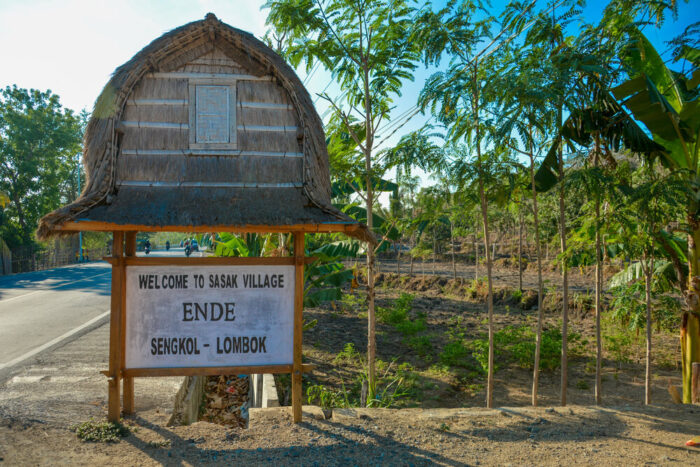
If you want a similar Sasak village experience but with a quieter atmosphere, ask your driver about Ende Village. It is another traditional village in the area and may feel less busy, depending on the timing of your visit.
If your main interest is traditional weaving and Lombok textiles, Sukarara Village is usually the better choice. Sade gives you a broader introduction to Sasak village life, while Sukarara focuses more clearly on weaving demonstrations and textile production.
So yes, Sade Village can be worth visiting — just go with realistic expectations. Treat it as a short cultural introduction, clarify donations or guide fees before you start, and choose Ende or Sukarara instead if they better match what you want from the visit.
Learn more in Ende Village, Lombok: A Quieter Sasak Village Near Kuta.
FAQ About Visiting Sade Village
Is there an entrance fee for Sade Village?
There is usually no fixed entrance fee. Visitors are expected to leave a donation, often around IDR 20,000–50,000, depending on the group and visit.
Do you need a guide in Sade Village?
A guide is not always strictly necessary, but it makes the visit much more useful. A local guide can explain the houses, weaving, family structure and marriage customs. Clarify at the beginning whether the guide is donation-based or has an expected fee.
How long do you need in Sade Village?
Most travelers spend around 30 minutes to 1 hour in Sade Village. If you want to ask questions, watch weaving or buy textiles, allow a little more time.
Is Sade Village touristy?
Yes, Sade Village is one of the most visited traditional villages in Lombok. It is still a living village, but it has adapted to tourism. Expect guides, souvenir stalls and donation requests.
Is Sade Village better than Sukarara?
It depends on what you want. Sade is better for a quick introduction to Sasak village life. Sukarara is better if your main interest is traditional weaving and textiles.
What should you wear to Sade Village?
Wear light, comfortable and respectful clothing. You do not need anything formal, but avoid walking through the village in only swimwear or very revealing beachwear. Covering your shoulders and knees is a good habit when visiting local villages in Lombok.
Can you buy textiles in Sade Village?
Yes. Many families sell woven textiles, sarongs, scarves and small souvenirs. Ask about the material and process if you are looking for handmade pieces, and bargain politely if needed.