
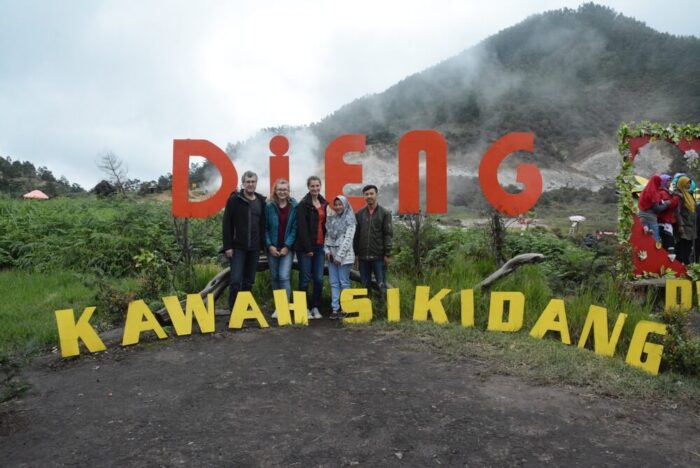
Sikidang Crater (called Kawah Sikidang in Indonesian) is one of the main highlights of the Dieng Plateau in Central Java. It’s one of the easiest places in Indonesia where you can see active volcanic activity up close — without committing to a long hike or serious climb.

Instead of dramatic mountain scenery, expect a wide, steaming field of grey earth, bubbling mud pools, and clouds of sulfur rising straight from the ground. The smell can be strong, and the landscape feels raw and exposed — but that’s exactly what makes it interesting.
If you’re exploring Dieng, Sikidang is a logical stop along the way. It won’t take much of your time, but it adds a very different dimension to your trip. Below, you’ll find practical and honest tips to help you decide when and how to visit.
Why Visit Sikidang Crater?
Dieng is known for its temples, rolling hills, and cool mountain atmosphere. Sikidang adds something completely different to that mix — a reminder that this plateau is still very much alive beneath the surface.
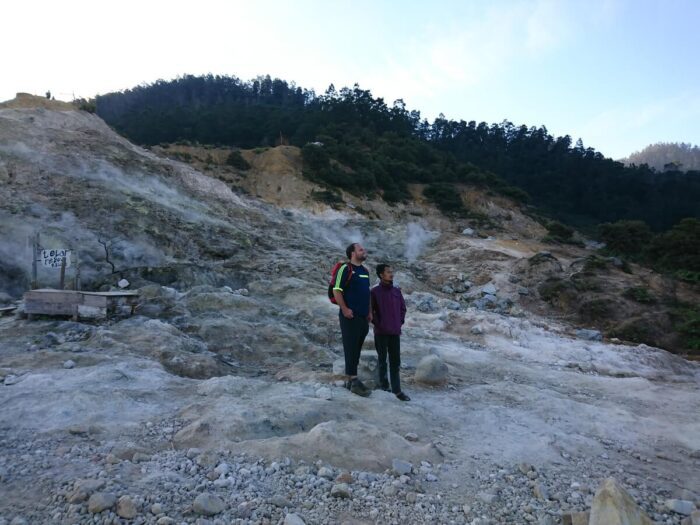
Here, you can safely observe volcanic activity at close range. Steam hisses from the ground, mud bubbles constantly, and the heat beneath your feet is real. It’s not a polished “Instagram-only” attraction — it’s a functioning geothermal area that you can actually walk through.
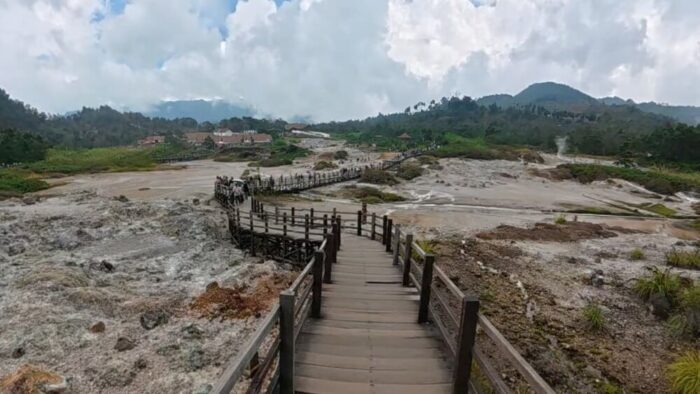
One of the biggest advantages is accessibility. There’s no demanding hike, no steep climb, and no complicated logistics. Wooden walkways guide you across the crater area, making it an easy visit even if you’re traveling with family or simply prefer a relaxed stop between other Dieng attractions.
Exploring Java with children? Read our tips in How to Travel Java with Kids: Tips from an Expat Mom.
What to See or Do
Once you arrive at Sikidang Crater, you’ll walk along wooden paths crossing a wide, steaming geothermal field. The area covers around 4 hectares, but because it’s one of the main attractions in Dieng, it can feel quite busy — especially on weekends or during high season.
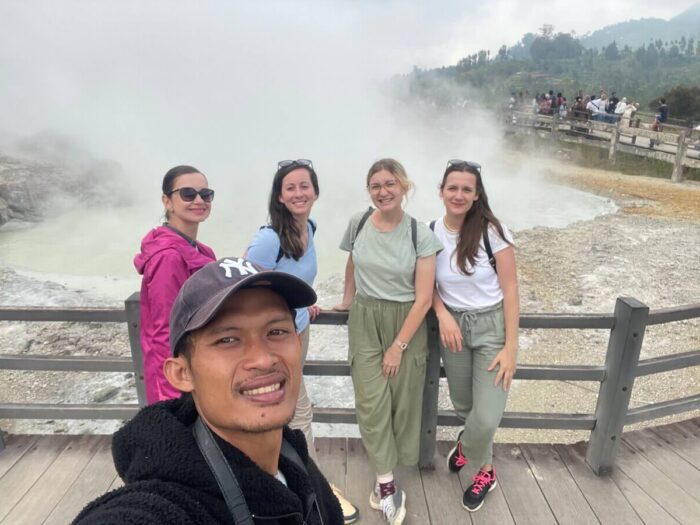
Visually, the landscape feels stark and almost otherworldly — grey soil and pale white smoke drifting across the field. At the center, the main crater resembles a giant boiling pot, with hot mud constantly bubbling and thick sulfur steam rising from the ground. The smell is noticeable, but compared to Kawah Putih in Bandung, it’s generally much more bearable.
After exploring the crater, the exit requires a fairly long walk. Before leaving, you’ll pass through a large souvenir market that feels almost like a maze. It can take 20–30 minutes to get through, especially when crowded. Recently, a new gate has been opened, which makes the exit shorter and more convenient.
Backindo Tip: If you’re interested in sulfur souvenirs, you can buy small packaged pieces here for around IDR 10,000–15,000 (approximately USD 0.65–1).
Around the crater, you’ll also find ATV rentals and jeep tour offers. ATV prices usually start from IDR 100,000–150,000 per hour (approximately USD 6.50–10), while jeep tours range from IDR 300,000 to over IDR 700,000 (approximately USD 20–45) depending on the route. But honestly, these are optional additions rather than essential experiences.
Curious about beautiful sunrise spots around Dieng? Read our guides to Mount Sikunir, Mount Bismo, and Mount Prau — each offering a completely different experience.
Practical Tips
If you’re planning to visit Sikidang Crater, it’s open daily from 08:00 to 16:00. The entrance fee for international visitors is around IDR 50,000 (approximately USD 3–3.50), and the ticket is combined with Arjuna Temple — so make sure to keep it with you.
The best time to visit Sikidang Crater is between 8 and 10 AM, when it’s still quiet, the air is cool, and the smell isn’t too strong. However, the crater can be visited at any time during opening hours. Don’t forget to bring a jacket or sweater — Dieng can be surprisingly chilly.
At the parking area, you’ll see many people selling masks. Honestly, they don’t make a huge difference. What helps more is keeping a bottle of water with you. If the smell gets intense, take a sip, rinse your mouth, and spit the water out — it can make you feel much better.
Also, bring small cash, as parking, snacks, and toilets usually don’t accept digital payments. And if you plan to fly a drone, make sure to get permission before taking off.
How to Get There
Sikidang Crater is closest to Wonosobo City, and it takes around 1.5 to 2 hours to reach Dieng by car. The easiest way to get there is by renting a car or hiring a driver from Wonosobo. If you’re used to riding a motorbike, renting a scooter is also an option—but be careful, as the road to Dieng is uphill and winding.
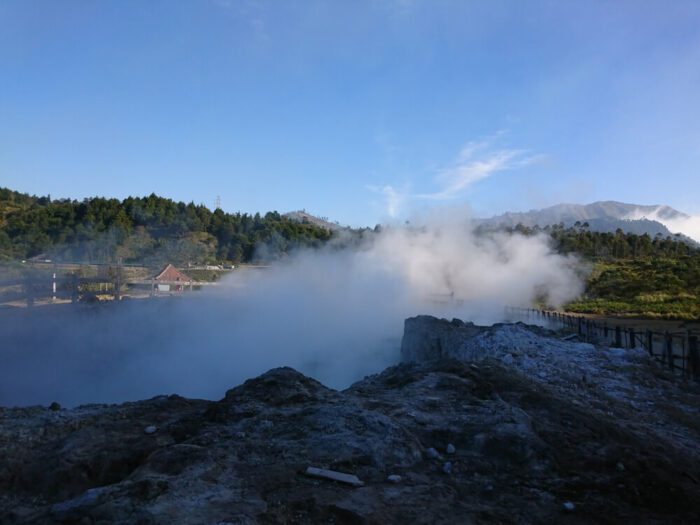
Public transportation is available, but limited. You can take a minibus from Wonosobo to Dieng, then either walk or hop on an ojek (motorbike taxi) to reach the crater. If you stay within the center, Dieng is actually walkable.
Looking for a trusted local driver in the area? Just send us a message at hello@backindo.com — we’ll gladly share our personal recommendations.
Where to Stay
In Dieng, there are two great accommodation options: Tani Jiwo Hostel and Better House Dieng. Tani Jiwo is perfect for backpackers or solo travelers—it has a relaxed vibe, unique design, and often becomes a hangout spot for fellow travelers.
On the other hand, Better House Dieng is a better fit for those traveling with family or a partner, as it offers a quieter atmosphere and more complete facilities. Both places are in a strategic location, making it super easy to explore other attractions around Dieng.
When to Visit
The best time to visit Dieng is during the dry season, from July to September, when the weather is clearer and you have a chance to see volcanoes around and possibly the famous frozen dew (embun beku or “bun upas”). This phenomenon usually appears around August, which is also when the Dieng Culture Festival (DCF) takes place.
It’s the coldest time of the year and perfect for experiencing Dieng’s unique mountain atmosphere. However, DCF is peak season, and the area can get very crowded. If you prefer a quieter experience, it’s better to avoid the exact festival dates and visit slightly before or after August.
In general, Dieng is especially popular with domestic travelers, so weekends tend to be busy year-round. If possible, plan your visit on a weekday for a calmer atmosphere.
Is Kawah Sikidang Worth a Visit?
Sikidang Crater isn’t the kind of place where you’ll spend half a day—but it’s still one of the most accessible ways to experience active volcanic activity up close. It’s raw, steaming, sulfur-scented, and very real.
Is it the most spectacular crater in Indonesia? Probably not. But as part of a Dieng itinerary, it makes sense — especially if it’s your first time seeing this kind of landscape.
Come early, manage your expectations, and enjoy it for what it is: a fascinating glimpse into the volcanic heart of Java.
Continue reading: