
Hitchhiking on the Indonesian island of Java is not impossible—far from it, in fact. It can be a truly rewarding way to see the island, meet locals, and uncover parts of the culture that most tourists miss. But let’s be clear: hitchhiking is not a familiar concept here. It’s not widely practiced or understood, and this can lead to plenty of confusion along the way.
That’s why I want to share my own experiences hitchhiking in Java—not as a step-by-step guide, but as a window into how this way of travel is seen locally.
I’ve lived on the island for over eight years, and my husband is Javanese, so I’ve had the chance to see things from both sides. Through these stories, I hope to show not just what it’s like to hitchhike here—but how it might feel for the people who see you doing it.
Is It Safe to Hitch on Java?
Personally, as a female solo traveler—and now as a mother of two small kids—I feel very safe in Indonesia, especially in Java. But that doesn’t mean you should let your guard down. Just like anywhere in the world, hitchhiking here comes with risks, and basic safety precautions still apply. Trust your instincts. If something doesn’t feel right, it probably isn’t. Avoid hitchhiking at night, always let someone know your plans, and if possible, hitchhike with a buddy.
Just because people are friendly doesn’t mean you shouldn’t stay aware and cautious.
Where and How to Hitchhike
The people of Java are incredibly kind and helpful. Many will go out of their way to assist a stranger, especially a foreign traveler. In tourist-heavy areas, such as near temples or major landmarks, locals might assume you’re lost or in trouble and may offer you a ride without you even asking. This generosity is genuine, but without clear communication, things can get muddled.
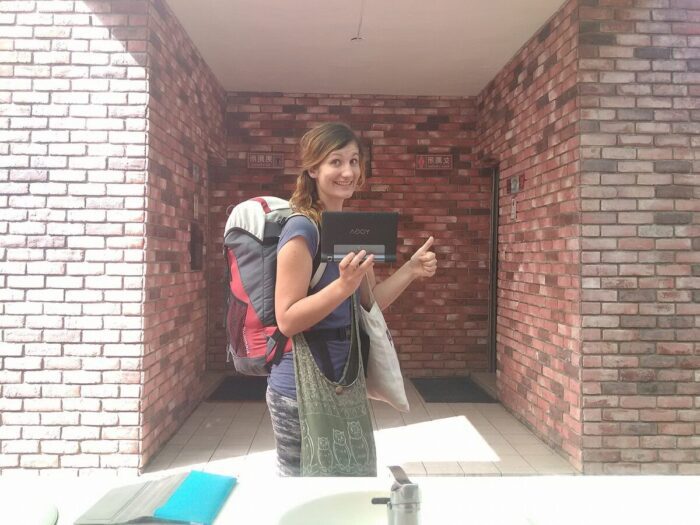
It’s important to note that the common hitchhiking gesture in Western countries—a raised thumb—often doesn’t translate in Indonesia. If you give someone a thumbs-up, they might simply smile and give you a thumbs-up back, without realizing you’re asking for a ride.
In Indonesia, the appropriate gesture to call someone over is waving your right hand downward toward yourself, like you’re beckoning a friend. It’s more culturally appropriate and clearly understood.
Also, note that most roads lack proper shoulders and it can be dangerous to hitch from busy stretches. You’re more likely to succeed if you start conversations at a gas station or rest area and see where the interaction leads.
Language and Clarity
Speaking at least a little Bahasa Indonesia goes a long way. Being able to explain that you’re traveling “numpang” (hitchhiking) and that you are not looking for a paid ride (“gratis”) helps avoid uncomfortable situations. There have been instances where drivers thought they were acting as informal taxis and expected payment at the end of the ride. This isn’t anyone’s fault—it’s just a matter of cultural expectations not aligning.
Also, because the idea of hitchhiking is unfamiliar to many Indonesians, there’s a chance that someone picking you up might take you to the nearest bus terminal or train station instead, thinking they are helping you reach public transport. For that reason, it’s usually better not to try hitchhiking along routes served by regular buses or minibuses, as it can lead to confusion or unnecessary detours.
Ready to discover more of Java? Read How to Get Around Java: Transportation Guide.
Kindness Goes Both Ways
Java, for all its beauty and vibrancy, is still developing economically. Not everyone can afford to offer a ride for free, and some may hesitate simply because they think you’re expecting more than they can give. That’s why a small gesture of appreciation can go a long way. Whether it’s a souvenir from your home country, a thoughtful trinket, or even a small contribution for petrol, showing gratitude is deeply appreciated.
Hitchhiking should never come at the cost of the locals. It should be a mutually enriching experience that respects their time and resources.
Also, be prepared for the hospitality to go far beyond the ride. Your driver might want to take a photo with you, call their friends to say they met a foreigner, or even invite you home for tea—or to stay the night. These spontaneous encounters can be heartwarming, humbling, and unforgettable. But they take time. So don’t hitchhike if you’re in a rush. Give yourself space to experience the slow, generous rhythm of Javanese hospitality.
My Personal Experiences
To be honest, I don’t usually hitchhike in a deliberate way. But a few times, the opportunity presented itself—maybe we were walking somewhere remote, or a kind driver simply offered us a lift. So while I’ve had some experience with hitchhiking in Java, it was more about the circumstances than a planned approach.
Also, it’s worth noting that my husband is Javanese, and he’s not a fan of the idea at all. Hitchhiking doesn’t sit well with him—he’s simply too polite and proper to feel comfortable asking a stranger for help like that, let alone enjoy it.
Prambanan
After visiting the temples around Prambanan, we—three foreigners—were walking along the road when a car passed by. We gave a quick wave, and to our surprise, the driver stopped and gave us a lift about 2 km to the main road. It wasn’t far, but it was a kind gesture. I doubt they knew we were hitchhiking for fun—they probably just thought we needed help.
Dieng
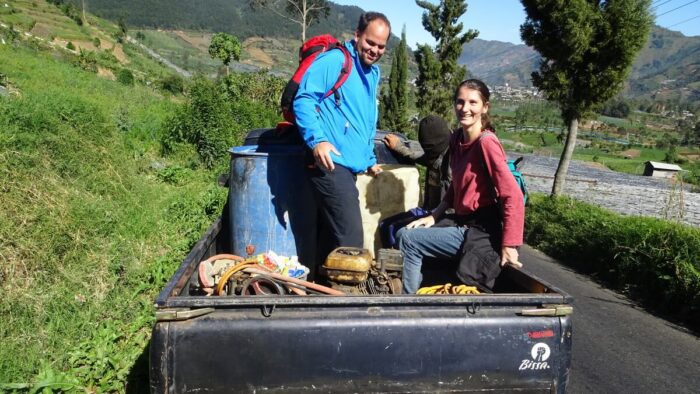
In Dieng, our car overheated on the way to the hot springs, so we decided to walk and come back for it later. As we were heading down the road, a pickup truck passed by and we gave a wave. My husband, who’s local, was very hesitant—hitchhiking just isn’t part of his culture. But the driver kindly stopped, gave us a short lift (about a kilometer), and even made a small detour to help us out.
Wonosobo
On the way from Wonosobo to Yogyakarta, my husband was traveling with three of my foreign friends who are big tea lovers. They stopped at a tea plantation to chat with the harvesters, and the conversation led to a ride offer from some kind locals in a pickup truck. The three foreigners hopped on the back, while my husband followed in our car. The locals even invited them to a nearby celebration, but it was a bit too far out of the way, so they politely declined.

Appearance Matters
In Indonesia, first impressions carry a lot of weight—especially when you’re asking for a favor like a ride. How you present yourself can make a real difference in how people respond. If you look scruffy, wear torn clothes, have visible tattoos, dreadlocks, or a style that resembles local punk communities (which are sometimes associated with trouble or street life), don’t be surprised if people hesitate to stop. Clean, modest, and respectful dress will increase your chances of getting a ride.
For men, beards aren’t very common in mainstream Indonesian culture, and having a large one might raise a few eyebrows. A neat appearance tends to make drivers more at ease. I’ve even met a few people in our village who are genuinely afraid of men with long beards—not out of disrespect, but simply because they’ve never traveled or been exposed to different cultures.
For women, it’s especially important to dress modestly. Avoid low-cut tops, tank tops, and shorts. Cover your shoulders and knees. This isn’t just about respect for local customs—it’s also about ensuring that you are perceived in a positive, non-provocative way. People are far more likely to help when they feel comfortable with you.
Indonesia is a fairly conservative country. Learn more in our guide Etiquette in Indonesia: A Do's and Don'ts Guide
Ultimately, how you present yourself sends a message. You want to be seen not as someone taking advantage of kindness, but as someone who respects the culture and is engaging in a meaningful exchange.
Final Thoughts
So yes, hitchhiking in Java is possible. But it requires patience, cultural sensitivity, and a bit of language learning. Go in with a smile, an open mind, and a few key phrases, and you just might find yourself welcomed into the heart of Java’s warm hospitality.